
If you are serious about building muscle, getting stronger, or improving your gym performance, you have probably heard about both creatine and whey protein. But a common question is: do you actually need both, or is one enough?
The short answer is that creatine and whey protein do completely different jobs. Whey protein helps you reach your daily protein target, while creatine mainly supports strength, training performance, and muscle growth by increasing your muscles’ available creatine stores.
That means you don’t necessarily need both. But for someone who trains regularly and wants to maximize muscle growth and performance, creatine and whey protein can work extremely well together.
The important thing is understanding what each supplement does and whether your diet and training actually require it. Whey Protein vs Mass Gainer: Which Is Better?
What Is Whey Protein?
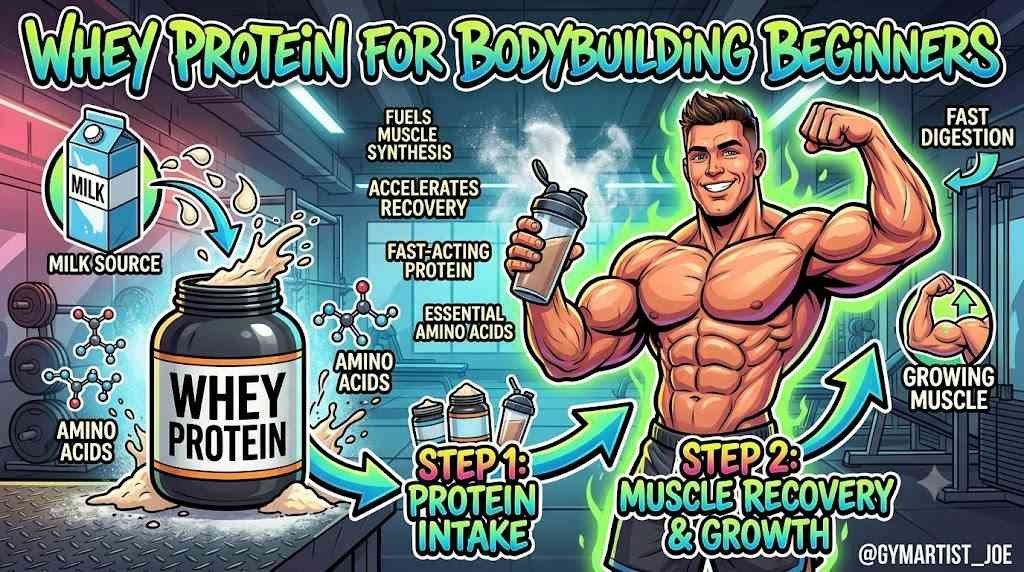
Whey protein is a high-quality protein made from milk. It contains all nine essential amino acids and is particularly rich in branched-chain amino acids, including leucine, which plays an important role in stimulating muscle protein synthesis.
For lifters, the biggest advantage of whey protein is convenience.
Instead of preparing another complete meal when you are busy, you can mix a scoop of whey with water or milk and quickly increase your protein intake.
Whey protein isn’t a magic muscle-building powder, though. Your body still needs enough total calories, protein, resistance training, recovery, and sleep.
Think of whey as an easy way to help you hit your protein numbers.
What Is Creatine?
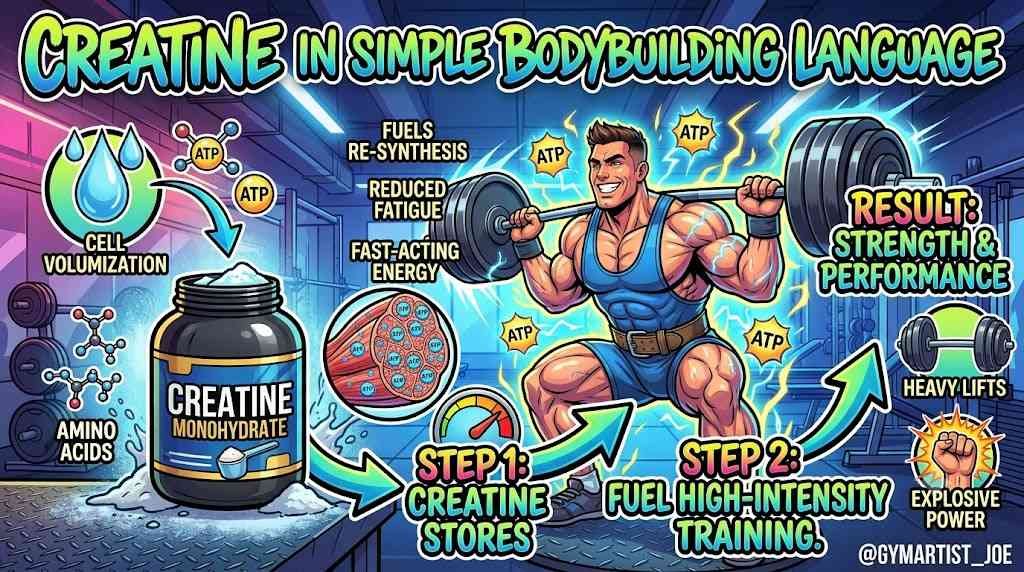
Creatine is a naturally occurring compound stored primarily in skeletal muscle. Your body produces some creatine on its own, and you also get it from foods such as meat and fish.
Supplementing with creatine increases the amount of creatine stored in your muscles.
This is useful because your muscles use the creatine-phosphate system to rapidly regenerate ATP, one of the main energy sources used during short, intense efforts.
In simple gym language, creatine can help you push harder, perform more reps, and maintain better training performance.
Over time, better training can contribute to improvements in strength and muscle growth.
Creatine and Whey Protein Do Different Jobs
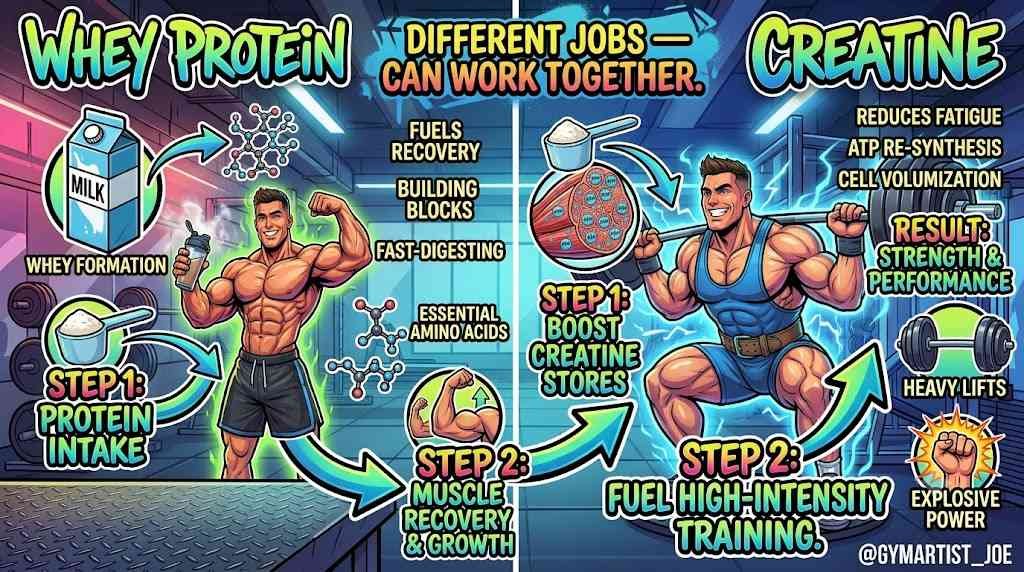
This is the most important thing to understand.
Whey protein = protein intake.
Creatine = training performance and muscle creatine stores.
They aren’t competing supplements.
You can take whey without creatine. You can take creatine without whey. And you can take both together.
For example, imagine someone already eats plenty of chicken, eggs, dairy, fish, and other protein-rich foods. They may have little need for whey protein because they’re already reaching their protein target.
However, they could still benefit from creatine.
On the other hand, someone might struggle to eat enough protein but have no problem getting enough creatine from their normal diet.
In that case, whey may be more useful.
Do You Need Both Creatine and Whey Protein?
No, you don’t need both.
Neither supplement is mandatory for building muscle.
You can build an impressive physique without whey protein, and you can build muscle without creatine.
But whether you should use both depends on your goals and diet.
If you’re training consistently and your goal is to maximize muscle growth and gym performance, using creatine and whey protein together can be a practical combination.
Whey helps make your protein target easier to reach, while creatine supports high-intensity training performance.
So rather than asking, “Which one is better?” ask:
“What is missing from my diet and training plan?”
Why Take Whey Protein for Muscle Growth?
Protein provides the amino acids your body needs to repair and build muscle tissue.
Resistance training creates a stimulus for muscle growth, but your body also needs sufficient protein to support the recovery and remodeling process.
That’s why total daily protein intake matters much more than simply drinking a shake immediately after your workout.
For many people who lift weights, a daily protein intake somewhere around 1.6–2.2 grams per kilogram of body weight is a commonly used target range for supporting muscle growth.
For example, someone weighing 75 kg could aim for roughly 120–165 grams of protein per day.
That doesn’t mean all of it needs to come from whey.
Food should remain an important part of your diet, while whey can fill the gaps.
Why Take Creatine for Muscle Growth?
Creatine is one of the most researched sports supplements available.
The main reason lifters use it is its ability to increase muscle creatine stores and support performance during repeated high-intensity efforts.
That can be useful during weight training.
If creatine allows you to maintain better performance across sets, reps, and training sessions, it can indirectly support your long-term muscle-building progress.
Creatine supplementation can also increase body weight because more water is stored inside muscle cells. This is not the same thing as gaining body fat.
That initial increase on the scale is one reason beginners sometimes think creatine has suddenly made them “fat.”
It hasn’t. SHBG on Blood Test: Normal Range, High & Low Levels Explained
Can You Take Creatine and Whey Protein Together?
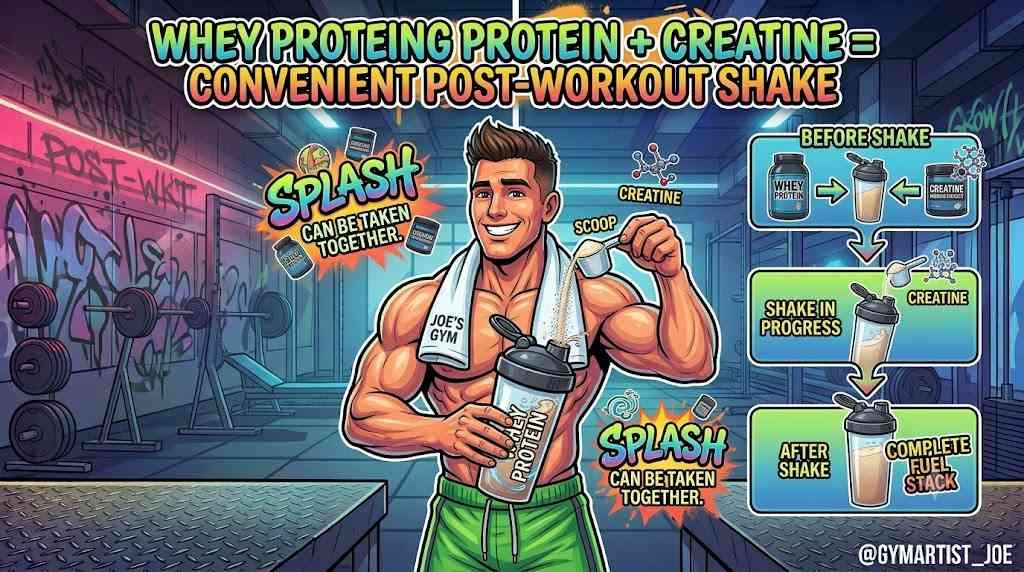
Yes.
There is no general reason you cannot mix creatine and whey protein together.
In fact, combining them in the same shake is one of the easiest ways to take both.
For example, your post-workout shake could contain:
- Whey protein
- Creatine monohydrate
- Water or milk
- Other ingredients depending on your diet
You don’t need to separate them by several hours.
Your body doesn’t suddenly stop absorbing creatine because you mixed it with protein.
The important thing is consistent daily creatine intake and adequate overall protein intake.
When Should You Take Whey Protein?
Whey protein can be taken whenever it helps you meet your daily protein target.
You can have it:
- After training
- With breakfast
- Between meals
- Before bed
- As part of a meal
- Whenever your daily protein intake needs a boost
The famous “30-minute anabolic window” is often exaggerated.
You don’t have to panic if you don’t drink your shake immediately after your final set.
Your overall daily nutrition matters much more.
If you enjoy having whey after training because it’s convenient, that’s perfectly fine.
When Should You Take Creatine?
Creatine doesn’t need to be taken immediately before your workout.
The bigger priority is taking it consistently every day.
A commonly used maintenance amount for creatine monohydrate is 3–5 grams per day.
You can take it in the morning, before training, after training, or with a meal.
There is no need to obsess over the exact minute.
Consistency wins.
How Much Whey Protein Should You Take?
Unlike creatine, whey protein doesn’t have one universal daily dose.
Your requirement depends on how much protein you’re already getting from food.
For example, if your target is 150 grams of protein per day and your normal diet provides 125 grams, you only need enough whey to help close the remaining gap.
One scoop might provide around 20–30 grams of protein, depending on the product.
So don’t automatically drink three or four shakes simply because you’re trying to build muscle.
Calculate your total daily protein first.
How Much Creatine Should You Take?
For most healthy adults using creatine monohydrate, 3–5 grams per day is a commonly used amount.
Some people use a loading phase involving larger daily amounts for several days, but loading isn’t mandatory.
Without loading, muscle creatine stores can still increase with consistent supplementation.
For most gym-goers, keeping things simple with a daily maintenance amount is perfectly reasonable.
Creatine and Whey Protein for Beginners
If you’re a beginner, don’t feel like you need a shelf full of supplements.
Your priorities should be:
- Consistent resistance training
- Adequate calories
- Enough protein
- Good sleep
- Progressive overload
- Consistency
After those basics are handled, supplements can make things easier.
Whey can help if you’re struggling to reach your protein target.
Creatine can be useful if you want a well-supported supplement for improving training performance.
You don’t need ten different powders to make progress.
Can You Build Muscle With Whey Protein but No Creatine?
Absolutely.
Whey protein provides protein and amino acids, but muscle growth ultimately depends on your complete diet and training program.
If you eat enough protein from normal foods, you don’t even need whey.
Plenty of people build muscle without taking creatine.
However, not using creatine means you’re simply choosing not to use a supplement that may provide additional performance benefits.
That’s a personal choice.
Can You Build Muscle With Creatine but No Whey Protein?
Yes.
Creatine doesn’t contain enough protein to replace your protein intake.
But you don’t need whey specifically to get protein.
You can get your protein from:
- Eggs
- Chicken
- Fish
- Meat
- Milk
- Yogurt
- Cottage cheese
- Soy
- Beans
- Lentils
- Other protein-rich foods
If your diet already gives you enough protein, there’s no nutritional requirement to drink whey. What Is PCT? Dosage & Chart
Creatine and Whey Protein for Fat Loss
Both can also fit into a fat-loss diet.
Whey protein can make it easier to maintain a high-protein diet while controlling calories.
Creatine can help you continue training hard while dieting.
One important point is that creatine may increase scale weight because of increased water stored in muscle.
So if you’re cutting and the scale goes up slightly after starting creatine, don’t automatically assume you’ve gained body fat.
Look at your waist measurement, photos, gym performance, and overall weight trend.
Are Creatine and Whey Protein Safe?
For healthy adults, creatine monohydrate and whey protein are generally considered well-studied supplements when used appropriately.
However, supplements aren’t automatically risk-free just because they’re popular.
Some people may experience digestive issues from whey, particularly if they have difficulty tolerating lactose or certain ingredients.
Creatine can also cause some people to experience temporary water-weight changes or digestive discomfort, particularly when large amounts are consumed at once.
If you have a medical condition, kidney disease, are pregnant, or take medications that may affect kidney function or fluid balance, speak with a qualified healthcare professional before starting supplementation.
Whey Protein vs Creatine: Which One Should You Buy First?
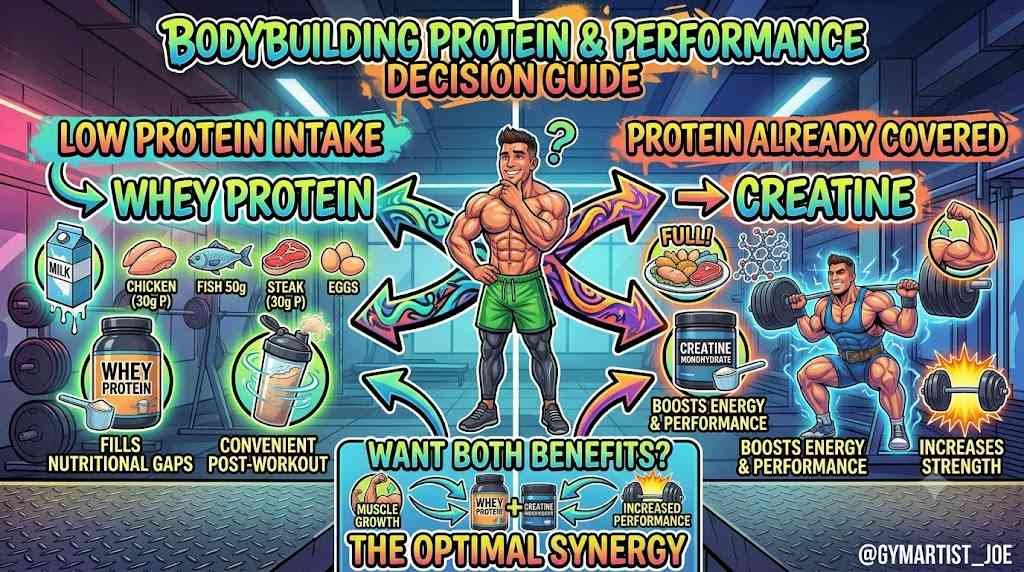
If your protein intake is low, whey protein may be the more useful first purchase.
If your diet already provides plenty of protein but you want a simple supplement to support training performance, creatine may be the better choice.
Here’s an easy way to think about it:
| Situation | More useful |
|---|---|
| You struggle to hit your protein target | Whey protein |
| Your protein intake is already high | Creatine |
| You want convenient post-workout protein | Whey protein |
| You want support for strength/performance | Creatine |
| You want both benefits | Creatine + whey |
| Your diet already covers everything | Neither is mandatory |
Creatine and Whey Protein on Rest Days
You don’t need to stop everything just because you’re not training that day.
Creatine is generally taken every day because the goal is to maintain elevated muscle creatine stores.
Whey protein on rest days is simply a food supplement.
If you need additional protein that day, have it.
If you’ve already eaten enough protein, there’s no requirement to drink whey just because it’s sitting in your kitchen.
Common Mistakes With Creatine and Whey Protein
Taking Whey Instead of Eating Proper Meals
Whey is a supplement, not a replacement for a balanced diet.
Thinking More Protein Means More Muscle
Once you’re meeting your protein needs, dramatically increasing protein doesn’t automatically produce dramatically more muscle.
Taking Creatine Only on Workout Days
Creatine works through regular supplementation, so taking it consistently makes more sense than only taking it before gym sessions.
Obsessing Over Supplement Timing
Daily nutrition and consistency are more important than finding the “perfect” minute to drink your shake.
Buying Too Many Supplements
You don’t need BCAAs, fat burners, testosterone boosters, pre-workouts, amino acids, mass gainers, and ten other products just because you’re trying to gain muscle.
Start with the basics.
Creatine and Whey Protein: Do You Need Both?
The answer depends on your diet.
If you struggle to consume enough protein, whey protein can be extremely convenient.
If you want to support strength and high-intensity training performance, creatine can be useful.
And if you want both, there’s absolutely nothing wrong with using creatine and whey protein together.
They aren’t interchangeable, and one doesn’t replace the other.
Think of whey as a convenient way to help meet your protein requirement, while creatine is a performance-focused supplement that helps increase your muscle creatine stores.
For a regular lifter who wants to gain muscle and get stronger, a simple combination of adequate protein + daily creatine + progressive training + enough calories + good recovery can cover the fundamentals without turning supplementation into a complicated science project. SARMs vs Steroids: What’s the Difference?
Frequently Asked Questions
Can I mix creatine and whey protein together?
Yes. Creatine monohydrate can be mixed into your whey protein shake. You don’t need to take them separately.
Should I take creatine before or after whey protein?
It doesn’t matter much. The priority is getting enough protein throughout the day and taking creatine consistently.
Is whey protein better than creatine?
Neither is “better.” They have different purposes. Whey helps you meet protein needs, while creatine supports muscle creatine stores and high-intensity exercise performance.
Can I take creatine and whey protein every day?
Yes, many people use both daily. Whey should depend on your protein requirements, while creatine is commonly taken consistently at around 3–5 grams daily.
Will creatine make me fat?
Creatine does not directly cause body-fat gain. It can increase body weight through additional water stored in muscle.
Do I need whey protein if I eat eggs and chicken?
Not necessarily. If your normal diet already provides enough protein, you don’t need whey. Whey is mainly a convenient way to increase protein intake.
Is creatine necessary for muscle growth?
No. You can build muscle without creatine. It is an optional supplement that may help support training performance and muscle-building progress.
Can beginners take creatine and whey protein?
Healthy adults can generally use both, but supplements shouldn’t replace the basics of good nutrition and consistent resistance training.
Final Verdict
You don’t need both creatine and whey protein to build muscle.
But they can complement each other extremely well.
Whey protein helps you hit your protein target. Creatine helps support high-intensity training performance.
If your diet is already high in protein, whey may not be necessary. If you’re already getting plenty of protein but want a simple performance supplement, creatine may be the better choice.
And if your goal is to make muscle gain and training recovery as practical as possible, using both can be a very simple and effective setup.
Need Help Choosing Creatine and Whey Protein?
Still confused about whether you need creatine and whey protein, how much to take, or which option makes sense for your fitness goal?
If you want help choosing the right supplements based on your body weight, training routine, diet, muscle-gain goal, or fat-loss goal, you can contact the Gym Pundit team on WhatsApp.
WhatsApp: 7696593279
Before buying multiple supplements, make sure you actually need them. A simple plan based on your diet and training goals is usually better than wasting money on products you don’t need.

[…] When it comes to building muscle and improving gym performance, most people focus on exercises, sets, and repetitions. However, one important factor often gets overlooked: rest time between sets.Resting too little can reduce your strength and affect your performance, while resting too long may make your workout unnecessarily lengthy. So, how long should you actually rest between sets?The answer depends on your fitness goals, exercise selection, training intensity, and recovery ability. Let’s break it down. Creatine and Whey Protein: Do You Need Both? […]