If you have ever searched for the best creatine supplement, you have probably come across Creatine Monohydrate vs Creatine HCL. Both are popular forms of creatine used by gym-goers for muscle growth, strength, workout performance, and recovery, but they have some important differences.
So, which one should you actually buy? Creatine Monohydrate vs Creatine HCL is a common debate because HCL is often promoted for its high solubility and smaller serving size, while monohydrate has decades of research behind it.
In this guide, we will compare both forms based on absorption, dosage, water retention, bloating, muscle growth, strength, side effects, and overall value so you can decide which option makes more sense for your training goals. Creatine and Whey Protein: Do You Need Both?
What Is Creatine?
Creatine is a naturally occurring compound stored mainly in your muscles. Your body makes some creatine on its own, and you also get smaller amounts from foods such as meat and fish.
Inside the muscle, creatine helps replenish ATP, which is the main energy source used during short, intense efforts.
That is why creatine is particularly useful for activities such as:
- Weight training
- Sprinting
- Powerlifting
- Bodybuilding
- High-intensity interval training
- Explosive sports
Supplementing with creatine increases the amount of creatine available to your muscles. Over time, this can help you perform more high-quality work in the gym.
And when training, nutrition, and recovery are all in place, that extra training capacity can contribute to better muscle and strength gains.
Creatine Monohydrate vs Creatine HCL: What Are They?
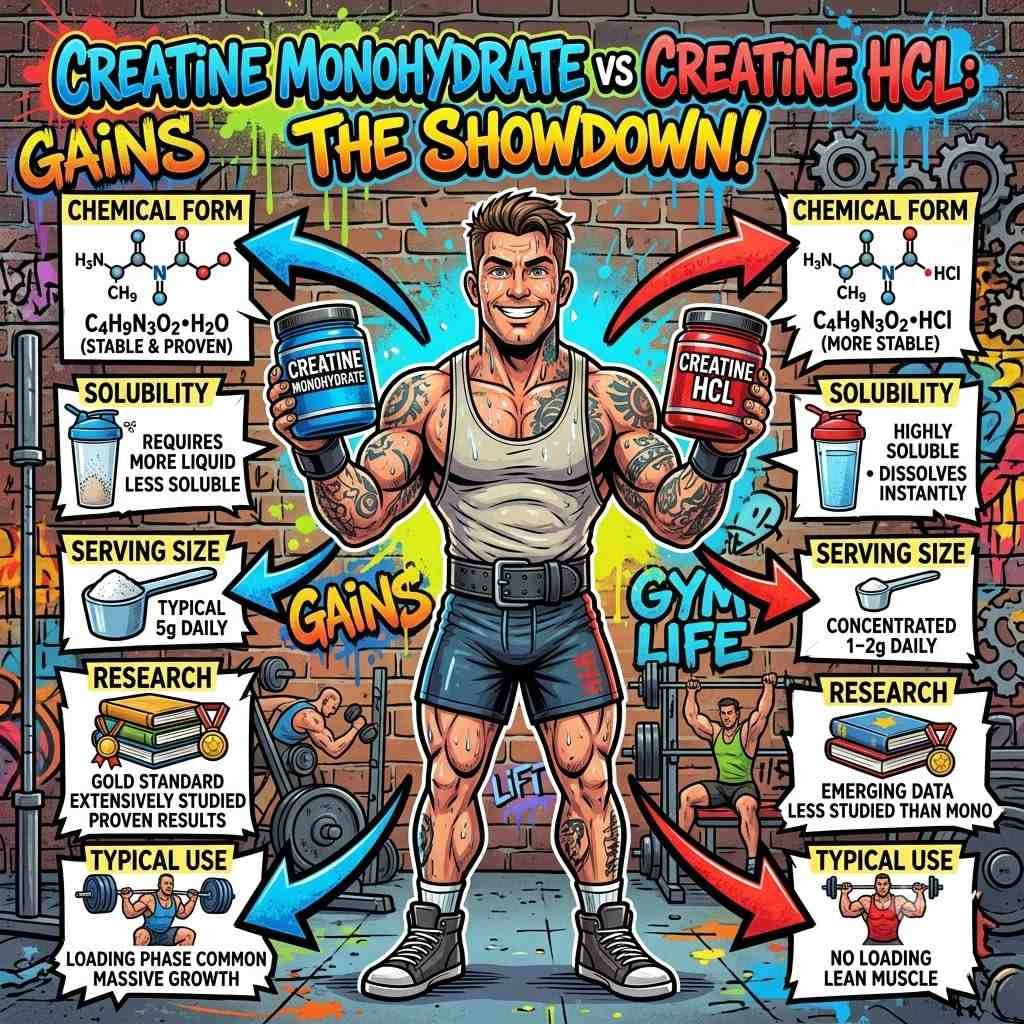
The biggest difference is the chemical form of creatine.
Creatine monohydrate is creatine attached to one molecule of water. It is the most extensively studied form of supplemental creatine and has been used in sports nutrition for decades.
Creatine HCL, or creatine hydrochloride, combines creatine with hydrochloride. It is highly soluble in water and is commonly marketed as a form that can be used in smaller servings.
Both ultimately provide creatine to your body.
The important question is whether the differences between them actually translate into better results.
Creatine Monohydrate: The Classic Choice
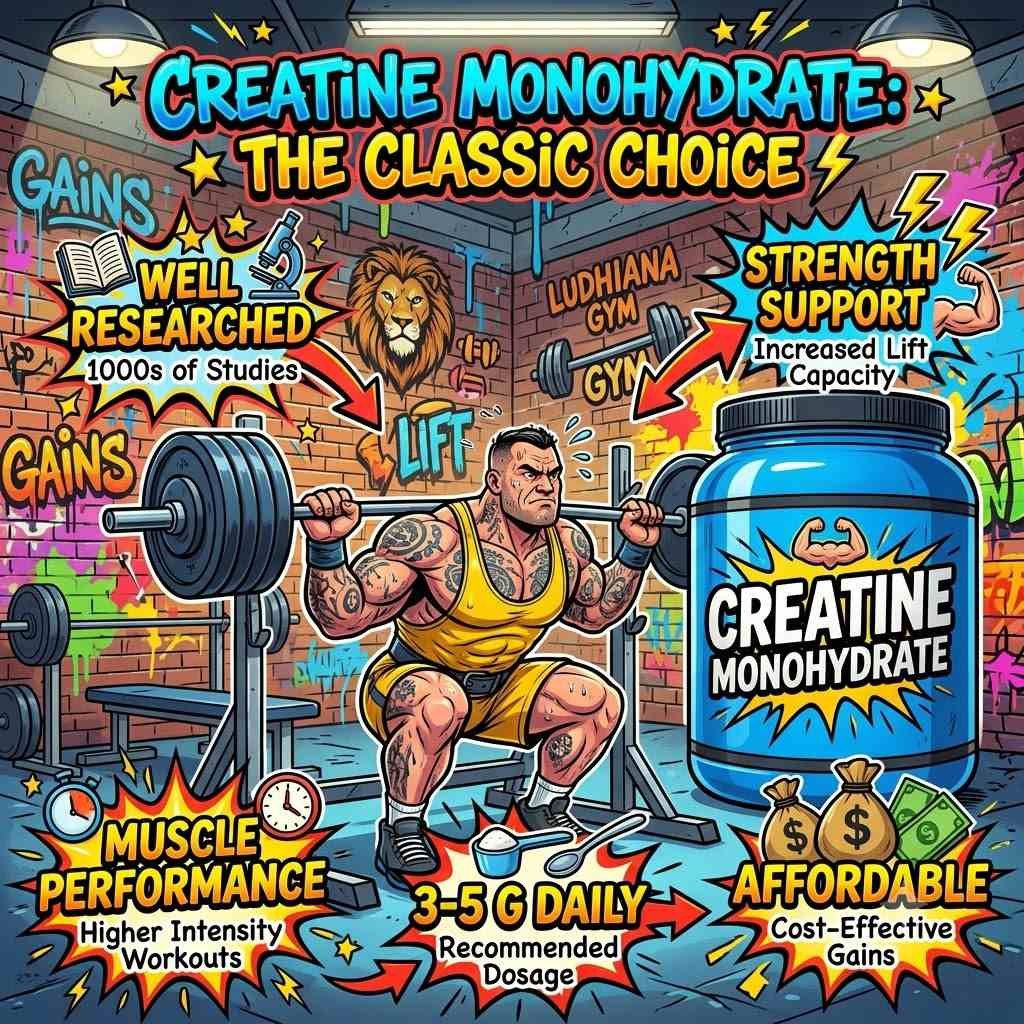
Creatine monohydrate is the form most people think about when they hear the word creatine.
It has been studied extensively for increasing muscle creatine stores, supporting strength and improving performance during repeated high-intensity exercise.
One major advantage is simply the amount of evidence behind it.
You do not need a complicated supplement stack to benefit from creatine monohydrate. A consistent daily intake is generally enough.
It is also usually one of the cheapest forms of creatine available.
For someone who wants a straightforward supplement with a huge amount of research behind it, monohydrate is difficult to beat.
Creatine HCL: Why Is It Popular?
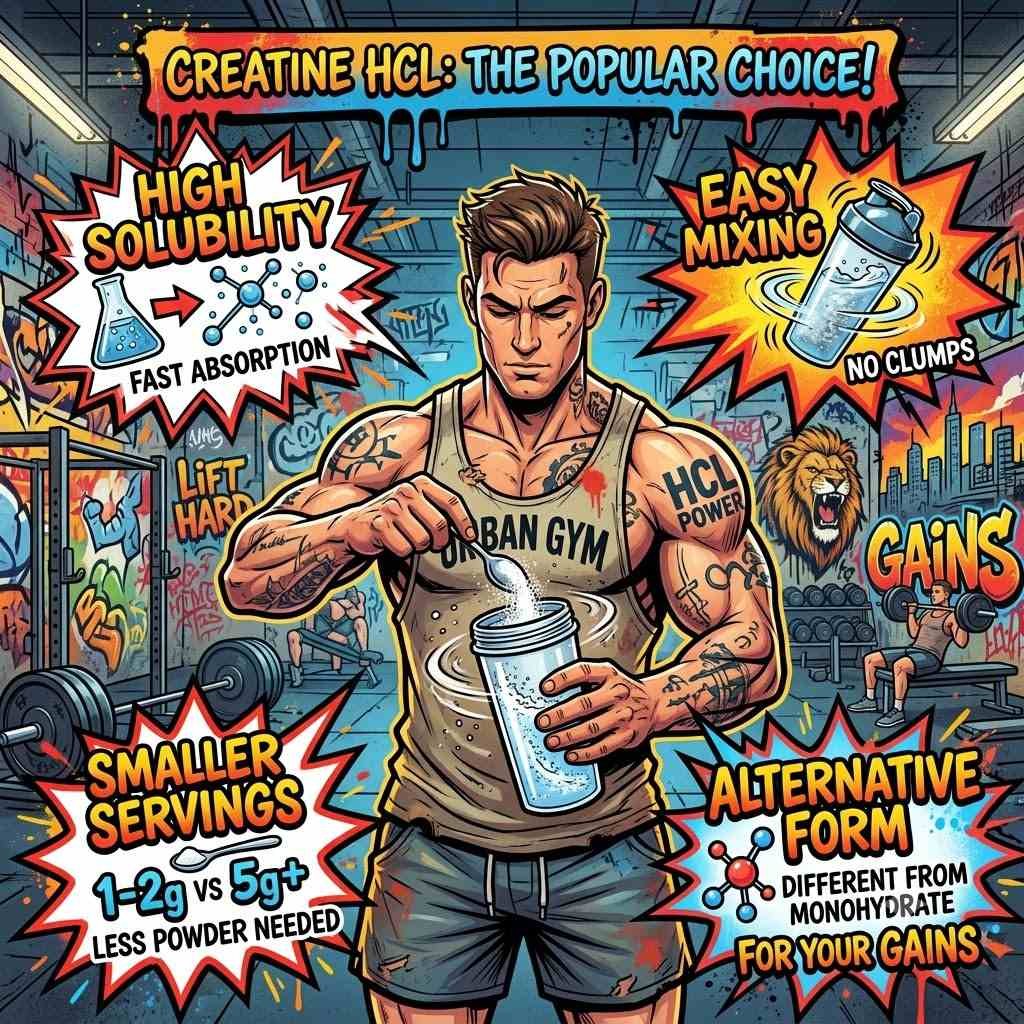
Creatine HCL became popular partly because of its excellent water solubility.
It mixes easily with liquids, which can be attractive if you dislike the texture of traditional creatine powders.
Manufacturers also commonly promote creatine HCL as requiring a smaller serving than monohydrate.
Another reason people choose it is the belief that it may cause less stomach discomfort or water retention.
However, marketing claims and scientific evidence are not always the same thing.
Just because creatine HCL dissolves better does not necessarily mean it produces better muscle growth or strength gains.
Creatine Monohydrate vs Creatine HCL: Which Absorbs Better?
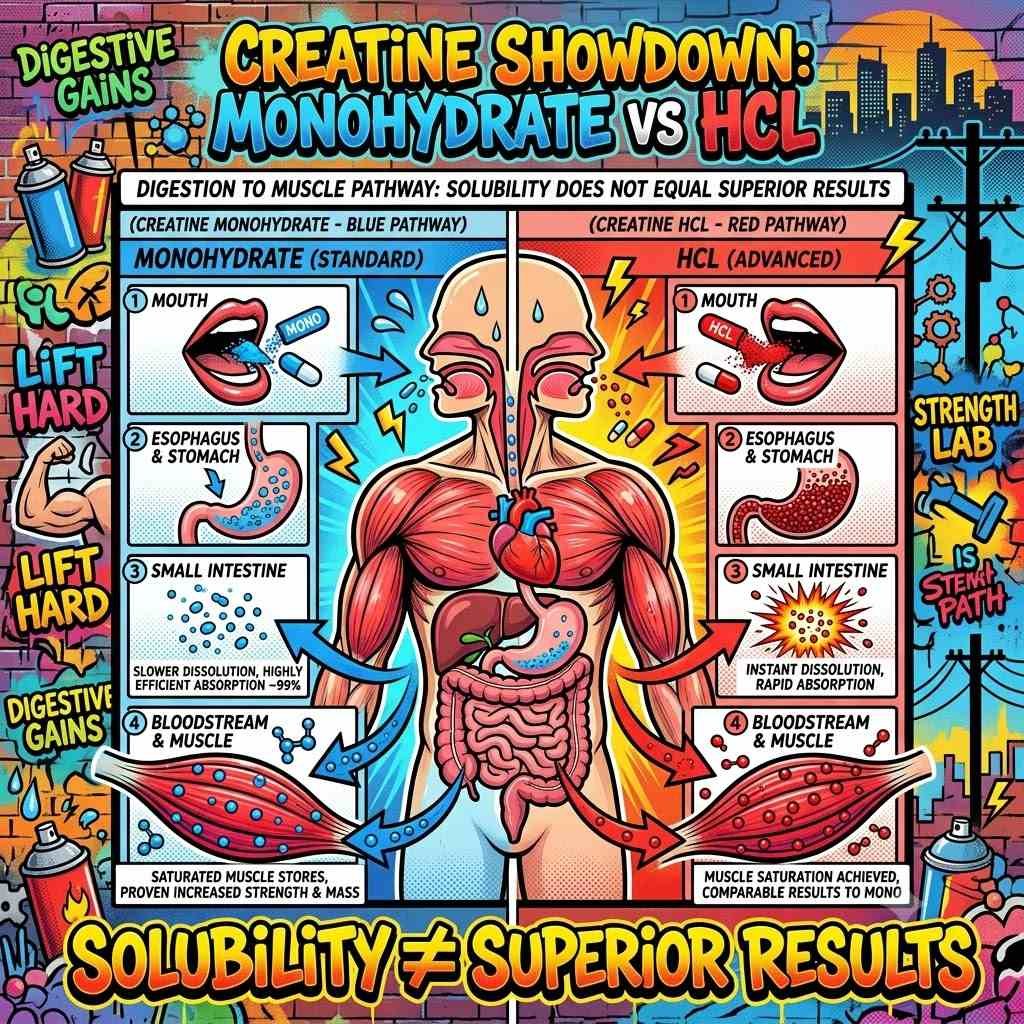
This is where things get interesting.
Creatine HCL is highly soluble, but solubility is not the same thing as superior effectiveness.
Creatine monohydrate already has excellent evidence showing that it can increase muscle creatine stores.
The body does not need a supplement to be extremely soluble in a glass of water for it to work effectively.
Once creatine reaches the digestive system, it goes through the normal processes of digestion and absorption before being transported into tissues.
So, while creatine HCL may mix more easily, that does not automatically make it better for muscle growth.
Creatine Monohydrate vs Creatine HCL for Muscle Growth
If your main goal is building muscle, creatine monohydrate has the stronger track record.
Creatine supplementation can help you train harder by supporting performance during repeated high-intensity efforts. Over time, this can contribute to improvements in strength and lean mass when combined with resistance training.
Creatine HCL may also provide creatine to the body, but there is not enough evidence to confidently say that it builds more muscle than monohydrate.
This is an important point.
More expensive does not mean more effective.
If two products can help you increase muscle creatine stores and improve training performance, the one with decades of research and a lower price is usually the easier recommendation. How Long Should You Rest Between Sets?
Creatine Monohydrate vs Creatine HCL for Strength
Creatine is particularly useful for people doing resistance training because strength and power depend heavily on the body’s ability to rapidly regenerate ATP.
With regular supplementation, increased muscle creatine stores can support repeated high-intensity efforts.
That may mean:
- More reps with a given weight
- Better training volume
- Improved power output
- Better performance across repeated sets
- Gradual improvements in strength
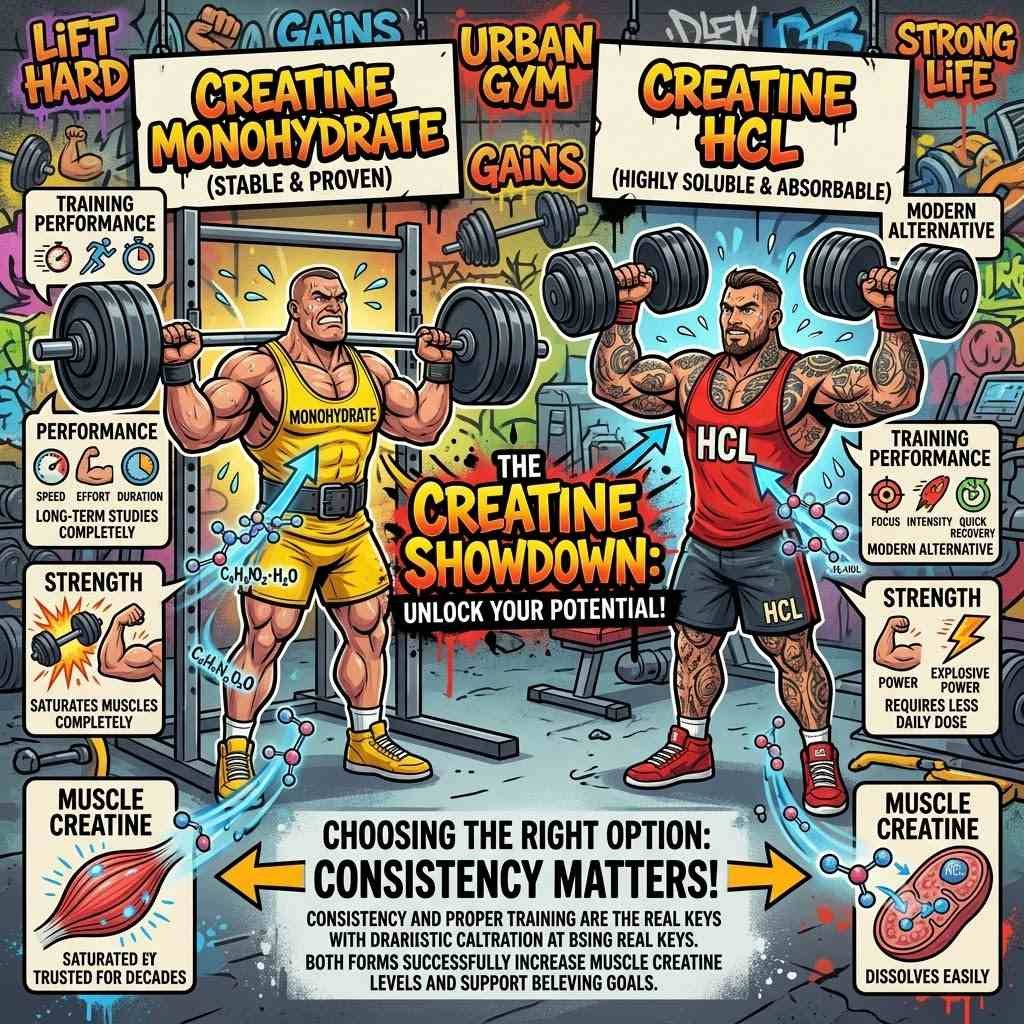
There is no strong reason to assume that HCL will dramatically outperform monohydrate for strength.
For most lifters, consistency matters much more than choosing a fancy creatine form.
Creatine Monohydrate vs Creatine HCL and Water Retention
This is probably the biggest concern people have when choosing creatine.
You may have heard that creatine makes you look bloated.
There is some truth behind the idea of increased water weight, but it is important to understand where that water is going.
Creatine can increase water stored within muscle cells. This is different from simply accumulating a large amount of water underneath the skin.
Some people may notice a small increase in body weight after starting creatine, particularly during the early stages of supplementation.
That does not automatically mean fat gain.
Creatine HCL is often marketed as producing less water retention, but there is not enough strong evidence to conclude that it consistently provides a major advantage over monohydrate in this area.
Does Creatine HCL Cause Less Bloating?
Some people report that creatine HCL feels easier on their stomach.
However, individual responses can vary.
Digestive discomfort may be more noticeable when someone takes a large amount of creatine at once.
For example, a person taking a very large serving may experience stomach discomfort regardless of which form they use.
If monohydrate bothers your stomach, you can try:
- Taking a smaller serving
- Taking it with food
- Splitting the serving
- Avoiding unnecessarily large doses
If you still don’t tolerate it well, trying another form such as HCL may be reasonable.
Creatine Monohydrate vs Creatine HCL: Dosage
Creatine monohydrate is commonly used at around 3–5 grams per day.
Some people use a loading phase of approximately 20 grams per day divided into several servings for around 5–7 days, followed by a maintenance dose.
But loading is not mandatory.
You can simply take 3–5 grams daily and allow your muscle creatine stores to increase gradually.
Creatine HCL products often recommend smaller serving sizes, but you should follow the manufacturer’s instructions rather than assuming that a smaller amount automatically means greater potency.
The amount of creatine that actually reaches your muscles is what matters.
Do You Need a Creatine Loading Phase?
No.
A loading phase is optional.
The purpose of loading is simply to saturate your muscles with creatine faster.
Without loading, your muscle creatine levels can still increase through consistent daily supplementation. It just takes longer.
So if you are not in a hurry, taking a regular daily serving is perfectly reasonable.
For most people, simplicity wins.
Creatine Monohydrate vs Creatine HCL: Which Is Better for Beginners?
For beginners, I would generally keep things simple.
Creatine monohydrate offers:
- Extensive research
- Simple dosing
- Low cost
- Proven effectiveness
- Easy availability
- Long-term experience in sports nutrition
You don’t need an expensive or complicated creatine product when you are just starting.
Your training program, protein intake, total calories, sleep, and consistency will have a much bigger impact on your progress. Whey Protein vs Mass Gainer: Which Is Better?
Is Creatine HCL More Powerful Than Monohydrate?
Not necessarily.
This is one of the biggest misconceptions surrounding newer creatine products.
A supplement can dissolve extremely well and still not produce superior results.
Creatine monohydrate has already demonstrated its ability to increase muscle creatine stores and support exercise performance.
Unless future research demonstrates a meaningful advantage for HCL, there is little reason to assume that it is automatically more powerful.
Creatine Monohydrate vs Creatine HCL: Which One Is Better?
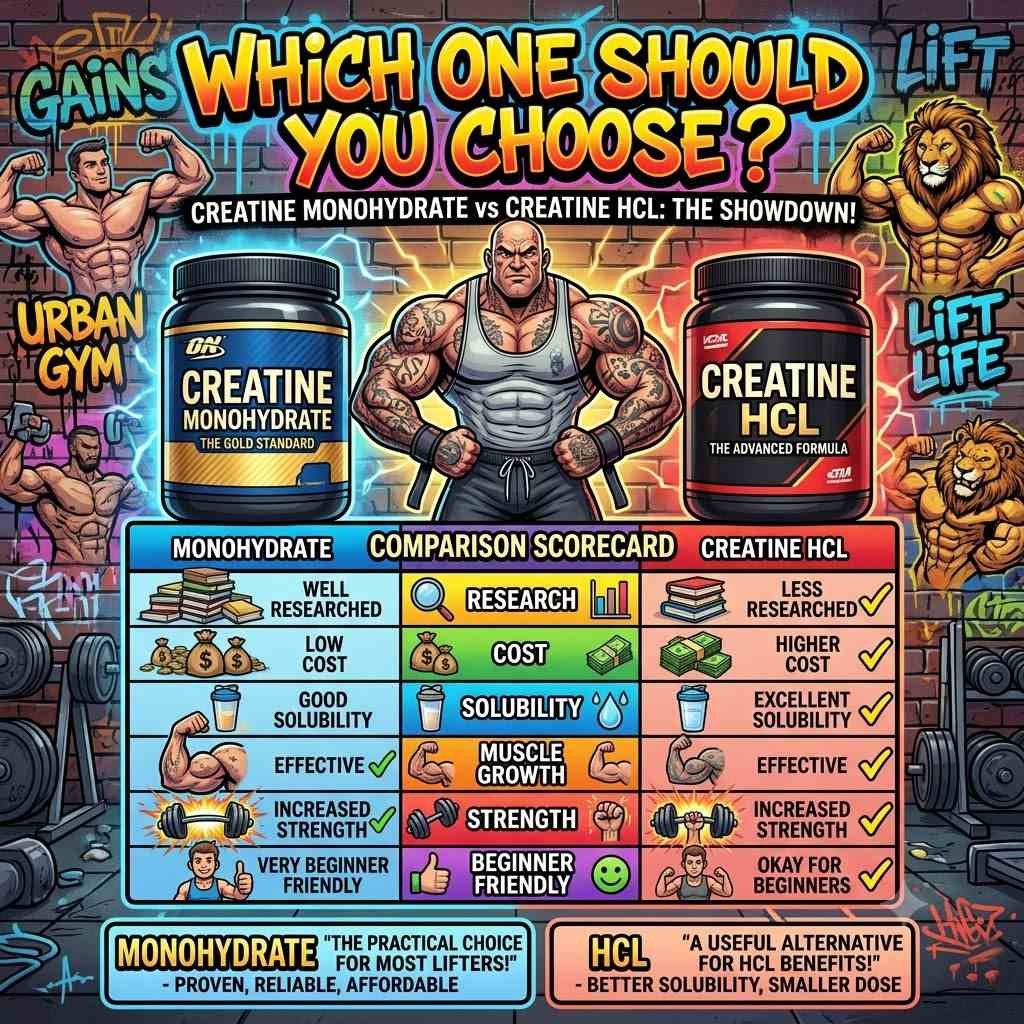
For the average gym-goer, creatine monohydrate is the better overall choice.
It is affordable, well researched, effective, and easy to use.
Creatine HCL may make sense for someone who strongly prefers its solubility or who does not tolerate monohydrate well.
But if your question is simply:
“Which one should I buy?”
For most people, the answer is creatine monohydrate.
You do not need to spend extra money just to get a different form of creatine.
Who Should Consider Creatine HCL?
Creatine HCL may be worth trying if:
- You dislike the texture of monohydrate
- You prefer a highly soluble powder
- Monohydrate causes you digestive discomfort
- You are willing to pay more for a different formulation
- You personally find HCL easier to use consistently
The key word here is consistency.
The best creatine is ultimately the one you can take regularly and comfortably.
Are There Any Side Effects of Creatine?
Creatine is generally considered well tolerated when used appropriately.
Some people may experience:
- Temporary increase in body weight
- Water retention in muscles
- Stomach discomfort
- Digestive issues, particularly with large servings
Drinking enough fluids and avoiding unnecessarily huge doses can make supplementation easier for many people.
People with existing medical conditions, particularly kidney-related concerns, should speak with a healthcare professional before starting creatine supplementation.
Creatine Monohydrate vs Creatine HCL: The Bottom Line
When you compare creatine monohydrate vs creatine HCL, the biggest difference is not that one is a magic muscle-building formula and the other isn’t.
Creatine monohydrate has the advantage of strong research, affordability, proven effectiveness, and simplicity.
Creatine HCL has excellent solubility and may be preferred by people who want a different formulation or who personally find it easier to tolerate.
But for most lifters, there is no compelling reason to ditch monohydrate simply because HCL sounds more advanced.
If your goal is muscle growth, strength, and better gym performance, a consistent daily creatine routine matters far more than buying the most expensive form on the shelf. SHBG on Blood Test: Normal Range, High & Low Levels Explained
Quick Verdict
| Feature | Creatine Monohydrate | Creatine HCL |
|---|---|---|
| Research | Excellent | More limited |
| Muscle growth | Proven | Promising, but less evidence |
| Strength | Proven | Not clearly superior |
| Solubility | Good | Excellent |
| Typical serving | 3–5 g/day | Usually smaller |
| Cost | Usually lower | Usually higher |
| Water retention | Possible | Marketed as lower, evidence less clear |
| Beginner-friendly | Yes | Yes |
| Overall choice | Best for most people | Good alternative |
Frequently Asked Questions
Is creatine HCL better than creatine monohydrate?
Not necessarily. Creatine HCL is more soluble, but there is not strong evidence showing that it consistently produces better muscle or strength gains than creatine monohydrate.
Can I take creatine every day?
Yes. Creatine is commonly taken daily to maintain elevated muscle creatine stores. A typical maintenance amount for creatine monohydrate is around 3–5 grams per day.
Does creatine make you fat?
Creatine does not directly cause body-fat gain. You may see the scale increase because of additional water stored in your muscles, particularly when you first start supplementing.
Does creatine HCL cause less bloating?
Some users report fewer digestive issues with HCL, but individual responses vary, and there is not strong evidence that HCL completely eliminates creatine-related water retention.
Which creatine is best for muscle growth?
Creatine monohydrate is the most established choice because it has extensive research supporting its ability to increase muscle creatine stores and support resistance-training performance.
Do I need to cycle creatine?
For most healthy adults, there is no established need to cycle creatine. Consistent daily supplementation is commonly used.
Should I take creatine before or after my workout?
The exact timing is much less important than taking creatine consistently. Choose a time that makes it easy for you to remember every day.
Can I mix creatine with whey protein?
Yes. Creatine can be mixed with whey protein or taken separately. What matters most is getting your daily creatine consistently.
Need Help Choosing the Right Creatine?
Still confused about Creatine Monohydrate vs Creatine HCL? If you’re not sure which creatine fits your training goal, diet, budget, or supplement routine, you can contact us on WhatsApp.
WhatsApp: 7696593279
You can ask about creatine, whey protein, workout nutrition, muscle-building supplements, or how to structure your basic supplement routine. Get your questions answered before spending money on a product you may not actually need.