When it comes to building muscle and improving gym performance, most people focus on exercises, sets, and repetitions. However, one important factor often gets overlooked: rest time between sets.
Resting too little can reduce your strength and affect your performance, while resting too long may make your workout unnecessarily lengthy. So, how long should you actually rest between sets?
The answer depends on your fitness goals, exercise selection, training intensity, and recovery ability. Let’s break it down. Creatine and Whey Protein: Do You Need Both?
1. How Long Should You Rest Between Sets?
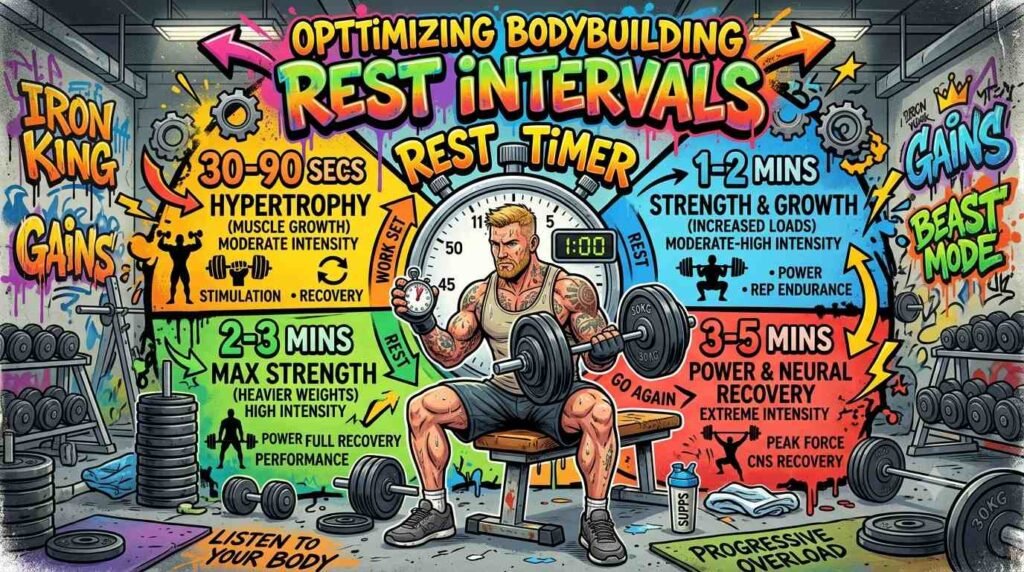
There is no single rest interval that works for everyone. Different exercises and training goals require different recovery periods
Here’s a general guide:
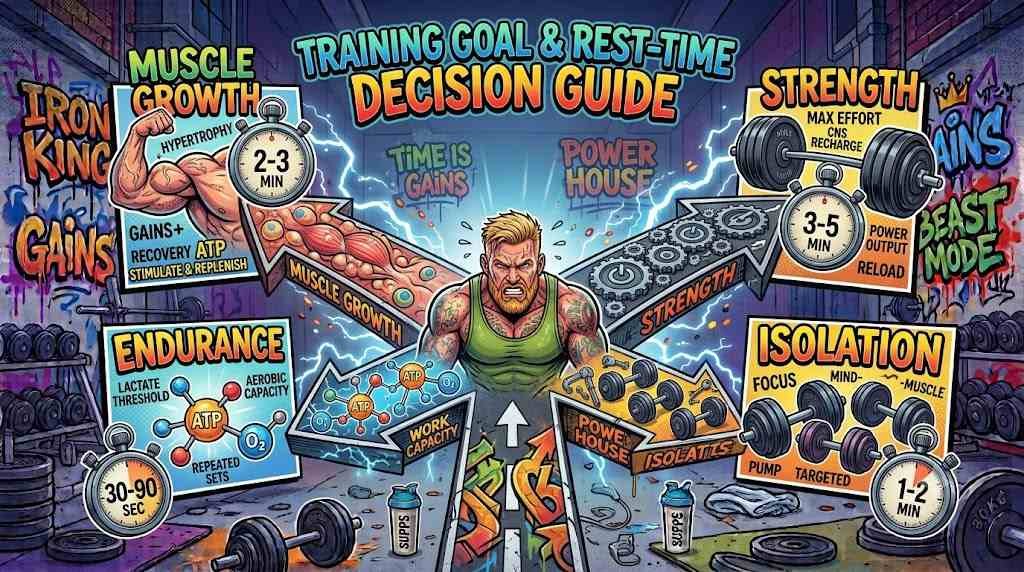
– Muscle growth (hypertrophy): Rest around 1–3 minutes between sets.
– Maximum strength: Rest around 3–5 minutes, especially for heavy compound lifts.
– Muscular endurance: Rest around 30–90 seconds.
– Heavy compound exercises: Rest around 2–5 minutes, depending on intensity.
– Isolation exercises: Rest around 1–2 minutes in most cases.
These are general guidelines rather than strict rules. If you’re still struggling to maintain proper form or complete your next set, you may need additional rest.
2. Rest Time for Muscle Growth
If your primary goal is building bigger muscles, your rest periods should allow you to perform enough quality work.
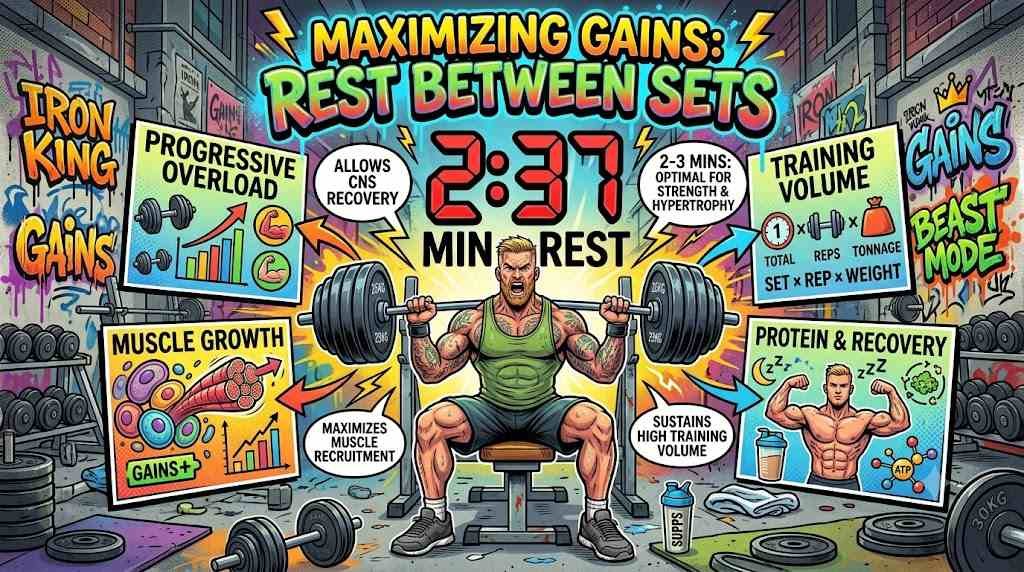
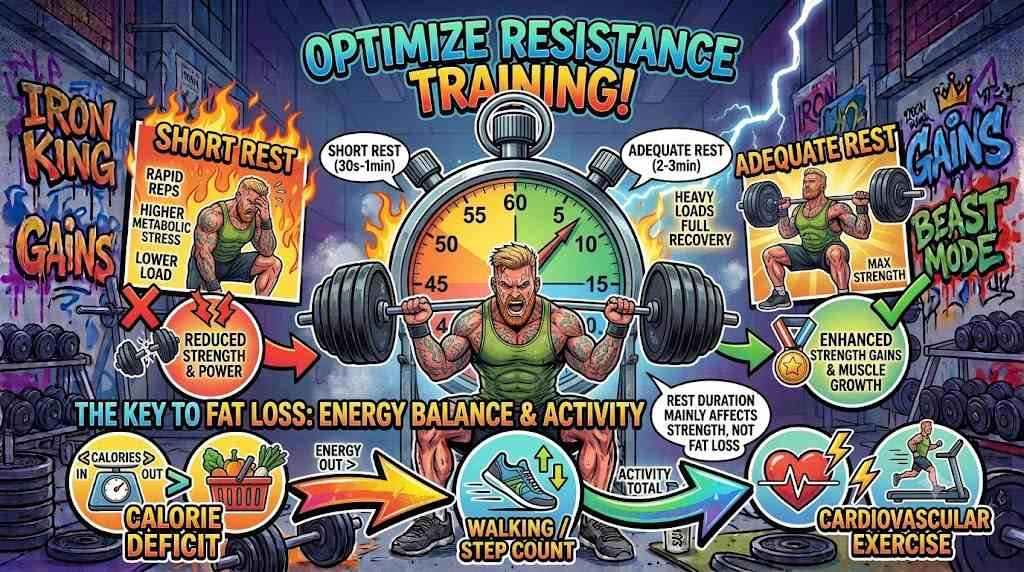
Many gym-goers believe that shorter rest periods automatically produce better muscle growth. However, research suggests that longer rest periods can be beneficial, particularly when they help you maintain your strength and training volume.
For example, if you’re performing bench presses, resting only 30 seconds may significantly reduce the number of repetitions you can complete in subsequent sets.
Taking 2–3 minutes between challenging sets may help you maintain performance and accumulate more effective training volume.
Remember: Muscle growth depends on several factors, including progressive overload, sufficient training volume, nutrition, and recovery. Rest periods are just one piece of the puzzle.
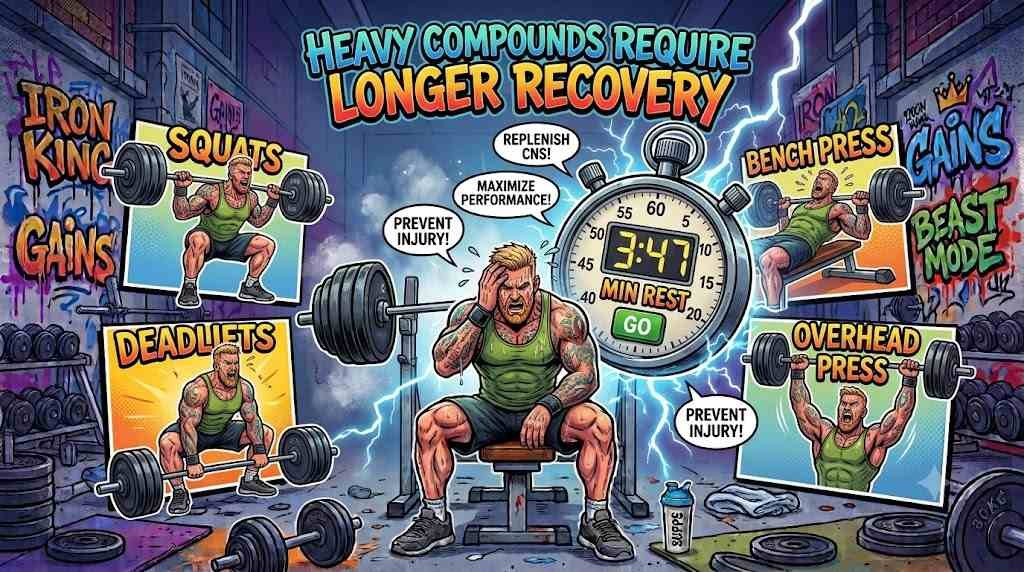
3. Rest Time for Heavy Compound Exercises
Compound exercises involve multiple muscle groups and joints. They generally demand more energy and create greater overall fatigue than isolation movements.
Examples include:
– Barbell squats
– Deadlifts
– Bench presses
– Overhead shoulder presses
– Barbell rows
– Pull-ups
When lifting heavy weights, longer rest periods are often necessary.
For example, someone performing heavy squats for 5 repetitions may need 3–5 minutes of rest before the next set. This allows more time for muscular and nervous system recovery.
If you’re training for maximum strength, adequate rest is especially important because fatigue can interfere with force production and lifting technique.
4. Rest Time for Isolation Exercises
Isolation exercises generally target a specific muscle group and involve fewer joints.
Examples include:
– Biceps curls
– Triceps pushdowns
– Lateral raises
– Leg extensions
– Hamstring curls
– Cable flyes
For these exercises, resting approximately 1–2 minutes is often sufficient.
However, if you’re performing heavy sets close to muscular failure, you may benefit from resting longer.
The goal isn’t to rush through your workout. It’s to maintain good technique and stimulate your muscles effectively. Creatine and Whey Protein: Do You Need Both?
5. Does Shorter Rest Time Burn More Fat?
Short rest periods can increase workout density and may make your training session feel more intense. However, shorter rest periods don’t automatically lead to greater fat loss.
Fat loss primarily depends on maintaining a calorie deficit over time. Your overall activity level, diet, resistance training, and consistency all contribute to the results.
If your goal is to lose fat while preserving muscle, don’t sacrifice the quality of your strength training just to keep your heart rate elevated.
You can combine resistance training with walking, cycling, or other forms of cardio to support your fat-loss goals.
6. Signs You’re Not Resting Enough Between Sets
Your body often gives you clues when your recovery time is insufficient.
Watch for these common signs:
– Your repetitions drop significantly between sets.
– Your lifting technique starts breaking down.
– You struggle to maintain your usual training weights.
– You feel unusually breathless before starting another set.
– Your performance declines as your workout progresses.
Some performance decline is normal, particularly during demanding workouts. However, consistently rushing between challenging sets can limit the quality of your training.
Try increasing your rest periods and see whether your strength and repetition performance improve.
7. How to Choose the Right Rest Period
Instead of following a stopwatch blindly, consider these practical guidelines:
For beginners: Start with around 1–3 minutes of rest, depending on the exercise. Prioritize proper form and learning good training technique.
For muscle-building workouts: Use approximately 2–3 minutes for challenging compound exercises and 1–2 minutes for most isolation exercises.
For strength training: Allow 3–5 minutes or more when necessary for heavy, demanding sets.
For endurance training: Shorter intervals of approximately 30–90 seconds may be appropriate, depending on the exercise and workout structure.
Adjust your rest periods according to how difficult the previous set was and how much recovery you need to perform the next one effectively.
Final Thoughts
Rest time between sets plays an important role in workout performance, muscle development, and strength progression.
If you’re training for muscle growth, don’t assume that shorter rest periods always produce better results. Taking enough time to recover can help you lift heavier weights, complete more repetitions, and maintain better exercise technique.
Focus on consistent training, progressive overload, proper nutrition, and adequate sleep. Once these fundamentals are in place, adjusting your rest periods can help you get even more out of every gym session.
Train smart, recover properly, and let your progress speak for itself.
Need Help With Your Workout or Muscle-Building Goals?
Still confused about how long you should rest between sets, how to structure your workout, or how to improve your muscle-building progress?
You don’t have to guess. For personalized guidance about your training, nutrition, supplements, or bodybuilding goals, you can contact the Gym Pundit team on WhatsApp.
WhatsApp: 7696593279
Whether you’re a beginner trying to build muscle, someone working on strength, or you’re looking to improve your overall gym routine, getting the right guidance can help you train smarter and stay consistent.
Message us on WhatsApp and let’s talk about your fitness goals.