If you have spent any time around bodybuilding, anabolic steroids, or performance-enhancing drugs, you have probably heard the term PCT. But what is PCT, why do people use it after an anabolic steroid cycle, and does post cycle therapy actually help the body recover?
PCT stands for Post Cycle Therapy. In bodybuilding discussions, it generally refers to the use of medicines or other interventions after stopping anabolic-androgenic steroids (AAS), with the goal of supporting the recovery of the body’s natural hormone production.
The reason this topic matters is simple: anabolic steroids can suppress the body’s own testosterone production. When external androgens are introduced, the brain detects that androgen levels are already high and reduces the signals that normally tell the testes to produce testosterone. After the drugs are stopped, natural testosterone production may therefore remain low for a period of time. BUY FULL PCT KIT
PCT is widely discussed in bodybuilding communities, but there is an important difference between what people commonly do and what has been firmly established by clinical research. There is still no universally accepted PCT protocol for anabolic-steroid-induced hypogonadism, and recovery can vary substantially from one person to another.
Let’s break down what PCT actually means, what happens to hormones after a cycle, the medications commonly discussed, bloodwork, recovery timelines, and the mistakes people often make. SARMs vs Steroids: What’s the Difference?
What Is PCT?
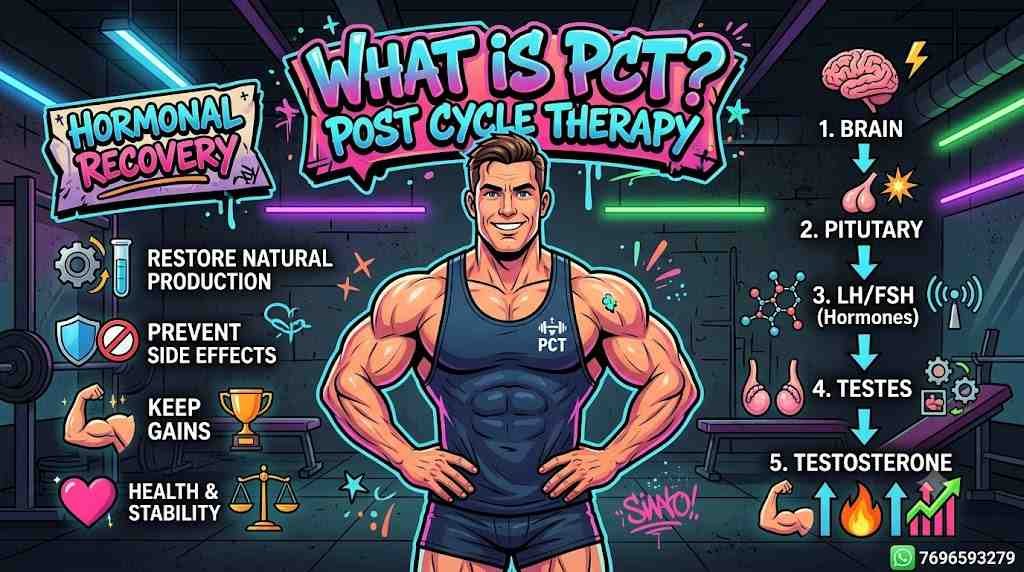
What Is PCT? Post Cycle Therapy is a term used for interventions intended to help someone recover after stopping anabolic-androgenic steroids.
During steroid use, external androgens can suppress the hypothalamic-pituitary-gonadal (HPG) axis. This is the hormonal communication system connecting the brain, pituitary gland, and testes.
Under normal conditions, the process roughly works like this:
Hypothalamus → GnRH → Pituitary → LH/FSH → Testes → Testosterone
When androgen levels become high because of external steroids, negative feedback reduces this signaling.
That can lead to:
- Lower LH
- Lower FSH
- Reduced natural testosterone production
- Reduced sperm production
- Reduced testicular activity
- Low libido after stopping
- Fatigue and low energy
- Erectile difficulties
- Mood changes
- Difficulty maintaining muscle and training performance
The severity depends on factors such as the compounds used, duration of use, exposure level, and individual biology.
So when people ask what is PCT, the simplest answer is:
PCT is the commonly used name for attempts to support hormonal recovery after anabolic steroid use.
However, PCT should not be confused with a guaranteed “reset” button. There is no medication combination that guarantees that natural testosterone production will immediately return to baseline.
What Is PCT Trying to Restore?
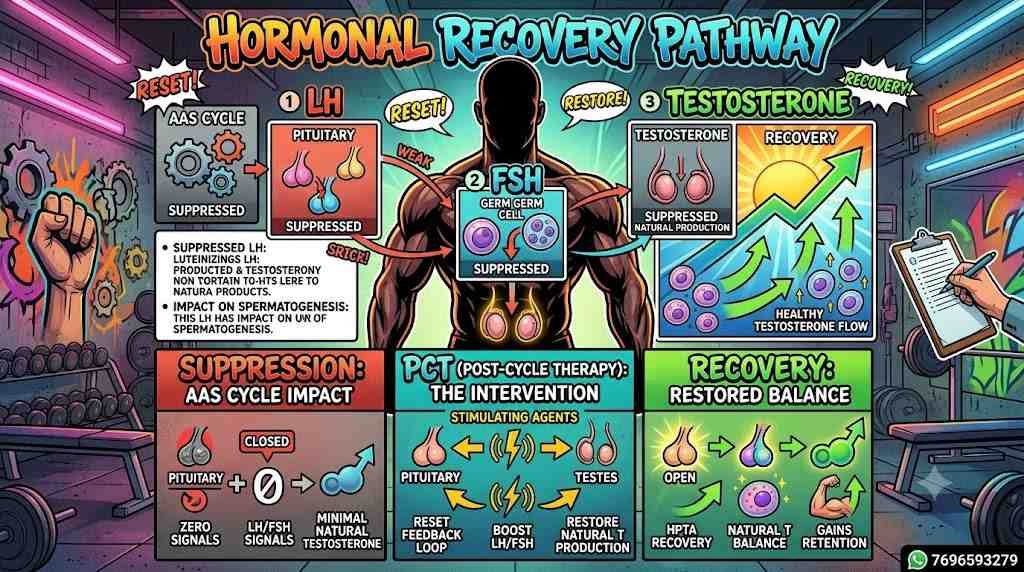
To understand what is PCT actually doing, it helps to understand what gets suppressed during steroid use.
The testes do not independently decide how much testosterone to produce. They receive signals from the pituitary gland.
Two important hormones are:
LH
LH, or luteinizing hormone, stimulates the Leydig cells in the testes to produce testosterone.
When steroid use suppresses LH, testosterone production can fall.
FSH
FSH, or follicle-stimulating hormone, is particularly important for sperm production and reproductive function.
Suppression of FSH can therefore affect fertility.
This is why recovery is not simply about getting a testosterone number back into a reference range. A complete recovery picture can involve testosterone, LH, FSH, sexual function, sperm production, symptoms, and other health factors.
Research suggests that hormonal recovery after stopping AAS is highly variable. A 2023 review found that gonadotropin recovery often occurs over roughly 3–6 months, while testosterone recovery can take months and reproductive recovery may take considerably longer.
What Is PCT Doing to the HPG Axis?
The main idea behind many PCT approaches is to reduce the hormonal feedback that keeps the HPG axis suppressed.
Some medications used in clinical settings can influence estrogen signaling or directly stimulate testicular function. In bodybuilding circles, these medications are commonly discussed as PCT drugs.
The problem is that the evidence surrounding their use specifically for anabolic-steroid withdrawal is much less established than the bodybuilding community often makes it sound.
A recent review of PCT research noted that PCT is widely used in real-world practice, but evidence supporting standardized protocols remains limited.
That distinction is important.
Commonly used does not automatically mean medically proven.
What Is PCT Usually Made Up Of?

There is no single standardized PCT medication combination.
The drugs most commonly discussed include:
- Selective estrogen receptor modulators, or SERMs
- Human chorionic gonadotropin, or hCG
- Aromatase inhibitors, or AIs
These drugs work through different mechanisms and are not interchangeable.
SERMs
SERMs such as clomiphene and tamoxifen are frequently mentioned in bodybuilding PCT discussions.
Their basic purpose is to alter estrogen-receptor signaling, which can reduce estrogenic negative feedback at the hypothalamus and pituitary and potentially increase LH and FSH signaling.
Clomiphene has been studied in men with hormone-related conditions, but its use specifically as unsupervised PCT following anabolic steroid use is an off-label practice and does not have a universally established protocol.
hCG
Human chorionic gonadotropin, or hCG, can stimulate the testes through receptors that respond similarly to LH.
This makes hCG fundamentally different from a SERM.
Because of its direct effects on testicular function and its potential effects on estrogen and fertility, hCG should not be treated like a simple bodybuilding supplement.
Aromatase Inhibitors
Aromatase inhibitors reduce the conversion of androgens into estrogen.
They are sometimes included in bodybuilding PCT discussions, particularly when people are concerned about elevated estrogen.
But lowering estrogen too aggressively can also cause problems. Estrogen is not simply a “bad hormone” that should always be minimized.
This is one reason why randomly stacking several hormone-active medications after a cycle can create another hormonal problem instead of solving the original one. Oral vs Injectable Steroids: What’s the Difference?
What Is PCT Supposed to Feel Like?
People often expect PCT to immediately make them feel normal after stopping steroids.
Real recovery can be much less predictable.
Some people may experience:
- Lower energy
- Reduced training performance
- Lower libido
- Erectile problems
- Poor motivation
- Mood changes
- Sleep problems
- Difficulty maintaining body weight or muscle
- Concerns about fertility
A 2023 survey of 470 men who had used AAS found that symptoms after cessation were common, with low mood, tiredness, and reduced libido among the frequently reported problems. However, the study was based on self-reported experiences and does not establish that PCT caused the reported improvements.
This is why symptoms alone are not enough to determine whether someone’s hormones have recovered.
What Is PCT and How Long Does Recovery Take?
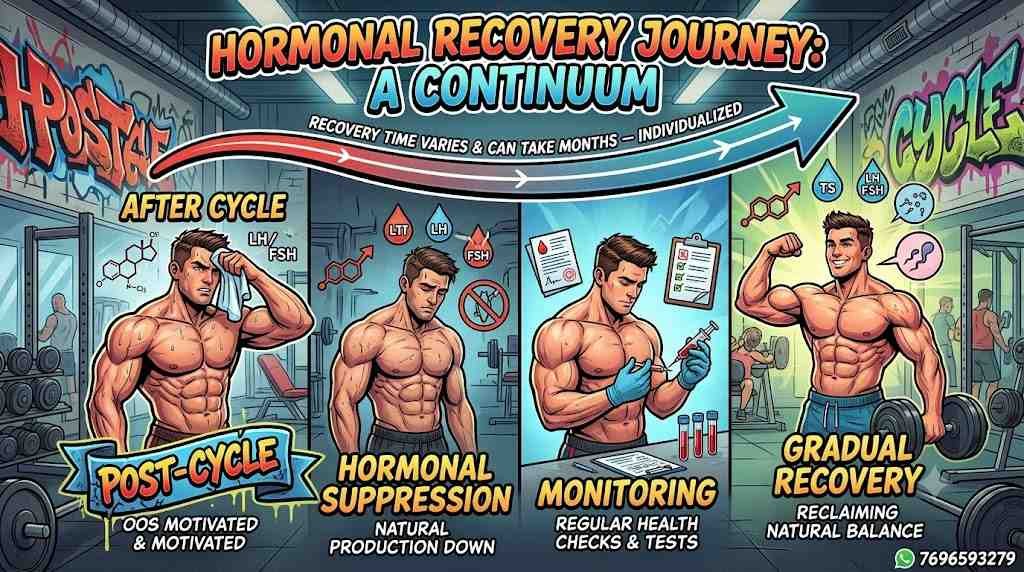
This is one of the biggest questions surrounding PCT.
There is no universal recovery timeline.
Someone who used one compound for a relatively short period can have a completely different recovery pattern from someone who used multiple anabolic steroids for a longer period.
Research has reported recovery ranging from weeks or months to considerably longer periods.
A 2023 scoping review concluded that biochemical recovery generally occurs over months, while sperm production and other reproductive functions can take months to years depending on the individual and exposure history.
Factors that may influence recovery include:
- Duration of steroid exposure
- Number of compounds used
- Type of anabolic steroid
- Exposure level
- Previous steroid cycles
- Age
- Baseline hormone function
- Fertility status
- Individual response
- Whether underlying hypogonadism existed before steroid use
So statements such as “PCT always takes four weeks” or “your testosterone will be normal exactly X weeks after your last injection” are oversimplifications.
What Is PCT Bloodwork?
One of the most important parts of evaluating recovery is laboratory testing.
Instead of guessing based on how someone feels in the gym, clinicians can evaluate hormone levels and other health markers.
Depending on the situation, testing may include:
- Total testosterone
- LH
- FSH
- Estradiol
- Prolactin
- SHBG
- Complete blood count
- Liver-related markers
- Kidney-related markers
- Lipid profile
- Other tests based on symptoms and medical history
For people concerned about fertility, a semen analysis can provide information that a testosterone test cannot.
This matters because testosterone recovery and fertility recovery are not necessarily the same thing.
A person can see testosterone levels improve while sperm production is still recovering.
What Is PCT Without Bloodwork?
This is where many bodybuilding discussions become problematic.
Some people decide what PCT medications to use based entirely on:
- The steroid cycle they ran
- Advice from a friend
- A forum post
- An online calculator
- A previous cycle
- How they feel
- A generic “four-week PCT” template
The problem is that these approaches do not tell you what your hormone levels actually look like.
Two people can stop the same steroid at the same time and have very different LH, FSH, testosterone, estradiol, and fertility profiles.
Medical evaluation is therefore much more useful than blindly copying someone else’s protocol.
What Is PCT After Testosterone?
Testosterone itself can suppress the HPG axis when used at supraphysiological levels or outside medically indicated testosterone replacement.
After stopping testosterone, the body may need time to restart its own signaling system.
The type of testosterone preparation also matters because different formulations can remain active for different periods.
That means the timing of hormonal evaluation and any medical treatment cannot simply be copied from an unrelated steroid cycle.
This is particularly important with long-acting injectable preparations.
What Is PCT After Oral Steroids?
Oral anabolic steroids can also suppress natural testosterone production.
A common misconception is that because an oral steroid leaves the bloodstream relatively quickly, natural testosterone production will immediately return to normal.
That does not necessarily happen.
The steroid may clear relatively quickly while the HPG axis remains suppressed.
Therefore, the pharmacological clearance of a compound and recovery of natural hormone production are two different processes.
What Is PCT for Fertility?
Fertility is one of the biggest reasons people seek medical help after anabolic steroid use.
External androgens can suppress LH and FSH, which can dramatically reduce sperm production.
Some men may develop very low sperm counts or even azoospermia during or after AAS use.
Recovery of sperm production can take substantially longer than recovery of testosterone.
For someone planning children, this changes the priorities.
The goal is not simply to make testosterone numbers look better. Fertility requires attention to sperm production and reproductive function.
A doctor specializing in endocrinology, urology, or reproductive medicine can evaluate this properly. Types of SARMs: Benefits, Uses, Research, and Safety
What Is PCT and Does It Actually Work?
This is where the answer needs some nuance.
There is evidence suggesting that certain medical interventions can accelerate biochemical or reproductive recovery in selected men, but the overall evidence base is still limited and there is no universally accepted PCT protocol for AAS withdrawal.
A retrospective study involving 641 men found an association between reported PCT use and faster biochemical recovery among men who had stopped AAS recently. However, the study was observational, meaning it cannot establish that PCT itself caused the faster recovery.
Another recent study reported faster hormonal and semen recovery among recreational bodybuilders receiving pharmacological treatment compared with observation, but the authors also highlighted the need for randomized controlled trials to establish evidence-based treatment protocols.
So the honest answer is:
PCT may help some people under certain circumstances, but it is not a guaranteed recovery protocol, and there is not enough evidence to justify one universal PCT formula for everyone.
What Is PCT and What Are the Risks?
PCT drugs are active medications, not harmless supplements.
Depending on the medication, potential adverse effects can include:
- Changes in mood
- Headaches
- Visual disturbances
- Changes in liver-related markers
- Changes in cholesterol
- Hormonal imbalance
- Estrogen becoming too low or too high
- Blood-clot-related complications with certain medicines
- Drug interactions
The exact risks depend on the medication and individual circumstances.
This is another reason why copying a random PCT protocol from an online bodybuilding forum can be risky.
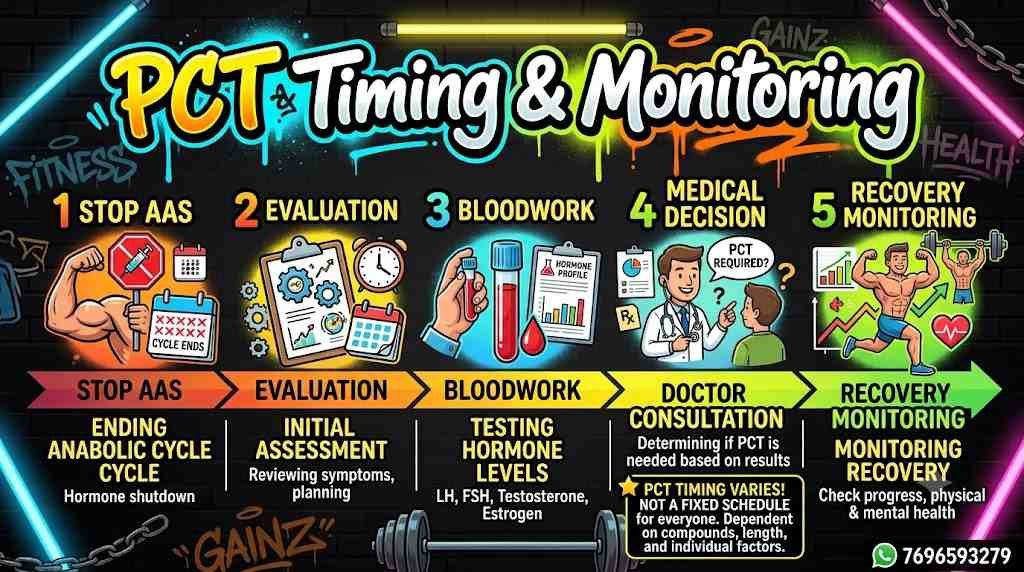
What Is PCT and What About Natural Supplements?
You will also find products marketed as “natural PCT,” testosterone boosters, estrogen blockers, liver-support products, and hormone-recovery supplements.
These products should not automatically be considered equivalent to medical treatment.
A supplement may contain ingredients that affect general nutrition or wellness, but that does not mean it can restart a suppressed HPG axis.
If testosterone production is significantly suppressed, relying on a supplement label rather than checking the underlying hormonal situation can delay proper evaluation.
What Is PCT? Commonly Discussed PCT Medicines
| PCT approach | Main purpose | What it targets | Important point |
|---|---|---|---|
| SERMs | Influence estrogen feedback | Hypothalamus & pituitary signaling | Clomiphene and tamoxifen are commonly discussed |
| hCG | Stimulate testicular activity | LH-like activity at the testes | Different mechanism from SERMs |
| Aromatase inhibitors | Reduce estrogen production | Aromatase enzyme | Lowering estrogen too far can also cause problems |
| Bloodwork & monitoring | Assess recovery | Testosterone, LH, FSH, estradiol and other markers | Helps determine what is actually happening |
PCT Dosage & Chart
| Medication | Timing shown in the reference chart | Role commonly discussed in PCT |
|---|---|---|
| Clomiphene (Clomid) | Higher amount during Days 1–10, then reduced amount during Days 11–20 | SERM intended to increase pituitary gonadotropin signaling |
| Tamoxifen (Nolvadex) | Higher amount during Days 1–10, then reduced amount during Days 11–20 | SERM that modifies estrogen-receptor feedback |
| hCG | Intermittent injections during selected days of the 20-day schedule | Acts directly on the testes through LH-like activity |
| Duration shown | 20 days | Example schedule from the supplied reference image |
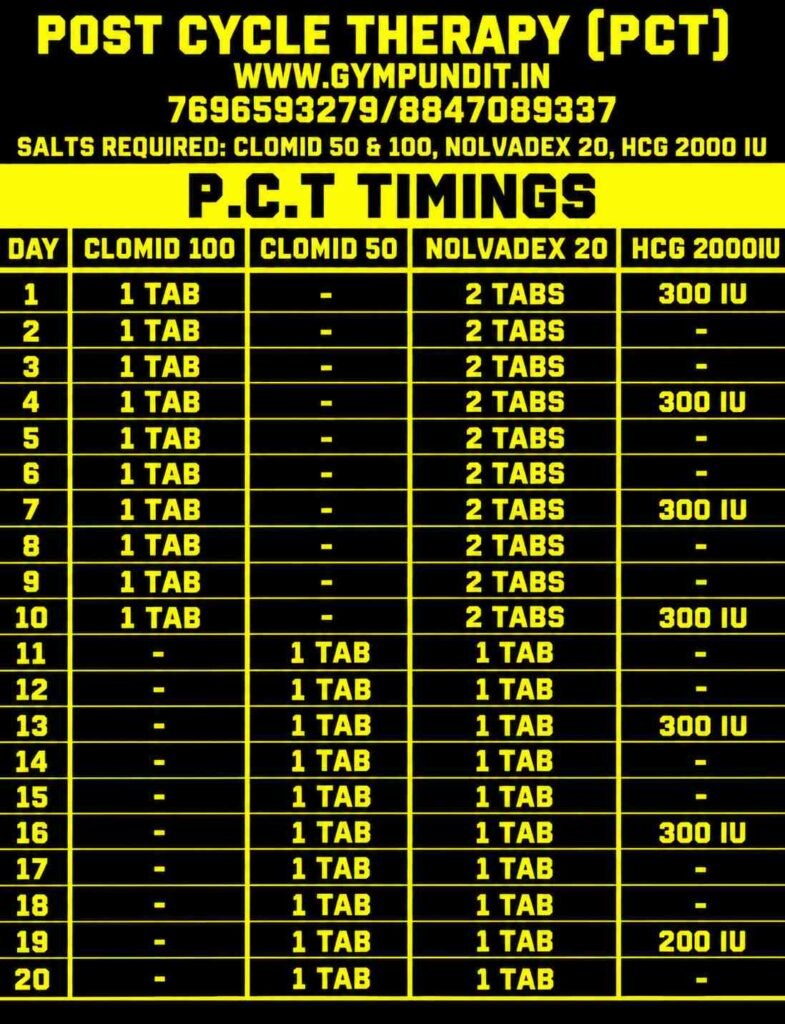
The chart above represents the structure of the supplied reference, not a recommended medical prescription. PCT dosage and timing can vary depending on the steroid compounds used, duration of exposure, hormone levels, symptoms and fertility goals. A recent review notes that evidence for standardized PCT protocols remains limited, while a 2026 Society for Endocrinology position statement says evidence supporting pharmacological interventions such as hCG and SERMs is still low quality.
What Is PCT and When Should Someone See a Doctor?
Medical evaluation becomes particularly important when someone experiences persistent symptoms after stopping AAS.
Seek professional help if symptoms such as these continue:
- Persistent low libido
- Erectile dysfunction
- Significant fatigue
- Persistent low mood
- Testicular changes
- Infertility concerns
- Breast tissue enlargement
- Major changes in sexual function
Severe depression or thoughts of self-harm require urgent professional support rather than attempting to solve the problem with an online PCT protocol.
AAS withdrawal can involve significant physical and psychological symptoms, and clinicians report considerable variation in how patients recover and how they are managed.
What Is PCT? Common Mistakes to Avoid
Copying Someone Else’s PCT
Your friend’s hormone levels are not your hormone levels.
A protocol that was used by one person does not automatically make sense for another.
Starting Multiple Drugs at Once
More medications do not automatically mean faster recovery.
Adding several hormone-active drugs together can make it difficult to understand what is causing a new symptom or abnormal laboratory result.
Ignoring Bloodwork
Feeling better does not necessarily mean complete hormonal or reproductive recovery.
Likewise, feeling tired does not automatically prove that testosterone is still suppressed.
Testing provides objective information.
Assuming Four Weeks Is Enough
Some people treat PCT like a fixed four-week calendar event.
Human recovery does not always follow a fixed schedule.
Starting Another Cycle Too Soon
One of the biggest problems is using another steroid cycle before recovery has been properly assessed.
Repeated suppression can make the overall recovery picture more complicated.
Focusing Only on Testosterone
Testosterone is important, but LH, FSH, estradiol, sperm production, symptoms, and broader health markers may also matter.
What Is PCT Compared With Natural Recovery?
Natural recovery means allowing the body’s own hormonal system to restart after stopping anabolic steroid exposure, with medical monitoring when appropriate.
PCT refers to using pharmacological interventions intended to influence that recovery.
Research indicates that spontaneous recovery occurs in many men, but the speed and completeness of recovery vary considerably.
That means the real question is not simply:
“Should everyone do PCT?”
The more useful question is:
“What is happening with this person’s hormones, symptoms, reproductive goals, and overall health after stopping AAS?”
That is something that can be evaluated medically rather than guessed from a generic cycle template. Dianabol vs Superdrol: Which Is Stronger?
What Is PCT? A Simple Recovery Checklist
If someone has stopped anabolic steroids and is concerned about recovery, a sensible health-focused approach is:
1. Stop adding unnecessary hormones.
Continuing or restarting AAS makes it harder to evaluate natural recovery.
2. Track symptoms.
Pay attention to libido, erectile function, energy, mood, sleep, and other major changes.
3. Get appropriate bloodwork.
Hormone testing can help establish whether suppression is still present.
4. Consider fertility testing if relevant.
A semen analysis may be important when conception is a priority.
5. Discuss abnormal results with a qualified clinician.
An endocrinologist, urologist, or reproductive specialist can help determine what is actually happening.
6. Avoid blindly copying online PCT protocols.
Medication choice and monitoring should be based on the individual’s situation.
What Is PCT? Frequently Asked Questions
What is PCT in bodybuilding?
PCT stands for Post Cycle Therapy. It is the term commonly used for interventions intended to support hormonal recovery after stopping anabolic-androgenic steroids.
Is PCT necessary after every steroid cycle?
There is no universal medical rule that every AAS user should follow the same PCT protocol. Recovery depends on the person’s exposure history, symptoms, hormone levels, fertility goals, and other factors.
How long does natural testosterone recovery take?
Recovery varies significantly. Research suggests that testosterone and gonadotropin recovery often occurs over months, while some reproductive functions can take considerably longer.
Can PCT guarantee normal testosterone?
No. PCT is not a guaranteed hormonal reset.
Can PCT restore fertility?
Fertility can recover after AAS cessation, but recovery may take longer than testosterone recovery. Some medically supervised treatments may be considered in selected cases, particularly when fertility is an important goal.
Is clomiphene a PCT drug?
Clomiphene is a SERM commonly discussed and sometimes used off-label in this context. Its use after AAS requires medical consideration because appropriate treatment and monitoring depend on the individual’s condition.
Is hCG used in PCT?
hCG is commonly discussed in PCT because it can directly stimulate testicular function. However, it is a hormone-active medication and should not be treated as a routine supplement.
Can natural supplements replace PCT?
There is no good basis for assuming that a general “testosterone booster” can replace medical evaluation or prescription treatment for significant AAS-induced hypogonadism.
What blood tests are useful after steroids?
Depending on the situation, clinicians may assess testosterone, LH, FSH, estradiol, prolactin, SHBG and broader health markers. Fertility concerns may also require semen analysis.
Can you recover without PCT?
Some men recover naturally after stopping AAS, while others experience prolonged suppression. The available research shows substantial individual variation.
Final Thoughts: What Is PCT Really About?
So, what is PCT?
Post Cycle Therapy is the bodybuilding term for interventions intended to help the body recover after anabolic steroid use, particularly recovery of the HPG axis and natural testosterone production.
The basic idea makes sense: anabolic steroids can suppress natural hormone production, and after stopping them, some people experience a period of hormonal suppression.
But the internet often makes PCT sound much more standardized than it actually is.
There is no universal four-week reset protocol that guarantees recovery for every steroid user. Current research shows that recovery can vary widely, and while some studies suggest that pharmacological treatment may accelerate certain aspects of recovery, the evidence is still developing.
The smartest way to understand recovery is to look at the complete picture: symptoms, hormone testing, reproductive goals, steroid exposure history, and time since cessation.
For anyone experiencing persistent symptoms after anabolic steroid use, medical evaluation is more useful than blindly following a PCT protocol copied from a bodybuilding forum.
Talk to Us
If you have questions about bodybuilding, performance-enhancing drugs, hormones, training, nutrition, or recovery, you can contact us on WhatsApp at 7696593279.
Use professional medical guidance for decisions involving prescription medicines or hormone treatment, especially when dealing with persistent symptoms or fertility concerns.

[…] For people interested in bodybuilding, testosterone, muscle growth, libido, or hormone blood work, understanding SHBG on blood test results can make your lab report much easier to understand. What Is PCT? Dosage & Chart […]