
IGF-1 LR3 has become one of the most talked-about research peptides in the bodybuilding and performance enhancement community. Known for its extended half-life and potent anabolic properties, IGF-1 LR3 is widely researched for its potential to support muscle growth, recovery, cellular repair, and athletic performance.
Unlike standard IGF-1, IGF-1 LR3 has been modified to remain active in the body much longer, allowing it to interact with muscle tissue for an extended period. This unique characteristic has made it a popular subject of research among bodybuilders, fitness enthusiasts, and scientists exploring muscle regeneration and growth signaling. Retatrutide Dosage Guide: Clinical Schedule, Results & Safety
Whether you’re looking to understand IGF-1 LR3 for muscle growth, learn about an IGF-1 LR3 cycle, or explore the correct IGF-1 LR3 dosage, this guide covers everything you need to know. We’ll explain how it works, discuss its potential benefits and risks, review cycle planning, dosage protocols, and answer frequently asked questions based on current research.
What Is IGF-1 LR3?

IGF-1 LR3 (Insulin-Like Growth Factor-1 Long Arginine 3) is a modified version of the naturally occurring Insulin-Like Growth Factor-1 (IGF-1). It was developed by altering the original IGF-1 molecule to improve its stability and extend the amount of time it remains active in the body.
Compared with natural IGF-1, IGF-1 LR3 includes:
- A substitution of arginine at position 3.
- An additional 13 amino acids attached to the N-terminal end.
- Reduced binding to IGF-binding proteins, allowing more of the peptide to remain biologically available.
These structural changes are why IGF-1 LR3 has a significantly longer duration of activity than native IGF-1, making it valuable in laboratory research focused on cell growth and tissue regeneration.
Although it is commonly discussed in bodybuilding circles, IGF-1 LR3 is primarily sold as a research peptide. Its use in humans for performance enhancement has not been approved by major regulatory agencies.
How Does IGF-1 LR3 Work?
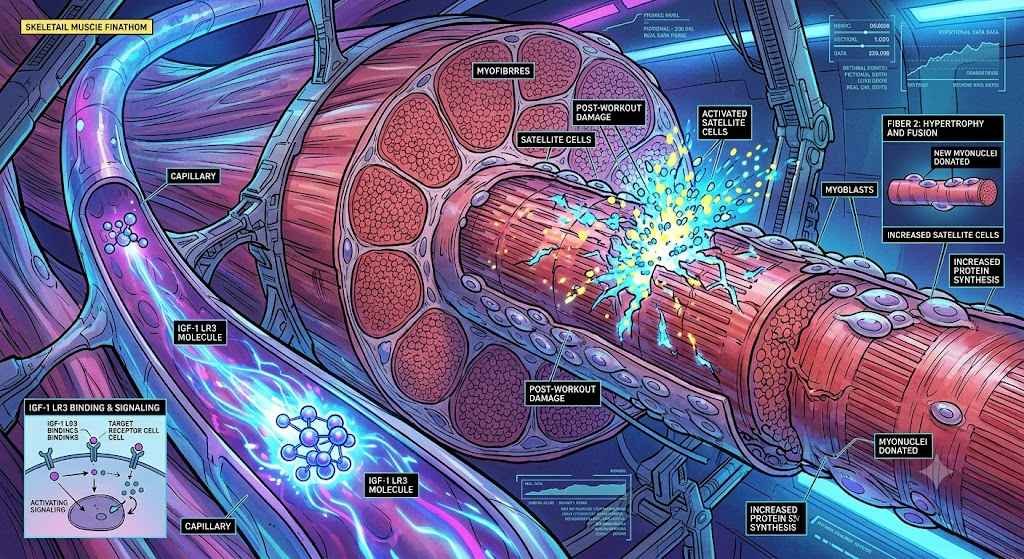
To understand why IGF-1 LR3 has attracted so much attention, it helps to look at its role in the body’s growth signaling pathways.
IGF-1 is one of the primary hormones involved in:
- Muscle protein synthesis
- Cell growth
- Recovery from training
- Tissue repair
- Nutrient utilization
IGF-1 LR3 binds to IGF-1 receptors found throughout the body. This activates intracellular signaling pathways that are involved in muscle growth and cellular adaptation.
Researchers have observed that IGF-1 signaling may contribute to:
- Increased protein synthesis
- Reduced muscle protein breakdown
- Activation of satellite cells involved in muscle repair
- Improved nutrient partitioning
- Support for recovery after intense exercise
Because IGF-1 LR3 remains active for much longer than standard IGF-1, researchers use it to study prolonged activation of these pathways.
Why Is IGF-1 LR3 Popular in Bodybuilding?
Among experienced bodybuilders and physique athletes, IGF-1 LR3 has gained attention because of its potential role in supporting lean muscle development and recovery.
Some users report incorporating IGF-1 LR3 into advanced performance-enhancement protocols with the goal of supporting:
- Lean muscle gains
- Faster post-workout recovery
- Improved workout performance
- Enhanced muscle fullness
- Better nutrient utilization during bulking phases
It’s important to note that much of the discussion surrounding these effects comes from anecdotal reports and research interest rather than high-quality clinical evidence in healthy athletes. Individual responses can vary, and claims of performance enhancement have not been established through regulatory approval.
IGF-1 LR3 vs IGF-1 DES
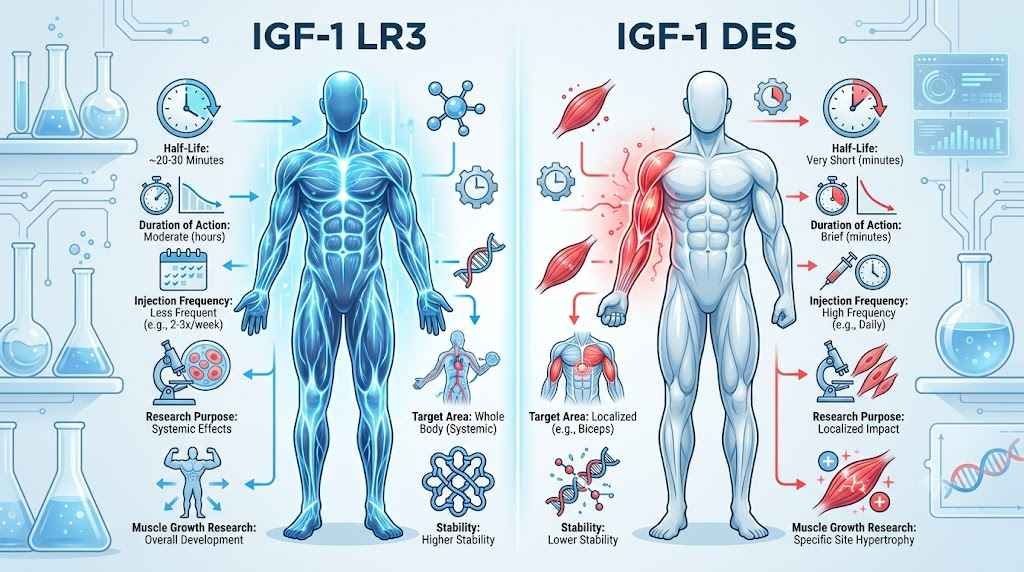
Many people researching growth factors wonder whether they should learn about IGF-1 LR3 or IGF-1 DES first. While both are modified forms of IGF-1, they differ significantly in how they are studied.
| Feature | IGF-1 LR3 | IGF-1 DES |
|---|---|---|
| Half-life | Much longer | Very short |
| Duration of activity | Extended | Localized and brief |
| Research focus | Whole-body exposure | Site-specific effects |
| Stability | Higher | Lower |
| Frequency of administration in research | Less frequent | More frequent |
In general, IGF-1 LR3 is researched for its prolonged biological activity, whereas IGF-1 DES is often studied for localized and short-lived effects.
Potential Benefits of IGF-1 LR3
Research into IGF-1 LR3 has explored several biological processes. While these findings should not be interpreted as proven outcomes for human performance, they help explain why the peptide has generated interest.
1. Potential Support for Muscle Growth
IGF-1 plays an important role in muscle protein synthesis and muscle cell development. Researchers continue to investigate how prolonged IGF-1 signaling may influence lean tissue growth.
2. Recovery After Intense Training
IGF-1 signaling has been associated with tissue repair and regeneration. This has made IGF-1 LR3 a subject of interest in studies examining recovery following muscle stress. Tesamorelin Dosage for Bodybuilding: Complete Guide
3. Cellular Repair
Scientists have explored the role of IGF-1 in supporting normal cellular repair mechanisms, particularly in muscle and connective tissue.
4. Nutrient Utilization
Research suggests IGF-1 influences how nutrients are used by cells. This has led to interest in its potential effects on nutrient partitioning, though more evidence is needed.
5. Muscle Cell Activation
IGF-1 has been linked to activation of satellite cells, which contribute to muscle repair and adaptation following resistance exercise.
6. Extended Biological Activity
One of the defining characteristics of IGF-1 LR3 is its longer duration of action compared with native IGF-1. This extended activity is a key reason it is widely used in laboratory research.
Who Researches IGF-1 LR3?
Interest in IGF-1 LR3 extends beyond bodybuilding communities. It is also studied by:
- Exercise physiology researchers
- Muscle biology laboratories
- Endocrine researchers
- Regenerative medicine scientists
- Cellular biology researchers
These investigations aim to better understand growth signaling, tissue repair, and cellular adaptation. However, this research does not establish IGF-1 LR3 as safe or effective for performance enhancement in humans.
Key Takeaways
IGF-1 LR3 is a modified form of Insulin-Like Growth Factor-1 designed for extended biological activity. Its role in muscle growth signaling and tissue repair has made it a widely discussed research peptide, particularly among those interested in bodybuilding and exercise science. While it has shown promising biological properties in research settings, users should recognize that many claims circulating online are based on anecdotal experience rather than conclusive clinical evidence.
IGF-1 LR3 for Muscle Growth
One of the main reasons IGF-1 LR3 has attracted attention is its role in the biological pathways involved in muscle growth. As a long-acting analog of insulin-like growth factor-1, it is designed to remain active longer than native IGF-1 by reducing binding to IGF-binding proteins. This allows researchers to study sustained activation of the IGF-1 receptor and downstream signaling pathways.

In laboratory and animal research, IGF-1 signaling has been associated with:
- Increased muscle protein synthesis
- Satellite cell activation
- Muscle fiber repair
- Cellular growth and differentiation
- Reduced muscle protein breakdown
These mechanisms explain why IGF-1 LR3 is frequently discussed in bodybuilding communities. However, it’s important to distinguish mechanistic and preclinical findings from proven outcomes in healthy humans. Controlled human research on IGF-1 LR3 itself remains very limited.
Why Bodybuilders Are Interested in IGF-1 LR3
Bodybuilders typically look for compounds that may help maximize muscle growth while improving recovery between training sessions.
Within bodybuilding circles, IGF-1 LR3 is often researched because of its potential to support:
- Lean muscle development
- Faster recovery after heavy workouts
- Improved nutrient utilization
- Enhanced muscle fullness
- Support for long-term training progression
Unlike growth hormone, which stimulates the body’s own production of IGF-1, IGF-1 LR3 acts directly on the IGF-1 receptor. This difference is one reason advanced users often compare the two when researching muscle-building pathways. SLUPP 332 Peptide: Uses, Benefits, Dosage, Side Effects
IGF-1 LR3 Bodybuilding Benefits
Although human evidence is limited, the following potential benefits are commonly discussed based on biological mechanisms and preclinical research.
1. Potential Increase in Lean Muscle Mass
IGF-1 is one of the body’s primary anabolic signaling molecules.
Researchers continue studying whether prolonged receptor activation may support:
- Muscle hypertrophy
- Muscle cell proliferation
- Lean tissue development
Animal and cell studies suggest anabolic effects, but comparable human performance data for IGF-1 LR3 are lacking.

2. Improved Recovery
Heavy resistance training creates microscopic muscle damage.
IGF-1 signaling is involved in:
- Tissue remodeling
- Muscle repair
- Cellular regeneration
This has made IGF-1 LR3 an area of interest for recovery-focused research.
3. Satellite Cell Activation
Satellite cells are often called the “muscle stem cells.”
These cells help:
- Repair damaged fibers
- Support muscle adaptation
- Contribute to long-term muscle development
One reason IGF-1 receives so much scientific attention is its relationship with satellite cell activity observed in preclinical models.
4. Nutrient Partitioning
Researchers have also investigated IGF-1’s role in glucose and amino acid uptake.
Efficient nutrient utilization may support:
- Muscle maintenance
- Recovery
- Training adaptation
The extent to which these findings apply to healthy athletes using IGF-1 LR3 remains uncertain.
5. Recovery Between Workouts
Many experienced lifters report being able to maintain higher training frequency while researching IGF-1 LR3 protocols.
Anecdotal reports commonly mention:
- Reduced soreness
- Faster recovery
- Better training consistency
These experiences are not a substitute for controlled clinical evidence and should be interpreted cautiously.
IGF-1 LR3 Cycle
One of the most searched topics online is the IGF-1 LR3 cycle.
There is no medically approved cycle for IGF-1 LR3 because it is a research compound rather than an approved medication for physique enhancement. Information shared online generally reflects research practices or anecdotal discussions rather than evidence-based clinical recommendations.
People researching IGF-1 LR3 commonly discuss:
- Stand-alone research protocols
- Bulking-focused protocols
- Cutting-focused protocols
- Combination research with other peptides
If you’re researching this compound, it’s important to understand that safety and effectiveness for these uses have not been established in controlled human trials.
IGF-1 LR3 Cycle Length
Search interest for IGF-1 LR3 cycle length continues to grow.
In research discussions, cycle durations vary widely depending on the objective being studied.
Commonly discussed research periods include:
- Short-term investigations
- Medium-duration protocols
- Extended laboratory research
Longer exposure does not necessarily mean better outcomes, and prolonged activation of growth-related pathways may also increase theoretical risks. This is one reason researchers emphasize careful study design and monitoring rather than assuming more is better.
IGF-1 LR3 Results
Everyone wants to know:
“How well does IGF-1 LR3 work?”
The honest answer is that results vary considerably.
Factors that influence outcomes include:
- Genetics
- Nutrition
- Training quality
- Sleep
- Recovery
- Overall health
- Research protocol
Within bodybuilding communities, anecdotal reports often describe:
- Improved muscle fullness
- Better workout recovery
- Gradual lean mass increases
- Enhanced training performance
However, these reports are not equivalent to scientific proof. Published evidence for IGF-1 LR3 in healthy humans is extremely limited, so expectations should remain realistic. NAD+: Benefits, Uses, Side Effects, & Complete Guide
IGF-1 LR3 Before and After
Searches for IGF-1 LR3 before and after images are extremely common.
While many transformation photos circulate online, they should be interpreted with caution because:
- Lighting can dramatically change appearance.
- Diet often changes during the same period.
- Training intensity usually increases.
- Multiple compounds may be used simultaneously.
- Image editing is common on social media.
Because of these variables, before-and-after photos cannot reliably demonstrate the effect of IGF-1 LR3 alone.
Instead of focusing solely on photos, evaluate progress using objective measures such as:
- Body weight
- Body-fat percentage
- Strength progression
- Recovery quality
- Training consistency
- Progress photos taken under identical conditions
How Long Does IGF-1 LR3 Take to Show Results?
Another common question is:
“How long does it take to see IGF-1 LR3 results?”
There is no single answer because outcomes depend on multiple variables, including training, nutrition, and the specific research context.
Anecdotal reports often describe:
- Early changes in workout recovery before visible physique changes.
- Gradual improvements in muscle fullness over time.
- Longer periods being needed before measurable body-composition changes become noticeable.
These timelines are based on user reports rather than controlled clinical trials and should not be interpreted as guaranteed outcomes.
Can Beginners Research IGF-1 LR3?
Beginners are generally encouraged to first understand:
- Resistance training fundamentals
- Progressive overload
- Recovery strategies
- Nutrition
- Sleep optimization
These foundational factors have a far stronger evidence base for improving muscle growth than any investigational peptide.
Since IGF-1 LR3 is not approved for bodybuilding or performance enhancement and human evidence remains limited, new trainees should avoid assuming it is necessary to achieve meaningful progress.
Key Takeaways
IGF-1 LR3 remains one of the most discussed research peptides because of its long-lasting activity and involvement in growth-related signaling pathways. Preclinical evidence supports continued scientific interest in its effects on muscle biology, recovery, and tissue repair, but robust human data for bodybuilding use are still lacking. For that reason, claims of dramatic muscle gains or guaranteed transformations should be viewed critically and in the context of the current evidence.
IGF-1 LR3 Dosage, Dosage Calculator, Injection Guide & Storage
Important: IGF-1 LR3 is an investigational research peptide. It is not approved by major regulatory agencies for bodybuilding or muscle-building purposes, and there is no medically established dosage for these uses. The information below summarizes commonly discussed research practices and explains measurement concepts—it is not a recommendation for self-administration.
IGF-1 LR3 Dosage
One of the most searched topics online is IGF-1 LR3 dosage, but there is no universally accepted protocol because the peptide is intended for research use rather than approved therapeutic use.
Discussions on bodybuilding forums and research communities often reference a wide range of amounts, but these should not be interpreted as medically validated or safe.
The exact amount studied in research varies depending on:
- Research objectives
- Experimental design
- Subject characteristics
- Duration of the study
- Other variables being investigated
Because of this variability, there is no single “best” IGF-1 LR3 dosage.
Understanding IGF-1 LR3 Measurements
Many beginners become confused by the units used with peptides.
You’ll often encounter:
- Micrograms (mcg)
- Milligrams (mg)
- International Units (IU)
For IGF-1 LR3, manufacturers typically label products in micrograms or milligrams, not IU. This is because IGF-1 LR3 is not standardized in International Units like insulin or human growth hormone.
IGF-1 LR3 Dosage in IU
A common search term is IGF-1 LR3 dosage in IU.
The important point is:
IGF-1 LR3 is generally not dosed in International Units (IU).
Instead, research products are measured by mass, such as:
- 100 mcg
- 500 mcg
- 1 mg (1,000 mcg)
Since there is no universal IU conversion for IGF-1 LR3, attempting to convert micrograms to IU can lead to confusion and dosing errors. When reviewing research literature or product labels, always use the unit specified by the manufacturer.

IGF-1 LR3 Dosage Calculator
Many users search for an IGF-1 LR3 dosage calculator when they are trying to understand peptide reconstitution.
Rather than converting to IU, the key calculation is determining how many micrograms are present in each volume of solution after reconstitution.
Example (Illustrative Only)
Suppose a vial contains:
- 1 mg IGF-1 LR3
- Reconstituted with 2 mL of bacteriostatic water
The concentration would be:
1,000 mcg ÷ 2 mL = 500 mcg/mL
From there:
- 0.10 mL = 50 mcg
- 0.20 mL = 100 mcg
- 0.50 mL = 250 mcg
- 1.00 mL = 500 mcg
This is a concentration calculation—not a recommended dosage.
IGF-1 LR3 Reconstitution Example
Proper reconstitution helps preserve peptide stability.
A typical laboratory process involves:
- Allow the vial to reach room temperature.
- Clean both vial stoppers with alcohol.
- Slowly add bacteriostatic water down the inside wall of the vial rather than directly onto the powder.
- Avoid vigorous shaking.
- Gently swirl until the solution becomes clear.
Excessive agitation can reduce peptide stability.
IGF-1 LR3 Injection
Another popular search is IGF-1 LR3 injection.
In laboratory settings, IGF-1 LR3 is commonly studied using subcutaneous (under the skin) administration. Some discussions also reference intramuscular research methods, but protocols differ depending on the research design.
The route of administration used in a study does not imply that it is appropriate or safe for self-use.
Common IGF-1 LR3 Injection Sites
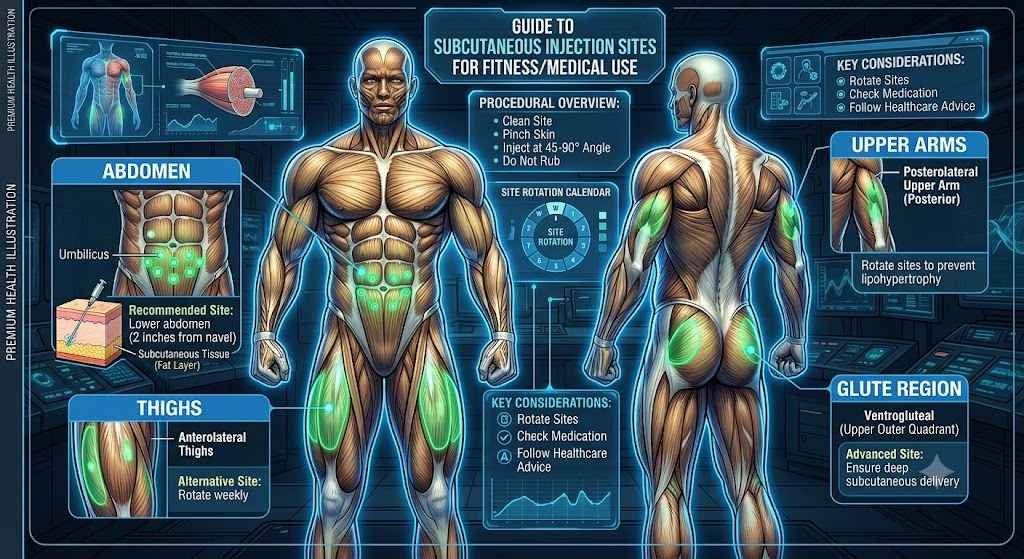
When discussing research involving subcutaneous administration, common anatomical areas include:
- Abdomen (away from the navel)
- Outer thigh
- Upper buttock
- Back of the upper arm
General best practices in clinical settings include rotating injection sites to reduce irritation and avoiding areas with bruising, redness, swelling, or signs of infection.
Tips for Sterile Handling
If a peptide is being handled in a laboratory setting, maintaining sterile technique is essential.
General practices include:
- Wash hands thoroughly.
- Use a new sterile syringe and needle each time.
- Clean vial tops with alcohol before access.
- Avoid touching the needle.
- Do not reuse needles or syringes.
- Store the reconstituted peptide as recommended by the manufacturer.
These practices help reduce contamination risk in research environments.
How to Store IGF-1 LR3
Proper storage is important for maintaining peptide quality.
Before Reconstitution
Most manufacturers recommend:
- Keeping the lyophilized (freeze-dried) peptide refrigerated according to label instructions.
- Protecting it from heat, moisture, and direct sunlight.
After Reconstitution
Once mixed with bacteriostatic water, many manufacturers advise:
- Refrigeration (typically 2–8°C / 36–46°F).
- Keeping the vial tightly sealed.
- Avoiding repeated warming and cooling cycles.
- Discarding the solution if it becomes cloudy, discolored, or develops visible particles.
Always follow the storage guidance provided by the specific manufacturer. MOTS-C Peptide: Benefits, Dosage, Side Effects
Common IGF-1 LR3 Dosage Mistakes
People researching IGF-1 LR3 often make avoidable errors, such as:
- Confusing micrograms (mcg) with milligrams (mg).
- Trying to convert IGF-1 LR3 into IU.
- Incorrect reconstitution calculations.
- Poor sterile handling.
- Improper storage.
- Assuming anecdotal online protocols are medically validated.
Understanding units, concentration, and handling is just as important as understanding the peptide itself.
Frequently Asked Questions About IGF-1 LR3 Dosage
Is there an official IGF-1 LR3 dosage?
No. There is no medically approved dosage for bodybuilding or performance enhancement.
Is IGF-1 LR3 measured in IU?
No. IGF-1 LR3 is generally measured in micrograms (mcg) or milligrams (mg), not International Units (IU).
Can I use an IGF-1 LR3 dosage calculator?
Yes, but it should be used only to calculate the concentration of a reconstituted solution based on the amount of peptide and the volume of diluent. It should not be interpreted as providing a recommended dose.
Does adding more bacteriostatic water change the total amount of IGF-1 LR3?
No. It changes the concentration (mcg per mL), not the total amount of peptide in the vial.
Why is sterile handling important?
Proper sterile technique helps reduce contamination and preserve the quality of the peptide in research settings.
Key Takeaways
Understanding IGF-1 LR3 dosage, reconstitution, and measurement units is essential for interpreting research information accurately. Because IGF-1 LR3 is not standardized in International Units, discussions should focus on micrograms, milligrams, and solution concentration rather than IU conversions. Equally important are proper storage, sterile handling, and recognizing that there is no approved dosage protocol for bodybuilding or performance enhancement.
IGF-1 LR3 Side Effects
Like many investigational peptides, IGF-1 LR3 may carry risks. Because it has not been approved for bodybuilding or recreational performance enhancement, its safety profile for these uses has not been fully established through large-scale human clinical trials.
Potential side effects discussed in scientific literature and reported anecdotally include:
1. Low Blood Sugar (Hypoglycemia)
IGF-1 has insulin-like activity, meaning it may influence blood glucose regulation.
Possible symptoms include:
- Dizziness
- Sweating
- Shakiness
- Hunger
- Fatigue
- Blurred vision
- Confusion
Anyone experiencing symptoms of severe hypoglycemia should seek immediate medical attention.
2. Water Retention
Some users report temporary fluid retention, which may lead to:
- Mild swelling
- Puffy appearance
- Temporary weight increase
The degree of water retention varies among individuals.
3. Headaches
Headaches are occasionally mentioned in anecdotal reports, particularly during the early stages of use. Persistent or severe headaches should not be ignored and warrant medical evaluation.
4. Joint or Muscle Discomfort
Some users describe:
- Joint stiffness
- Muscle aches
- Temporary discomfort during adaptation
These reports are anecdotal, and a direct causal relationship has not been established.
5. Injection Site Reactions
When administered by injection in research settings, localized reactions may occur, including:
- Redness
- Mild pain
- Swelling
- Itching
- Bruising
Rotating injection sites and using proper sterile technique may help reduce local irritation.
6. Changes in Blood Glucose
Because IGF-1 influences glucose metabolism, researchers consider blood sugar changes a potential concern. Individuals with diabetes or other metabolic disorders should not assume investigational peptides are safe for them without medical guidance.
7. Theoretical Risk of Abnormal Cell Growth
IGF-1 plays a role in normal cell growth and proliferation. For this reason, scientists continue to study whether prolonged or excessive activation of IGF-1 signaling could influence abnormal cell growth in certain contexts.
This remains an active area of research and is one reason IGF-1 LR3 should not be viewed as a risk-free compound. GHRP-6 Peptide: Benefits, Dosage, Side Effects
Who Should Avoid IGF-1 LR3?
Because safety data are limited, IGF-1 LR3 should not be considered appropriate for everyone.
Extra caution is warranted for individuals who are:
- Under 18 years of age
- Pregnant or breastfeeding
- Living with diabetes or recurrent hypoglycemia
- Managing active cancer or a history of hormone-sensitive cancers
- Living with significant liver, kidney, or heart disease
- Taking medications that affect blood glucose without medical supervision
If someone is considering any investigational peptide, discussing potential risks with a qualified healthcare professional is advisable.
Is IGF-1 LR3 Legal?
The legal status of IGF-1 LR3 varies by country.
In many regions:
- It is available for laboratory research purposes.
- It is not approved as a medication for muscle building or athletic performance.
- Sporting organizations may prohibit its use in competition.
Always check the regulations in your country before purchasing or possessing research peptides.
How to Choose High-Quality IGF-1 LR3
If you’re looking for IGF-1 LR3 buy online, choosing a reputable supplier is essential. Consider the following:
- Quality-controlled research products
- Transparent product information
- Batch identification where available
- Responsive customer support
- Secure packaging
- Positive customer reputation
- Reliable shipping options
Avoid suppliers that make unrealistic medical claims or promise guaranteed bodybuilding results.
Buy Authentic IGF-1 LR3 from GymPundit.in
If you’re looking for 100% authentic IGF-1 LR3 research peptides, GymPundit.in offers carefully sourced research products for customers who value quality and reliability.
Why Choose GymPundit.in?
- 100% authentic research products
- Quality-focused sourcing
- Secure packaging
- Worldwide shipping
- Trusted by the fitness community
- Responsive customer support
- Competitive pricing
Whether you’re purchasing a single research peptide or multiple products, GymPundit.in aims to provide dependable service and quality products. IGF-1 DES Peptide: Benefits, Dosage, Side Effects
Order on WhatsApp
Need help selecting the right research peptide or placing an order?
WhatsApp us today:
📱 +91 76965 93279
Our team can assist you with:
- Product availability
- Pricing
- Shipping information
- Order support
- General product guidance
Frequently Asked Questions (FAQs)
What is IGF-1 LR3?
IGF-1 LR3 is a modified version of Insulin-Like Growth Factor-1 designed to remain active longer than native IGF-1. It is primarily marketed for laboratory research.
Is IGF-1 LR3 the same as HGH?
No. Human Growth Hormone (HGH) stimulates the body to produce IGF-1, while IGF-1 LR3 acts directly on IGF-1 receptors.
Is IGF-1 LR3 a steroid?
No. IGF-1 LR3 is a synthetic analog of insulin-like growth factor-1 and is not an anabolic steroid.
Is IGF-1 LR3 a SARM?
No. SARMs target androgen receptors, whereas IGF-1 LR3 works through the IGF-1 signaling pathway.
Can IGF-1 LR3 build muscle?
IGF-1 signaling plays a role in muscle growth and repair, but there is limited high-quality human evidence demonstrating that IGF-1 LR3 safely and effectively builds muscle in healthy individuals.
Is IGF-1 LR3 approved for bodybuilding?
No. It has not been approved by major regulatory agencies for bodybuilding or performance enhancement.
How is IGF-1 LR3 measured?
It is typically measured in micrograms (mcg) or milligrams (mg), not International Units (IU).
Is there an official IGF-1 LR3 dosage?
No. There is no medically approved dosage for bodybuilding use.
How should IGF-1 LR3 be stored?
Most manufacturers recommend storing the lyophilized product and any reconstituted solution according to the label instructions, typically refrigerated and protected from heat and light.
Can beginners use IGF-1 LR3?
Beginners should first focus on proven fundamentals such as training, nutrition, sleep, and recovery. IGF-1 LR3 is an investigational peptide and should not be considered a substitute for these basics.
Is IGF-1 LR3 allowed in competitive sports?
Many sporting organizations prohibit substances that affect growth-factor pathways. Competitive athletes should review the rules of their governing body.
Does IGF-1 LR3 require a prescription?
Requirements vary by country. Always check local laws and regulations before purchasing.
Final Verdict
IGF-1 LR3 remains one of the most widely discussed research peptides because of its prolonged biological activity and its role in growth-related signaling pathways. Research suggests it has important effects on muscle biology, tissue repair, and cellular adaptation, but human evidence for bodybuilding use remains limited, and it is not approved for muscle-building or performance enhancement.
If you’re researching IGF-1 LR3, rely on credible scientific sources, maintain realistic expectations, and understand both the potential benefits and the uncertainties surrounding its use.
For those seeking authentic IGF-1 LR3 research products, GymPundit.in offers quality-focused products, secure shipping, and dedicated customer support to help you source research peptides with confidence.



[…] This guide explains everything you need to know, including its mechanism of action, potential benefits, dosage protocols, possible side effects, and frequently asked questions. While research continues to evolve, many users are interested in this peptide because it may offer a more targeted approach to fat metabolism than traditional growth hormone. IGF-1 LR3: Benefits, Dosage, Cycle, Side Effects & Muscle Growth […]
[…] It is important to note that AOD 9604 is not an anabolic steroid and should not be expected to produce dramatic muscle growth. IGF-1 LR3: Benefits, Dosage, Cycle, Side Effects & Muscle Growth […]
[…] If treatment needs to be discontinued, a healthcare professional can determine whether the dose should be reduced gradually. IGF-1 LR3: Benefits, Dosage, Cycle, Side Effects & Muscle Growth […]