What Is GHK-CU Peptide?
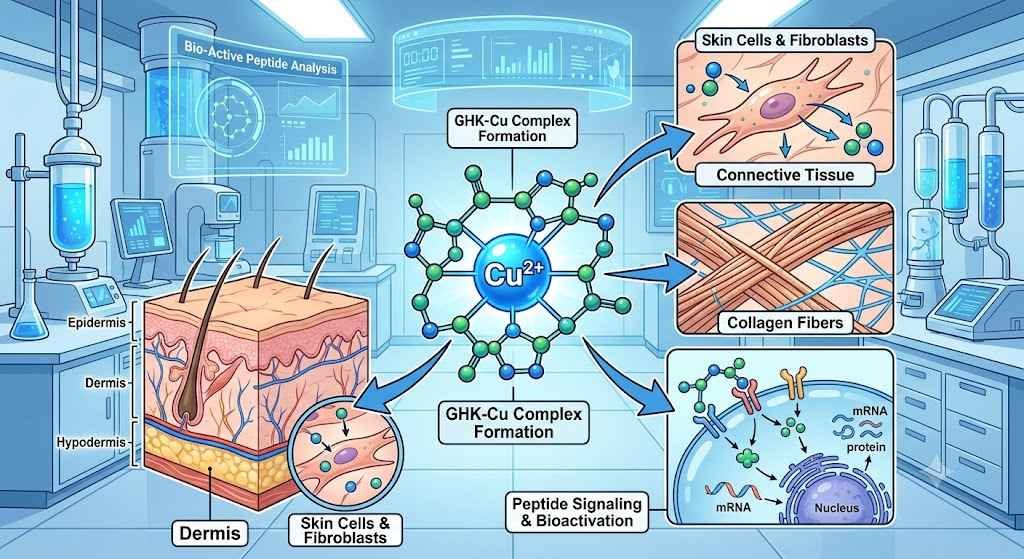
GHK-CU Peptide is a naturally occurring copper-binding peptide composed of three amino acids—glycine, histidine, and lysine. The abbreviation GHK comes from these amino acids, while CU refers to copper, the essential mineral that binds to the peptide and enables many of its biological functions.
Originally discovered in human plasma during the 1970s, GHK-CU has since been identified in saliva and urine as well. Although its concentration gradually decreases with age, researchers have found that it plays an important role in tissue repair, skin regeneration, collagen production, wound healing, and overall cellular health.
Today, GHK-CU Peptide has become one of the most widely researched peptides in regenerative medicine, cosmetic science, and anti-aging research. Interest in this peptide continues to grow because of its ability to support healthier skin, encourage hair growth, and assist the body’s natural healing processes.
Unlike anabolic steroids or muscle-building peptides, GHK-CU is primarily valued for its regenerative and restorative properties. It is commonly studied for applications involving skin rejuvenation, scar reduction, hair follicle support, and tissue repair. Retatrutide Dosage Guide: Clinical Schedule, Results & Safety
How Does GHK-CU Peptide Work?
The unique properties of GHK-CU Peptide come from its ability to bind copper ions and deliver them where they are needed. Copper is an essential trace mineral involved in numerous enzymatic reactions that support healthy skin, connective tissue, blood vessels, and immune function.
Rather than acting like a hormone, GHK-CU functions as a signaling peptide. It communicates with cells, helping regulate biological processes involved in repair and regeneration.
Copper Delivery
One of the primary functions of GHK-CU Peptide is transporting copper to tissues that require it. Copper serves as a cofactor for several enzymes involved in collagen formation, antioxidant defense, and tissue remodeling.
By improving copper availability at the cellular level, GHK-CU may help maintain healthy connective tissue and promote faster recovery after minor skin damage.
Cellular Communication
GHK-CU Peptide acts as a biological messenger that influences how cells respond during repair and regeneration. Laboratory research suggests it can regulate the activity of numerous genes involved in inflammation, tissue remodeling, and extracellular matrix production.
This signaling activity is one reason why GHK-CU continues to attract attention in regenerative medicine.
Collagen and Elastin Production
Healthy skin depends heavily on collagen and elastin, two structural proteins responsible for firmness, elasticity, and resilience.
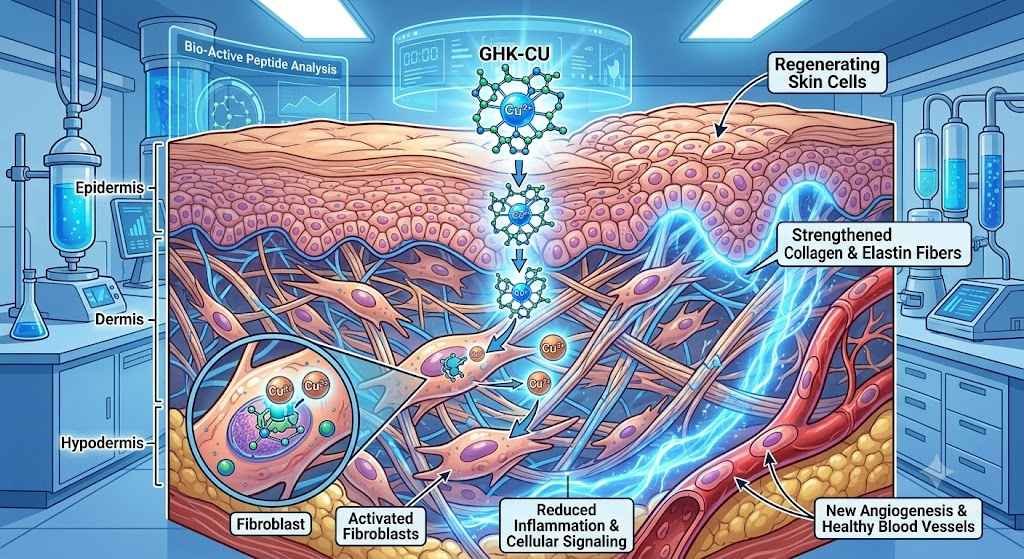
Research indicates that GHK-CU Peptide may encourage fibroblasts—the cells responsible for producing collagen and elastin—to increase their activity. This has made the peptide particularly popular in cosmetic and dermatological research focused on reducing visible signs of aging.
Tissue Repair
GHK-CU Peptide is frequently investigated for its role in wound healing and tissue regeneration. It may help coordinate the body’s natural repair response by supporting new blood vessel formation, collagen deposition, and remodeling of damaged tissue.
Because of these properties, it has become an area of interest for research involving burns, surgical recovery, and skin injuries.
Anti-Inflammatory Activity
Chronic inflammation contributes to accelerated aging and delayed tissue repair. Experimental studies suggest GHK-CU may help regulate inflammatory signaling pathways, creating a more favorable environment for healing.
While more clinical research is needed, these findings have contributed to growing interest in GHK-CU as a regenerative peptide.
GHK-CU Peptide Benefits
The growing popularity of GHK-CU Peptide is largely driven by its broad range of potential regenerative properties. Although ongoing research continues to expand our understanding, current evidence suggests that GHK-CU may support several aspects of tissue health and recovery.
Supports Skin Rejuvenation
One of the best-known GHK-CU Peptide benefits is its ability to promote healthier-looking skin. Research suggests it may improve skin texture, hydration, and overall appearance by supporting natural tissue remodeling.
For this reason, GHK-CU is commonly included in cosmetic formulations such as serums, creams, and topical treatments.
May Reduce Fine Lines and Wrinkles
As collagen production naturally declines with age, wrinkles and reduced skin elasticity become more noticeable.
By encouraging collagen synthesis and improving extracellular matrix function, GHK-CU Peptide may help soften the appearance of fine lines and improve skin firmness over time.
Supports Hair Growth
Another popular area of research involves GHK-CU Peptide for hair growth. Preliminary studies suggest the peptide may help maintain healthier hair follicles, improve scalp health, and support the normal hair growth cycle.
Although results can vary, many researchers consider GHK-CU one of the most promising peptides for hair restoration research.
Promotes Wound Healing
GHK-CU has demonstrated encouraging regenerative properties in studies involving skin repair and wound healing. It may assist by supporting collagen formation, improving blood vessel development, and enhancing tissue remodeling.
These effects have made it a subject of interest in regenerative medicine and dermatological research.
Anti-Aging Support
Because GHK-CU influences multiple biological pathways involved in repair and regeneration, it has become widely recognized as an anti-aging peptide.
Its potential to improve skin quality, support healthy collagen production, and reduce oxidative stress makes it one of the most studied peptides in longevity-focused research.
Helps Improve Skin Elasticity
Healthy, youthful skin depends on strong connective tissue. By supporting collagen and elastin synthesis, GHK-CU Peptide may help improve skin elasticity and resilience.
Many users seek products containing GHK-CU to maintain smoother, firmer-looking skin.
Supports Antioxidant Defense
Oxidative stress contributes to cellular aging and tissue damage. Laboratory studies indicate that GHK-CU may enhance the body’s natural antioxidant defense systems, helping protect cells from oxidative damage.
May Help Regulate Inflammation
Balanced inflammatory responses are essential for efficient healing. Research suggests GHK-CU Peptide may help regulate inflammatory activity during tissue repair, potentially contributing to improved recovery outcomes. Tesamorelin Dosage for Bodybuilding: Complete Guide
Key Takeaways
- GHK-CU Peptide is a naturally occurring copper-binding tripeptide.
- It plays an important role in tissue repair, collagen production, and skin regeneration.
- It is widely researched for anti-aging, wound healing, and hair growth applications.
- GHK-CU functions as a signaling peptide rather than a hormone.
- Interest in GHK-CU continues to grow in regenerative medicine and cosmetic science.
GHK-CU Peptide for Hair Growth
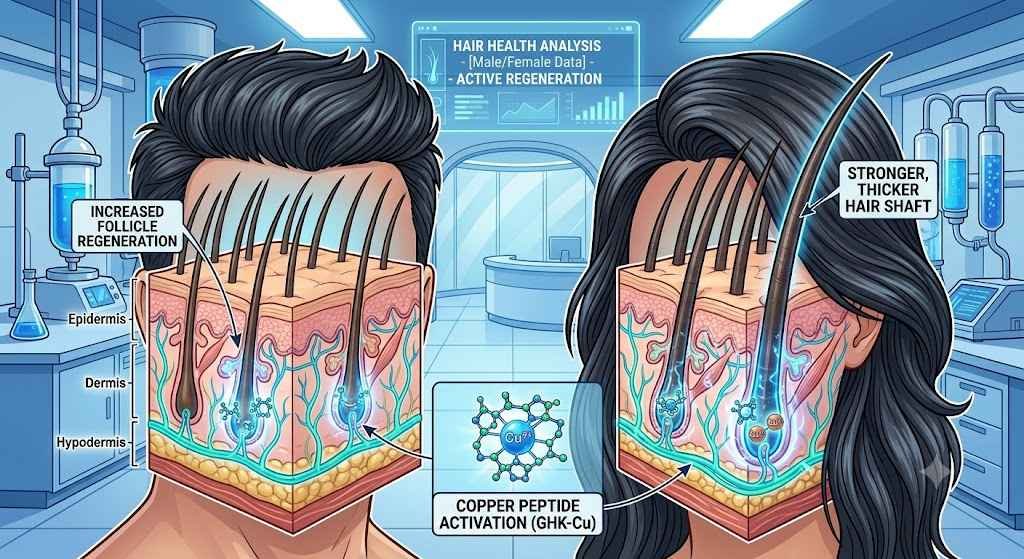
One of the fastest-growing areas of research surrounding GHK-CU Peptide is its potential role in supporting healthier hair growth. Hair loss can result from aging, genetics, inflammation, poor scalp health, and damage to hair follicles. Researchers have explored GHK-CU because of its ability to influence tissue repair, improve blood vessel formation, and support healthy cellular function.
Laboratory and early clinical studies suggest that GHK-CU may help create a healthier environment for hair follicles by encouraging cell regeneration and reducing inflammatory activity around the scalp. It has also been investigated for its ability to increase the production of proteins involved in normal hair follicle development.
Unlike traditional hair loss medications that primarily target hormones, GHK-CU focuses on improving scalp health and supporting the natural hair growth cycle. This makes it an attractive option for individuals looking to complement an overall hair care routine.
Potential Hair Growth Benefits
- May support healthier hair follicles
- Helps improve scalp health
- Encourages tissue regeneration
- May reduce inflammation around follicles
- Supports stronger and thicker-looking hair
- May extend the active growth phase of hair
Although many users report positive experiences, individual results vary, and more large-scale clinical studies are needed to fully understand its long-term effectiveness.
GHK-CU Peptide for Skin Care
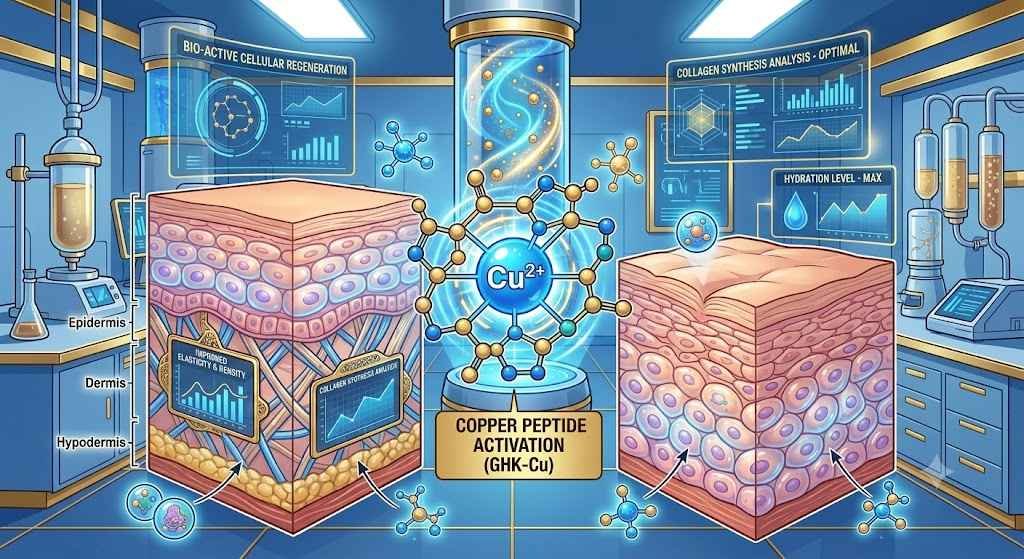
Skin rejuvenation is one of the most recognized applications of GHK-CU Peptide. Because the peptide naturally binds copper, it supports biological processes involved in maintaining healthy skin structure and appearance.
As we age, collagen production gradually decreases, leading to wrinkles, fine lines, and reduced elasticity. Research suggests that GHK-CU may help stimulate fibroblasts—the cells responsible for producing collagen and elastin—allowing the skin to maintain a firmer and smoother appearance.
Many cosmetic formulations include GHK-CU because of its potential to improve hydration, texture, and overall skin quality.
Potential Skin Benefits
- Supports collagen production
- Improves skin elasticity
- Enhances skin hydration
- Helps reduce the appearance of fine lines
- Promotes smoother skin texture
- Supports overall skin regeneration
These properties have made GHK-CU a popular ingredient in advanced anti-aging skincare products and regenerative cosmetic research.
GHK-CU Peptide for Anti-Aging
Interest in GHK-CU Peptide has grown significantly within the anti-aging community due to its ability to influence multiple pathways involved in tissue repair and cellular maintenance.
Unlike products that simply mask signs of aging, GHK-CU is being studied for its potential to support the body’s natural regenerative processes. By promoting collagen synthesis, supporting antioxidant activity, and encouraging tissue remodeling, it may help maintain healthier-looking skin over time.
Researchers have also investigated its role in reducing oxidative stress, which is one of the major contributors to premature aging.
Potential Anti-Aging Benefits
- Supports youthful skin appearance
- Promotes collagen and elastin production
- May reduce oxidative stress
- Helps improve skin firmness
- Supports natural tissue regeneration
- Encourages healthier skin texture
While GHK-CU shows promising research findings, it should be viewed as part of a broader approach that includes proper nutrition, sun protection, exercise, and healthy lifestyle habits.
GHK-CU Peptide for Wound Healing
Another area where GHK-CU Peptide has attracted scientific interest is wound healing and tissue repair. Research indicates that the peptide may help coordinate several biological processes involved in healing damaged tissue.
These processes include collagen formation, blood vessel development (angiogenesis), extracellular matrix remodeling, and cellular migration—all essential for efficient wound repair.
Because of these regenerative properties, GHK-CU has been studied in connection with:
- Minor cuts and abrasions
- Surgical recovery research
- Scar management
- Burn recovery studies
- Skin repair following cosmetic procedures
Although research remains ongoing, these findings highlight why GHK-CU is considered one of the leading regenerative peptides in modern biomedical research. SLUPP 332 Peptide: Uses, Benefits, Dosage, Side Effects
GHK-CU Peptide Dosage
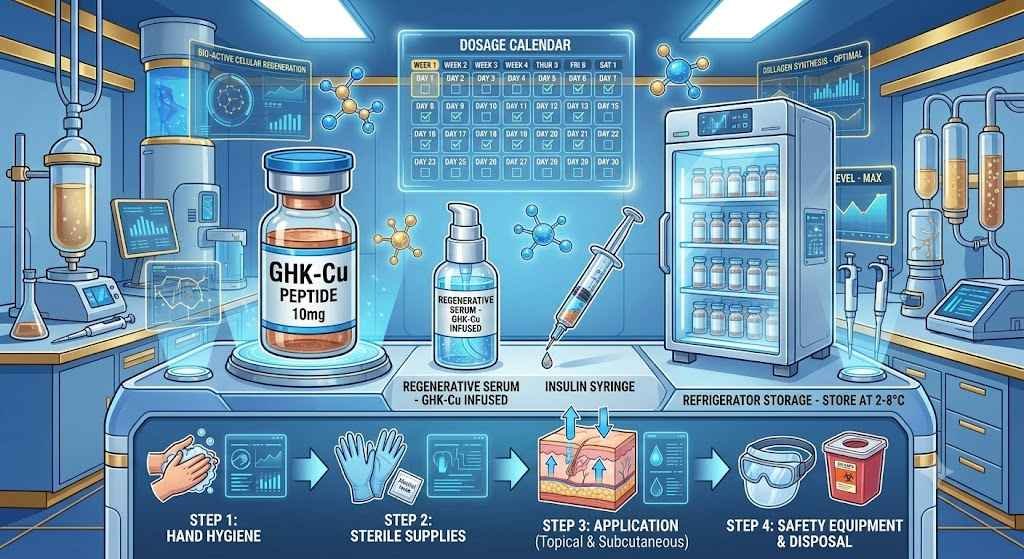
The appropriate GHK-CU Peptide dosage depends on the formulation being used, the intended research purpose, and individual protocols. Since there are no universally accepted medical dosing guidelines for every application, users should follow product-specific instructions and seek guidance from a qualified healthcare professional when appropriate.
Injectable GHK-CU Peptide Dosage
In research settings, injectable GHK-CU is commonly used in the following ranges:
| Protocol | Typical Dosage |
|---|---|
| Low Dose | 1-2 mg daily |
| Standard Dose | 2-5 mg daily |
| Higher Research Dose | Up to 10 mg daily under research protocols |
Typical research cycles range from 4 to 8 weeks, depending on the objectives.
Topical GHK-CU Peptide Dosage
For cosmetic use, GHK-CU is commonly formulated as:
- Serums
- Creams
- Gels
- Foams
- Hair growth solutions
Most topical products are applied once or twice daily to clean skin or scalp, following the manufacturer’s instructions.
Recommended Cycle Length
Although research protocols vary, common study durations include:
- Skin rejuvenation: 8–12 weeks
- Hair growth research: 3–6 months
- Scar management: Several months, depending on the treatment plan
- General regenerative studies: 4–12 weeks
Consistency is considered important when evaluating potential outcomes.
Storage Guidelines
Proper storage helps maintain peptide stability.
General recommendations include:
- Store lyophilized powder in a refrigerator before reconstitution.
- Protect from excessive heat, moisture, and direct sunlight.
- After reconstitution, refrigerate and use within the timeframe recommended by the manufacturer.
- Avoid repeated freeze-thaw cycles, as they may reduce peptide stability.
Always refer to the storage instructions provided with your specific product.
How to Use GHK-CU Peptide Safely
If you are considering GHK-CU Peptide, following safe handling and usage practices is essential.
Safety Tips
- Purchase from reputable suppliers that provide quality-controlled products.
- Follow recommended dosage instructions for the specific formulation.
- Use sterile techniques when handling injectable products.
- Do not exceed suggested research dosages without professional guidance.
- Monitor for skin irritation or unexpected reactions.
- Store the peptide correctly to preserve its quality.
- Discontinue use and consult a healthcare professional if significant adverse effects occur.
GHK-CU is generally well tolerated in research settings, but individual responses may vary. Responsible use and realistic expectations are key to achieving the best possible outcomes.
GHK-CU Side Effects
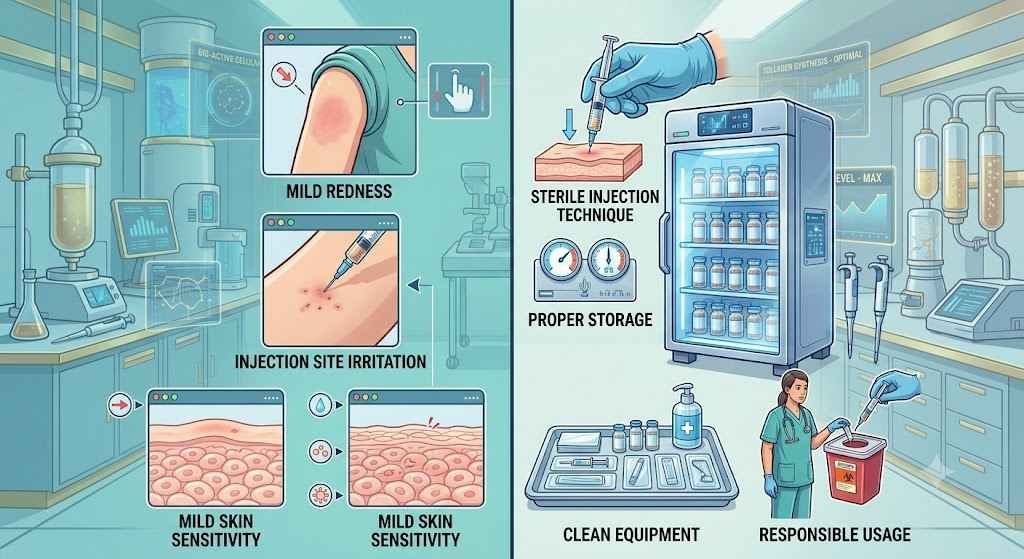
Although GHK-CU has been widely studied in regenerative medicine and cosmetic research, no compound is completely free from potential adverse effects. Most available research suggests that it is generally well tolerated when used appropriately, but individual responses can differ depending on the formulation, dosage, and personal sensitivity.
Most reported side effects are mild and temporary, particularly when compared with many performance-enhancing compounds. Nevertheless, users should be aware of possible reactions before beginning any protocol.
Injection Site Reactions
Individuals using injectable forms may occasionally experience:
- Mild redness
- Temporary swelling
- Slight discomfort
- Local tenderness
- Minor bruising
These reactions typically resolve within a short period and can often be minimized by using proper injection techniques and rotating injection sites.
Skin Irritation
Topical products containing GHK-CU may occasionally cause:
- Mild itching
- Temporary redness
- Dryness
- Burning sensation
- Increased skin sensitivity
These symptoms are usually short-lived. If irritation persists, discontinue use and consult a healthcare professional.
Headache
A small number of users have reported mild headaches during the initial stages of use. While the exact mechanism remains unclear, staying hydrated and following recommended dosing guidelines may help reduce the likelihood of this effect. NAD+: Benefits, Uses, Side Effects, & Complete Guide
Allergic Reactions
Although uncommon, allergic reactions are possible with any cosmetic or injectable product.
Potential symptoms include:
- Persistent rash
- Severe itching
- Facial swelling
- Difficulty breathing
If any signs of a serious allergic reaction occur, discontinue use immediately and seek medical attention.
Limited Human Research
One of the most important considerations is that long-term human research remains limited for certain applications. While laboratory and early clinical studies are encouraging, additional large-scale research is still needed to establish long-term safety across different uses.
For this reason, responsible use and realistic expectations are essential.
Who Should Avoid GHK-CU?
While many healthy adults tolerate GHK-CU well in research settings, some individuals should avoid using it unless specifically advised by a qualified healthcare professional.
This includes:
- Pregnant or breastfeeding women
- Individuals with known allergies to peptide ingredients
- People with active skin infections near the application area
- Those undergoing treatment for serious medical conditions unless approved by their physician
- Individuals under 18 years of age
Anyone taking prescription medications or managing chronic health conditions should seek professional medical advice before starting any peptide protocol.
GHK-CU vs BPC-157
Although both compounds belong to the peptide family, they serve different purposes and have distinct areas of research.
| Feature | GHK-CU | BPC-157 |
|---|---|---|
| Primary Focus | Skin regeneration and tissue remodeling | Tendon, ligament and gastrointestinal healing |
| Main Benefit | Skin quality, collagen production and hair support | Soft tissue recovery and injury repair |
| Hair Growth Research | Yes | Limited |
| Cosmetic Applications | Extensive | Minimal |
| Anti-Aging Interest | High | Moderate |
If your primary goal is improving skin quality or supporting hair health, GHK-CU is generally the more relevant option. Those focused on tendon or ligament recovery often look toward BPC-157 instead.
GHK-CU vs TB-500
TB-500 is another well-known research peptide frequently discussed alongside GHK-CU.
| Feature | GHK-CU | TB-500 |
|---|---|---|
| Skin Rejuvenation | Excellent | Limited |
| Hair Growth Research | Yes | No significant evidence |
| Wound Healing | Strong research interest | Strong research interest |
| Tissue Repair | Excellent | Excellent |
| Cosmetic Use | Common | Rare |
Many researchers view these peptides as complementary rather than direct competitors because they target different aspects of tissue repair.
GHK-CU vs HGH
Human Growth Hormone (HGH) and GHK-CU are fundamentally different compounds.
| Feature | GHK-CU | HGH |
|---|---|---|
| Compound Type | Copper-binding tripeptide | Peptide hormone |
| Muscle Growth | Minimal | Significant under medical supervision |
| Skin Health | Primary application | Secondary benefit |
| Hair Research | Yes | Limited |
| Anti-Aging Research | Extensive | Extensive |
| Hormonal Activity | None | Yes |
Unlike HGH, GHK-CU does not function as a hormone. Instead, it works primarily by influencing cellular repair processes and supporting collagen production.
Frequently Asked Questions
Is GHK-CU legal?
The legal status varies by country and intended use. Always check your local regulations before purchasing or importing peptide products.
How long does it take to see results?
The timeline depends on the application.
- Skin appearance may begin improving within several weeks.
- Hair-related outcomes often require consistent use for several months.
- Scar improvement can take several months depending on severity.
Individual responses will vary.
Can GHK-CU be stacked with other peptides?
Some research protocols combine GHK-CU with peptides such as BPC-157 or TB-500 to investigate complementary regenerative effects. However, combination protocols should only be considered under appropriate professional guidance.
Is GHK-CU suitable for beginners?
Many users consider it approachable because it is primarily researched for regenerative purposes rather than hormonal effects. Even so, beginners should educate themselves on proper handling, dosing, and storage before use.
Does GHK-CU build muscle?
No. Its primary areas of research relate to skin health, wound healing, collagen production, and hair support rather than increasing muscle mass.
Where to Buy GHK-CU
If you’re looking for GHK-CU research products, choosing a supplier that prioritizes quality, transparency, and customer support is essential.
At GymPundit.in, we provide carefully sourced research products with a focus on quality and customer satisfaction.
Why choose GymPundit?
- Premium research-quality products
- Quality-controlled sourcing
- Secure and discreet packaging
- Worldwide shipping available
- Responsive customer support
- Competitive pricing
- Trusted by fitness enthusiasts since 2014
Before purchasing any peptide, review the product information carefully and ensure it aligns with your intended research purpose.
Need Help? Contact GymPundit on WhatsApp
Not sure which peptide is right for your goals?
Our team can assist you with:
- Product recommendations
- Ordering assistance
- Shipping information
- General product guidance
WhatsApp: +91 76965 93279
Our support team is happy to answer your questions and help you choose the most suitable research product.
Final Verdict
GHK-CU has become one of the most extensively researched regenerative peptides due to its potential role in supporting collagen production, skin renewal, wound healing, and healthy hair. While current findings are promising, many applications still require larger human studies to better define long-term safety and effectiveness.
Whether your interest lies in cosmetic science, regenerative research, or healthy aging, this copper-binding peptide remains an important area of ongoing investigation. Choosing high-quality products, following appropriate protocols, and maintaining realistic expectations are all essential for responsible use.
With continued scientific interest, GHK-CU is likely to remain a key focus in peptide research for years to come. GHRP-6 Peptide: Benefits, Dosage, Side Effects


[…] Longer use has not been studied extensively in large human trials, so caution is advised. GHK-CU Peptide: Benefits, Dosage, Side Effects & Uses […]