
Introduction: What Is IGF-1 DES Peptide?
IGF-1 DES is a modified version of Insulin-like Growth Factor-1 (IGF-1), a naturally occurring growth factor involved in muscle development, tissue repair, and cellular growth. In bodybuilding and research communities, the IGF-1 DES peptide has gained attention because of its unique structure and its interaction with muscle cells.
Unlike traditional IGF-1, IGF-1 DES is a shorter peptide variant that has a deletion of the first three amino acids from the N-terminal region of IGF-1. This small structural change gives IGF-1 DES different binding characteristics and increased local activity around muscle tissue.
Researchers study the IGF-1 DES peptide because of its role in cellular signaling, satellite cell activation, and muscle regeneration pathways. Due to these properties, it has become a topic of interest among athletes, researchers, and fitness enthusiasts looking to understand advanced muscle-growth mechanisms.
However, IGF-1 DES is not a simple muscle-building supplement. It is a research compound that affects complex biological pathways, meaning proper knowledge, responsible decision-making, and understanding of potential risks are extremely important.

How Does It Work?
IGF-1 DES is a naturally occurring splice variant of IGF-1 that is produced in certain tissues, especially during periods of muscle damage or repair. It belongs to the insulin-like growth factor family, which plays a significant role in regulating cell growth and regeneration.
The main difference between IGF-1 DES and regular IGF-1 is its molecular structure. The removal of three amino acids from IGF-1 changes how the peptide interacts with IGF receptors and binding proteins.
Because of these structural differences, IGF-1 DES is believed to have:
- Stronger local activity in muscle tissue
- Reduced interaction with some IGF-binding proteins
- Increased ability to influence muscle cell signaling pathways
When IGF-1 DES interacts with IGF-1 receptors on muscle cells, it activates pathways involved in:
- Protein synthesis
- Muscle cell growth
- Satellite cell activity
- Tissue regeneration
This process is one reason why IGF-1 DES for bodybuilding has attracted attention among advanced athletes and researchers studying muscle adaptation.
Mechanism of Action
The effects of IGF-1 DES peptide are mainly connected to the activation of the IGF-1 receptor (IGF-1R). When this receptor is stimulated, several intracellular pathways may become activated.
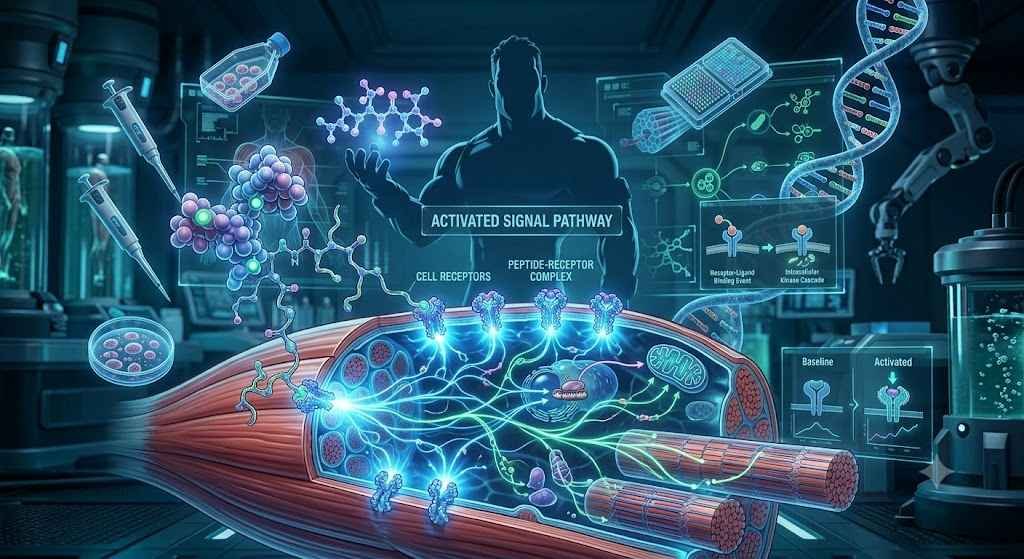
The major pathways associated with IGF-1 signaling include:
PI3K/Akt Pathway
The PI3K/Akt pathway plays an important role in muscle protein synthesis and cellular growth. Activation of this pathway helps regulate processes involved in muscle maintenance and recovery.
Satellite Cell Activation
Satellite cells are specialized muscle stem cells that contribute to muscle repair and growth. IGF-1 DES has been researched for its possible role in stimulating these cells.
Increased Cellular Communication
IGF-1 DES may influence communication between muscle cells, helping researchers understand how muscles respond after stress, training, or injury.
Because of these biological effects, IGF-1 DES benefits for bodybuilding are often discussed in relation to muscle recovery, regeneration, and growth mechanisms.
IGF-1 DES Benefits for Bodybuilding
The interest in IGF-1 DES benefits for bodybuilding comes from its relationship with muscle growth pathways, cellular repair, and regeneration processes. IGF-1 DES is a research peptide that has been studied for its interaction with muscle cells and its potential role in supporting tissue adaptation.
Unlike traditional muscle-building supplements that provide nutrients, IGF-1 DES peptide works through biological signaling pathways that influence how cells respond to growth and repair signals.
Below are some of the commonly discussed areas of research surrounding IGF-1 DES.
IGF-1 DES and Muscle Growth

One of the biggest reasons IGF-1 DES for muscle growth has gained attention is its connection with muscle cell development.
IGF-1 DES interacts with IGF-1 receptors located on muscle cells, which are involved in regulating anabolic signaling pathways. These pathways are connected with processes such as:
- Muscle protein synthesis
- Cellular growth signals
- Muscle tissue remodeling
- Adaptation after resistance training
During intense resistance exercise, muscle fibers experience microscopic stress. The body naturally activates repair mechanisms to rebuild and strengthen these tissues. Researchers study IGF-1 DES because of its possible involvement in these natural muscle repair processes. Follistatin 344: Benefits, Dosage Protocol & Buy Online
However, muscle growth is still primarily influenced by factors such as:
- Progressive resistance training
- Adequate protein intake
- Proper recovery
- Sleep quality
- Overall nutrition
IGF-1 DES and Muscle Recovery
Another commonly discussed area of IGF-1 DES benefits is muscle recovery.
Hard training sessions create stress on muscle tissue, requiring efficient repair mechanisms. Growth factors like IGF-1 play a role in regulating cellular communication during recovery.
IGF-1 DES has been researched for its possible effects on:
- Muscle cell repair signaling
- Tissue regeneration pathways
- Recovery-related cellular processes
For athletes involved in high-volume training, recovery is one of the most important factors affecting long-term progress. This is why growth factors such as IGF-1 DES continue to attract scientific interest.

IGF-1 DES and Satellite Cell Activity
Satellite cells are important for muscle adaptation because they help repair damaged muscle fibers and contribute to muscle growth.
Research on IGF-1 DES peptide has focused on its relationship with satellite cell activation. These specialized cells can contribute additional nuclei to muscle fibers, supporting the process of muscle repair and development.
This mechanism is one reason why IGF-1 DES is often discussed in advanced bodybuilding research.
IGF-1 DES and Nutrient Uptake
Another area associated with IGF-1 DES benefits is its possible role in nutrient signaling.
IGF-related pathways are connected with how cells respond to nutrients, glucose, and amino acids. Efficient nutrient utilization is an important factor in maintaining muscle performance and recovery.
A balanced bodybuilding approach still requires:
- High-quality protein sources
- Sufficient calories
- Proper carbohydrate intake
- Essential fats
- Consistent training
Growth factor signaling alone cannot replace a well-designed diet and training program.
IGF-1 DES and Muscle Repair After Training
Resistance training creates controlled stress that stimulates adaptation. During this process, multiple hormones and growth factors participate in recovery.
IGF-1 DES is researched because of its potential involvement in:
- Supporting muscle tissue remodeling
- Influencing repair-related pathways
- Understanding muscle regeneration processes
This makes IGF-1 DES bodybuilding research an interesting area for scientists studying muscle physiology.
IGF-1 DES Benefits: Quick Summary
| Potential Area of Interest | Research Focus |
|---|---|
| Muscle Growth | IGF receptor signaling and anabolic pathways |
| Recovery | Cellular repair mechanisms |
| Satellite Cells | Muscle regeneration processes |
| Nutrient Signaling | Cellular response to nutrients |
| Tissue Repair | Growth factor activity |
Important Note:
Although IGF-1 DES benefits are widely discussed in bodybuilding circles, it remains a research peptide and is not approved as a general muscle-building supplement. More human research is needed to fully understand its long-term effects and safety profile. PT-141 Peptide: Benefits, Dosage, Side Effects, Results
IGF-1 DES Dosage: How Is It Used?

One of the most searched topics related to IGF-1 DES peptide is dosage. Many athletes and fitness enthusiasts look for information about IGF-1 DES dosage because of its popularity in advanced bodybuilding discussions.
However, IGF-1 DES is a research compound that affects important biological pathways involved in cell growth and metabolism. There is currently no officially approved bodybuilding dosage guideline for IGF-1 DES, and human research data remains limited.
Because of this, understanding the factors that influence IGF-1 DES activity is more important than simply focusing on a number.
Factors That Influence IGF-1 DES Response
The response to IGF-1 DES peptide can vary significantly between individuals. Factors that may influence how the body responds include:
Training Experience
Advanced athletes with years of resistance training may have different physiological responses compared with beginners because of differences in muscle adaptation and recovery capacity.
Nutrition and Calorie Intake
Muscle growth requires sufficient nutrients. Protein intake, total calories, carbohydrates, and micronutrients all influence muscle-building outcomes.
Recovery Quality
Sleep and recovery play a major role in hormonal balance and tissue repair. Poor recovery can limit progress regardless of any research compound being studied.
Individual Biology
Genetics, age, hormone levels, and overall health can affect how growth-factor pathways function in the body.
IGF-1 DES Administration Research
In scientific settings, researchers study IGF-1 DES under controlled laboratory conditions to understand:
- Cellular signaling
- Muscle tissue response
- Growth factor activity
- Regeneration mechanisms
The purpose of research is to understand how IGF-related pathways function rather than to establish a standard bodybuilding protocol.
IGF-1 DES Dosage vs IGF-1 LR3 Dosage Differences
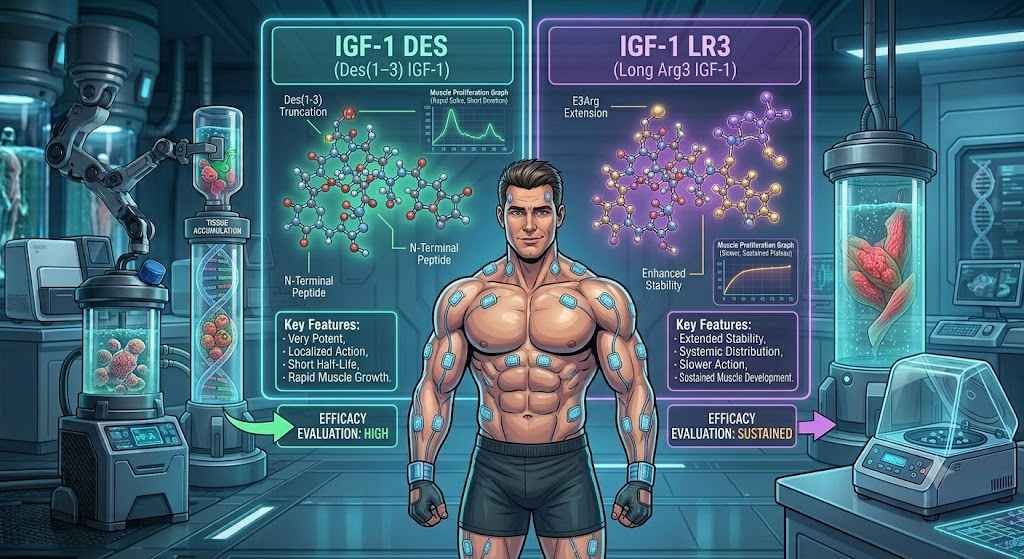
A common comparison among researchers and bodybuilding communities is IGF-1 DES vs IGF-1 LR3.
Both are modified versions of IGF-1, but they have different structural characteristics.
| Feature | IGF-1 DES | IGF-1 LR3 |
|---|---|---|
| Structure | Shortened IGF-1 variant | Extended IGF-1 analog |
| Research Interest | Local muscle signaling | Longer activity profile |
| Binding Characteristics | Different receptor interaction | Modified half-life |
| Primary Research Area | Muscle cell response | Growth factor activity |
Because these peptides have different structures, their biological behavior may not be identical.
Why Proper Knowledge Is Important Before Using IGF-1 DES
Understanding IGF-1 DES dosage requires knowledge of how growth factors interact with the body.
IGF pathways influence many systems beyond muscle tissue, including:
- Cell growth regulation
- Glucose metabolism
- Tissue development
- Cellular communication
Changing these pathways without proper understanding may carry potential risks.
A responsible approach should always include:
- Learning about the compound
- Understanding possible effects
- Considering personal health factors
- Consulting qualified medical professionals when appropriate
Can Beginners Use IGF-1 DES?
IGF-1 DES is generally considered an advanced research compound rather than something designed for beginners.
Beginners can usually achieve significant improvements through:
- Progressive workout programs
- Proper nutrition
- Adequate protein intake
- Consistent recovery habits
Building a strong foundation naturally is important before exploring advanced areas of sports science.
IGF-1 DES Dosage: Key Points
- There is no officially approved bodybuilding dosage for IGF-1 DES.
- Research data in humans remains limited.
- Individual responses can vary.
- Proper training and nutrition remain the foundation of muscle development.
- Understanding potential risks is essential.
IGF-1 DES Side Effects and Safety Concerns
When researching IGF-1 DES side effects, it is important to understand that IGF-1 DES is a compound that interacts with growth-factor pathways inside the body. These pathways are involved in cell growth, metabolism, and tissue development, meaning changes to them may have effects beyond muscle tissue. GHRP-6 Peptide: Benefits, Dosage, Side Effects
Although IGF-1 DES is discussed in bodybuilding and research communities, long-term human safety data is limited. The potential risks are still being studied, and responsible consideration of possible side effects is important.
Potential IGF-1 DES Side Effects
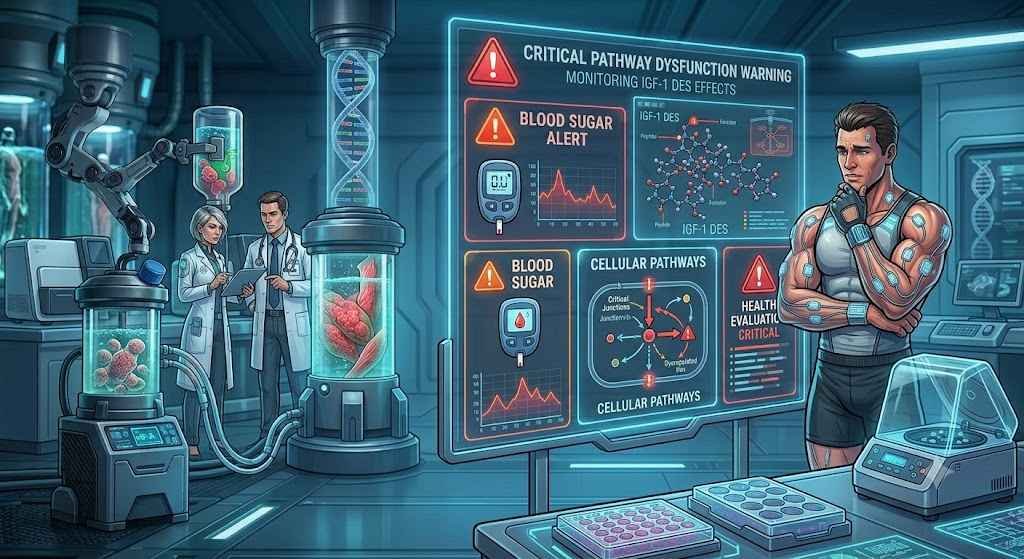
The possible side effects associated with IGF-1 DES peptide are mainly related to its influence on insulin-like growth factor signaling.
Blood Sugar Changes
IGF-related pathways are connected with glucose metabolism and insulin activity. Altering these pathways may potentially affect blood sugar regulation in some individuals.
Possible concerns may include:
- Changes in insulin sensitivity
- Fluctuations in blood glucose levels
- Increased risk of blood sugar-related complications in susceptible individuals
People with existing metabolic conditions should be especially cautious.
Hypoglycemia Risk
One of the commonly discussed concerns with IGF-related compounds is the possibility of low blood sugar levels.
Symptoms of low blood sugar may include:
- Dizziness
- Weakness
- Sweating
- Shaking
- Confusion
- Increased hunger
- Fatigue
Because glucose regulation is a complex process, any compound that influences insulin-like pathways requires careful consideration.
IGF-1 DES and Abnormal Cell Growth Concerns
IGF-1 pathways are naturally involved in regulating cell growth and development. Because of this, researchers continue to study how increased IGF signaling may affect different tissues.
A major area of scientific interest is the relationship between growth-factor activity and uncontrolled cell growth.
This does not mean IGF-1 DES causes cancer, but it highlights why compounds affecting growth pathways require careful research and responsible use.
Water Retention and Soft Tissue Changes
Some individuals discussing IGF-1 DES bodybuilding effects report concerns related to changes in muscle fullness and water balance.
Possible observations may include:
- Temporary changes in muscle appearance
- Increased fullness
- Changes in body composition perception
Individual responses can vary significantly.
Joint and Tissue Growth Concerns
Since IGF-1 is involved in tissue development, researchers study its effects on different types of cells, including connective tissues.
Potential concerns may involve:
- Changes in soft tissues
- Alterations in tissue growth signaling
- Unpredictable long-term effects
More research is required to fully understand these possibilities.
Headaches and General Discomfort
Some users discussing IGF-related compounds report experiencing general side effects such as:
- Headaches
- Fatigue
- Feeling unwell
- Changes in energy levels
These effects can vary depending on individual sensitivity and overall health.
Who Should Avoid IGF-1 DES?
Extra caution is recommended for individuals who:
- Have blood sugar regulation problems
- Have a history of hormone-related health issues
- Have existing medical conditions involving growth pathways
- Are using medications that affect glucose metabolism
- Are unsure about the potential risks
Consulting a qualified healthcare professional is recommended before considering compounds that influence growth-factor pathways. MOTS-C Peptide: Benefits, Dosage, Side Effects
IGF-1 DES Side Effects: Quick Summary
| Potential Concern | Explanation |
|---|---|
| Blood Sugar Changes | IGF pathways interact with glucose metabolism |
| Hypoglycemia Risk | Possible effects on blood glucose regulation |
| Cell Growth Concerns | Growth pathways require careful research |
| Tissue Changes | IGF signaling affects multiple tissues |
| Headaches/Fatigue | Reported general discomfort in some cases |
Is IGF-1 DES Safe?
The safety of IGF-1 DES peptide is still being researched. While IGF-1 plays an important natural role in the human body, modifying growth-factor activity can have complex effects.
Anyone researching IGF-1 DES for bodybuilding should understand that it is not a replacement for proper training, nutrition, and recovery strategies.
A strong foundation built through:
- Structured resistance training
- Balanced nutrition
- Quality sleep
- Consistent lifestyle habits
remains the most reliable approach for improving muscle growth and performance.
IGF-1 DES vs IGF-1 LR3: What Is The Difference?
One of the most common questions in advanced peptide research is IGF-1 DES vs IGF-1 LR3. Both compounds are modified versions of Insulin-like Growth Factor-1 (IGF-1), but they have different molecular structures and biological characteristics.
Although both are related to the IGF-1 family, their differences in structure can influence how they interact with receptors, binding proteins, and cellular signaling pathways.
Understanding the differences between IGF-1 DES peptide and IGF-1 LR3 helps explain why researchers study these compounds separately.
What Is The Difference Between IGF-1 DES and IGF-1 LR3?
The main difference between IGF-1 DES and IGF-1 LR3 comes from their molecular modifications.
IGF-1 DES
IGF-1 DES is a shorter variant of IGF-1 that lacks the first three amino acids from the N-terminal region.
This structural modification may affect:
- Receptor interaction
- Binding characteristics
- Local activity around tissues
IGF-1 DES is often studied because of its potential role in muscle-cell signaling and regeneration pathways.
IGF-1 LR3
IGF-1 LR3 is a modified version of IGF-1 that contains an additional amino acid sequence, making it structurally different from natural IGF-1.
This modification is associated with:
- Altered binding properties
- Extended activity compared with natural IGF-1
- Different interaction with IGF-binding proteins
IGF-1 LR3 has also gained attention in bodybuilding research because of its longer-lasting activity profile.
IGF-1 DES vs IGF-1 LR3 Comparison Table
| Feature | IGF-1 DES | IGF-1 LR3 |
|---|---|---|
| Full Name | Des(1-3) IGF-1 | Long R3 IGF-1 |
| Structure | Three amino acids removed | Modified with additional amino acid changes |
| Research Interest | Local muscle signaling | Extended IGF activity |
| Binding Characteristics | Different receptor interaction | Reduced binding to some IGF-binding proteins |
| Research Focus | Muscle cell response | Growth-factor activity |
IGF-1 DES vs IGF-1 LR3 For Muscle Growth
Both IGF-1 DES and IGF-1 LR3 are researched because of their connection with muscle growth pathways.
IGF signaling is involved in:
- Muscle cell communication
- Protein synthesis regulation
- Tissue repair mechanisms
- Cellular adaptation
However, the exact effects can depend on many factors, including:
- Individual biology
- Training status
- Nutrition
- Recovery
- Overall health
Neither compound can replace the fundamentals of muscle development.
IGF-1 DES vs IGF-1 LR3: Which One Is Better?
There is no scientifically established answer to which is “better.”
The two peptides have different structures and are studied for different biological characteristics.
Researchers may choose to investigate one over the other depending on the specific purpose of the study.
Important factors include:
- Research objective
- Desired biological pathway being studied
- Available scientific data
- Safety considerations
IGF-1 DES vs IGF-1 LR3: Key Takeaways
- IGF-1 DES is a shorter IGF-1 variant with a unique structure.
- IGF-1 LR3 is a modified IGF-1 analog designed to alter activity characteristics.
- Both affect IGF-related pathways.
- Both require further research to understand long-term effects.
- Neither should be considered a substitute for proper training and nutrition.
IGF-1 DES Frequently Asked Questions (FAQs)
What Is IGF-1 DES Peptide?
IGF-1 DES is a modified form of Insulin-like Growth Factor-1 (IGF-1) that has a unique molecular structure. It is studied for its interaction with IGF receptors and its role in cellular growth, muscle signaling, and tissue repair pathways.
What Are The Benefits of IGF-1 DES?
The commonly discussed IGF-1 DES benefits are related to its potential role in muscle-cell signaling, recovery pathways, and tissue regeneration research.
Areas of scientific interest include:
- Muscle growth pathways
- Cellular repair mechanisms
- Satellite cell activity
- Tissue adaptation
However, more research is needed to fully understand its effects.
Is IGF-1 DES The Same As IGF-1 LR3?
No, IGF-1 DES and IGF-1 LR3 are different modified versions of IGF-1.
IGF-1 DES has a shorter structure due to the removal of three amino acids, while IGF-1 LR3 contains structural modifications designed to change its activity profile.
Both interact with IGF-related pathways but have different characteristics. Retatrutide Dosage Guide: Clinical Schedule, Results & Safety
What Is The Difference Between IGF-1 DES and HGH?
Although both are associated with growth-related processes, IGF-1 DES and HGH (Human Growth Hormone) work through different mechanisms.
HGH stimulates the production of IGF-1 in the body, while IGF-1 DES is a modified IGF-1 molecule that directly interacts with IGF receptors.
Can IGF-1 DES Increase Muscle Size?
IGF-1 pathways are involved in muscle development and repair processes. Because of this, IGF-1 DES is researched in relation to muscle growth mechanisms.
However, muscle development depends on multiple factors, including:
- Training intensity
- Diet
- Protein intake
- Recovery
- Genetics
Is IGF-1 DES Safe?
The long-term safety profile of IGF-1 DES is not fully established. Since it influences growth-factor signaling pathways, potential risks and side effects require careful consideration.
Research is ongoing to better understand its effects.
Does IGF-1 DES Have Side Effects?
Possible IGF-1 DES side effects may be related to changes in growth-factor activity and glucose metabolism.
Potential concerns include:
- Blood sugar changes
- Hypoglycemia risk
- Headaches
- Fatigue
- Unpredictable tissue effects
Individual responses may vary.
Final Thoughts: Is IGF-1 DES Worth Considering?
IGF-1 DES peptide is an interesting compound in the field of advanced muscle research because of its connection with IGF signaling, muscle-cell communication, and tissue regeneration pathways.
The popularity of IGF-1 DES bodybuilding research comes from its unique structure and its potential influence on mechanisms involved in muscle adaptation.
However, it is important to understand that IGF-1 DES is not a replacement for the fundamentals of bodybuilding. Proper training, nutrition, recovery, and consistency remain the foundation of achieving long-term results.
Anyone researching IGF-1 DES should take time to understand:
- How IGF pathways work
- Potential risks
- Current scientific limitations
- Individual health considerations
Knowledge and responsible decision-making are essential when exploring advanced research compounds.
Need More Information About IGF-1 DES?
At Gym Pundit, we provide detailed information about advanced bodybuilding compounds, peptides, SARMs, training strategies, and nutrition guidance.
Our team has been serving the fitness community since 2014, helping athletes and fitness enthusiasts understand bodybuilding science better.
For product information, availability, or general queries, contact our team:
WhatsApp: 7696593279



[…] Consistent nutrition and training remain the biggest factors influencing where fat is lost. IGF-1 DES Peptide: Benefits, Dosage, Side Effects […]