Benefits and Types of SARMs have become a major topic in bodybuilding, fitness, and performance-enhancement discussions, but understanding these compounds requires looking beyond the marketing claims. SARMs, or Selective Androgen Receptor Modulators, are investigational compounds designed to interact with androgen receptors in a more selective way than traditional androgens. In this guide, we’ll explore the major types of SARMs, their potential benefits, how they differ, their research status, and the risks that users should understand before forming an opinion about them.
These compounds have attracted enormous attention because they were designed around an interesting idea: activate the androgen receptor in a more tissue-selective way than traditional androgenic drugs.
That concept sounds simple, but the science behind it is much more complicated.
SARMs, or Selective Androgen Receptor Modulators, are a class of compounds developed to investigate whether some of the anabolic effects associated with testosterone and other androgens could be produced while reducing unwanted effects in certain tissues. Research has explored their potential applications in areas such as muscle wasting, osteoporosis, frailty, and other conditions.
At the same time, SARMs have become popular in the bodybuilding world because compounds such as Ostarine, Ligandrol, RAD-140, Andarine, and others are commonly discussed in relation to muscle development, body composition, and athletic performance.
But there is a major distinction that should not be overlooked:
A compound being researched for a particular effect does not automatically mean it is an approved or proven treatment for that purpose.
In the United States, no SARM currently has an FDA-approved indication, and the FDA has repeatedly warned consumers about products marketed as SARMs.
So, what exactly are SARMs, what makes the different types unique, and why have they become such a major topic in bodybuilding?
Let’s break it down.
What Are SARMs?

SARMs stands for Selective Androgen Receptor Modulators.
The name tells you quite a lot about how these compounds were designed.
Androgen receptors are proteins found in various tissues throughout the body. Natural androgens such as testosterone and dihydrotestosterone interact with these receptors and influence processes involving muscle, bone, reproductive tissues, and other organs.
SARMs are designed to interact with the androgen receptor while producing different patterns of activity depending on the compound and tissue involved.
Researchers hoped that this selectivity could allow beneficial anabolic effects—particularly in muscle and bone—while limiting some unwanted androgenic effects associated with conventional androgen therapy.
That’s where the attraction comes from.
Traditional anabolic-androgenic steroids can have broad effects because their metabolites and receptor activity influence multiple tissues. SARMs were developed as an attempt to create a more targeted approach.
However, “selective” does not mean “side-effect free.”
Modern research continues to question how completely these compounds can separate desired anabolic effects from unwanted androgenic and systemic effects. A 2025 critical appraisal noted that clinically meaningful tissue selectivity remains uncertain and that evidence supporting SARMs as superior to conventional androgens is still incomplete.
Why Were SARMs Developed?

The original scientific interest in SARMs wasn’t bodybuilding.
Researchers were interested in developing new androgen-based therapies that could potentially help people dealing with conditions involving:
- Muscle wasting
- Loss of lean body mass
- Osteoporosis
- Frailty
- Certain forms of cancer-related wasting
- Hormonal deficiencies
- Other conditions where anabolic activity could potentially be beneficial
Clinical and preclinical research has investigated several of these possibilities, although development has not resulted in FDA-approved SARM treatments.
This distinction is important because internet discussions often make SARMs sound like finished pharmaceutical products.
They aren’t.
Many of the compounds discussed in fitness communities remain investigational, while products sold online can also have significant quality and labeling problems.
How SARMs Work
To understand the different types, it helps to understand the basic mechanism first.
When an androgen binds to an androgen receptor, it can influence gene expression inside the cell. This ultimately affects various physiological processes.
SARMs also interact with androgen receptors, but their chemical structures influence how those receptors behave after binding.
Researchers have proposed several mechanisms that may contribute to tissue-selective activity, including differences in receptor conformation, recruitment of regulatory proteins, and signaling pathways between tissues.
Think of it this way:
Same receptor → different compound → different biological signaling pattern.
That’s one reason different SARMs can produce very different research results.
Some have primarily been investigated for effects on lean body mass. Others have attracted attention because of their potential effects on bone, muscle, or other androgen-responsive tissues.
And this brings us to the biggest question surrounding the subject.
Benefits and Types of SARMs: What Are the Potential Benefits?

When people search for the benefits of SARMs, they’re usually talking about three major areas:
Muscle and lean mass
Some SARMs have demonstrated the ability to increase lean body mass in clinical research, although improvements in actual physical performance or strength have not always followed to the same degree.
Bone health
The anabolic effects of androgen-receptor signaling have made SARMs interesting candidates for research involving bone loss and osteoporosis.
Body composition
Certain investigational SARMs have been studied for their ability to influence lean mass and body composition, which is one reason they have attracted attention from the fitness community.
But here’s where responsible interpretation matters.
The potential benefits observed in research should not be confused with guaranteed results from recreational use.
Clinical trials use controlled compounds, defined populations, measured doses, medical monitoring, and specific research objectives. Products purchased through unofficial online channels may not contain what their labels claim.
The FDA has specifically warned that products marketed as SARMs are unapproved and may pose serious risks, including liver injury and cardiovascular complications.
So while the scientific concept behind SARMs is fascinating, the real-world picture is considerably more complicated than the marketing claims you may see online.
Why Are There So Many Different SARMs?
Not all SARMs are the same.
Each compound has its own chemical structure, receptor activity, pharmacological characteristics, and research history.
That’s why you will see different compounds associated with different goals in bodybuilding discussions.
Some of the most commonly discussed names include:
| SARM | Common Name | General Research Interest |
|---|---|---|
| MK-2866 | Ostarine / Enobosarm | Lean mass and muscle-related research |
| LGD-4033 | Ligandrol | Lean body mass and anabolic research |
| RAD-140 | Testolone | Muscle and androgen-receptor research |
| S-4 | Andarine | Muscle and bone-related research |
| YK-11 | YK-11 | Myostatin-related and anabolic research |
| S-23 | S-23 | Potent androgen-receptor research |
| ACP-105 | ACP-105 | Investigational anabolic research |
It’s worth emphasizing that these names do not represent FDA-approved bodybuilding treatments.
The popularity of a compound online also doesn’t necessarily reflect the quality or quantity of human evidence behind it.
Some compounds have substantially more published research than others, while certain popular products have limited human data.
That difference becomes extremely important when evaluating claims about safety, effectiveness, and long-term outcomes.
Types of SARMs: The Major Compounds Explained
One of the biggest mistakes people make when researching SARMs is treating every compound as if they are basically the same.
They aren’t.
Different SARMs have different chemical structures, receptor activity, research histories, and levels of human evidence. Some have progressed into human clinical trials, while others remain largely experimental.
The bodybuilding community also tends to rank these compounds according to perceived “strength,” muscle-building potential, or popularity. However, those rankings don’t necessarily reflect the quality of scientific evidence available for each compound.
Let’s take a closer look at the major names you’ll encounter when researching benefits and types of SARMs.
Benefits and Types of SARMs: Ostarine (MK-2866)
Ostarine, also known as MK-2866 or enobosarm, is one of the most widely recognized compounds in the SARM category.
It was developed as an investigational compound with particular interest in preserving or increasing lean body mass.
Clinical research has investigated enobosarm in populations where maintaining muscle mass could be medically important. Studies have reported increases in lean body mass, although improvements in physical function have not always been equally impressive.
This research helps explain why Ostarine became so popular among fitness enthusiasts.
Why Ostarine Attracts Attention
Ostarine is commonly discussed in relation to:
- Lean body mass
- Muscle preservation
- Changes in body composition
- Anabolic activity
However, its popularity shouldn’t be confused with regulatory approval or proven long-term safety.
Ostarine is not an FDA-approved bodybuilding drug, and recreational use can involve risks that are difficult to predict, particularly because products sold online may not contain exactly what their labels claim.
In other words, Ostarine may be one of the better-known SARMs, but “well known” does not mean “risk free.”
Benefits and Types of SARMs: Ligandrol (LGD-4033)
LGD-4033, commonly known as Ligandrol, is another widely discussed SARM.
It has developed a reputation in bodybuilding circles for being associated with increases in lean body mass, and there is some human research behind that reputation.
A controlled clinical study involving healthy men found that LGD-4033 produced dose-dependent increases in lean body mass during the study period. At the same time, researchers observed suppression of testosterone levels and changes in certain lipid measurements.
That combination is important.
A compound can produce a desirable anabolic effect while also producing physiological changes that may be undesirable.
What Makes Ligandrol Different?
In fitness communities, Ligandrol is frequently associated with:
- Lean-mass development
- Increased body weight
- Anabolic activity
- Muscle-building research
But the available human studies are relatively limited in duration, and they do not establish the long-term safety of recreational use.
Therefore, it is more accurate to describe LGD-4033 as an investigational SARM with demonstrated anabolic effects in controlled research rather than as an approved muscle-building medication.
Benefits and Types of SARMs: RAD-140 (Testolone)
RAD-140, commonly called Testolone, is one of the most recognizable names in the modern SARM market.
It was developed as a potent androgen-receptor modulator and has attracted scientific interest because of its anabolic properties.
Preclinical research has examined RAD-140 in relation to androgen-receptor signaling and muscle-related effects, while early clinical research has also investigated the compound.
However, the amount of human evidence remains considerably smaller than what exists for established pharmaceutical treatments.
Why RAD-140 Is Considered Potent
Bodybuilding discussions often describe RAD-140 as a “strong” or “advanced” SARM.
That reputation comes largely from its pharmacological characteristics and preclinical research rather than extensive long-term human trials.
It is commonly discussed in connection with:
- Muscle development
- Lean body mass
- Strength
- Androgen-receptor activity
But potency isn’t automatically an advantage.
Greater androgen-receptor activity can also mean greater potential for hormonal disruption and other unwanted effects.
This is why simply asking which SARM is “strongest” doesn’t provide a complete picture. Peptides for Bodybuilding: Types, Uses, Dosage & Safety
Andarine (S-4): A SARM With a Distinctive Side Effect
Andarine, commonly known as S-4, is another investigational SARM that frequently appears in bodybuilding discussions.
Research has explored its anabolic and androgen-receptor activity, while online fitness communities have associated it with muscle retention and body-composition goals.
However, S-4 has a characteristic that makes it particularly different from several other compounds in this category.
S-4 and Visual Disturbances
Visual problems are one of the most frequently discussed concerns associated with Andarine.
Users and research reports have described issues involving night vision and adaptation to darkness.
This is an important reminder that the word “selective” doesn’t mean that a compound only affects skeletal muscle.
A SARM can interact with biological systems beyond the tissues people are primarily interested in.
For that reason, S-4 shouldn’t simply be described as another muscle-building compound without discussing its distinctive safety concerns.

Benefits and Types of SARMs: YK-11
YK-11 occupies a somewhat unusual position in the SARM conversation.
It is frequently marketed alongside SARMs, but its pharmacology is not as straightforward as better-characterized compounds such as Ostarine or LGD-4033.
YK-11 has attracted attention because of experimental research involving pathways associated with myostatin and muscle development.
This is also where online marketing can get ahead of the science.
You may encounter claims describing YK-11 as a powerful “myostatin inhibitor.” That description oversimplifies the available evidence.
Human research is extremely limited, making it difficult to determine how laboratory findings translate into meaningful outcomes or long-term safety in healthy people.
Why YK-11 Remains Experimental
The interest surrounding YK-11 mainly comes from proposed effects involving:
- Myostatin-related pathways
- Muscle-cell development
- Anabolic signaling
But limited human evidence means there is still substantial uncertainty.
That makes YK-11 very different from a conventional, well-established pharmaceutical treatment.
S-23 and Its Unusual Research Profile
S-23 is another investigational compound commonly grouped with SARMs.
It is often described online in terms of muscle-building potential, but its research history is particularly interesting because scientists have also investigated its effects on the male reproductive system.
Preclinical studies have examined S-23 in connection with male hormonal contraception, including suppression of sperm production.
This matters because it demonstrates that SARMs can have biological effects extending beyond muscle tissue.
Calling S-23 simply a “stronger muscle-building SARM” therefore misses an important part of its pharmacology.
ACP-105: A Lesser-Known Compound
ACP-105 is considerably less familiar to most fitness audiences than Ostarine, Ligandrol, or RAD-140.
It is an investigational androgen-receptor modulator that has been examined primarily in preclinical research.
Because substantially less human information is available, there is also less reliable evidence for determining its real-world effects in healthy athletes.
And this leads to an important principle when researching lesser-known SARMs:
Limited evidence doesn’t mean limited risk.
Sometimes it simply means that researchers haven’t studied the compound extensively enough to understand its risks.
Benefits and Types of SARMs: Comparing the Major Compounds
Here’s a simplified overview of the compounds discussed above:
| Compound | Common Name | Main Research Interest | Human Evidence |
|---|---|---|---|
| MK-2866 | Ostarine / Enobosarm | Lean mass and muscle preservation | More developed |
| LGD-4033 | Ligandrol | Lean body mass | Human studies available |
| RAD-140 | Testolone | Androgen/anabolic activity | Limited |
| S-4 | Andarine | Anabolic and bone-related research | Limited |
| YK-11 | YK-11 | Myostatin-related mechanisms | Very limited |
| S-23 | S-23 | Androgen and reproductive research | Primarily preclinical |
| ACP-105 | ACP-105 | Investigational anabolic activity | Limited |
The table reveals something that is often overlooked in online SARM discussions:
The evidence isn’t evenly distributed across the category.
Some compounds have been studied in controlled human trials, while others have little or no meaningful human research.
That difference matters enormously when evaluating claims about effectiveness and safety.
Benefits and Types of SARMs: Is There a “Best” Compound?
This is probably one of the most common questions people ask.
Which SARM is the best?
Scientifically, there isn’t a universal answer.
The answer changes depending on what outcome you’re measuring.
A compound that produces a particular change in lean body mass may not be the same compound that produces the most interesting results in bone research.
Likewise, the compound producing the strongest anabolic signal isn’t necessarily the one with the most favorable safety profile.
And when the question becomes “Which SARM is safest for bodybuilding?”, the available evidence doesn’t support a simple winner.
That’s because most recreational SARM use occurs outside the controlled environment of clinical research.
The more useful approach is to examine each compound based on:
- What researchers have actually studied
- How much human evidence exists
- What adverse effects have been observed
- Whether the compound has regulatory approval
- How reliable the available product-quality information is
That gives us a much more realistic picture than simply ranking SARMs from “weakest” to “strongest.”
SARMs vs Anabolic Steroids
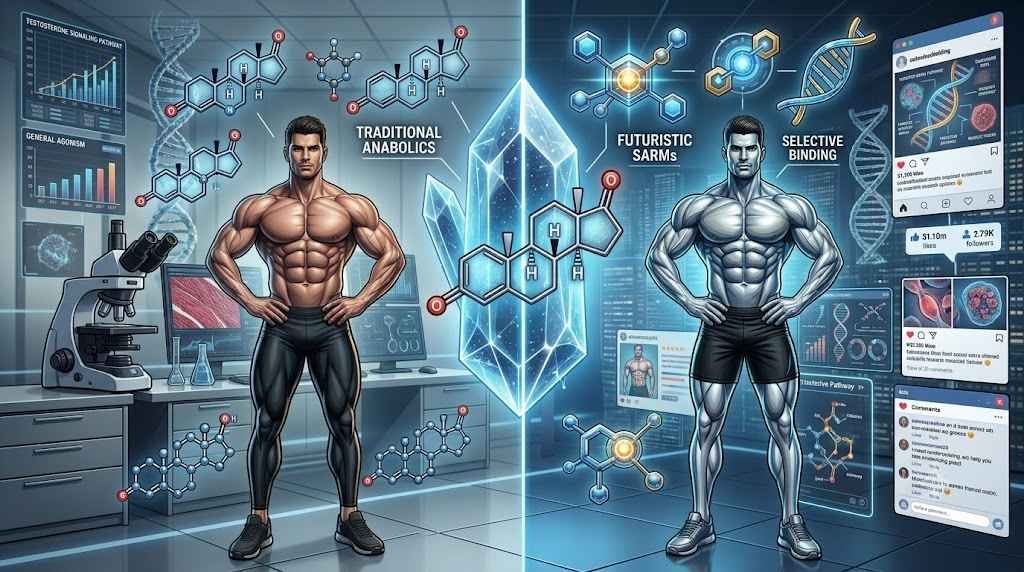
SARMs and anabolic steroids are often discussed together because both interact with androgen-related pathways.
However, they are not the same class of compounds.
Traditional anabolic-androgenic steroids include testosterone and various synthetic derivatives that can produce broad androgenic and anabolic effects.
SARMs were developed with the goal of producing a more selective pattern of androgen-receptor activity.
The theoretical idea is attractive:
More targeted receptor activity could potentially provide anabolic effects while reducing certain unwanted androgenic effects.
But “potentially” is the key word.
Clinical development has not established that SARMs provide the broad safety advantages that early theories might suggest. Concerns have been raised around hormonal suppression, liver effects, cardiovascular markers, and other adverse outcomes.
So while the science behind SARMs is fascinating, describing them as simply a “safer version of steroids” would be misleading.
The two categories have different pharmacology, different research histories, and different risk profiles.
For anyone researching benefits and types of SARMs, understanding that distinction is essential before looking at claims about muscle growth, fat loss, or athletic performance.
Benefits and Types of SARMs: What Are the Potential Benefits?
When people search for benefits and types of SARMs, they’re usually interested in one thing: what these compounds can actually do.
The answer isn’t as straightforward as many bodybuilding websites make it sound.
Research has shown that certain investigational SARMs can influence lean body mass and other androgen-related processes. However, evidence varies substantially between compounds, and results from controlled studies shouldn’t automatically be interpreted as proof that recreational SARM use is safe or effective.
The potential areas of interest include:
- Lean body mass
- Muscle preservation
- Body composition
- Bone health
- Androgen-related research
- Potential applications in muscle-wasting conditions
Let’s examine each area separately.
Benefits and Types of SARMs for Muscle Growth
Muscle growth is probably the biggest reason SARMs became popular in bodybuilding communities.
And there is a scientific reason for that interest.
Androgen-receptor signaling plays an important role in muscle tissue. Because SARMs are designed to interact with these receptors, researchers have investigated whether they can stimulate anabolic processes while producing a more selective response than traditional androgenic compounds.
Some clinical studies have demonstrated increases in lean body mass with investigational SARMs.
For example, research involving enobosarm has reported increases in lean body mass in certain populations. LGD-4033 has also demonstrated increases in lean body mass during controlled human research.
But there’s an important distinction:
An increase in lean body mass is not automatically the same thing as a dramatic increase in functional muscle strength or athletic performance.
Body composition, muscle quality, strength, endurance, and physical function are separate measurements.
This is one reason scientific studies need to be interpreted carefully rather than reduced to a simple “more muscle = better performance” conclusion.
Why Lean Mass Matters
Lean body mass includes more than contractile skeletal muscle.
It can include:
- Muscle tissue
- Body water
- Organs
- Connective tissue
- Other non-fat components of the body
Therefore, a clinical study reporting an increase in lean body mass shouldn’t automatically be interpreted as the same result as adding a specific amount of new contractile muscle.
This distinction is particularly important when comparing clinical research with bodybuilding claims.
Benefits and Types of SARMs for Muscle Retention
Another area of interest is maintaining lean tissue during periods when muscle loss may occur.
Muscle loss can happen for many reasons, including:
- Aging
- Prolonged inactivity
- Illness
- Calorie restriction
- Certain medical conditions
Researchers have investigated SARMs partly because androgen-receptor activation may help preserve anabolic signaling.
This is one reason compounds such as enobosarm have been studied in populations vulnerable to muscle wasting.
For athletes, this has led to widespread interest in the idea of using SARMs during dieting phases.
However, clinical research into muscle wasting and recreational bodybuilding are two very different situations.
A compound studied for preserving lean mass in an older or medically compromised population cannot automatically be assumed to provide the same benefit for a healthy competitive athlete. Steroids for Bodybuilding: Benefits, Dosage & Side Effects
Benefits and Types of SARMs for Body Composition
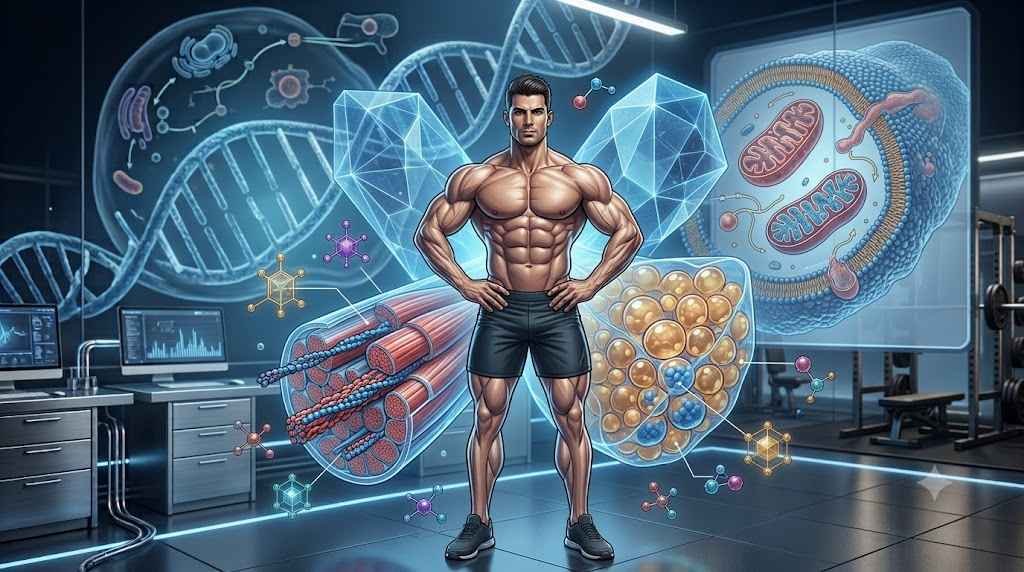
Body composition refers to the relationship between fat mass and lean mass.
This is another area where SARMs receive significant attention.
The theoretical attraction is easy to understand.
If a compound increases or preserves lean tissue while an individual reduces body fat through diet and training, overall body composition could potentially improve.
However, SARMs aren’t fat-burning medications in the conventional sense.
Their primary pharmacological target is the androgen receptor, not the metabolic pathways directly targeted by established weight-management medications.
SARMs and Fat Loss
One of the most common online claims is that SARMs directly burn body fat.
That description is misleading.
SARMs are not primarily designed as fat-loss drugs.
Any changes in body composition observed during research may involve alterations in lean mass, changes in overall body composition, training status, diet, or other factors.
This means the phrase “SARMs for fat loss” should be approached carefully.
A person can become leaner while using an anabolic compound without the compound itself functioning as a conventional fat-burning agent.
Dietary energy balance remains a fundamental factor in reducing body fat.
Benefits and Types of SARMs for Bone Health
Muscle isn’t the only tissue that has made SARMs scientifically interesting.
Bone is also an androgen-responsive tissue.
Researchers have therefore investigated whether selective androgen-receptor modulation could potentially support bone health and address conditions involving reduced bone density.
This is particularly relevant to conditions such as osteoporosis and age-related loss of bone mass.
Some preclinical and clinical research has explored this possibility, although SARMs have not become established treatments for osteoporosis.
This is an excellent example of the broader scientific concept behind the entire SARM category.
Researchers weren’t simply looking for a new bodybuilding compound.
They were investigating whether androgen signaling could be manipulated in a more targeted way for therapeutic purposes.
Benefits and Types of SARMs in Muscle-Wasting Research
Another major area of interest is muscle wasting.
Conditions involving loss of skeletal muscle can significantly affect quality of life, mobility, and recovery.
Researchers have therefore explored anabolic agents that might help maintain or increase lean tissue without relying entirely on conventional testosterone-based treatments.
Enobosarm, for example, has been studied in clinical settings involving muscle loss and lean body mass.
This research is important because it shows where the scientific interest in SARMs originally came from.
The medical goal was not simply to create a shortcut for bigger muscles.
The broader objective was to investigate whether selective androgen-receptor activity could potentially provide therapeutic benefits.
SARMs and Athletic Performance
This is where online claims often become much stronger than the evidence.
Bodybuilding communities commonly associate SARMs with:
- Increased strength
- Improved training capacity
- Better recovery
- Increased muscle size
- Enhanced athletic performance
Some of these claims are biologically plausible because changes in lean body mass and androgen-receptor signaling can influence physical characteristics.
But plausibility isn’t the same as clinical proof.
Human studies on individual SARMs have often been relatively short and designed around specific medical or physiological endpoints rather than competitive athletic performance.
There is also limited evidence establishing how these compounds affect long-term performance in trained athletes.
Therefore, it would be inaccurate to describe SARMs as proven performance-enhancing medications.
Benefits and Types of SARMs: What About Recovery?
“Recovery” is another popular keyword surrounding SARMs.
The idea is that increased anabolic signaling could potentially help the body maintain or build tissue during periods of stress.
But recovery isn’t one single biological process.
It involves:
- Muscle protein synthesis
- Muscle damage and repair
- Sleep
- Nutrition
- Nervous-system recovery
- Hormonal regulation
- Training load
- Hydration
- Psychological stress
A compound that affects androgen receptors may influence some aspects of these processes, but that doesn’t mean it automatically accelerates every component of recovery.
In other words, SARMs shouldn’t be viewed as a replacement for adequate sleep, nutrition, programming, and rest.
Are the Benefits the Same for Every SARM?
Absolutely not.
This is one of the most important points in the entire article.
The term “SARM” describes a category rather than one specific drug.
Ostarine, Ligandrol, RAD-140, Andarine, YK-11, and S-23 are chemically and pharmacologically different compounds.
They may interact with androgen receptors differently and have different research profiles.
Some have human clinical data.
Others have mostly preclinical evidence.
Some have distinctive safety concerns that aren’t necessarily shared by every compound.
Therefore, saying “SARMs increase muscle” is an overly broad statement.
A more accurate description would be:
Certain investigational SARMs have demonstrated anabolic or lean-mass effects in research, but their effectiveness and safety vary by compound and remain incompletely understood.
That distinction is what separates evidence-based information from typical internet marketing.
What the Research Really Tells Us
When the available evidence is put together, a balanced picture emerges.
SARMs are scientifically interesting because they demonstrate that androgen-receptor signaling can potentially be manipulated in different ways.
Some compounds have shown measurable effects on lean body mass.
Others have generated interest because of their potential effects on bone or reproductive biology.
But several major questions remain.
We still need better long-term human data on:
- Cardiovascular effects
- Liver health
- Hormonal recovery
- Fertility
- Long-term body composition
- Cancer-related risks
- Interactions with other medications
- Effects of prolonged exposure
And there’s another issue that is especially important outside clinical research: product quality.
A laboratory compound studied in a controlled trial is not necessarily equivalent to a product purchased from an unregulated online source.
Label accuracy, contamination, substitution, and inconsistent concentrations can all complicate the real-world picture.
That’s why understanding the potential benefits and types of SARMs requires looking at both sides of the equation:
What might these compounds offer, and what could they potentially cost in terms of health and safety?
The next section tackles the second half of that equation.
Benefits and Types of SARMs: Understanding the Risks
The benefits are only one side of the SARMs conversation.
If you’re researching benefits and types of SARMs, you also need to understand what can happen when these compounds interfere with the body’s androgen system.
This is where a lot of online content becomes misleading.
You’ll often see SARMs described as a “safer alternative” to anabolic steroids. The word safer can create the impression that the compounds are low-risk or harmless.
That’s not what the available evidence tells us.
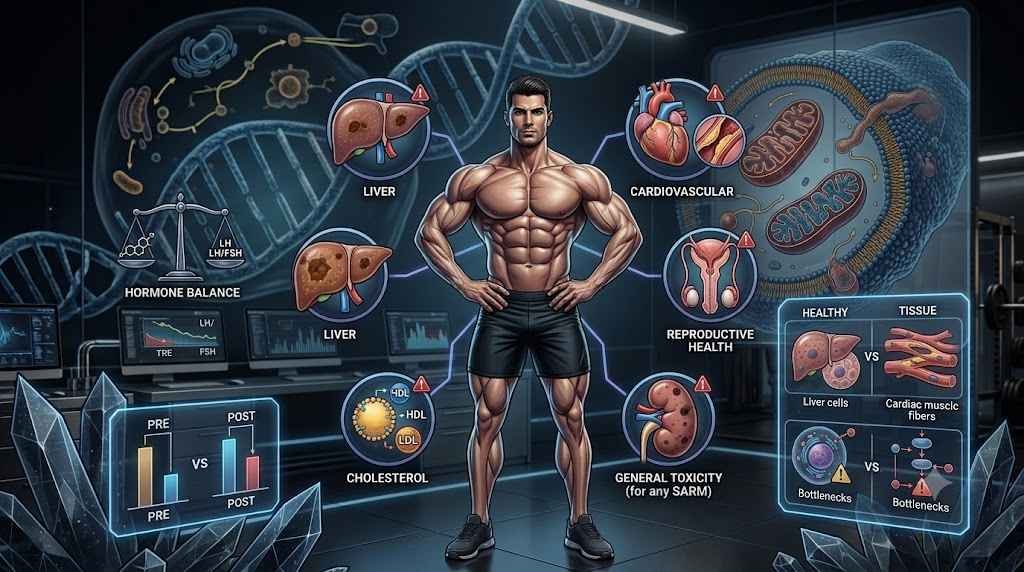
SARMs are pharmacologically active compounds. They can influence hormone signaling, cholesterol levels, liver function, and other biological systems. Some risks are relatively well documented, while others remain uncertain because long-term human data are limited.
And that uncertainty itself is something worth taking seriously. Clen: Guide to Fat Loss, Dose, Cycles & Side Effects
Benefits and Types of SARMs: Testosterone Suppression
One of the most important concerns is suppression of the body’s natural testosterone production.
Your endocrine system operates through a feedback loop. When the body detects sufficient androgen activity, it can reduce signaling that normally stimulates the testes to produce testosterone.
Because SARMs activate androgen receptors, they can interfere with this system.
Clinical research involving LGD-4033, for example, demonstrated suppression of testosterone and other hormonal changes during treatment.
The degree of suppression can vary depending on the compound, exposure, individual biology, and other factors.
This is particularly relevant because some people assume that selective activity means SARMs won’t affect natural testosterone production.
That’s incorrect.
Selective androgen-receptor activity does not mean selective hormonal effects.
What Can Testosterone Suppression Mean?
Reduced testosterone production can potentially be associated with symptoms such as:
- Lower libido
- Fatigue
- Reduced motivation
- Mood changes
- Erectile difficulties
- Reduced training performance
- Changes in fertility
The experience isn’t necessarily identical for everyone.
Some people may notice little initially, while others can experience more obvious hormonal changes.
The bigger issue is that the long-term consequences of repeated or prolonged exposure to investigational SARMs remain incompletely understood.
Benefits and Types of SARMs: Cholesterol and Cardiovascular Concerns
Another important issue is cardiovascular health.
Certain SARM studies have reported changes in lipid profiles, including reductions in HDL cholesterol.
HDL is commonly referred to as “good cholesterol,” although cardiovascular risk is much more complicated than simply looking at one cholesterol number.
The bigger point is that altering lipid metabolism isn’t something that should be ignored simply because a compound is marketed as selective.
The FDA has also warned about potential cardiovascular risks associated with products marketed as SARMs.
This is particularly important for people who already have cardiovascular risk factors.
Why Cholesterol Changes Matter
Someone can feel completely normal while their lipid profile is moving in an unfavorable direction.
That’s why relying exclusively on how you feel isn’t a reliable way to determine whether an androgenic compound is affecting your health.
Blood markers can change before noticeable symptoms appear.
This is one reason clinical research relies on laboratory measurements rather than simply asking participants whether they feel okay.
Liver Concerns and SARMs
Liver health is another major consideration.
Reports of liver injury associated with SARM-containing products have attracted regulatory attention, and the FDA has specifically warned about serious liver injury associated with products marketed as SARMs.
Potential warning signs of significant liver problems can include:
- Unusual fatigue
- Nausea
- Abdominal discomfort
- Dark urine
- Yellowing of the skin or eyes
- Unusual itching
Anyone experiencing symptoms suggestive of liver injury should seek medical attention rather than assuming the problem will resolve on its own.
It’s also important to understand that liver toxicity isn’t necessarily predictable simply by looking at how “mild” or “strong” a compound is considered within bodybuilding communities.
Individual compounds can behave differently, and product contamination or mislabeling adds another layer of uncertainty.
Benefits and Types of SARMs: Fertility and Reproductive Health
Hormones don’t operate in isolation.
Androgen signaling is closely connected with reproductive function.
Because some SARMs can suppress natural testosterone production, reproductive health is another area researchers have investigated.
This becomes particularly interesting with compounds such as S-23, which has been studied in experimental research involving male contraception and suppression of sperm production.
That doesn’t mean every SARM produces exactly the same reproductive effects.
It does mean that assuming SARMs have no effect on fertility would be scientifically irresponsible.
For someone planning to have children, hormonal manipulation deserves particularly careful consideration.
S-4 and Its Unique Visual Concerns
Andarine, or S-4, deserves its own mention because of its distinctive association with visual disturbances.
People researching the compound may encounter reports of:
- Difficulty seeing in low-light conditions
- Changes in night vision
- Altered adaptation between bright and dark environments
These effects are particularly interesting because they aren’t simply another example of testosterone suppression.
They demonstrate that compounds designed around androgen-receptor activity can still produce effects involving other biological systems.
That’s an important lesson when looking at benefits and types of SARMs as a whole.
Different compounds can have very different safety profiles.
Benefits and Types of SARMs: What About Long-Term Safety?
This may actually be the biggest unanswered question.
Most people researching SARMs online aren’t interested in using them for a few weeks under tightly controlled clinical conditions.
They’re interested in repeated exposure.
And that’s where the scientific evidence becomes much thinner.
Long-term questions remain around:
- Cardiovascular health
- Liver function
- Hormonal recovery
- Fertility
- Lipid metabolism
- Psychological effects
- Drug interactions
- Long-term reproductive health
A lack of evidence isn’t evidence that something is safe.
It simply means researchers don’t yet have enough information to confidently determine the risk.
That’s particularly important with newer or poorly studied compounds.
The Hidden Problem: What’s Actually in the Product?
There’s another issue that doesn’t get enough attention.
A research compound and an online product sold under the same name are not necessarily equivalent.
Products marketed as SARMs have been found to have labeling and quality concerns. Some may contain different quantities than advertised, while others may contain additional substances or compounds that weren’t clearly disclosed.
This creates a difficult situation.
Even if researchers know the pharmacology of a particular SARM, the consumer may not actually know what substance—or concentration—they’ve purchased.
That’s one reason regulatory agencies have repeatedly warned consumers about products marketed as SARMs.
Benefits and Types of SARMs: Why “Research Chemical” Doesn’t Mean Safe
You may see SARMs sold online under labels such as:
“For research purposes only.”
That phrase shouldn’t automatically make a product sound safer.
A research designation generally doesn’t mean that the substance has been approved for human consumption.
It also doesn’t guarantee:
- Pharmaceutical-grade manufacturing
- Accurate labeling
- Sterility
- Consistent concentration
- Long-term safety
- Human clinical approval
The scientific status of a compound and the marketing language used to sell it are two very different things.
Are SARMs Safer Than Steroids?
This is probably one of the most controversial questions in the entire subject.
The original concept behind SARMs was attractive precisely because researchers hoped to achieve anabolic effects with greater tissue selectivity.
But that theoretical goal doesn’t mean modern SARMs have been proven to be universally safer than anabolic steroids.
Both categories can affect androgen signaling.
Both can produce unwanted physiological effects.
And SARMs have their own specific concerns.
The most accurate answer is therefore:
SARMs should not be treated as automatically safe simply because they are selective.
“Selective” describes a pharmacological design concept.
It is not a synonym for “harmless.”
What About Stacking SARMs?
Bodybuilding communities sometimes discuss combining multiple SARMs to pursue different effects.
From a safety perspective, this creates an obvious problem.
If one compound can alter hormones, lipids, or liver function, combining several investigational compounds can make it much harder to predict the overall effect.
It can also become difficult to determine which compound is responsible if an adverse reaction occurs.
And because many combinations have never been adequately studied in humans, there may be no reliable clinical data showing how those compounds interact.
More compounds don’t automatically mean better results.
Sometimes they simply mean more variables and more uncertainty.
Benefits and Types of SARMs: The Bottom Line on Safety
SARMs are an interesting area of pharmacological research, but the bodybuilding version of the story is often much simpler than the scientific reality.
Yes, certain SARMs have demonstrated anabolic or lean-mass effects in research.
But they can also affect the endocrine system, cardiovascular markers, liver health, reproductive function, and potentially other biological systems.
Some compounds have more human evidence than others.
Some have very limited research.
And long-term recreational safety remains an important unanswered question.
So if you’re evaluating the benefits and types of SARMs, don’t look only at what a compound might help you gain.
Look at what the evidence says about what you could potentially lose, too.
That balanced perspective becomes even more important when we move into the next section: SARMs vs anabolic steroids, SARMs vs natural training, and why the two categories shouldn’t be compared simply by asking which one is “stronger.”
Benefits and Types of SARMs vs Anabolic Steroids
SARMs and anabolic steroids are often mentioned in the same conversation because both interact with the androgen system.
But they’re not interchangeable.
Anabolic-androgenic steroids include testosterone and synthetic compounds derived from or structurally related to testosterone. Their effects can extend across multiple androgen-responsive tissues.
SARMs, on the other hand, were designed around the concept of selective androgen-receptor modulation.
The basic scientific idea was fascinating: could researchers stimulate anabolic activity in tissues such as muscle and bone while reducing unwanted androgenic effects elsewhere?
That concept is what separates SARMs from conventional anabolic steroids.
But there’s an important catch.
A selective mechanism does not automatically produce a risk-free drug.
The clinical development of SARMs has shown that compounds in this category can still produce hormonal, metabolic, hepatic, and other adverse effects.
SARMs vs Steroids: What’s the Main Difference?
A simple way to think about the distinction is:
Anabolic steroids: broader androgenic/anabolic activity.
SARMs: designed to produce a more selective pattern of androgen-receptor activity.
That sounds like a straightforward advantage for SARMs, but real biology isn’t quite that simple.
The human body contains androgen receptors in multiple tissues, and manipulating androgen signaling can have consequences beyond the tissue someone is trying to target.
This is why calling SARMs “safe steroids” is an oversimplification.
Benefits and Types of SARMs vs Natural Training
There’s another comparison worth making: SARMs versus training without performance-enhancing drugs.
Natural training doesn’t provide the pharmacological shortcut that androgen-receptor agonists can potentially provide.
Instead, progress depends on fundamentals such as:
- Progressive resistance training
- Adequate protein intake
- Sufficient calories
- Sleep
- Recovery
- Consistency
- Proper programming
The disadvantage is obvious: natural progress can be slower.
But there’s also an advantage that shouldn’t be ignored.
Natural training doesn’t expose the body to an investigational androgenic compound and therefore doesn’t carry the same drug-related risks associated with SARMs.
For someone who hasn’t optimized their training, nutrition, and recovery, jumping immediately toward experimental compounds can also mean overlooking the easiest gains available.
A surprisingly large number of plateaus aren’t caused by a lack of drugs.
They’re caused by inconsistent training, inadequate food intake, poor sleep, or an ineffective program.
Benefits and Types of SARMs for Cutting vs Bulking
Another common question is whether different SARMs are better suited to different bodybuilding phases.
Online discussions often divide them into categories such as:
Bulking compounds
Compounds perceived as being more useful for gaining size and body weight.
Cutting compounds
Compounds marketed around preserving muscle while reducing body fat.
Recomp compounds
Compounds promoted as useful for simultaneously improving muscle mass and body composition.
These categories are primarily bodybuilding terminology.
They shouldn’t be confused with established medical classifications.
A SARM doesn’t magically understand whether you’re bulking or cutting.
Your diet, training program, energy balance, starting body composition, genetics, sleep, and many other variables continue to determine the outcome.
SARMs During a Calorie Deficit
During a calorie deficit, the primary goal is usually to reduce body fat while maintaining as much lean tissue as possible.
That’s one reason anabolic compounds attract attention during cutting phases.
However, the presence of a SARM doesn’t eliminate the fundamental requirement for an appropriate calorie deficit.
If energy intake remains consistently above expenditure, simply taking a SARM won’t automatically produce significant fat loss.
And if the calorie deficit is excessively aggressive, the body can still experience problems with recovery, training performance, and lean-mass retention.
The compound isn’t replacing the fundamentals.
Benefits and Types of SARMs and Muscle Recomposition
Body recomposition means improving the ratio of muscle to fat rather than focusing exclusively on scale weight.
This is another area where SARMs receive considerable attention.
The idea sounds attractive:
More lean mass + less fat = better physique.
But body recomposition can occur naturally as well, particularly in:
- Beginners
- People returning after a training break
- Individuals with higher body-fat levels
- People who previously trained inconsistently
Resistance training, adequate protein, controlled calorie intake, and good recovery can produce substantial changes in body composition without pharmacological intervention.
SARMs may alter the biological environment around muscle growth, but they don’t eliminate the importance of those fundamentals.
Why SARMs Aren’t Magic
The internet can make performance-enhancing compounds look almost magical.
A product description might promise:
More muscle.
More strength.
Less fat.
Better recovery.
Minimal side effects.
Real physiology is considerably messier.
A compound can produce one desirable effect while simultaneously creating another unwanted effect.
For example, increased lean body mass can occur alongside suppression of natural testosterone production.
That doesn’t mean the anabolic effect isn’t real.
It means the body isn’t a collection of isolated systems.
Changing one pathway can influence several others.
This is one of the most important concepts to understand when evaluating the benefits and types of SARMs.
Benefits and Types of SARMs: Why Individual Response Matters
Another mistake is assuming that everyone responds identically.
Two people can use the same compound and experience very different outcomes.
Factors that can influence response include:
- Age
- Sex
- Genetics
- Training history
- Existing hormone levels
- Diet
- Body composition
- Sleep
- Other medications
- Other substances being used
There’s also the possibility of counterfeit or inaccurately labeled products.
So even anecdotal reports should be treated carefully.
One person’s experience doesn’t establish a predictable outcome for everyone else.
SARMs and Competitive Sports
For athletes, there’s another major consideration: anti-doping regulations.
Many SARMs are prohibited in competitive sport under anti-doping rules.
That means an athlete can potentially face serious consequences even if a compound is marketed online as a “research chemical” or legal supplement.
Competitive athletes should always check the current prohibited-substance list and applicable rules of their sport before taking any product that could contain a SARM.
This is particularly important because supplement contamination and inaccurate labeling can also create testing problems.
Benefits and Types of SARMs: Are They Supplements?
No.
This distinction is extremely important.
SARMs are often sold through websites that make them look similar to dietary supplements.
But a SARM is a pharmacologically active compound, not a conventional vitamin, mineral, protein powder, or sports supplement.
Calling something a “research chemical” doesn’t turn it into a dietary supplement.
Likewise, putting a compound inside a capsule or tablet doesn’t change its pharmacological classification.
Consumers should be extremely cautious about websites that present investigational compounds as if they were ordinary fitness supplements.
How to Evaluate SARM Claims Online
If you’ve spent time researching SARMs, you’ve probably encountered contradictory information.
One website says a compound is extremely effective.
Another says it’s useless.
A forum member claims they experienced incredible gains.
Someone else reports serious side effects.
How do you decide what’s credible?
Start with the evidence.
Look for Human Research
Human clinical trials generally provide more useful information than isolated laboratory experiments.
Animal and cell studies can be valuable, but their findings don’t automatically translate into predictable human outcomes.
Look at the Study Duration
A study lasting several weeks cannot tell us everything about what happens after years of repeated exposure.
Short-term results should therefore not be presented as proof of long-term safety.
Separate Lean Mass From Performance
A change in lean body mass doesn’t automatically mean a proportional increase in strength, endurance, or athletic performance.
Always look at what researchers actually measured.
Be Skeptical of Absolute Claims
Statements such as:
- “Zero side effects”
- “Completely safe”
- “No suppression”
- “100% legal”
- “Better than steroids”
- “Guaranteed muscle growth”
should immediately raise questions.
Biology rarely works in absolutes.
Benefits and Types of SARMs: The Bigger Picture
The most interesting thing about SARMs isn’t actually their popularity in bodybuilding.
It’s the scientific concept behind them.
Researchers wanted to explore whether androgen signaling could be manipulated more selectively than with traditional androgenic drugs.
That research has produced valuable information about androgen receptors, muscle tissue, bone, hormones, and other biological systems.
But the gap between scientific potential and real-world bodybuilding marketing is enormous.
Some SARMs have produced measurable effects in human studies.
Others remain highly experimental.
And none should be treated as automatically safe simply because they belong to a newer class of compounds.
The smarter way to understand SARMs is to look at the evidence compound by compound rather than treating the entire category as one single drug.
And that brings us to one of the most useful sections of this guide: how to choose reliable information about different SARMs, what red flags to watch for, and the most frequently asked questions people have about their benefits, types, safety, and legality.
Benefits and Types of SARMs: Are They Legal?
The legal status of SARMs can be confusing because different countries regulate them differently.
There’s also a major difference between being legal to possess, being approved as a medicine, being legal to sell as a dietary supplement, and being permitted in competitive sports.
Those are four completely different questions.
In the United States, SARMs are not FDA-approved for human use. The FDA has repeatedly warned consumers about products marketed as SARMs and has highlighted potential risks associated with these products.
In competitive sports, the situation is even clearer.
SARMs are prohibited by the World Anti-Doping Agency (WADA), meaning athletes governed by anti-doping rules can face sanctions for using them.
So when you see a website claiming that SARMs are simply “legal supplements,” it’s worth looking beyond the marketing language.
Legal status depends on the jurisdiction, intended use, product classification, and applicable sporting regulations.
Benefits and Types of SARMs: Research Compounds vs Approved Medicines

This distinction deserves special attention.
A compound can be scientifically interesting without being an approved medicine.
Researchers may study a compound for years before regulators determine whether it is safe and effective enough for a specific medical indication.
SARMs fall into this category.
Some compounds have undergone human trials and demonstrated measurable biological effects.
That doesn’t mean they have completed the regulatory process required for approval.
An approved medicine generally has to demonstrate an appropriate balance between:
Benefit → effectiveness → safety → quality → manufacturing consistency.
A compound being discussed in research papers only tells us that scientists are investigating it.
It doesn’t automatically establish that the compound is appropriate for recreational use.
Benefits and Types of SARMs: Why Product Quality Matters
There’s another issue that is easy to overlook.
The compound studied in a laboratory isn’t necessarily identical to the product someone buys online.
Products marketed as SARMs may have problems involving:
- Incorrect labeling
- Inconsistent concentrations
- Contamination
- Substitution with other substances
- Undisclosed ingredients
This makes it difficult to interpret anecdotal reports.
Imagine two people both claim they used “the same SARM.”
If one product contains a different concentration—or even a completely different active ingredient—their experiences aren’t really comparable.
This is one reason controlled pharmaceutical research is so different from purchasing an unknown product online.
How to Think About SARM Research
If you’re trying to separate useful information from internet hype, use a simple hierarchy.
Highest confidence: well-designed human clinical trials.
Useful supporting evidence: systematic reviews and high-quality scientific reviews.
Early evidence: animal studies and laboratory research.
Lowest confidence: anonymous forum experiences, social-media posts, and marketing claims.
That doesn’t mean personal experiences are automatically false.
It means they can’t establish causation or predict what will happen to everyone else.
One person saying, “I used this compound and felt great,” isn’t evidence that the compound is safe.
Likewise, one person reporting a side effect doesn’t establish that everyone will experience it.
The strongest conclusions come from controlled research involving enough participants and appropriate measurements.
Frequently Asked Questions About the Benefits and Types of SARMs
What Are SARMs?
SARMs are Selective Androgen Receptor Modulators, a group of compounds designed to interact with androgen receptors in a more tissue-selective manner than traditional androgens.
Researchers have investigated them for potential applications involving muscle, bone, and other conditions associated with loss of lean tissue.
They are not the same thing as dietary supplements.
What Are the Most Common Types of SARMs?
Some of the most commonly discussed compounds include:
- Ostarine (MK-2866)
- Ligandrol (LGD-4033)
- RAD-140 (Testolone)
- Andarine (S-4)
- YK-11
- S-23
- ACP-105
However, the amount of scientific evidence varies considerably between these compounds.
What Are the Main Benefits of SARMs?
Research has investigated SARMs for potential effects on lean body mass, muscle preservation, bone health, and other androgen-related processes.
Some compounds have demonstrated increases in lean body mass during controlled studies.
However, potential research benefits shouldn’t be interpreted as proof that recreational use is safe or appropriate.
Do SARMs Burn Fat?
SARMs aren’t conventional fat-burning drugs.
Some compounds may influence body composition by affecting lean tissue, but reducing body fat still fundamentally depends on energy balance, nutrition, physical activity, and other factors.
The phrase “fat-burning SARM” is therefore more of a bodybuilding marketing term than a precise pharmacological description.
Which SARM Is Best for Muscle Growth?
There isn’t a scientifically established “best” SARM for bodybuilding.
Different compounds have different research profiles, and many popular compounds have limited human data.
A compound producing greater anabolic activity isn’t necessarily safer or better overall.
Are SARMs Safer Than Steroids?
They shouldn’t automatically be considered safer.
SARMs were developed with the goal of achieving more selective androgen-receptor activity, but they can still produce hormonal and other adverse effects.
Long-term safety data are also limited for many compounds.
Can SARMs Suppress Testosterone?
Yes.
Some SARMs have demonstrated suppression of natural testosterone production in human studies.
The degree of suppression varies depending on the compound and individual circumstances.
This is one of the most important risks to understand before considering these compounds.
Can SARMs Affect Cholesterol?
Yes.
Clinical research involving some SARMs has reported unfavorable changes in lipid profiles, including reductions in HDL cholesterol.
The cardiovascular implications depend on the overall health profile of the individual and the extent and duration of the changes.
Can SARMs Damage the Liver?
Liver injury has been reported in association with products marketed as SARMs, and regulatory authorities have warned consumers about this risk.
The possibility of inaccurate labeling or contaminated products makes the issue even more complicated.
Symptoms such as dark urine, yellowing of the skin or eyes, unusual abdominal discomfort, or significant unexplained fatigue warrant medical evaluation.
Are SARMs Legal in Sports?
SARMs are prohibited by WADA and are banned substances in competitive sport under its anti-doping framework.
Athletes should always check the current rules applicable to their sport and governing organization.
Are SARMs FDA Approved?
No.
SARMs are not FDA-approved for bodybuilding, muscle building, fat loss, or general performance enhancement.
The FDA has issued warnings regarding products marketed as SARMs and their potential health risks.
Are SARMs Natural?
No.
SARMs are synthetic pharmacological compounds designed to interact with androgen receptors.
They should not be confused with natural supplements such as creatine, protein powder, or amino acids.
Do All SARMs Work the Same Way?
No.
The term SARM describes a category of compounds, not a single substance.
Different SARMs have different structures, receptor interactions, potency, research histories, and potential adverse effects.
That’s why it is misleading to assume that information about one compound automatically applies to every SARM.
Why Are SARMs So Popular in Bodybuilding?
Their popularity largely comes from the idea that they could provide anabolic effects while producing fewer unwanted effects than traditional anabolic steroids.
That theoretical concept has attracted enormous interest.
However, online popularity has grown faster than the long-term clinical evidence supporting recreational use.
Benefits and Types of SARMs: Are They Worth the Risk?
That’s ultimately an individual question, but it shouldn’t be answered using marketing claims alone.
The potential anabolic effects are real enough to explain the scientific interest.
At the same time, hormonal suppression, lipid changes, liver concerns, reproductive effects, product-quality problems, and long-term uncertainty are real considerations.
Anyone evaluating these compounds should understand both sides rather than focusing exclusively on potential muscle gains.
Final Thoughts on the Benefits and Types of SARMs
SARMs are one of the more interesting developments in androgen-receptor research, but they’re also one of the most misunderstood subjects in modern bodybuilding.
The concept behind them is clever.
Researchers wanted to investigate whether anabolic signaling could be manipulated more selectively than with traditional androgenic drugs.
That research has produced compounds such as Ostarine, Ligandrol, RAD-140, Andarine, and several other investigational molecules.
Some have demonstrated measurable effects on lean body mass.
Others remain largely experimental. TB500 + BPC157: Benefits, Dosage, Safety & Research Guide
But the important takeaway is this:
Potential benefit doesn’t equal proven safety.
The fact that a compound can influence muscle tissue doesn’t mean it is appropriate for recreational use. And the fact that a compound is described as “selective” doesn’t mean it is free from hormonal, cardiovascular, liver, reproductive, or other risks.
When researching benefits and types of SARMs, the smartest approach is to look beyond bodybuilding hype.
Understand what the compound was developed for.
Look at the human evidence.
Separate clinical findings from anecdotal experiences.
Understand the potential adverse effects.
And remember that long-term safety remains uncertain for many compounds in this category.
Ultimately, the most useful SARM guide isn’t the one that promises the biggest results.
It’s the one that helps you understand the science well enough to recognize both the potential and the limitations.
Have Questions About SARMs?
Still confused about the different types of SARMs, their potential benefits, research status, or how they compare with other compounds?
If you want to discuss your questions directly, feel free to contact us on WhatsApp.
WhatsApp: 7696593279
Send us a message and our team can help you understand the available information and point you toward the right resources for your fitness and bodybuilding goals.
Message us on WhatsApp: 7696593279



[…] So let’s keep things simple and break down what GLP-1 actually is, what it does inside the body, why it can help with weight loss, and what people should know before considering GLP-1-based treatment. Benefits and Types of SARMs: Complete Guide […]
[…] This guide breaks everything down in simple language while separating what has actually been studied from what is commonly claimed online. Benefits and Types of SARMs: Complete Guide […]
[…] Here’s a quick-reference breakdown of compounds frequently discussed in bodybuilding. Benefits and Types of SARMs: Complete Guide […]
[…] The degree of suppression can vary between individuals and depends on factors such as exposure, duration, other compounds, baseline hormone levels, and individual physiology. Benefits and Types of SARMs: Complete Guide […]
[…] In this guide, we’ll look at the major types of SARMs, what researchers have studied them for, their potential benefits, common claims surrounding them, and the safety concerns you should understand before believing the marketing. Benefits and Types of SARMs: Complete Guide […]