
If you have been anywhere around the fitness, fat-loss or weight-loss world lately, chances are you have heard about GLP-1. It has become one of the biggest talking points in the weight-loss industry, and for good reason. People are using GLP-1 medications to help control appetite, manage blood sugar, and lose weight.
But there is a lot of confusion around the topic too. Some people think GLP-1 is simply a “fat-burning drug,” while others believe it works like a normal supplement. It is neither.
So let’s keep things simple and break down what GLP-1 actually is, what it does inside the body, why it can help with weight loss, and what people should know before considering GLP-1-based treatment. Benefits and Types of SARMs: Complete Guide
What Is GLP-1?
GLP-1 stands for glucagon-like peptide-1. In simple terms, it is a hormone naturally produced by your body after you eat.
One of its main jobs is helping your body handle food properly. It can help control blood sugar, slow down how quickly food leaves your stomach and, probably most importantly for people trying to lose weight, make you feel fuller after eating.
Think about it like this: normally, you eat a meal and eventually your brain gets the message that you’ve had enough. GLP-1 is one of the signals involved in that process.
This is why GLP-1 has attracted so much attention in the weight-loss world.
How Does GLP-1 Help With Weight Loss?
This is where things get interesting.
GLP-1 doesn’t simply “melt fat” like some people claim. Instead, it can make eating less much easier.
A major effect is appetite control. When appetite goes down, you may find yourself eating smaller portions and thinking about food less often. Over days and weeks, that reduction in calorie intake can lead to weight loss.
GLP-1 can also slow stomach emptying, meaning food can stay in the stomach longer. This may help you feel satisfied for longer after a meal.
So the basic formula is pretty simple:
Less hunger → smaller food intake → calorie deficit → potential weight loss.
Of course, your overall diet, activity level, sleep and lifestyle still matter. GLP-1 is not a magic replacement for those things.
GLP-1 Medications: Why Are They So Popular?
The term GLP-1 is often used when people are actually talking about GLP-1 receptor agonist medications.
These medications are designed to act on the same system used by the body’s natural GLP-1 hormone. Different medications have different properties, approved uses and dosing schedules.
Some are mainly used for blood-sugar management, while certain medications are also approved for weight management in appropriate patients.
That distinction is important because not every GLP-1 medication is automatically a weight-loss drug, and not everyone is a suitable candidate for these medicines.
GLP-1 for Weight Loss: What Can You Expect?
One reason GLP-1 medications have become so popular is that the weight-loss results can be significant for some people.
But don’t look at it as a shortcut where you take something and wake up shredded the next morning.
Weight loss still happens over time.
For someone who has struggled with constant hunger, large portions or frequent cravings, appetite control can make sticking to a calorie deficit much easier. Instead of fighting hunger all day, they may simply feel satisfied with less food.
That can be a huge advantage.
At the same time, results are different from person to person. Your starting weight, diet, activity level, medication, treatment plan and individual response can all affect the outcome.
Is GLP-1 a Fat Burner?
No. This is one of the biggest misunderstandings.
GLP-1 does not work like a traditional stimulant-based fat burner. It doesn’t simply force your body to burn massive amounts of fat.
The main advantage is appetite and food-intake control.
If you were eating 3,000 calories every day because you were constantly hungry and then started consistently eating 2,200 calories, your body would have less energy coming in. Over time, that calorie deficit can result in weight loss.
That’s why the diet still matters.
A GLP-1 medication may make the diet easier to follow, but the basic rules of energy balance haven’t disappeared.
GLP-1 and Appetite Control
For many people, appetite is the hardest part of dieting.
You can have the perfect meal plan written on paper, but if you’re starving two hours after every meal, eventually you may end up eating more than planned.
This is one area where GLP-1 can make a noticeable difference.
People may experience less hunger, feel full sooner and stay satisfied for longer. That can reduce constant snacking and make portion control easier.
For someone who has spent years struggling with food cravings, this can feel like a completely different dieting experience.
GLP-1 and Muscle Loss: What About Bodybuilders?
Now let’s talk gym stuff.
If your goal is simply to make the scale go down, losing weight may sound great. But if you’re a bodybuilder or someone who cares about maintaining muscle, the goal should be different.
You don’t just want to lose weight.
You want to lose unwanted body fat while doing as much as possible to preserve your muscle.
Rapid weight loss, low protein intake, poor training and not paying attention to nutrition can all make maintaining muscle harder.
That’s why resistance training and adequate protein become especially important during a weight-loss phase.
In other words, don’t treat GLP-1 as a reason to stop lifting and eat almost nothing.
Your training and nutrition still matter.
Who Should Consider GLP-1 Treatment?
GLP-1-based medications are medical treatments, so the right question isn’t simply, “Does GLP-1 work?”
The better question is:
“Is this treatment appropriate for me?”
That depends on your health, medical history, current medications, weight-related health risks and other factors.
A qualified healthcare professional can determine whether a particular medication is appropriate and which treatment makes sense.
Buying a random product online and trying to copy somebody else’s protocol is a completely different situation.
GLP-1 Side Effects
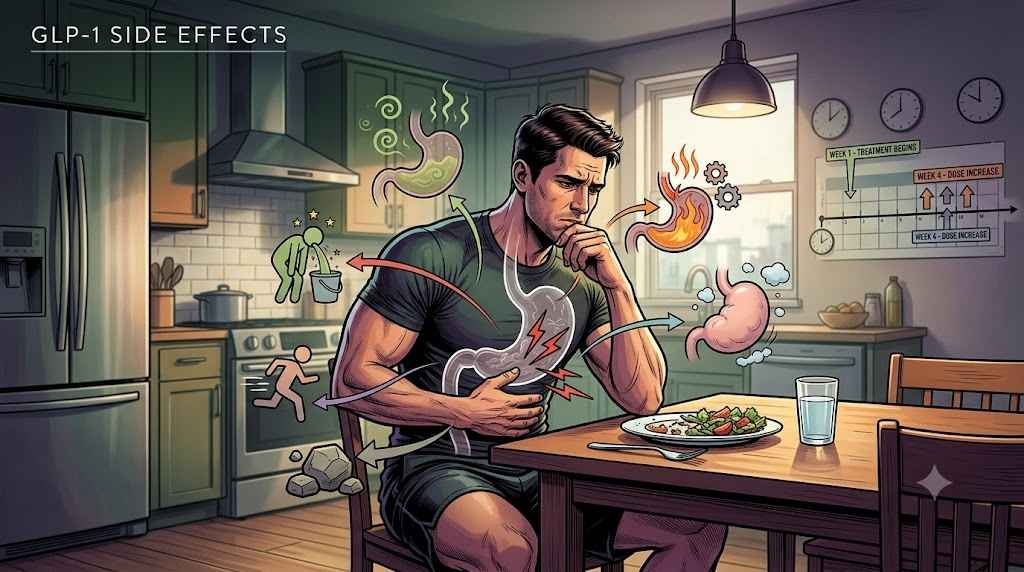
Like any medication, GLP-1-based treatments can cause side effects.
Common digestive complaints can include nausea, vomiting, diarrhea, constipation, stomach discomfort and reduced appetite.
Some people experience these effects more strongly than others, particularly when starting treatment or changing doses.
This is one reason medical supervision matters.
If you are taking a GLP-1 medication and experience severe or unusual symptoms, don’t simply assume it is “part of the process.” Speak with your healthcare provider.
The Bottom Line
GLP-1 has changed the conversation around weight loss because it targets one of the biggest problems many people face: hunger.
It isn’t a magic fat burner, and it isn’t a replacement for good nutrition and training. Its biggest advantage is that it can influence appetite, fullness and food intake, which can make a calorie deficit easier for some people to maintain.
For gym-goers, the key is to think beyond the number on the weighing scale. If you’re trying to get leaner, maintaining muscle, eating enough protein and continuing resistance training should still be part of the plan.
And if you’re considering an actual GLP-1 medication, treat it like what it is — a medical treatment — rather than another random supplement from the fitness world.
GLP-1 Dosage: How the Dose Is Usually Increased
Now let’s get to the part most people are searching for: GLP-1 dosage.
One thing you need to understand first is that these medications are generally not started at the highest dose. The dose is slowly increased over time. This is called dose escalation, and the main reason for doing it is to help the body adjust and reduce stomach-related side effects such as nausea, vomiting and diarrhea.
So don’t look at the highest number and think, “That’s the dose I should start with.” That’s not how these medications are designed to be used.
Wegovy Dosage
Wegovy contains semaglutide and is used for weight management in appropriate patients. The standard injection schedule starts low and moves up gradually.
| Weeks | Weekly Dose |
|---|---|
| Weeks 1–4 | 0.25 mg |
| Weeks 5–8 | 0.5 mg |
| Weeks 9–12 | 1 mg |
| Weeks 13–16 | 1.7 mg |
| Week 17 onward | 2.4 mg maintenance |
The current prescribing information starts Wegovy at 0.25 mg once weekly and increases the dose every four weeks. For adults, 2.4 mg once weekly is the recommended maintenance dose, although 1.7 mg may be used as a maintenance dose depending on the situation and tolerability.
In simple gym-bro language: start low, let your body get used to it, then move up gradually.
If someone is struggling with side effects during escalation, the prescribing information allows consideration of delaying the next increase rather than blindly pushing the dose higher.
Zepbound Dosage
Zepbound contains tirzepatide and follows a similar step-by-step approach, but the numbers are different.
| Weeks | Weekly Dose |
|---|---|
| Weeks 1–4 | 2.5 mg |
| Weeks 5–8 | 5 mg |
| Weeks 9–12 | 7.5 mg |
| Weeks 13–16 | 10 mg |
| Weeks 17–20 | 12.5 mg |
| Week 21 onward | 15 mg maximum |
The current prescribing information recommends starting at 2.5 mg once weekly for four weeks. After that, the dose can be increased in 2.5 mg steps after at least four weeks on the current dose. For weight reduction, the labeled maintenance options are 5 mg, 10 mg or 15 mg once weekly, with 15 mg being the maximum recommended dose.
Again, don’t look at the 15 mg number and assume everyone needs to reach it. The maintenance dose depends on how the person responds and tolerates the medication.
Mounjaro Dosage
Mounjaro also contains tirzepatide, so you’ll notice that the dose progression looks very similar to Zepbound.
| Weeks | Weekly Dose |
|---|---|
| Weeks 1–4 | 2.5 mg |
| Weeks 5–8 | 5 mg |
| Weeks 9–12 | 7.5 mg |
| Weeks 13–16 | 10 mg |
| Weeks 17–20 | 12.5 mg |
| Week 21 onward | 15 mg maximum |
The important thing here is not to confuse the drug ingredient with the brand’s approved use. Mounjaro is a tirzepatide product approved for specific diabetes-related uses, while Zepbound is the tirzepatide product approved for chronic weight management and certain obesity-related sleep apnea treatment.
So although the active ingredient is the same, you shouldn’t assume the two brand names are interchangeable for every purpose.
Ozempic Dosage
Ozempic is another semaglutide product, but its approved uses are different from Wegovy.
The standard escalation looks like this:
| Treatment Stage | Weekly Dose |
|---|---|
| First 4 weeks | 0.25 mg |
| After 4 weeks | 0.5 mg |
| If additional control is needed | 1 mg |
| If additional control is needed | 2 mg maximum |
The current prescribing information recommends starting at 0.25 mg once weekly for four weeks, then increasing to 0.5 mg. If additional blood-sugar control is needed, the dose can be increased to 1 mg after at least four weeks on 0.5 mg, and then to 2 mg after at least four weeks on 1 mg.
And this is an important point for readers: Ozempic and Wegovy both contain semaglutide, but they are not simply two names for the exact same treatment. Their approved indications and dosing instructions are different. TB500 + BPC157: Benefits, Dosage, Safety & Research Guide
Why Don’t People Start With the Highest GLP-1 Dose?
This is actually pretty simple.
Your stomach and digestive system need time to adjust.
If you suddenly jump to a much higher dose, you may be more likely to deal with problems such as nausea, vomiting, diarrhea, constipation or stomach discomfort.
That’s why these medications use a gradual increase instead of going straight to the maximum dose.
Think of it like training in the gym.
You wouldn’t walk into the gym on day one, load 300 kg on the bar and expect your body to handle it perfectly. You build up.
The same basic idea applies here: start lower, give the body time to adapt, and only increase according to the prescribed treatment plan.
Does Everyone Need the Highest Dose?
No.
This is another mistake people make when they look at online dosage charts.
Higher does not automatically mean better.
The goal isn’t to reach the biggest number possible. The goal is to find a dose that provides the intended benefit while remaining tolerable.
For example, the current Zepbound labeling lists 5 mg, 10 mg and 15 mg as maintenance options for weight reduction rather than saying that everyone must eventually use 15 mg. The prescribing information specifically says treatment response and tolerability should be considered when selecting the maintenance dose.
So if someone is already getting the desired effect at a lower maintenance dose and tolerating it well, there isn’t a simple rule saying they should keep increasing just because a higher dose exists.
What If Side Effects Become Too Strong?
This is where you shouldn’t try to play doctor.
If side effects become difficult to handle, the answer isn’t automatically “push through it.”
For Wegovy, the prescribing information says that if a patient does not tolerate a dose during escalation, delaying the next increase for four weeks can be considered. Zepbound’s prescribing information also emphasizes tolerability when choosing the maintenance dose.
Basically, the dose should be managed around the person, not the other way around.
That’s one of the biggest reasons GLP-1 treatment should be handled with proper medical guidance rather than copied from somebody else’s cycle or dosage chart online.
GLP-1 Side Effects: What Should You Know?
Let’s be real — GLP-1 medications can work well for weight management, but they are not completely side-effect free.
The most common problems are usually related to the stomach and digestive system. People may experience nausea, diarrhea, constipation, vomiting, stomach pain, bloating, indigestion or acid reflux. These problems can be more noticeable when treatment is started or when the dose is increased.
For some people, the side effects are mild and get better as the body adjusts. For others, they can be strong enough to make eating and drinking difficult.
That’s why the whole “more dose = better results” mindset doesn’t really make sense here.
The goal is not to see how much medication your body can tolerate. The goal is to get the intended benefit while keeping treatment as safe and tolerable as possible.
Nausea and GLP-1

Nausea is probably one of the first things people hear about when GLP-1 medications come up.
Because these medicines can affect appetite and slow stomach emptying, some people may feel full very quickly or feel uncomfortable after eating.
A huge meal that you could normally finish without thinking may suddenly feel like way too much.
This is one reason people using GLP-1 treatment often find that smaller meals are easier to handle than trying to force down large portions.
If nausea becomes severe or persistent, don’t just assume you have to suffer through it. Talk with your healthcare professional.
Constipation and Digestive Problems
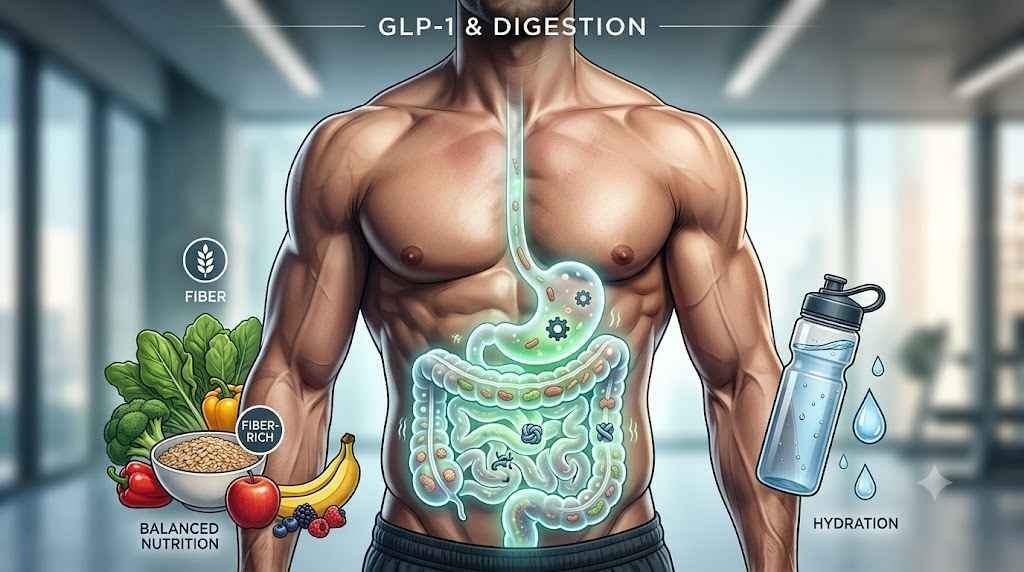
Constipation can also happen.
When someone suddenly eats much less food, drinks less because their appetite is down, or changes their diet, their digestion can change too. GLP-1 medicines themselves can also contribute to gastrointestinal problems.
This is where basic stuff like adequate fluids, a balanced diet and enough fiber can become important, as long as those choices fit your individual treatment plan.
If you’re dealing with persistent or severe digestive symptoms, it’s better to get medical advice instead of trying random internet fixes.
Can GLP-1 Cause Muscle Loss?
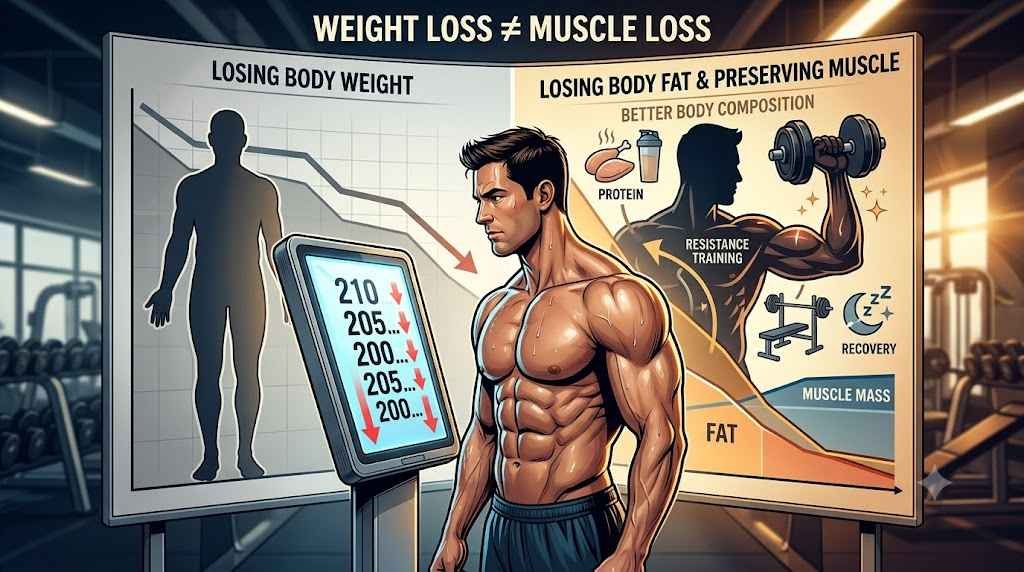
Now we get to the part that matters a lot to gym people.
Weight loss and fat loss are not exactly the same thing.
When body weight goes down, the body can lose a mixture of fat mass and lean mass. Research looking at GLP-1-based treatments has found that some lean mass can be lost during weight reduction.
That doesn’t mean GLP-1 automatically destroys your muscles.
It means you shouldn’t look only at the number on the weighing scale.
If you are dropping weight very quickly while barely eating and completely stop training, you’re not giving your body much reason to hold on to muscle.
For a gym-goer, the better approach is to focus on fat loss while doing everything sensible to protect lean mass. Clen: Guide to Fat Loss, Dose, Cycles & Side Effects
How to Protect Muscle While Using GLP-1

This is where bodybuilding basics still win.
You don’t need some crazy secret stack.
You need to keep lifting, get enough protein and make sure your diet isn’t so restrictive that you’re barely eating anything.
Recent research suggests that resistance training during weight loss can help protect fat-free mass and improve strength.
So if you’re using a GLP-1 treatment and your goal is to look leaner rather than simply become lighter, keep resistance training in your routine.
You don’t need to train like a professional bodybuilder seven days a week.
Just keep giving your muscles a reason to stay.
Protein Becomes Even More Important
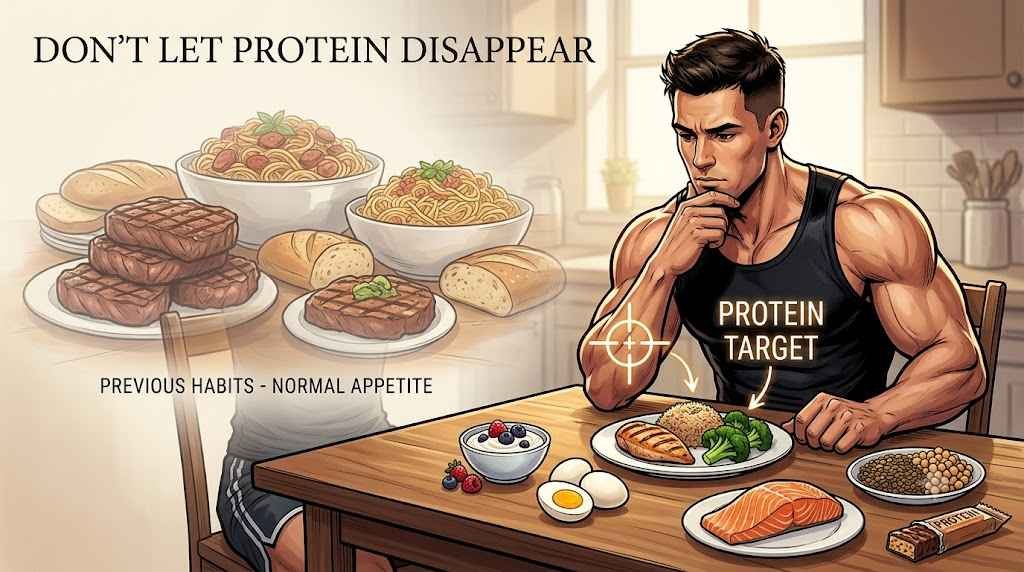
Here’s another simple rule.
If your appetite is much lower, it can become surprisingly easy to eat far less protein than you normally would.
Imagine you’re used to eating three large meals every day, and suddenly you’re only comfortable eating small portions. If you aren’t paying attention, your protein intake can fall along with your calories.
That’s not ideal when you’re trying to preserve muscle.
Recent reviews of GLP-1-based weight-loss treatment emphasize adequate nutrition and protein along with resistance training as part of a strategy to protect lean mass.
For gym people, the takeaway is simple:
Don’t just chase a lower number on the scale. Chase better body composition.
GLP-1 Diet: What Should You Eat?
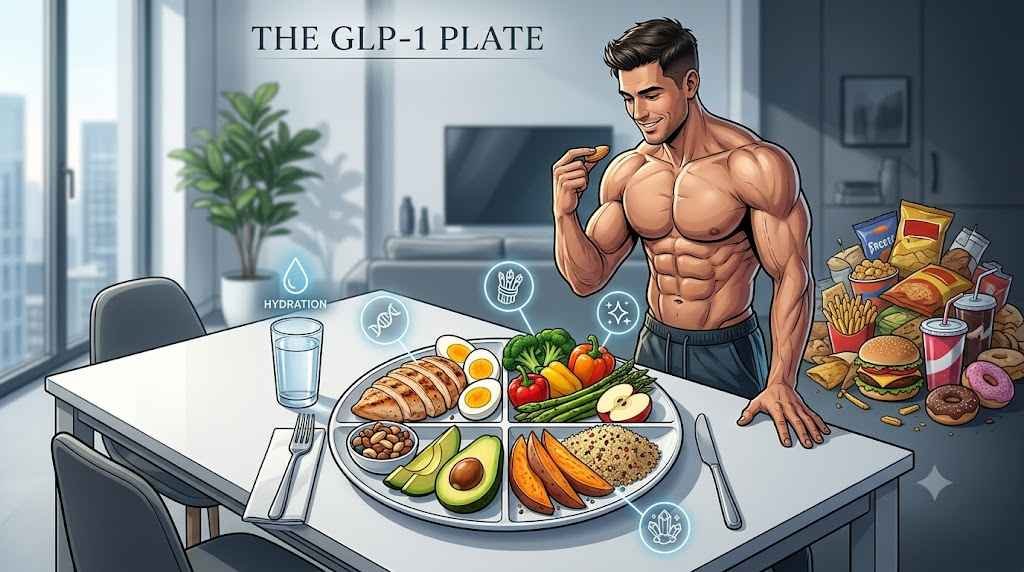
You don’t need a crazy “GLP-1 diet.”
Think basic bodybuilding nutrition.
Get your protein from foods you tolerate well. Include vegetables and fruits where appropriate. Keep some healthy fats in the diet. Choose quality carbohydrate sources based on your activity and calorie needs.
The bigger issue is that your appetite may become so low that eating enough nutritious food becomes difficult.
That’s why food quality matters.
If you’re eating less, you don’t want every calorie coming from junk food. You want the food you do eat to actually provide protein, vitamins, minerals, fiber and other useful nutrients.
Don’t Make the Mistake of Starving Yourself
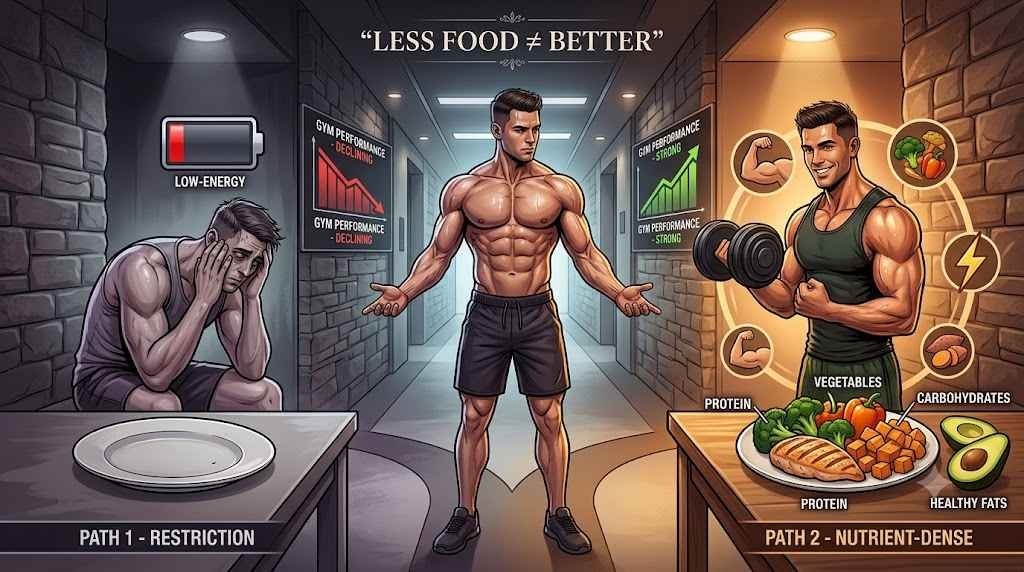
This is where some people completely mess things up.
They start a GLP-1 medication, suddenly have almost no appetite, and think:
“Perfect. I’ll just eat as little as possible and lose weight faster.”
That’s not the mindset you want.
The goal isn’t to see how little food you can survive on.
Extreme restriction can make it harder to get enough protein and nutrients, and it can make training and recovery much harder.
A good weight-loss plan should still be sustainable.
GLP-1 and Gym Training

If you’re already lifting weights, there is usually no reason to suddenly throw your entire training program out the window simply because you’re trying to lose weight.
Keep your resistance training consistent.
You may need to adjust your training volume or intensity if your calorie intake drops significantly or you’re dealing with nausea, fatigue or other side effects. But completely stopping resistance training removes one of the main tools you have for maintaining muscle.
Research on resistance exercise during weight loss supports its role in protecting fat-free mass and improving strength.
So don’t turn your GLP-1 phase into a “just walk and eat nothing” plan.
If you want a better-looking physique, lifting still matters.
GLP-1 Is Not a Replacement for Good Habits

This is probably the biggest point of the entire article.
GLP-1 treatment can make appetite control easier for some people, but it doesn’t magically build muscle, fix a terrible diet or replace physical activity.
Think of it as one part of the bigger picture.
Your food choices matter.
Your training matters.
Your sleep matters.
Your daily activity matters.
And your ability to maintain healthier habits over the long term matters even more.
The medication may help create a better environment for weight loss, but what you do with that opportunity is still important.
What Happens If You Stop GLP-1?
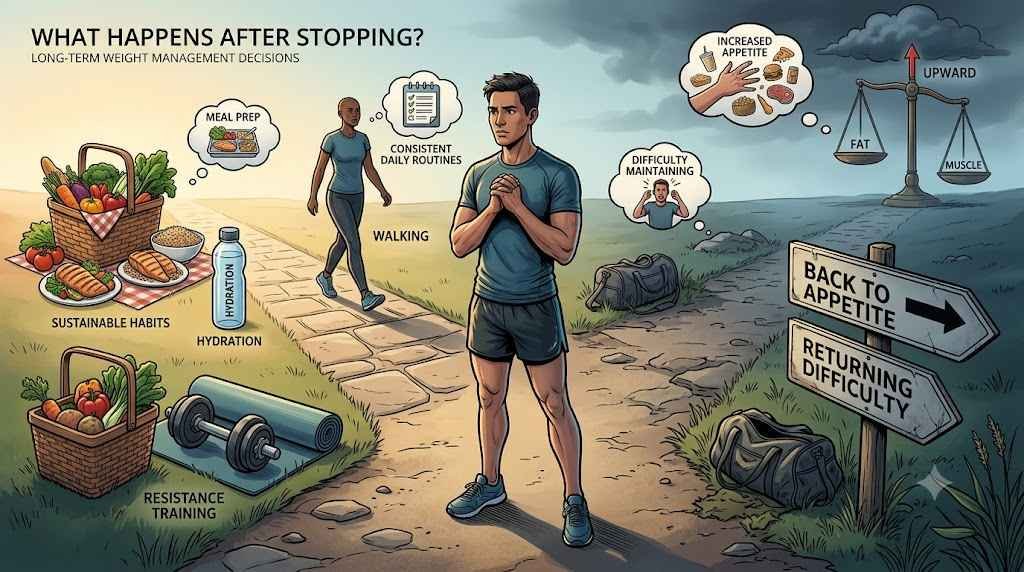
Another question people ask is whether the weight will stay off after stopping treatment.
The answer isn’t simply yes or no.
Weight management is a long-term process, and stopping treatment can change appetite and make maintaining the previous calorie intake more difficult for some people.
This is why you shouldn’t think of GLP-1 treatment as a temporary “fat-loss cycle” where you use it for a few weeks, reach your goal and forget about everything else.
Your long-term eating habits and lifestyle still matter.
If you’re considering stopping a prescribed GLP-1 medication, discuss it with your healthcare provider rather than making the decision based on somebody else’s experience online. Steroids for Bodybuilding: Benefits, Dosage & Side Effects
GLP-1 vs Traditional Fat Burners

GLP-1 medications and traditional fat burners are two completely different things.
Most stimulant-style fat burners are marketed around increasing energy expenditure, alertness or thermogenesis.
GLP-1-based medicines work through appetite, digestion and blood-sugar-related pathways.
So if somebody tells you that GLP-1 is simply a “stronger fat burner,” that’s an oversimplification.
The main reason these medicines can help with weight loss is that they can make it easier for some people to control food intake and maintain a calorie deficit.
That’s a very different mechanism from popping a stimulant and hoping it burns extra calories.
The Gym-Bro Takeaway
If we strip away all the complicated medical talk, here’s what you really need to remember.
GLP-1 can help with appetite and weight management, but it doesn’t give you a free pass to stop caring about nutrition or training.
If you’re using a prescribed GLP-1 medication, think about the whole picture: eat enough quality food, prioritize protein, keep lifting, stay hydrated, pay attention to side effects and follow your healthcare professional’s instructions.
And don’t make the classic mistake of thinking that the fastest possible weight loss is automatically the best result.
For a gym person, the real win is losing unnecessary body fat while keeping as much strength and muscle as possible.
GLP-1 Frequently Asked Questions
By now, you probably get the basic idea: GLP-1 treatment can be useful for weight management, but the medication is only one piece of the puzzle. Let’s clear up some of the questions people commonly ask before starting or while using GLP-1 treatment.
Can GLP-1 Help With Belly Fat?
GLP-1 medications can help reduce overall body weight and body fat, but they don’t specifically target belly fat.
Unfortunately, there is no medication that lets you choose exactly where your body burns fat first.
As overall body fat decreases, abdominal fat may also decrease. How quickly that happens depends on genetics, starting body composition, calorie intake, activity levels and other individual factors.
If your main goal is a leaner waist, focus on overall fat loss rather than trying to find a product that supposedly “melts belly fat.”
Does GLP-1 Burn Fat Directly?
Not in the same way people usually mean when they talk about a traditional fat burner.
GLP-1-based medications mainly work through hormonal pathways involved in appetite, food intake and blood-glucose regulation. By helping some people feel fuller and eat less, they can make maintaining a calorie deficit easier.
The calorie deficit is still what ultimately drives weight loss.
So don’t think of GLP-1 as a magic fat-burning switch. Think of it as a medication that can influence some of the biological factors that make weight management difficult.
Can You Build Muscle While Using GLP-1?

It is possible to maintain or potentially build muscle depending on your training status, protein intake, calorie intake and overall program, but it can be harder to gain muscle during significant calorie restriction.
If muscle is a priority, resistance training should remain part of your routine.
Beginners may still make progress while losing fat, while more advanced lifters may find muscle gain much harder during a calorie deficit.
That’s why your goal matters.
If you’re mainly trying to lose fat, focus on preserving as much lean mass and strength as possible. If you’re trying to maximize muscle growth, an aggressive calorie deficit probably isn’t the smartest approach.
How Much Protein Should You Eat on GLP-1?
There isn’t one universal protein number that works for everyone using GLP-1 treatment.
Your protein needs depend on factors such as body weight, lean mass, training volume, age, calorie intake and your overall health.
The important point is to avoid letting dramatically reduced appetite accidentally turn your diet into a very low-protein diet.
If you’re struggling to eat enough because of nausea or early fullness, speak with a healthcare professional or registered dietitian about how to meet your nutritional needs.
For gym-goers, spreading protein across smaller meals can also be easier than trying to force down one huge serving.
Can GLP-1 Make You Lose Strength?
It can happen indirectly.
If your calorie intake drops significantly, you’re eating too little protein, you’re dehydrated or you’re losing lean mass during rapid weight loss, your gym performance can suffer.
Some people also experience nausea, fatigue or other side effects that make hard training more difficult.
That’s why watching your strength can be useful during a weight-loss phase.
If your body weight is falling but your major lifts are reasonably stable, you’re generally in a better position than someone whose weight is dropping rapidly while strength and training performance are collapsing.
Can You Drink Alcohol While Using GLP-1?
This is something you should discuss with your healthcare professional because the answer can depend on your medication, health history and other factors.
Alcohol can also make it harder to stick to a calorie-controlled diet and may worsen digestive symptoms for some people.
If you’re already experiencing nausea, vomiting, reflux or other gastrointestinal problems, adding alcohol may not be a great combination.
What Should You Do If GLP-1 Side Effects Become Severe?
Don’t simply try to push through severe symptoms.
Persistent vomiting, severe abdominal pain, dehydration, fainting, difficulty keeping fluids down or other concerning symptoms deserve medical attention.
The exact action depends on the medication and the symptoms you’re experiencing, so contacting your healthcare professional is the safest move.
Also, don’t change your prescribed dose just because somebody online claims that a different dose worked better for them.
Is GLP-1 Suitable for Bodybuilders?
That’s a much more complicated question than a simple yes or no.
A bodybuilder trying to lose body fat may be interested in GLP-1 treatment because appetite control can become easier during a calorie deficit. But bodybuilding also creates nutritional demands that shouldn’t be ignored.
If you’re trying to maintain muscle while getting lean, you still need appropriate resistance training, sufficient protein, recovery and a sensible calorie deficit.
GLP-1 treatment doesn’t replace those fundamentals.
And if you’re considering prescription treatment, the decision should be made with a qualified healthcare professional based on your individual situation rather than bodybuilding forums or social-media advice.
Final Thoughts on GLP-1 for Weight Loss
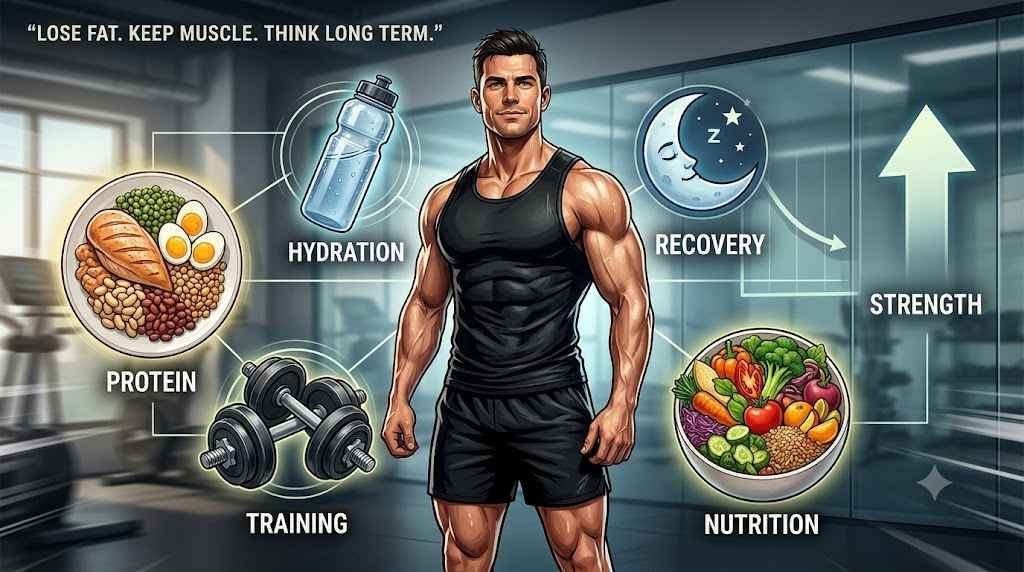
GLP-1 medications have changed the conversation around weight management, and there’s a good reason they’ve attracted so much attention.
They can make appetite control easier for many people, which can make maintaining a calorie deficit much more manageable.
But here’s the part gym people shouldn’t forget.
Losing weight isn’t the same as building a better physique.
If you want to look lean, strong and muscular, you need to think beyond the weighing scale.
Keep resistance training in your routine. Make protein a priority. Eat nutrient-dense foods. Stay hydrated. Get enough sleep. Monitor your training performance and don’t treat extreme calorie restriction as a shortcut.
And most importantly, don’t copy somebody else’s medication protocol from the internet.
GLP-1 treatment should be approached as medical treatment, not as another bodybuilding “cycle.”
Used appropriately under professional guidance, it may be one useful tool for weight management. But the long-term goal should always be bigger than simply watching the scale go down.
Lose the unnecessary fat. Protect your muscle. Build better habits. And think long-term.
Need Help With Your GLP-1 Journey?
Still confused about GLP-1 medications, weight-loss nutrition, training, or how to structure your diet while cutting?
If you want more information or have questions about our available products and fitness-related guidance, feel free to contact us on WhatsApp.
WhatsApp: 7696593279
Send us a message and our team will help you with your query.



[…] SARMs are designed to interact selectively with androgen receptors. Anabolic steroids are synthetic compounds related to testosterone that produce anabolic and androgenic effects throughout the body. Peptides, on the other hand, are a much broader group of compounds that can influence different biological signaling pathways. GLP-1 for Weight Loss: Benefits, Side Effects & Muscle Loss […]
[…] For that reason, body weight shouldn’t be used to create your own mathematical BPC-157 dosing formula. GLP-1 for Weight Loss: Benefits, Side Effects & Muscle Loss […]