
Peptides for muscle growth have become one of the hottest topics in modern bodybuilding, but how much of what you hear online is actually supported by research? From CJC-1295 and Ipamorelin to GHRP-6, IGF-1, MGF, and newer experimental compounds, different peptides have very different levels of human evidence. In this guide, we’ll look at which peptides have actually been studied, what researchers have found, how dosage and cycle discussions compare with the available evidence, and where bodybuilding claims go beyond the science.
The problem is that all of these compounds are often put into the same basket. SARMs vs Steroids vs Peptides: Complete Comparison
One peptide may have human clinical research behind it, another may only have animal or laboratory research, and another may have almost no meaningful human data at all. Yet online, they can all be marketed as if they are equally proven for muscle growth.
They are not.
That is exactly what this guide is about.
Instead of simply giving you a list of popular peptides and calling them “muscle-building peptides,” we are going to look at which compounds have actually been studied, what researchers were trying to investigate, what the studies found, and how much of that evidence can realistically be applied to bodybuilding.
A recent 2026 review of performance-enhancing peptides targeting the GH–IGF-1 system made the same distinction, separating compounds according to the quality of available evidence and pointing out the major gap between clinical research and self-administered bodybuilding protocols.
So if you are wondering whether a peptide is actually studied or simply popular online, this is where things get interesting.
What Are Peptides for Muscle Growth?
Peptides are short chains of amino acids. You can think of them as smaller relatives of proteins.
The human body naturally produces thousands of different peptides, and many of them act as signaling molecules. They can communicate with cells and influence processes such as hormone release, metabolism, inflammation, tissue repair and other biological functions.
In bodybuilding discussions, the peptides that attract the most attention are generally those connected with the growth hormone (GH) and insulin-like growth factor-1 (IGF-1) pathways.
Some peptides can stimulate the release of growth hormone. Others mimic or influence naturally occurring hormones or signaling molecules.
That is why compounds such as CJC-1295, GHRP-2, GHRP-6 and Ipamorelin are frequently discussed together.
But there is an important point that gets overlooked:
Increasing GH or IGF-1 does not automatically mean that a compound has been proven to build significant muscle in healthy bodybuilders.
A laboratory result showing increased GH is one thing. Demonstrating meaningful increases in muscle mass, strength or athletic performance in trained humans is another.
That difference will be one of the biggest themes throughout this article.
How Do Peptides for Muscle Growth Work?

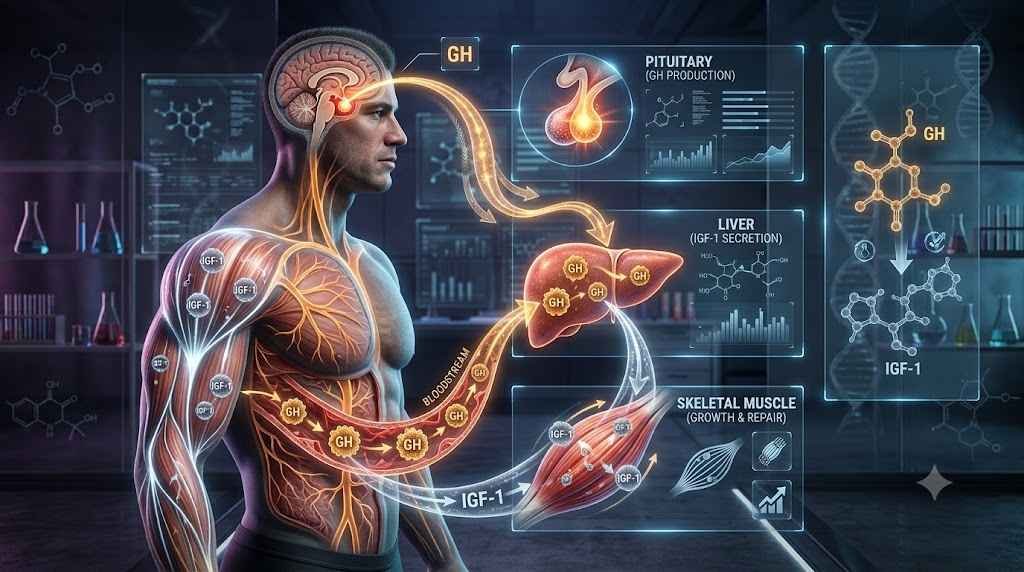
The simplest way to understand many bodybuilding-related peptides is to look at the GH–IGF-1 axis.
Growth hormone is released by the pituitary gland and plays an important role in growth, metabolism and tissue regulation. One of its major downstream effects involves IGF-1, which is produced largely by the liver and also locally in various tissues.
The relationship is more complicated than simply:
Peptide → GH → Bigger muscles
The actual physiology involves multiple signals, receptors and feedback mechanisms.
Some peptides act as growth hormone secretagogues, meaning they stimulate the body to release GH.
Others are GHRH analogues, which act through pathways related to growth hormone-releasing hormone.
Some compounds are designed to influence IGF-1 signaling directly.
And then there are peptides marketed for completely different purposes, such as fat metabolism or tissue recovery, where the connection to actual muscle hypertrophy is much less established.
A 2026 review identified several major groups commonly encountered in performance-enhancing settings, including GHRH analogues such as CJC-1295 and tesamorelin, GH secretagogues such as GHRP-2, GHRP-6, hexarelin and ipamorelin, and IGF-1-related compounds such as IGF-1 LR3 and PEG-MGF.
The Difference Between “Studied” and “Proven”
This is probably the most important part of the entire article.
A peptide can be studied without being proven as a muscle-building drug.
For example, researchers may administer a peptide to human volunteers and measure:
- Growth hormone levels
- IGF-1 levels
- Blood glucose
- Appetite
- Body composition
- Protein synthesis
- Fat mass
- Lean body mass
- Recovery markers
- Safety parameters
That gives us useful scientific information.
But it does not automatically prove that the peptide will make a healthy, resistance-trained person dramatically more muscular.
There is also a huge difference between a clinical trial involving a specific medical population and a bodybuilding cycle involving a healthy athlete.
This is why we will use different evidence categories throughout this article:
Evidence Level 1: Human Clinical Evidence
These compounds have been studied in humans in controlled clinical or pharmacological research.
This is the strongest category, although even here the research may not specifically involve bodybuilding.
Evidence Level 2: Human Research but Limited Bodybuilding Evidence
A compound may have human studies showing biological activity, but there may be little evidence demonstrating meaningful muscle growth or improved performance in healthy lifters.
Evidence Level 3: Mainly Preclinical Research
This includes laboratory and animal research.
The results can be interesting and scientifically useful, but they should not be presented as proof that the same effect will occur in humans.
Evidence Level 4: Little or No Meaningful Human Evidence
Some peptides have become extremely popular in bodybuilding despite having very little reliable human evidence.
This is where marketing can get far ahead of science.
Why Dosage Tables Can Be Misleading
You will often see peptide websites publish neat-looking dosage charts:
Peptide → dose → frequency → cycle length → expected results
It looks scientific.
But a dosage appearing online does not mean that it is an established clinical dose.
A dose used in a research study is also not automatically a recommended bodybuilding dose.
For this article, our dosage tables will therefore distinguish between published research doses and commonly reported bodybuilding protocols whenever the evidence allows us to do so.
That distinction matters because the 2026 scientific literature specifically notes uncertainty surrounding the doses, stacking practices and product composition associated with unregulated self-administration of performance-enhancing peptides.
In other words, we are not going to turn an internet protocol into a fake “scientific recommendation.”
Which Peptides Are We Going to Examine?
The main compounds discussed in this guide will include:
- CJC-1295
- Ipamorelin
- GHRP-2
- GHRP-6
- Hexarelin
- Sermorelin
- Tesamorelin
- IGF-1
- IGF-1 LR3
- MGF and PEG-MGF
- AOD-9604 / HGH Fragment 176-191
These compounds do not all have the same evidence level.
Some have meaningful human pharmacological or clinical research.
Some have evidence for changing hormone levels or body composition without strong evidence for bodybuilding-specific muscle gain.
And some popular compounds have extremely limited human data.
For example, the FDA currently states that it has not identified human exposure data for PEG-MGF and has identified limited safety information for several other commonly discussed compounds, including CJC-1295, ipamorelin and AOD-9604.
That alone should tell you why simply ranking peptides from “best” to “worst” would be misleading.
Before We Talk About Cycles, Know What the Research Actually Says
There is another important issue with peptide cycles.
Bodybuilders commonly discuss protocols lasting several weeks or months. However, many of those schedules come from online self-administration practices rather than controlled clinical trials.
That means we should not confuse:
“This is commonly discussed online”
with:
“This has been scientifically established as an effective and safe cycle.”
Throughout this guide, any cycle or dosage information will therefore be presented with its evidence level clearly identified.
The goal is not to tell you that every peptide is useless.
It is also not to tell you that every peptide is a miracle muscle builder.
The goal is much simpler:
Separate the science from the hype.
Once you understand which peptides have actually been studied, what they were studied for, and where the evidence becomes weak, it becomes much easier to judge the bodybuilding claims surrounding them.
And that’s where we go next.
GH-Releasing Peptides:
CJC-1295: The Long-Acting GH Secretagogue
If you have spent any time around peptide discussions, CJC-1295 is probably one of the first names you have seen.
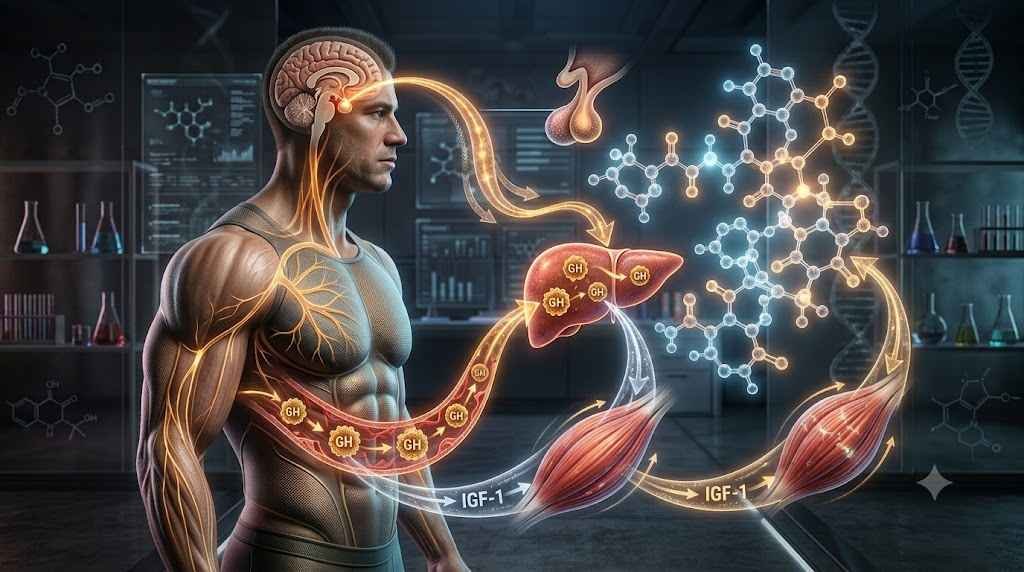
The reason is pretty simple: CJC-1295 was designed to keep stimulating the growth hormone pathway for much longer than traditional GHRH.
CJC-1295 is a long-acting analogue of growth hormone-releasing hormone (GHRH). Instead of directly being growth hormone, it works upstream by stimulating the body’s own GH secretion.
And this is where things get interesting.
In a controlled human study involving healthy adults, researchers found that CJC-1295 produced dose-dependent increases in GH and IGF-1. After a single administration, average GH concentrations increased by roughly 2- to 10-fold for six days or more, while IGF-1 remained elevated for around 9–11 days. The researchers also reported that repeated dosing could keep IGF-1 above baseline for considerably longer.
That sounds impressive.
But don’t jump straight from “GH and IGF-1 increased” to “CJC-1295 builds huge muscles.”
That’s not what the study proved.
The research demonstrated a strong hormonal response. It did not establish CJC-1295 as a proven muscle-building drug for healthy bodybuilders.
What Makes CJC-1295 Different?
The biggest attraction is its relatively long duration of action.
In the human study, the estimated half-life was approximately 5.8–8.1 days. Researchers also observed sustained increases in IGF-1 following administration.
This is very different from short-acting GH secretagogues that produce a much shorter pulse.
Think of it like this:
Short-acting secretagogue:
A quick signal → GH rises → signal fades.
Long-acting CJC-1295:
A longer-lasting signal → GH/IGF-1 remain influenced for much longer.
That pharmacology is one of the main reasons CJC-1295 became so popular in the peptide world.
CJC-1295 Human Research Dose Table
| Research setting | Dose reported in study | What researchers measured |
|---|---|---|
| Healthy adults | 30 µg/kg | GH and IGF-1 response |
| Healthy adults | 60 µg/kg | GH and IGF-1 response |
| Healthy men | 60 µg/kg | GH pulsatility |
| Healthy men | 90 µg/kg | GH pulsatility |
These numbers are research doses, not recommended bodybuilding doses. The published studies used controlled experimental conditions and monitored participants.
And that’s an important distinction for every dosage table in this article.
A number appearing in a clinical paper does not automatically mean that number should be copied into a bodybuilding protocol.
Ipamorelin: The More Selective GH Secretagogue

Now we get to Ipamorelin.
Ipamorelin belongs to the growth hormone-releasing peptide family, but it became particularly popular because researchers found it capable of stimulating GH release without producing the same broad hormonal profile associated with some older secretagogues.
Human research has directly investigated its pharmacokinetics and GH response.
In one study, healthy male volunteers received different intravenous infusion rates of ipamorelin. Researchers observed a distinct GH release response, with GH peaking approximately 40 minutes after administration and then declining.
The important takeaway?
Ipamorelin can stimulate GH in humans.
That part is not just bodybuilding forum talk.
But again, the leap from:
“Ipamorelin increases GH”
to:
“Ipamorelin will significantly increase muscle mass in a healthy lifter”
requires evidence that is much harder to find.
Ipamorelin Research Dose Table
| Research parameter | Human study |
|---|---|
| Lowest infusion rate studied | 4.21 nmol/kg over 15 min |
| Additional rates studied | 14.02, 42.13, 84.27 nmol/kg |
| Highest rate studied | 140.45 nmol/kg |
| Main endpoint | GH response |
These were controlled infusion rates, not a bodybuilding injection schedule.
So if you see an online chart saying:
“Ipamorelin = X mcg every day for X weeks”
don’t automatically assume that number came from a clinical trial.
It may simply be a community protocol that has been repeated so many times that it starts looking scientific.
That’s one of the biggest problems with peptide information online.
GHRP-2: Strong GH Stimulation, But There’s More Going On
GHRP-2 is another peptide that has been studied in humans for its ability to stimulate GH release.
And unlike some newer compounds, GHRP-2 has been around in the research literature for quite a while.
One human diagnostic study administered 100 µg of GHRP-2 intravenously to healthy subjects and people with suspected growth hormone deficiency. GH peaked within approximately 60 minutes in the study.
Another study looked at repeated administration.
Researchers gave healthy young men 100 µg of GHRP-2 subcutaneously each day for five days and found that the GH response became attenuated. Importantly, the study did not find an increase in IGF-1 during that short treatment period.
That’s a really interesting result for bodybuilding discussions.
Why?
Because it shows why you cannot simply assume:
More GH stimulation = more muscle growth.
The body is constantly adjusting to hormonal signals.
A compound can produce a strong GH response on day one, while the response may change with repeated exposure.
GHRP-2 Human Research Examples
| Study type | Dose used | Main finding |
|---|---|---|
| GH diagnostic testing | 100 µg IV | Strong GH response |
| Repeated administration | 100 µg SC daily × 5 days | GH response became attenuated |
| Appetite study | 1 µg/kg/hour infusion | Increased food intake in healthy men |
The appetite finding is worth remembering too. GHRP-2 acts through the ghrelin receptor, and human research has shown that it can influence appetite as well as GH secretion.
So if somebody tells you GHRP-2 is simply a “muscle-building peptide,” they’re leaving out a pretty important part of the story.
GHRP-6: The Classic GH-Releasing Peptide

Then we have GHRP-6, one of the most recognizable names in the bodybuilding peptide world.
GHRP-6 is a synthetic growth hormone secretagogue that has been studied extensively enough to establish that it can stimulate GH release in humans.
In one human experiment, healthy men received GHRP-6 at 1 µg/kg intravenously, producing a substantial GH response. Researchers also found that blocking endogenous GHRH greatly reduced the GH response, showing that the body’s own GHRH system plays an important role in GHRP-6’s action.
Another pharmacokinetic study examined GHRP-6 in healthy male volunteers using single intravenous doses of 100, 200 and 400 µg/kg.
Again, these are experimental research conditions.
They should not be interpreted as a recommended self-administration schedule.
GHRP-6 Research Dose Examples
| Human research | Dose |
|---|---|
| GH-response study | 1 µg/kg IV |
| Pharmacokinetic study | 100 µg/kg IV |
| Pharmacokinetic study | 200 µg/kg IV |
| Pharmacokinetic study | 400 µg/kg IV |
Notice something important here.
The doses aren’t presented as:
“Take this much every day for 12 weeks.”
That’s because these studies were designed to answer pharmacological questions — not to establish a bodybuilding cycle.
That’s exactly why copying a research number directly into a bodybuilding protocol can be misleading.
So Which One Is “Best”?
Here’s where bodybuilding discussions usually go off the rails.
People want a simple ranking:
CJC-1295 > Ipamorelin > GHRP-6 > GHRP-2
or perhaps the opposite.
But science doesn’t really work that way.
These compounds have different pharmacological profiles and have been investigated for different purposes.
| Peptide | Human research? | Main thing demonstrated | Muscle-growth evidence |
|---|---|---|---|
| CJC-1295 | Yes | Sustained GH/IGF-1 elevation | Limited |
| Ipamorelin | Yes | GH stimulation | Limited |
| GHRP-2 | Yes | GH stimulation | Limited |
| GHRP-6 | Yes | GH stimulation | Limited |
The strongest conclusion we can make from these studies is that these compounds can influence GH secretion.
That is not the same thing as proving that they produce significant muscle hypertrophy in healthy resistance-trained athletes.
And honestly, that’s what makes this topic more interesting.
The science isn’t saying:
“These peptides are fake.”
It’s saying:
“We know they can affect the GH system. We have much less evidence showing exactly how much extra muscle a healthy bodybuilder gains from using them.”
That’s a much more accurate answer.
What About Peptide Cycles?
This is where we need to separate research design from bodybuilding culture.
Clinical studies may last days or weeks and use carefully controlled doses, while online bodybuilding protocols can run for many weeks and sometimes combine several compounds.
Those are not equivalent.
For this reason, there isn’t a scientifically established:
“CJC-1295 12-week muscle-building cycle”
or
“Ipamorelin 10-week hypertrophy cycle”
supported by high-quality trials in healthy bodybuilders.
There are plenty of protocols discussed online, but that does not make them clinically validated.
So rather than pretending there is one official cycle, this article will use the following evidence-based framework:
| Protocol type | Evidence status |
|---|---|
| Human research dose | Documented experimental evidence |
| Medical dosing | Only applicable where a compound has an established medical indication |
| Bodybuilding cycle | Generally not clinically established |
| Multi-peptide stack | Limited evidence for bodybuilding outcomes |
| Long-term self-administration | Safety and efficacy uncertain |
That distinction may sound boring compared with a flashy “12-week peptide cycle,” but it is actually one of the most valuable pieces of information a reader can get.
Because a protocol being popular doesn’t make it proven.
The Big Takeaway From These Four Peptides
If we strip away the marketing, here’s what we know.
CJC-1295: strong evidence that it can produce sustained GH and IGF-1 increases in humans.
Ipamorelin: human research demonstrates GH stimulation and provides pharmacokinetic data.
GHRP-2: clearly stimulates GH, but repeated exposure can show attenuation, and it can also affect appetite.
GHRP-6: clearly stimulates GH and interacts with the body’s GHRH system.
But there is a common thread running through all four:
Human evidence for hormonal effects is much stronger than human evidence for bodybuilding-specific muscle gain.
And that’s the line readers need to remember.
The next question is even more interesting:
What happens when we move away from GH secretagogues and start looking directly at the IGF-1 side of the equation?
That’s where things get considerably more complicated.
And that’s where IGF-1, IGF-1 LR3, MGF and PEG-MGF enter the picture.
IGF-1: Peptides for Muscle Growth and the Growth Pathway
If GH is the messenger that gets most of the attention, IGF-1 is one of the major downstream players.
IGF-1, or insulin-like growth factor-1, is a naturally occurring hormone involved in growth and development. It is influenced by growth hormone and has important effects on tissues throughout the body.
This is why IGF-1 has always been fascinating to the bodybuilding community.
The theory sounds straightforward:
GH increases IGF-1 → IGF-1 influences muscle tissue → muscle growth should increase.
But human physiology is never quite that simple.
IGF-1 is involved in several processes, including cellular growth, protein synthesis and tissue development. However, the effect of manipulating IGF-1 depends on factors such as dose, tissue exposure, nutritional status, training, insulin sensitivity and the individual’s underlying physiology.
And unlike some of the newer peptides floating around bodybuilding forums, IGF-1 itself has a substantial history of human research.
IGF-1 Has Actually Been Studied in Humans
One of the interesting human studies involved patients with myotonic dystrophy.
Researchers administered recombinant IGF-1 and found increases in protein synthesis, body weight and lean body mass during treatment.
That sounds like exactly what a bodybuilder wants to hear.
But there’s a catch.
The participants had a medical condition. They weren’t healthy competitive bodybuilders trying to add 10 kg of muscle.
This distinction is extremely important.
A clinical result in a patient population does not automatically tell us what will happen when a healthy lifter uses the same compound.
IGF-1 Dosage Research for Peptides for Muscle Growth
| Research setting | Dose used | Main outcome |
|---|---|---|
| Myotonic dystrophy study | 0.1 mg/kg/day | Protein synthesis and body-composition effects |
| Other clinical research | Variable | Metabolic and growth-related outcomes |
| Bodybuilding use | No established clinical cycle | Evidence insufficient |
The 0.1 mg/kg/day figure comes from a clinical research setting and should not be interpreted as a recommendation for bodybuilding.
That’s an important rule throughout this article:
Research dose ≠ bodybuilding dose.
Why IGF-1 Peptides for Muscle Growth Are More Complicated
Here’s something that gets overlooked constantly.
IGF-1 isn’t just a muscle-building switch.
It is a powerful biological signaling molecule involved in growth and metabolism.
Increasing IGF-1 can affect multiple tissues and systems.
That’s why manipulating the pathway can have consequences beyond simply increasing muscle protein synthesis.
IGF-1 also has insulin-like effects. Depending on the compound, dose and individual circumstances, altering this pathway can potentially affect blood glucose regulation.
This is one reason experimental use shouldn’t be treated like taking a basic sports supplement.
And there’s another problem:
systemic IGF-1 isn’t necessarily the same thing as local muscle IGF-1 signaling.
Muscle tissue can produce IGF-related signals locally, and researchers continue to investigate how systemic and local IGF-1 pathways contribute to adaptation.
So the bodybuilding idea that “more circulating IGF-1 automatically equals more muscle” is an oversimplification.
IGF-1 LR3: A Popular Peptide for Muscle Growth With Limited Evidence

Now we get to IGF-1 LR3.
This compound is frequently discussed in bodybuilding circles as a modified version of IGF-1 designed to have different pharmacological properties.
The “LR3” refers to a modification involving the IGF-1 molecule.
Online bodybuilding discussions commonly portray it as a more powerful or longer-acting version of ordinary IGF-1.
Sounds great, right?
Here’s the problem:
Popularity is not the same thing as human clinical evidence.
The amount of high-quality human research specifically establishing IGF-1 LR3 as an effective muscle-building compound in healthy bodybuilders is extremely limited compared with the amount of discussion surrounding it online.
That means we have to be careful when reading claims about:
- Muscle hyperplasia
- Dramatically increased protein synthesis
- Localized muscle growth
- “Permanent” muscle gains
- Improved nutrient partitioning
- Faster recovery
Many of these claims come from bodybuilding communities, theoretical mechanisms or preclinical research rather than large controlled trials in healthy resistance-trained humans.
IGF-1 LR3 Evidence for Muscle Growth
| Question | Current evidence |
|---|---|
| Is the compound biologically active? | Yes |
| Has the IGF-1 pathway been extensively studied? | Yes |
| Is IGF-1 itself studied in humans? | Yes |
| Is IGF-1 LR3 well established in bodybuilding trials? | No |
| Is there a clinically validated muscle-building cycle? | No |
| Are long-term bodybuilding outcomes well established? | No |
That last three lines are the ones worth remembering.
You can have a fascinating mechanism without having a proven bodybuilding protocol.
IGF-1 LR3 Dose & Cycle Claims: Where the Internet Gets Messy
If you search bodybuilding forums, you’ll find all kinds of numbers for IGF-1 LR3.
Some people recommend short cycles.
Others recommend longer protocols.
Some suggest using it around workouts.
Others talk about localized administration.
The problem is that there isn’t a standardized, clinically validated bodybuilding protocol that we can point to and say:
“This is the scientifically proven IGF-1 LR3 cycle.”
We can’t honestly make that claim.
So rather than presenting an internet protocol as fact, here’s the evidence-based version:
| Item | Evidence status |
|---|---|
| Human pharmacology of IGF-1 | Well studied |
| Human bodybuilding trials of IGF-1 LR3 | Very limited |
| Standardized IGF-1 LR3 bodybuilding dose | Not established |
| Standardized IGF-1 LR3 cycle length | Not established |
| Long-term safety data in healthy athletes | Limited |
This is exactly the kind of distinction that separates a genuinely useful peptide article from a copy-pasted bodybuilding protocol.
MGF: A Muscle Growth Peptide With Limited Human Evidence
Next up is MGF, usually referred to as mechano growth factor.
MGF became extremely popular because of an interesting idea:
What if mechanical stress from resistance training causes muscle tissue to produce growth-related IGF signaling locally?
That’s a much more interesting concept than simply throwing another hormone into the bloodstream.
Exercise and mechanical loading can influence local signaling within skeletal muscle. Researchers have investigated different IGF-related splice variants and their potential roles in muscle adaptation and repair.
This led to enormous interest in MGF among bodybuilders.
But here’s where we need to slow down.
A biological mechanism observed in muscle doesn’t automatically mean that injecting a synthetic version of that peptide will reproduce the same process.
That’s a huge leap.
MGF Peptide Evidence for Muscle Growth
Much of the excitement around MGF comes from laboratory research and animal studies.
Those studies can help researchers understand how muscle cells respond to mechanical loading and IGF-related signaling.
But they don’t establish that commercially sold MGF products produce predictable increases in muscle mass in healthy human bodybuilders.
So MGF belongs much closer to the experimental end of our evidence spectrum.
| MGF question | Evidence |
|---|---|
| Is the underlying IGF-related biology real? | Yes |
| Is exercise-related muscle signaling studied? | Yes |
| Is injected MGF proven to build muscle in healthy humans? | No |
| Is there an established clinical bodybuilding dose? | No |
| Is there a validated MGF cycle? | No |
This is one of those cases where the underlying science is genuinely interesting, but the bodybuilding claims have moved much faster than the human evidence.
PEG-MGF: An Experimental Peptide for Muscle Growth
PEG-MGF takes the experimental nature of MGF one step further.
PEG refers to polyethylene glycol, which can be attached to certain molecules to alter their pharmacokinetic properties.
In theory, modifying a peptide this way can change how long it remains in circulation.
That’s one reason PEGylated compounds attract so much attention.
But PEG-MGF is an excellent example of why we should never judge a peptide by its name alone.
The fact that:
PEG + MGF
sounds scientifically sophisticated doesn’t mean the final compound has been clinically validated for muscle growth.
In fact, the FDA has specifically noted that it has not identified human exposure data for PEG-MGF and that safety information is limited. (fda.gov)
That puts PEG-MGF firmly into the experimental category.
PEG-MGF and the Evidence for Muscle Growth
| Category | PEG-MGF |
|---|---|
| Biological concept | Interesting |
| Human exposure data identified by FDA | None identified |
| Human bodybuilding trials | Not established |
| Standard medical dose | None established |
| Validated bodybuilding cycle | None established |
| Long-term safety | Unknown |
And that last word matters:
Unknown.
Unknown doesn’t mean “definitely dangerous.”
It means we don’t have enough reliable evidence to confidently describe the risk.
The IGF-1 Family of Peptides for Muscle Growth: Evidence Ranking
Now let’s put everything into perspective.
| Compound | Human research | Human bodybuilding evidence | Evidence category |
|---|---|---|---|
| IGF-1 | Yes | Limited | Human clinical evidence |
| IGF-1 LR3 | Very limited | Very limited | Experimental |
| MGF | Limited/preclinical | Not established | Experimental |
| PEG-MGF | Extremely limited | Not established | Experimental |
This table tells us something important.
IGF-1 has the strongest human evidence of the group, but even IGF-1 research should not be confused with proof that recreational bodybuilding use is safe or reliably produces dramatic hypertrophy.
The modified compounds have a much bigger evidence gap.
What About “Local Growth”?
One of the most persistent claims surrounding IGF-1 LR3 and MGF is that injecting a peptide into a particular muscle will cause that muscle to grow disproportionately.
You’ll often hear claims like:
“Inject it into your biceps and grow bigger biceps.”
It sounds logical.
But local injection does not automatically mean local biological action.
A compound can diffuse, enter circulation and interact with tissues throughout the body. The idea that simply injecting something into a muscle guarantees that only that muscle receives the growth signal is far more complicated than bodybuilding forums often make it sound.
That’s why claims about precise, localized hypertrophy should be treated cautiously unless supported by controlled human research.
So, Are IGF-1 and MGF Actually Muscle-Building Peptides?
The honest answer is:
The biology is real. The bodybuilding claims are much bigger than the evidence.
IGF-1 is undeniably involved in growth and muscle biology, and human research has demonstrated measurable effects under specific clinical conditions.
MGF and PEG-MGF are scientifically interesting, but evidence for using them as muscle-building agents in healthy humans is far weaker.
And IGF-1 LR3 sits somewhere in the middle of those two extremes: it is based on a well-understood biological pathway, but that doesn’t mean its specific bodybuilding claims have been clinically established.
This is exactly why we shouldn’t create a “best peptide” ranking based purely on internet popularity.
The Muscle-Building Reality Check
Here’s the biggest lesson from this section:
A peptide can have a real mechanism, real biological activity and even real human research — while still lacking strong evidence for bodybuilding-specific muscle growth.
That’s not a contradiction.
It’s how science works.
Researchers might establish that a compound:
changes GH → changes IGF-1 → changes protein synthesis
without establishing:
healthy lifter → takes compound → gains X kg of muscle → improves strength by X%.
Those are completely different questions.
And when you see a peptide marketed with guaranteed muscle gains, massive recovery claims or precise localized growth promises, that’s exactly when you should ask:
“Where is the human trial?”
If there isn’t one, the claim belongs in the theory/experimental category rather than the proven category.
In the next section, we’ll move away from the IGF-1 family and look at another group that gets heavily promoted in bodybuilding:
HGH Fragment 176-191, AOD-9604, and other peptides associated with fat loss.
And this is where another common bodybuilding misconception gets exposed:
A peptide that may influence fat metabolism isn’t automatically a muscle-building peptide.
HGH Fragment 176-191: Why It Isn’t a Direct Muscle Growth Peptide
So far, we’ve talked about peptides that mainly get attention because of the GH–IGF-1 pathway.
Now let’s change direction.
HGH Fragment 176-191 is discussed very differently.
Instead of being promoted primarily as a muscle-building compound, it is usually associated with fat metabolism and lipolysis.
The name comes from the fact that it is based on a specific portion of the human growth hormone molecule — amino acids 176 through 191.
And this is where a lot of online marketing becomes confusing.
People sometimes hear “HGH fragment” and immediately assume:
HGH fragment = HGH = muscle growth.
That’s not how it works.
A fragment of a hormone can have very different biological properties from the complete hormone.
The idea behind HGH Fragment 176-191 is that this region of the GH molecule may retain some of the hormone’s effects on fat metabolism without reproducing all of the actions of full-length growth hormone.
That distinction is extremely important. MK-677: Benefits, Dosage, Half-Life, Effects & Side Effects
Is HGH Fragment 176-191 Effective for Muscle Growth?
Not based on strong human evidence.
The primary interest surrounding this fragment has been lipolysis and fat metabolism, rather than directly increasing muscle protein synthesis or producing measurable hypertrophy in trained humans.
So if someone is building an article about peptides for muscle growth, HGH Fragment 176-191 should not be presented as though it has the same evidence profile as IGF-1.
It’s a completely different discussion.
The more accurate question is:
Could improving body composition indirectly help a bodybuilding goal?
That’s a much more reasonable question.
Reducing body fat while maintaining lean mass can obviously make a physique look more muscular.
But that does not mean a fat-loss peptide has directly built new muscle tissue.
AOD-9604: Research on Fat Loss and Muscle Growth
Now we get to AOD-9604.
AOD-9604 was developed from the C-terminal region of human growth hormone and was investigated primarily as a potential treatment for obesity and metabolic problems.
This gives us something important that many experimental peptides don’t have:
There is actual human research.
But again, we need to look at what the research was actually designed to investigate.
Researchers weren’t primarily asking:
“Will AOD-9604 make a healthy bodybuilder gain 5 kg of lean muscle?”
They were investigating its potential effects on body weight and fat metabolism.
That means we should judge the evidence according to the question the studies actually asked.
What Did Early Research Show?
Preclinical research produced some interesting findings.
For example, one animal study found that oral AOD-9604 reduced body-weight gain and increased lipolytic activity in obese Zucker rats.
That’s scientifically interesting.
But animal results are not proof of a human bodybuilding effect.
And this is exactly where peptide articles often go wrong.
A researcher sees:
increased lipolysis in animals
and an internet marketer turns it into:
“This peptide melts human belly fat.”
Those are two completely different statements.
AOD-9604 Human Research and Its Role in Muscle Growth
AOD-9604 was taken into human development for obesity and weight management.
However, the overall clinical evidence has not established it as a standard treatment for obesity or as a proven bodybuilding compound.
The FDA’s review of AOD-9604 notes that available clinical safety information is limited and that it did not find adequate human information for proposed subcutaneous or transdermal use. The agency also concluded that there was insufficient information to establish long-term safety.
That’s a pretty important reality check.
AOD-9604 has been studied.
But:
Studied ≠ proven.
And:
Fat-loss research ≠ muscle-growth research.
AOD-9604 Research vs Bodybuilding Claims
Let’s make this easy to understand.
| Question | Evidence |
|---|---|
| Has AOD-9604 been scientifically investigated? | Yes |
| Has it been studied in relation to obesity/fat metabolism? | Yes |
| Does preclinical research show lipolytic activity? | Yes |
| Is it an established muscle-building drug? | No |
| Is it an FDA-approved bodybuilding treatment? | No |
| Is there a clinically validated bodybuilding cycle? | No |
| Is long-term safety established for recreational use? | No |
That’s a much more honest picture than simply calling AOD-9604 a “fat-burning peptide.”
What About AOD-9604 Dosage?
This is another area where online peptide information can become misleading.
You will find websites publishing exact daily protocols and cycle lengths.
But the existence of an online dosage chart doesn’t mean that the dose has been established as safe or effective for bodybuilding.
Human research has used different experimental approaches, and the clinical development of AOD-9604 did not establish a standard bodybuilding protocol.
The FDA has specifically noted that it did not find pharmacokinetic/bioavailability information supporting proposed subcutaneous and transdermal uses in humans and that long-term safety information is insufficient.
So our dosage table should look like this:
AOD-9604 Evidence-Based Dose Table
| Category | What we can say |
|---|---|
| Preclinical research | Doses have been investigated in animal models |
| Human research | AOD-9604 has been investigated in clinical development |
| Bodybuilding dose | No clinically established dose |
| Bodybuilding cycle | No validated cycle |
| Long-term recreational use | Safety not established |
That’s much better than taking a random internet protocol and presenting it as medical science.
HGH Fragment 176-191 vs AOD-9604
These two names are often used almost interchangeably online, but it’s worth understanding the relationship.
AOD-9604 is a modified peptide derived from the C-terminal region of human growth hormone.
HGH Fragment 176-191 refers specifically to the corresponding region of the GH molecule.
They are related conceptually, but they shouldn’t automatically be treated as identical compounds.
This is one reason product descriptions and research papers need to be read carefully.
A peptide being “derived from HGH” doesn’t mean it has the same pharmacological effects as recombinant HGH.
Do These Peptides for Muscle Growth Actually Build Muscle?
This is where we need to be brutally honest.
If your question is:
“Can AOD-9604 or HGH Fragment 176-191 directly build significant muscle?”
There isn’t strong human evidence to support that claim.
Their main research interest is connected to fat metabolism, not direct hypertrophy.
That doesn’t make them useless research compounds.
It simply means their potential role is different.
Think about a cutting phase.
A bodybuilder may want:
lower body fat + preserved lean mass + good training performance
A compound being investigated for fat metabolism might theoretically fit into that discussion.
But that is very different from saying:
“This peptide builds muscle.”
Why Fat Loss Can Still Matter for a Muscle-Growth Article
At first, this section might seem slightly outside the topic.
Why talk about fat-loss peptides in an article about peptides for muscle growth?
Because bodybuilding isn’t only about adding muscle.
Physique development is about the relationship between:
- Muscle mass
- Body fat
- Training
- Nutrition
- Recovery
- Body composition
Someone can gain muscle and still look less muscular if body fat increases substantially.
Likewise, losing fat while preserving lean tissue can make existing muscle definition much more visible.
That’s why fat-loss peptides frequently appear in bodybuilding discussions alongside muscle-building compounds.
But again:
Improving body composition is not the same as directly stimulating muscle hypertrophy.
The Biggest Myth About Peptides for Muscle Growth
Here’s one myth worth killing:
“Because the peptide comes from HGH, it works like HGH.”
No.
A peptide fragment can have its own biological behavior.
The fact that a sequence originates from a larger hormone doesn’t mean it reproduces every action of the original hormone.
This is exactly why researchers study peptide fragments independently.
And it is also why we should judge AOD-9604 based on AOD-9604 research, rather than assuming it has the same effects as full-length HGH.
Evidence Ranking for Peptides for Muscle Growth
Let’s put the compounds we’ve covered so far into one simple picture.
| Compound | Main area of interest | Human evidence | Muscle-growth evidence |
|---|---|---|---|
| CJC-1295 | GH/IGF-1 stimulation | Yes | Limited |
| Ipamorelin | GH stimulation | Yes | Limited |
| GHRP-2 | GH stimulation | Yes | Limited |
| GHRP-6 | GH stimulation | Yes | Limited |
| IGF-1 | Growth/metabolic signaling | Yes | Limited clinical relevance to bodybuilding |
| IGF-1 LR3 | IGF-1 signaling | Very limited | Not established |
| MGF | Muscle signaling | Limited/preclinical | Not established |
| PEG-MGF | Experimental IGF-related signaling | Extremely limited | Not established |
| AOD-9604 | Fat metabolism | Some human research | Not established |
| HGH Fragment 176-191 | Fat metabolism | Limited | Not established |
And this table reveals something important.
The peptide world isn’t one giant category.
There are different mechanisms, different evidence levels, and completely different research objectives.
What We’ve Learned About Peptides for Muscle Growth
At this point, we’ve looked at several major peptide categories.
The GH secretagogues such as CJC-1295, GHRP-2, GHRP-6 and Ipamorelin can influence growth hormone release.
IGF-1 has genuine human research behind it and is deeply involved in growth-related signaling.
MGF and PEG-MGF are much more experimental when it comes to actual human bodybuilding use.
AOD-9604 and HGH Fragment 176-191 belong more naturally in the fat-metabolism conversation than the direct muscle-building conversation.
And that brings us to a very important conclusion:
The word “peptide” doesn’t tell you how effective a compound is.
You have to ask:
What does it actually do?
Has it been studied in humans?
What population was studied?
What outcome did researchers measure?
And most importantly:
Did the study actually demonstrate muscle growth?
That’s the standard we should use when evaluating peptides for muscle growth, rather than simply counting how popular a compound is on bodybuilding forums.
In the next part, we’ll take everything we’ve covered and build the big comparison section — looking at which compounds have the strongest human evidence, which are mostly experimental, and where the popular bodybuilding claims start getting ahead of the science.
Which Peptides for Muscle Growth Have the Strongest Evidence?
After looking at individual compounds, it’s time to step back and ask the question that most peptide articles avoid:
Which ones actually have the evidence behind them?
Not which peptide has the coolest name.
Not which one is trending on social media.
Not which one has the most impressive transformation posted online.
We’re talking about human research.
And once you look at the evidence this way, the peptide landscape becomes much easier to understand.
Some compounds have been studied in humans and clearly produce measurable biological effects. Others have promising laboratory research but little meaningful evidence in humans. And some are discussed heavily in bodybuilding despite having almost no clinical evidence for recreational use.
That’s why there isn’t one universal “best” option when it comes to peptides for muscle growth.
The Evidence Hierarchy
Before ranking anything, here’s the easiest way to understand the evidence.
Level 1 — Human clinical evidence
The compound has been studied in humans under controlled conditions.
Level 2 — Human pharmacological evidence
Researchers have demonstrated biological activity in humans, but bodybuilding-specific outcomes remain unclear.
Level 3 — Preclinical evidence
The compound has interesting laboratory or animal data, but human evidence is weak or absent.
Level 4 — Mostly anecdotal
The majority of claims come from online experiences, forums, marketing or anecdotal reports.
This distinction matters because a peptide can have a fascinating mechanism without having proven results in real-world bodybuilding.
CJC-1295: Strong Human Hormonal Evidence
CJC-1295 sits relatively high on the evidence ladder when we’re talking specifically about its ability to influence the GH–IGF-1 system.
Controlled human research has demonstrated that CJC-1295 can produce sustained increases in GH and IGF-1. In one study involving healthy adults, researchers observed dose-dependent increases in GH and prolonged elevation of IGF-1 following administration.
That’s meaningful evidence.
But remember what the researchers actually measured.
They measured hormonal responses.
They did not establish a long-term bodybuilding cycle demonstrating a predictable amount of muscle gain.
Evidence rating
Human GH/IGF-1 evidence: Stronger
Bodybuilding muscle-growth evidence: Limited
So CJC-1295 is definitely studied, but it shouldn’t be described as a clinically proven muscle-building drug.
Ipamorelin: Human GH Response Is Well Documented
Ipamorelin also has human pharmacological research.
Studies in healthy volunteers demonstrated that the peptide can stimulate GH secretion, and researchers have investigated its pharmacokinetic properties and dose-response relationship.
That gives us solid evidence that the compound interacts with the GH system.
But again, the evidence becomes thinner when we ask the bodybuilding question:
Does long-term Ipamorelin use produce significant additional muscle growth in healthy resistance-trained athletes?
There isn’t strong clinical evidence answering that question.
Evidence rating
Human GH evidence: Moderate
Bodybuilding hypertrophy evidence: Limited
GHRP-2: Definitely Studied, But Not a Magic Muscle Switch
GHRP-2 has been studied in humans for decades.
Researchers have demonstrated that it stimulates GH secretion and have investigated its effects on appetite and other physiological responses.
That makes GHRP-2 a genuine research compound rather than something that exists only in bodybuilding forums.
But once again, the evidence doesn’t give us a clean equation of:
GHRP-2 → X amount of muscle gained
And that’s what matters if we’re specifically talking about peptides for muscle growth.
Evidence rating
Human pharmacology: Strong
Bodybuilding hypertrophy evidence: Limited
GHRP-6: Similar Story
GHRP-6 has also been studied extensively enough to demonstrate clear GH-secretagogue activity in humans.
Researchers have investigated its effects on GH secretion and the interaction between GHRP-6 and the body’s endogenous GHRH system.
So again:
Studied? Yes.
Proven bodybuilding muscle builder? No.
That distinction needs to stay throughout this article.
Evidence rating
Human pharmacology: Strong
Bodybuilding hypertrophy evidence: Limited
IGF-1: The Most Interesting Muscle-Related Compound
If we shift the conversation toward direct growth signaling, IGF-1 becomes particularly interesting.
Unlike some experimental peptides, recombinant IGF-1 has been used in actual medical research and has a substantial body of human literature.
One clinical study in patients with myotonic dystrophy found that recombinant IGF-1 increased protein synthesis and was associated with increases in body weight and lean body mass.
That is a much more direct connection to muscle-related outcomes.
But there is still a major caveat.
The participants were not healthy bodybuilders.
They had a medical condition.
So we cannot simply take that result and say:
“IGF-1 is proven to make healthy bodybuilders bigger.”
That’s an entirely different research question.
Evidence rating
Human evidence: Strong
Muscle-related biological evidence: Stronger
Healthy-bodybuilder evidence: Limited
This is probably one of the most important distinctions in the entire article.
IGF-1 LR3: Popularity Far Ahead of Evidence
IGF-1 LR3 is extremely popular in bodybuilding circles.
But when we move from internet discussions to controlled human research, things become much less impressive.
There is substantial research surrounding the IGF-1 pathway, but that does not mean every modified IGF-1 analogue has equivalent clinical evidence.
For IGF-1 LR3 specifically, there isn’t a strong body of controlled human bodybuilding research demonstrating predictable increases in muscle mass.
That’s why it should be classified as experimental rather than established.
Evidence rating
Human bodybuilding evidence: Very limited
Long-term safety evidence: Limited
Validated muscle-building cycle: No
MGF: Fascinating Biology, Weak Human Bodybuilding Evidence
MGF is another perfect example of the difference between mechanism and outcome.
Mechanical loading can influence local growth-related signaling in skeletal muscle, and IGF-related splice variants have attracted significant scientific interest.
But the existence of this biology doesn’t prove that administering an MGF product will reproduce the same effect in a human bodybuilder.
That’s the missing step.
Evidence rating
Scientific concept: Interesting
Human therapeutic evidence: Limited
Bodybuilding hypertrophy evidence: Not established
PEG-MGF: Experimental Territory
PEG-MGF is even further into experimental territory.
The compound is frequently discussed online, but reliable human evidence is extremely limited.
The FDA has stated that it has not identified human exposure data for PEG-MGF and has highlighted the lack of adequate safety information surrounding several compounds in this broader category. (fda.gov)
That doesn’t mean we can say:
“PEG-MGF definitely doesn’t work.”
It means something more scientifically responsible:
We don’t have enough human evidence to confidently say how effective or safe it is.
Evidence rating
Human evidence: Extremely limited
Bodybuilding evidence: Not established
Long-term safety: Unknown
AOD-9604: Studied for Fat, Not Muscle
AOD-9604 is another compound where the marketing can easily outrun the science.
There is human research and clinical development history surrounding AOD-9604, particularly in the context of obesity and fat metabolism.
But that’s different from having clinical evidence showing significant muscle growth.
Preclinical studies have produced interesting findings related to lipolysis and body weight, while human development has explored its potential for obesity-related applications.
So AOD-9604 may belong in a conversation about body composition, but it shouldn’t be presented as one of the strongest evidence-based muscle-building peptides.
Evidence rating
Human research: Yes
Fat-metabolism research: Yes
Direct muscle-growth evidence: Weak
The Big Peptide Evidence Table
Now let’s put the entire discussion into one table.
| Peptide | Human research | GH/IGF-1 evidence | Direct muscle evidence | Overall bodybuilding evidence |
|---|---|---|---|---|
| CJC-1295 | Yes | Strong | Limited | Limited |
| Ipamorelin | Yes | Moderate | Limited | Limited |
| GHRP-2 | Yes | Strong | Limited | Limited |
| GHRP-6 | Yes | Strong | Limited | Limited |
| IGF-1 | Yes | Direct pathway | Some human evidence | Limited |
| IGF-1 LR3 | Very limited | Biological basis | Not established | Experimental |
| MGF | Limited/preclinical | Related pathway | Not established | Experimental |
| PEG-MGF | Extremely limited | Related pathway | Not established | Highly experimental |
| AOD-9604 | Yes | Not primarily GH-focused | Not established | Fat/body-composition focused |
| HGH Fragment 176-191 | Limited | Not equivalent to full HGH | Not established | Experimental |
This is probably the table readers will screenshot.
Because it cuts through a lot of the noise.
What About Stacking Peptides?
Now we get into one of the most popular topics in bodybuilding:
The stack.
Instead of using one compound, people combine several peptides with the idea that they will attack muscle growth from multiple angles.
A common theoretical approach is combining a GHRH-type compound with a GH secretagogue.
The logic is understandable.
One compound influences the GHRH pathway.
Another stimulates GH release through a different mechanism.
The theory is that combining them could produce a stronger or more sustained GH response.
But here’s the catch:
A stronger hormonal response does not automatically mean proportionally greater muscle growth.
And the more compounds you combine, the harder it becomes to know:
- Which compound caused an effect
- Which compound caused a side effect
- Whether the combination actually improved results
- Whether the combination increases risk
- What happens with long-term use
This is why evidence from single-compound studies shouldn’t automatically be used to justify multi-peptide stacks.
If researchers studied Compound A and Compound B separately, that doesn’t prove:
Compound A + Compound B = twice the benefit.
That’s an assumption.
Are Peptide Cycles Scientifically Established?
This is another important question.
Bodybuilding communities commonly talk about:
8-week cycles
12-week cycles
off periods
peptide combinations
and other structured protocols.
But there is no universal clinical cycle for peptides for muscle growth in healthy bodybuilders.
Research protocols are designed around specific scientific questions.
A study might administer a compound once.
Another might investigate repeated doses over several days.
Another might investigate a medically indicated treatment over months.
None of those automatically becomes a bodybuilding cycle.
So whenever you see an online chart claiming:
“This is the scientifically proven 12-week peptide cycle.”
ask:
“Which clinical trial established that?”
If there isn’t one, you’re looking at a bodybuilding protocol — not a clinically validated treatment schedule.
Why Dosage Alone Doesn’t Tell You Whether a Peptide Works
Another trap is focusing too much on the number.
People often ask:
“What’s the best dose?”
But the better question is:
“What dose was actually studied, in whom, for what purpose, and what outcome did researchers measure?”
For example, a dose that produces a strong GH response in a controlled laboratory study doesn’t necessarily represent the dose that produces maximum muscle hypertrophy.
And a dose that was tolerated in a short study doesn’t automatically establish long-term safety.
This is why our earlier dosage tables have focused on published research doses rather than pretending there is a universal bodybuilding dose for every compound.
The Most Important Lesson From the Research
If you remember only one thing from this article, remember this:
There are three separate questions.
Question 1: Does the peptide do something biologically?
For many of these compounds, the answer is yes.
Question 2: Has it been studied in humans?
For several of them, yes.
Question 3: Has it been proven to produce significant muscle growth in healthy bodybuilders?
For most of them, the evidence is much weaker.
That’s the gap between pharmacology and bodybuilding claims.
And it’s a huge gap.
So Which Peptides Actually Stand Out?
If we’re being strict about evidence rather than hype, the compounds with the most detailed human research are those that have been investigated for measurable physiological effects such as GH secretion, IGF-1 activity, or medical conditions.
CJC-1295, GHRP-2, GHRP-6, and Ipamorelin have meaningful human pharmacological research demonstrating GH-related effects.
IGF-1 has an even broader human research history and some evidence involving protein synthesis and lean body mass in clinical populations.
But the modified bodybuilding favorites — especially IGF-1 LR3, MGF and PEG-MGF — have a much larger evidence gap when it comes to healthy human muscle growth.
And AOD-9604 belongs primarily in the fat-metabolism/body-composition discussion rather than the direct hypertrophy category.
That’s why the best answer to the title of this article isn’t:
“This peptide is the best.”
It’s:
“Some peptides are genuinely well studied for biological effects, but very few have strong evidence proving that they reliably build substantial muscle in healthy bodybuilders.”
That may not be the flashiest answer.
But it’s the scientifically honest one.
And honestly, that’s exactly what makes this article different from the thousands of peptide articles that simply repeat marketing claims.
Next, we’re going to tackle another major question:
What are the potential risks and side effects of these compounds — and why does “research peptide” not automatically mean “safe peptide”?
Peptides for Muscle Growth: Risks and Side Effects You Should Know
Here’s the part that often gets skipped when people talk about peptides for muscle growth.
You’ll see plenty of conversations about GH, IGF-1, recovery, fat loss, and muscle gain.
But the body doesn’t have a separate “muscle growth mode.”
When you manipulate a biological pathway, other systems can be affected too.
And that’s especially important with peptides that interact with the growth hormone–IGF-1 axis.
Some compounds have been studied in humans and have identifiable adverse effects. Others have such limited human data that the biggest problem is simply not knowing enough about their long-term safety.
So let’s break it down properly.
Peptides for Muscle Growth and the Risks of Increasing GH
Growth hormone does much more than influence muscle-related processes.
It affects metabolism, fluid balance, glucose regulation and other tissues throughout the body.
That means increasing GH signaling can produce effects that have nothing to do with getting bigger muscles.
This is why a compound that produces a strong GH response isn’t automatically a better bodybuilding compound.
More isn’t always better.
The goal isn’t simply:
“How high can I push GH?”
The real question is:
“What happens when I manipulate this pathway repeatedly over time?”
That’s much harder to answer.
Water Retention and Swelling From Peptides for Muscle Growth
One of the effects associated with increased GH activity is fluid retention.
Depending on the compound and individual response, people may notice:
- Puffy appearance
- Swelling
- Changes in body weight
- Tight rings or shoes
- Numbness or tingling
- A feeling of pressure in the hands
This can also make someone think they’re gaining muscle faster than they actually are.
Imagine stepping on the scale and seeing several extra kilograms.
That doesn’t necessarily mean you’ve built several kilograms of new muscle tissue.
Some of the change can come from water and glycogen.
That’s why bodybuilders should never judge a peptide solely by how quickly body weight changes.
Blood Sugar and Insulin Sensitivity With Peptides for Muscle Growth
This is one of the more important issues with manipulating the GH–IGF-1 system.
Growth hormone has complex effects on glucose metabolism and can reduce insulin sensitivity under certain conditions.
IGF-1 also has insulin-like actions.
So manipulating these pathways can potentially affect blood glucose regulation.
This becomes especially relevant when someone is already using multiple compounds that influence glucose or insulin.
And that’s another reason stacking several experimental compounds together can become difficult to evaluate.
If glucose control changes, which compound caused it?
Was it the GH secretagogue?
The IGF-related compound?
Something else in the stack?
Or the combination?
Without controlled research, there may be no easy answer.
Headaches and General Discomfort From Muscle Growth Peptides
Some people using GH-related compounds report headaches, fatigue, dizziness, or general discomfort.
These symptoms aren’t necessarily specific to one peptide.
They can depend on:
- Dose
- Individual sensitivity
- Fluid balance
- Other medications or compounds
- Underlying health
- Product purity
And this brings us to another major issue.
The label on a peptide vial isn’t necessarily proof that the contents match the label.
Product Quality and Safety of Peptides for Muscle Growth
This is where “research peptide” becomes a confusing term.
A product being sold as a research peptide doesn’t automatically mean it has pharmaceutical-grade manufacturing, verified purity or consistent potency.
Depending on the source, problems can include:
- Incorrect concentration
- Contamination
- Degradation
- Incorrect labeling
- Sterility problems
- Substitution with another compound
For injectable products, sterility isn’t a minor detail.
A contaminated injectable product can create risks completely separate from the biological effects of the peptide itself.
So when discussing peptides for muscle growth, product quality is part of the safety conversation.
CJC-1295 Safety: What Do We Know About This Peptide for Muscle Growth?
Human studies of CJC-1295 have provided useful pharmacological information, including its effects on GH and IGF-1.
But that doesn’t mean we have decades of safety data for recreational bodybuilding use.
The FDA has identified limited safety information for CJC-1295 and has noted concerns surrounding the lack of adequate information for certain compounded uses.
This distinction matters.
Short-term human research ≠ long-term bodybuilding safety.
Ipamorelin: A Studied Peptide for Muscle Growth, But Not Risk-Free
Ipamorelin has human pharmacological research demonstrating GH stimulation.
But again, research into how a compound affects GH doesn’t establish that prolonged recreational use is safe.
The FDA has also identified limited safety information for ipamorelin in the context of compounded use.
So it belongs in the category of:
“Biologically active and studied, but not fully characterized for long-term bodybuilding use.”
That’s a very different statement from saying it’s harmless.
GHRP-2 and GHRP-6: Appetite and Muscle Growth Peptides
GHRP-2 and GHRP-6 interact with pathways associated with ghrelin signaling.
And ghrelin is strongly connected to appetite.
That means these compounds can potentially affect hunger as well as GH secretion.
For someone trying to gain weight, increased appetite might sound like a positive.
For someone cutting, it could become a serious problem.
Imagine trying to maintain a calorie deficit while suddenly feeling significantly hungrier throughout the day.
The peptide hasn’t magically changed your nutrition goals.
It’s simply changed one of the signals influencing appetite.
That’s why the same biological effect can be helpful for one person and frustrating for another.
IGF-1: More Than Just a Signal for Muscle Growth
IGF-1 deserves special attention because it directly interacts with growth and metabolic pathways.
Clinical use of recombinant IGF-1 is associated with risks including hypoglycemia, and this is one reason medical administration requires appropriate monitoring.
That is completely different from treating IGF-1 like a normal bodybuilding supplement.
The hormone has real physiological power.
And with that power comes real physiological consequences.
This is another example of why:
“It occurs naturally in the body”
doesn’t mean:
“Adding more is automatically safe.”
The body naturally produces insulin too.
That doesn’t mean injecting unlimited insulin is safe.
The same basic principle applies here.
IGF-1 LR3: The Bigger Evidence Gap for Muscle Growth
The safety problem becomes even more obvious with modified compounds such as IGF-1 LR3.
The problem isn’t simply that researchers have identified a long list of proven side effects.
The bigger problem is that we don’t have enough high-quality human data to confidently characterize the long-term risk profile of recreational use.
That’s an important difference.
When evidence is weak, you shouldn’t automatically conclude:
“It’s dangerous.”
But you also shouldn’t conclude:
“It’s safe.”
The scientifically honest answer is:
We don’t know enough.
MGF and PEG-MGF: Experimental Peptides for Muscle Growth

MGF and PEG-MGF are even more experimental.
For PEG-MGF specifically, the FDA states that it has not identified human exposure data and has raised concerns about the lack of sufficient safety information.
That means anyone claiming to know exactly what a long-term PEG-MGF bodybuilding cycle will do to the human body is going beyond the evidence.
And that’s something readers should recognize.
Confidence should match evidence.
If human evidence is extremely limited, the certainty of the claims should be low too. TB500 + BPC157: Benefits, Dosage, Safety & Research Guide
AOD-9604: Don’t Confuse a Different Mechanism With Safe Muscle Growth
AOD-9604 is often marketed as a selective fat-loss peptide with fewer effects than full-length growth hormone.
But “different mechanism” doesn’t mean “zero risk.”
The FDA has reviewed the available information and concluded that safety information for AOD-9604 is limited, including insufficient information to establish long-term safety for certain proposed routes of administration.
So once again:
Interesting research compound? Yes.
Proven risk-free fat-loss tool? No.
Cancer Concerns and Peptides for Muscle Growth
This is one of the most controversial topics surrounding GH and IGF-related compounds.
You’ll often see extreme claims online:
“IGF-1 causes cancer.”
That’s too simplistic.
At the same time, it would also be irresponsible to say:
“IGF-1 has nothing to do with cancer biology.”
IGF signaling is involved in cell growth and survival, and researchers have extensively investigated the relationship between the GH–IGF system and cancer biology.
The important distinction is between:
being biologically involved in a pathway
and
proving that recreational peptide use causes cancer.
Those aren’t the same statement.
For someone considering experimental manipulation of growth-related pathways, the lack of long-term safety data should itself be taken seriously.
Peptides for Muscle Growth: Side Effects vs Unknowns
Here’s a useful way to think about the entire peptide category.
Known or biologically plausible concerns
Depending on the compound, these can include:
- Fluid retention
- Changes in blood glucose
- Changes in insulin sensitivity
- Headaches
- Tingling or numbness
- Appetite changes
- Injection-site reactions
- Other hormone-related effects
The bigger unknowns
For several experimental peptides:
- Long-term safety
- Long-term metabolic effects
- Effects of chronic exposure
- Effects of combining multiple peptides
- Effects of contaminated or incorrectly dosed products
- Effects in healthy athletes
- Effects at bodybuilding doses
The second list is arguably more important.
Because if we don’t have enough research, we can’t confidently tell you what happens after years of repeated exposure.
What Happens When You Stack Multiple Peptides for Muscle Growth?
This deserves its own warning.
A person might start with one compound.
Then add another.
Then another.
Then something for recovery.
Then something for fat loss.
Eventually, the stack can contain several biologically active compounds.
The problem is that clinical research usually doesn’t study those combinations.
So the evidence becomes weaker with every additional compound.
You can no longer confidently say:
“This combination is safe because each compound was studied individually.”
The combination itself hasn’t necessarily been studied.
And interactions can change both effectiveness and risk.
The “Research Peptide” Label Doesn’t Make Peptides for Muscle Growth Safe

This phrase deserves to be printed in bold.
Research peptide does not mean a safety-tested bodybuilding product.
It generally tells you something about the intended research context or marketing category, not that the product has been approved for recreational human use.
A compound can be:
- Scientifically interesting
- Published in research
- Biologically active
- Manufactured by a legitimate laboratory
and still not be an approved treatment for bodybuilding or muscle growth.
That’s why readers should be cautious about interpreting a research paper as an endorsement of recreational use.
What Should You Actually Take Away About Peptides for Muscle Growth?
The safest conclusion isn’t:
“All peptides are dangerous.”
That’s an oversimplification.
And it isn’t:
“Peptides are safe because they’re naturally related to hormones.”
That’s also wrong.
The better conclusion is:
Different peptides have very different evidence and risk profiles.
Some have meaningful human research.
Some have limited clinical data.
Some are primarily supported by preclinical research.
And some popular bodybuilding compounds have very little reliable human safety information.
The more experimental the compound, the more cautious we should be about making confident claims regarding peptides for muscle growth.
That’s the real lesson.
When Should Someone Stop Using Peptides for Muscle Growth and Get Medical Help?
Anyone experiencing severe or unexpected symptoms after using a biologically active compound should not simply assume the symptoms are “part of the cycle.”
Particularly concerning symptoms can include:
- Severe or persistent headache
- Significant swelling
- Fainting
- Severe dizziness
- Confusion
- Chest pain
- Difficulty breathing
- Severe weakness
- Signs of abnormal blood glucose
Those aren’t situations where an internet forum should be your medical team.
If something feels seriously wrong, get appropriate medical evaluation.
The Bottom Line on Peptide Safety and Muscle Growth
Peptides aren’t magic.
They aren’t automatically dangerous either.
They’re biologically active compounds, and that means they deserve the same level of respect as any other compound capable of altering hormone or metabolic pathways.
The strongest evidence exists for some compounds and specific medical or research applications.
The weakest evidence exists for many of the experimental bodybuilding compounds that are sold online.
So before asking:
“Which peptide should I use?”
a better question is:
“What does the human evidence actually tell me about this compound?”
That question will save you from a lot of marketing hype.
And it brings us to the final stage of the article.
We’ve looked at the major peptide categories, research evidence, dosage information, bodybuilding claims and safety concerns.
Now let’s put everything together and answer the original question:
Which peptides are actually studied, which ones are mostly experimental, and what should a reader realistically expect from peptides for muscle growth?
The Final Verdict: Which Peptides Are Actually Studied?
After going through all these compounds, one thing should be clear:
The peptide world is not divided into “good peptides” and “bad peptides.”
It’s divided into compounds with different levels of evidence.
Some have been studied extensively in humans.
Some have demonstrated very specific hormonal effects.
Some have interesting animal or laboratory research.
And some have become extremely popular in bodybuilding despite having very little reliable human evidence.
That’s why choosing the best option from a simple internet ranking isn’t really the right way to approach peptides for muscle growth.
Instead, look at the evidence behind the compound.
The Strongest Human Evidence

Among the compounds we’ve covered, CJC-1295, GHRP-2, GHRP-6 and Ipamorelin have human research demonstrating effects on growth hormone secretion.
CJC-1295 is particularly interesting because human research demonstrated prolonged increases in GH and IGF-1 following administration.
GHRP-2 and GHRP-6 have also demonstrated strong GH-secretagogue activity in human research.
Ipamorelin has human pharmacological data showing that it can stimulate GH secretion.
But there is a common mistake here.
Human evidence of GH stimulation isn’t the same as human evidence of dramatic muscle growth.
These compounds clearly affect the GH system.
What isn’t nearly as well established is exactly how much additional muscle a healthy, resistance-trained person would gain from long-term recreational use.
IGF-1 Has a Different Evidence Profile
IGF-1 deserves separate attention.
It has a much longer history of human research than many of the experimental compounds discussed in bodybuilding communities.
Clinical research has demonstrated effects on protein synthesis and lean body mass under certain medical conditions. For example, one study involving patients with myotonic dystrophy reported increased protein synthesis and increases in body weight and lean body mass during recombinant IGF-1 treatment.
That’s meaningful.
But again, the population matters.
A patient with a medical disorder isn’t the same as a healthy bodybuilder.
So IGF-1 has genuine human evidence, but that evidence shouldn’t be converted into a claim that recreational IGF-1 use is a proven bodybuilding strategy.
The Experimental Side of the Peptide World
Now we reach the compounds where the evidence gets much thinner.
IGF-1 LR3, MGF and PEG-MGF are heavily discussed in bodybuilding circles, but the quality and amount of human evidence supporting their use specifically for muscle hypertrophy are limited.
PEG-MGF is an especially good example.
The FDA has stated that it has not identified human exposure data for PEG-MGF and has raised concerns about insufficient safety information. (fda.gov)
That doesn’t prove that the compound has no biological effect.
It means the evidence isn’t strong enough to make confident claims about recreational human use.
What About AOD-9604 and HGH Fragment 176-191?
These compounds belong in a different conversation.
Their main area of interest is fat metabolism and body composition, not direct muscle hypertrophy.
AOD-9604 has been investigated in human development for obesity-related applications, while preclinical work has explored its effects on lipolysis and body weight.
So why do bodybuilders care?
Because getting leaner can dramatically improve the appearance of an already muscular physique.
But that’s not the same thing as building new muscle tissue.
This distinction matters when discussing peptides for muscle growth.
The Peptide Evidence Scorecard
Here’s the simplest way to summarize everything.
| Peptide | Human research | Main evidence | Bodybuilding muscle evidence | Overall category |
|---|---|---|---|---|
| CJC-1295 | Yes | GH/IGF-1 response | Limited | Human research |
| Ipamorelin | Yes | GH response | Limited | Human research |
| GHRP-2 | Yes | GH response | Limited | Human research |
| GHRP-6 | Yes | GH response | Limited | Human research |
| IGF-1 | Yes | Growth/protein synthesis | Limited in healthy lifters | Human clinical evidence |
| IGF-1 LR3 | Very limited | IGF-related biology | Not established | Experimental |
| MGF | Limited/preclinical | Muscle signaling | Not established | Experimental |
| PEG-MGF | Extremely limited | Experimental | Not established | Highly experimental |
| AOD-9604 | Yes | Fat metabolism | Not established | Body-composition focused |
| HGH Fragment 176-191 | Limited | Fat metabolism | Not established | Experimental |
If you screenshot only one table from this article, make it this one.
It separates “has human research” from “has proven bodybuilding results.”
Those are two very different things.
So Which Peptide Is Best for Muscle Growth?
Here’s the answer that probably won’t make peptide marketers happy:
There isn’t enough high-quality evidence to name one peptide as the universally best muscle-building peptide for healthy bodybuilders.
Different compounds affect different pathways.
CJC-1295 and the GHRP family can influence GH secretion.
IGF-1 directly participates in growth-related signaling.
MGF research focuses on muscle-related signaling mechanisms.
AOD-9604 has been investigated primarily around fat metabolism.
Comparing all of them as though they’re competing versions of the same drug doesn’t make scientific sense.
The better approach is to ask:
What pathway does this compound affect?
What has actually been demonstrated in humans?
Was the research performed in healthy athletes?
Was muscle growth actually measured?
Those questions are much more useful than asking which peptide has the best reputation on social media.
Are Peptides for Muscle Growth Better Than Steroids?

This is another question readers will inevitably ask.
The answer isn’t a simple yes or no.
Anabolic steroids and peptides work through very different biological pathways.
Anabolic-androgenic steroids primarily interact with androgen receptors and can directly influence muscle protein synthesis, nitrogen retention and other anabolic processes.
Many peptides discussed in this article work indirectly through GH, IGF-1 or other signaling pathways.
That means comparing them as if they were interchangeable products isn’t particularly useful.
It also doesn’t make sense to assume:
“Peptide = safer than steroid.”
Safety depends on the specific compound, dose, duration, route of administration, product quality and individual circumstances.
A biologically active peptide can still produce significant physiological effects.
Can Muscle Growth Peptides Replace Training and Nutrition?

Absolutely not.
This might sound obvious, but it’s worth saying.
You can manipulate GH.
You can manipulate IGF-1.
You can influence appetite or fat metabolism.
None of that changes the fundamentals of building a physique.
You still need:
Progressive resistance training
Enough protein
Adequate calories
Good sleep
Consistent recovery
Time
If those fundamentals aren’t in place, adding experimental compounds isn’t going to magically turn poor training into excellent training.
And if the fundamentals are already excellent, the question of whether an experimental peptide provides enough additional benefit to justify its uncertainties becomes much more complicated.
Frequently Asked Questions
What are the most studied peptides for muscle growth?
Several peptides connected with the GH–IGF-1 pathway have been studied in humans, including CJC-1295, GHRP-2, GHRP-6 and Ipamorelin. IGF-1 itself has an extensive human research history. However, the amount of evidence specifically demonstrating muscle growth in healthy bodybuilders is much smaller.
Are peptides proven to build muscle?
Some peptides influence biological pathways involved in growth and muscle metabolism, and IGF-1 has shown muscle-related effects in certain clinical populations. But strong evidence proving that commonly marketed bodybuilding peptides reliably produce substantial muscle gains in healthy resistance-trained people is limited.
Is CJC-1295 proven for muscle growth?
CJC-1295 has human research demonstrating prolonged increases in GH and IGF-1. However, this does not establish a clinically proven bodybuilding muscle-building effect.
Is Ipamorelin studied in humans?
Yes. Human studies have investigated Ipamorelin’s ability to stimulate GH secretion and its pharmacological properties. Evidence specifically demonstrating long-term muscle hypertrophy in healthy bodybuilders remains limited.
Is GHRP-6 a muscle-building peptide?
GHRP-6 clearly stimulates GH release in human research, but that does not automatically establish it as a clinically proven muscle-building treatment.
Is IGF-1 better than CJC-1295?
They’re not really equivalent compounds. CJC-1295 acts through the GH-releasing pathway, while IGF-1 is itself a major downstream growth-related hormone. Their evidence bases and clinical uses are different.
Is IGF-1 LR3 proven to build more muscle than IGF-1?
There isn’t enough high-quality human bodybuilding research to make that claim confidently.
Is MGF proven to increase muscle size?
The biology surrounding MGF and IGF-related muscle signaling is interesting, but injected MGF has not been established through strong human trials as a reliable muscle-building treatment.
Is PEG-MGF safe?
There isn’t enough human evidence to establish long-term safety. The FDA has specifically noted that it has not identified human exposure data for PEG-MGF.
Are AOD-9604 and HGH Fragment 176-191 muscle-building peptides?
They are primarily associated with research into fat metabolism rather than direct muscle hypertrophy. They should not be presented as proven muscle-building compounds.
Final Thoughts
The biggest problem with the peptide industry isn’t that every peptide is fake.
It’s that the evidence gets mixed together.
A human clinical study gets mentioned next to an animal experiment.
An animal experiment gets mentioned next to a bodybuilding forum.
The forum protocol gets repeated on another website.
Eventually, an experimental protocol starts looking like an established medical treatment.
That’s how misinformation spreads.
The reality is much more interesting.
We have genuine human research showing that several peptides can influence GH secretion and related pathways. We have clinical research into IGF-1 and its biological effects. We also have fascinating experimental research involving MGF and other emerging compounds.
But when the question becomes:
“Which peptides are actually proven to build significant muscle in healthy bodybuilders?”
the answer becomes much more cautious.
The evidence simply isn’t as strong as the marketing makes it sound.
So if you’re researching peptides for muscle growth, don’t just look at the peptide’s popularity.
Look at the human evidence.
Look at the population studied.
Look at the dose used in the research.
Look at the outcomes measured.
And most importantly, ask whether the study actually measured muscle growth, rather than simply measuring a change in GH, IGF-1, appetite or another biological marker.
That’s the difference between understanding peptides and simply following peptide hype.
The science is fascinating. The marketing is often much more confident than the science.
And knowing the difference is probably the most valuable takeaway from this entire guide.
Peptides for Muscle Growth: Dosage and Cycle Reference Charts

One of the most searched parts of any peptide article is the dosage.
And honestly, this is where things can get messy very quickly.
Search online and you’ll find people giving exact protocols for almost every peptide imaginable:
“Run this for 8 weeks.”
“Use this every morning.”
“Stack these two together.”
“Take this much before training.”
The problem?
A bodybuilding protocol posted online isn’t automatically a scientifically validated dosage. CJC 1295: Benefits, DAC vs No DAC, Ipamorelin, Dosage
For this reason, the tables below separate published/research information from commonly discussed bodybuilding protocols. Where there isn’t enough evidence to establish a reliable human bodybuilding dose, the table says so.
That’s much more useful than pretending every number found online is medically established.
CJC-1295 Dosage & Cycle Reference
Human research has investigated CJC-1295 at different doses and demonstrated increases in GH and IGF-1. One early clinical study used single doses ranging from 30–60 µg/kg, with repeated administration also investigated.
However, those were research protocols, not bodybuilding recommendations.
| Category | Information |
|---|---|
| Compound | CJC-1295 |
| Human research | Yes |
| Research dosing | Variable; clinical studies have used weight-based doses |
| Standard bodybuilding dose | Not clinically established |
| Standard bodybuilding cycle | Not clinically established |
| Main pathway | GH → IGF-1 |
| Evidence level | Human pharmacological evidence |
The important point is that a research dose shouldn’t simply be converted into an 8- or 12-week bodybuilding cycle.
Ipamorelin Dosage & Cycle Reference
Ipamorelin has been studied in humans for its ability to stimulate GH secretion.
But again, there is no universally accepted clinical protocol for using Ipamorelin specifically to increase muscle mass in healthy bodybuilders.
| Category | Information |
|---|---|
| Compound | Ipamorelin |
| Human research | Yes |
| Research purpose | GH secretion/pharmacology |
| Standard bodybuilding dose | Not established |
| Standard bodybuilding cycle | Not established |
| Primary action | GH secretagogue |
| Evidence level | Human pharmacological evidence |
This is a perfect example of why “studied” doesn’t automatically mean “proven bodybuilding protocol.”
GHRP-2 Dosage & Cycle Reference
GHRP-2 has been studied extensively enough to establish that it can stimulate GH secretion.
However, the research literature does not establish a universal bodybuilding cycle designed to maximize muscle hypertrophy.
| Category | Information |
|---|---|
| Compound | GHRP-2 |
| Human research | Yes |
| Main effect studied | GH stimulation |
| Standard bodybuilding dose | Not clinically established |
| Standard bodybuilding cycle | Not clinically established |
| Muscle-growth outcome | Not adequately established in healthy bodybuilders |
So if you see a website confidently presenting one exact GHRP-2 cycle as the scientifically proven protocol, take that claim with a large grain of salt.
GHRP-6 Dosage & Cycle Reference
GHRP-6 is another well-known GH secretagogue with human research.
The compound has been investigated for its effects on GH secretion, but bodybuilding-specific dosing and long-term cycling aren’t clinically standardized.
| Category | Information |
|---|---|
| Compound | GHRP-6 |
| Human research | Yes |
| Main pathway | GH secretion |
| Standard bodybuilding dose | Not clinically established |
| Standard bodybuilding cycle | Not clinically established |
| Important consideration | Appetite can be affected |
| Evidence level | Human pharmacological evidence |
The appetite effect is especially relevant.
Someone trying to gain weight may view increased hunger differently from someone trying to stay in a calorie deficit.
IGF-1 Dosage & Cycle Reference
This is where we need to be particularly careful.
Recombinant IGF-1 has legitimate medical uses and has been studied in clinical populations, but those medical dosing regimens should not be converted into bodybuilding cycles.
For example, clinical IGF-1 products have specific approved indications, patient populations and medical monitoring requirements.
| Category | Information |
|---|---|
| Compound | Recombinant IGF-1 |
| Human research | Extensive |
| Medical applications | Yes, for specific conditions |
| Bodybuilding dose | No clinically established protocol |
| Bodybuilding cycle | No clinically validated cycle |
| Key concern | Glucose-lowering/hypoglycemic effects |
| Evidence level | Human clinical evidence |
This is one compound where medical dosing and bodybuilding dosing should never be treated as interchangeable concepts.
IGF-1 LR3 Dosage & Cycle Chart
IGF-1 LR3 is where online bodybuilding protocols become particularly aggressive.
You’ll find many different protocols online involving daily administration, workout timing and short cycles.
But there’s a major problem:
There is no well-established human bodybuilding protocol that demonstrates a specific dose and cycle will reliably produce a predictable amount of muscle growth.
| Category | Evidence |
|---|---|
| IGF-1 LR3 human bodybuilding studies | Very limited |
| Standard clinical dose | Not established |
| Evidence-based bodybuilding dose | Not established |
| Evidence-based cycle length | Not established |
| Long-term safety | Insufficient data |
| Overall category | Experimental |
Therefore, rather than publishing a random internet dose as though it were scientifically proven, it is more accurate to label IGF-1 LR3 as experimental.
MGF Dosage & Cycle Chart
MGF is another compound where the online bodybuilding protocol is much more developed than the clinical evidence.
There are theoretical reasons why MGF is interesting.
There are experimental findings involving IGF-related muscle signaling.
But there isn’t strong human evidence establishing an effective bodybuilding dose.
| Category | Information |
|---|---|
| Compound | MGF |
| Human research | Limited |
| Direct human hypertrophy evidence | Not established |
| Standard dose | Not established |
| Standard cycle | Not established |
| Long-term safety | Unknown |
| Evidence category | Experimental |
That distinction should remain clear throughout any responsible discussion of MGF.
PEG-MGF Dosage & Cycle Chart
PEG-MGF is even further into experimental territory.
The lack of adequate human data means there isn’t a scientifically validated bodybuilding dose or cycle that we can confidently present.
| Category | Information |
|---|---|
| Compound | PEG-MGF |
| Human exposure data | Extremely limited |
| Standard medical dose | Not established |
| Bodybuilding dose | Not established |
| Bodybuilding cycle | Not established |
| Long-term safety | Unknown |
| Evidence category | Highly experimental |
The FDA has specifically noted the lack of identified human exposure data for PEG-MGF.
So an exact “scientific cycle” would simply be misleading.
AOD-9604 Dosage & Cycle Chart
AOD-9604 has been investigated in clinical development, particularly around obesity and body-weight management.
That gives it more human research than some experimental peptides, but it still doesn’t establish a bodybuilding protocol for building muscle.
| Category | Information |
|---|---|
| Compound | AOD-9604 |
| Human research | Yes |
| Primary research interest | Obesity/fat metabolism |
| Bodybuilding dose | Not clinically established |
| Bodybuilding cycle | Not clinically established |
| Direct muscle-growth evidence | Not established |
| Evidence category | Body-composition research |
The FDA has also highlighted limitations in the available safety information for AOD-9604.
HGH Fragment 176-191 Dosage & Cycle Chart
HGH Fragment 176-191 is primarily discussed around fat metabolism rather than direct muscle hypertrophy.
Because there isn’t an established human bodybuilding protocol, we shouldn’t present an internet dosage as though it were clinically proven.
| Category | Information |
|---|---|
| Compound | HGH Fragment 176-191 |
| Main research interest | Fat metabolism |
| Human bodybuilding trials | Not established |
| Standard bodybuilding dose | Not established |
| Standard cycle | Not established |
| Direct muscle-growth evidence | Not established |
| Evidence category | Experimental |
Master Dosage & Cycle Table
Here’s the quick-reference chart readers can bookmark.
| Peptide | Human research | Established bodybuilding dose? | Established bodybuilding cycle? | Main research area |
|---|---|---|---|---|
| CJC-1295 | Yes | No | No | GH/IGF-1 |
| Ipamorelin | Yes | No | No | GH secretion |
| GHRP-2 | Yes | No | No | GH secretion |
| GHRP-6 | Yes | No | No | GH/appetite |
| IGF-1 | Yes | No | No | Growth/metabolic signaling |
| IGF-1 LR3 | Very limited | No | No | Experimental IGF signaling |
| MGF | Limited | No | No | Muscle-related signaling |
| PEG-MGF | Extremely limited | No | No | Experimental |
| AOD-9604 | Yes | No | No | Fat metabolism |
| HGH Fragment 176-191 | Limited | No | No | Fat metabolism |
And honestly, this table is probably more valuable than a giant chart filled with random internet doses.
Why?
Because it tells readers exactly where the science currently stands.
What About 8-Week and 12-Week Peptide Cycles?
This is worth addressing directly because 8-week cycles and 12-week cycles are constantly mentioned in bodybuilding communities.
There is nothing magical about the number eight or twelve.
Those durations generally come from bodybuilding practice, not from one universal scientific rule governing peptides.
A research study may last days, weeks or months depending on what researchers are trying to measure.
That doesn’t mean:
“Study lasted 12 weeks = 12-week bodybuilding cycle.”
Likewise, an online protocol saying “run for 8 weeks” doesn’t automatically mean eight weeks has been scientifically established as the optimal duration.
So there is no universal cycle length that applies to all peptides for muscle growth.
Should Peptides Be Stacked?
Stacking is extremely popular.
A common theoretical strategy is combining compounds that influence different parts of the GH/IGF pathway.
The theory is understandable.
But there’s a major evidence problem.
If Compound A has been studied by itself and Compound B has been studied by itself, that doesn’t prove:
A + B = better results.
The combination may produce different effects.
It may also produce additional adverse effects.
And if something goes wrong, identifying the responsible compound becomes much harder.
This is why readers shouldn’t mistake a popular bodybuilding stack for a clinically validated combination therapy.
The Most Important Dosage Rule
If there is one thing readers should remember from this entire dosage section, it’s this:
Never confuse a published research dose with a proven bodybuilding dose.
A study tells us what researchers administered under specific conditions.
It doesn’t automatically tell us:
- The best bodybuilding dose
- The ideal injection schedule
- The perfect cycle length
- The safest long-term protocol
- The best combination with other compounds
Those are separate questions.
And for many of the experimental compounds discussed in this article, science simply hasn’t answered them yet.
Final Takeaway on Dosage
The internet makes peptide dosing look incredibly precise.
You’ll see numbers down to individual micrograms.
That can create the impression that the science is highly established.
But sometimes the precision of the number hides the uncertainty behind it.
50 mcg can look scientifically precise even when the underlying bodybuilding evidence is weak.
That’s why responsible peptide research isn’t about finding the most specific number.
It’s about understanding where that number came from.
Was it a controlled human trial?
An animal study?
A medical protocol?
A pharmacokinetic experiment?
Or simply a bodybuilding forum?
Those sources don’t carry the same weight.
And when it comes to peptides for muscle growth, the evidence should always come before the protocol.
What Actually Makes Sense When Looking at Peptides for Muscle Growth?
After going through the science, the research, the mechanisms, the dosage questions, and the safety concerns, we can finally answer the question behind this entire article.
Which peptides are actually worth paying attention to?
The answer depends on what you mean by “worth paying attention to.”
If you mean most scientifically studied, the answer is different from if you mean most popular in bodybuilding.
And if you mean proven to build muscle in healthy lifters, the list gets much shorter.
That’s the distinction that matters.
The Difference Between Mechanism and Results
This is probably the biggest lesson from the entire peptide discussion.
A compound can have a perfectly legitimate biological mechanism.
It can increase GH.
It can increase IGF-1.
It can influence protein synthesis.
It can affect fat metabolism.
It can activate a particular cellular pathway.
But none of those facts automatically proves that the compound will produce impressive muscle growth in a healthy bodybuilder.
Think of it like this:
Mechanism → biological effect → physiological effect → actual physique result
There are several steps between each arrow.
And every step needs evidence.
That’s why some peptides for muscle growth look incredibly impressive when you read the mechanism, but become much less impressive when you look for long-term controlled human bodybuilding trials.
Which Peptides Have the Most Interesting Evidence?
If we’re looking specifically at human research, several compounds stand out for different reasons.
CJC-1295
Interesting because controlled human studies have demonstrated prolonged GH and IGF-1 responses.
Ipamorelin
Interesting because it has been investigated as a selective GH secretagogue in humans.
GHRP-2
Interesting because human research clearly demonstrates GH-releasing activity.
GHRP-6
Interesting because it affects GH secretion and also interacts with appetite-related pathways.
IGF-1
Interesting because it sits much closer to the actual growth-signaling pathway and has substantial human clinical research.
But here’s the key:
None of these should automatically be translated into a guaranteed bodybuilding result.
Which Ones Are Mostly Experimental?
This category includes compounds such as:
- IGF-1 LR3
- MGF
- PEG-MGF
- HGH Fragment 176-191
Some have fascinating biological theories behind them.
Some have preclinical research.
Some have enthusiastic bodybuilding communities.
But the amount of reliable human evidence is nowhere near as strong as the online popularity would suggest.
That’s why these compounds should be approached as experimental, not as established muscle-building therapies.
What About AOD-9604?
AOD-9604 is slightly different.
It has human research history, but its main scientific interest has been around obesity, fat metabolism and body weight, rather than direct muscle hypertrophy.
That means it may be relevant to a broader body-composition discussion.
But it shouldn’t be marketed as one of the best peptides for muscle growth.
That’s simply not what the strongest evidence demonstrates.
The “Best Peptide” Doesn’t Really Exist
This might disappoint some readers, but it’s probably the most honest answer in this entire guide.
There isn’t one peptide that can scientifically be crowned:
“The best muscle-building peptide.”
Why?
Because different compounds act through different pathways.
CJC-1295 isn’t doing the same thing as IGF-1.
IGF-1 isn’t doing the same thing as AOD-9604.
MGF isn’t equivalent to either.
And even within the GH secretagogue category, different compounds have different pharmacological profiles.
So instead of asking:
“Which peptide is strongest?”
ask:
“Which biological pathway am I actually trying to influence, and what human evidence supports doing so?”
That’s a much better question.
Peptides vs Natural Muscle Growth
Before anyone starts thinking that peptides are the foundation of muscle growth, let’s bring the conversation back to reality.
Your body already has incredibly powerful systems for building muscle.
You have:
Resistance training
Muscle protein synthesis
Satellite-cell activity
Hormonal signaling
Nutrient availability
Sleep and recovery
Progressive overload
These systems work together.
A peptide doesn’t replace them.
In fact, the basics are so important that someone with mediocre training, poor nutrition and terrible sleep is unlikely to get the results they imagine simply because they added a peptide.
The boring fundamentals remain the foundation.
Training Still Comes First
If your goal is hypertrophy, progressive resistance training remains one of the most reliable tools available.
You need to consistently expose the muscle to enough training stimulus.
That means managing:
- Volume
- Intensity
- Exercise selection
- Frequency
- Progressive overload
- Recovery
You don’t need a complicated system.
You need consistency.
A sophisticated peptide stack can’t compensate for months of inconsistent training.
Protein Still Matters
Muscle tissue needs amino acids.
That means adequate dietary protein remains fundamental.
For most resistance-trained people, a daily protein intake somewhere around 1.6–2.2 g/kg of body weight is commonly used as a practical range based on sports-nutrition research.
The exact requirement varies with the individual, total calorie intake, training volume and other factors.
But the principle is simple:
Don’t spend hundreds of dollars researching experimental peptides while ignoring your protein intake.
That’s putting the cart before the horse.
Calories Matter Too
If you’re trying to gain muscle, your overall energy intake matters.
A small calorie surplus can support muscle growth.
If you’re trying to lose fat while maintaining muscle, a controlled calorie deficit combined with sufficient protein and resistance training is generally the foundation.
Again, no peptide changes this fundamental equation.
A compound potentially affecting GH or fat metabolism doesn’t eliminate the need to manage calories.
Sleep Is Still One of the Best “Recovery Compounds”
This one doesn’t come in a vial.
It doesn’t require refrigeration.
And it doesn’t cost hundreds of dollars.
It’s sleep.
Poor sleep can negatively affect recovery, performance, appetite regulation and training quality.
So before obsessing over which peptide has the most impressive mechanism, make sure you’re consistently getting enough quality sleep.
It’s one of the least exciting answers in bodybuilding.
It’s also one of the most important.
What Should Beginners Know?
If you’re completely new to peptides, don’t start by looking for the strongest cycle.
Start by learning the difference between:
FDA-approved medicines
clinical research compounds
experimental compounds
supplements
and products sold online as research chemicals.
Those categories are not interchangeable.
A peptide appearing in a scientific paper doesn’t automatically mean the product you’re buying online is the same pharmaceutical-quality material used in the study.
That’s a huge distinction.
What Should Experienced Lifters Know?
Experienced lifters have a different problem.
They may already know the basics.
They may have years of training experience.
They may understand calories and macros.
They may have excellent programming.
But experience doesn’t eliminate uncertainty.
In fact, experienced athletes should arguably be more careful about experimental compounds because they may be tempted to stack multiple agents after hitting a plateau.
The more complicated the stack becomes, the harder it becomes to understand what’s actually working.
A Simple Decision Framework
If you’re researching peptides for muscle growth, use this five-question checklist.
1. What does the peptide actually do?
Don’t rely on the marketing name.
Look at the mechanism.
2. Has it been studied in humans?
Animal research is useful, but humans are not laboratory mice.
3. Who was studied?
Healthy adults?
Athletes?
Children?
Patients with a specific disease?
The population matters.
4. What did the researchers actually measure?
GH?
IGF-1?
Body weight?
Fat mass?
Protein synthesis?
Actual muscle size?
These are not interchangeable outcomes.
5. How strong is the long-term safety data?
This is the question most bodybuilding discussions skip.
Short-term tolerability doesn’t establish years of safety.
The Peptide Ranking That Actually Makes Sense
Rather than ranking compounds from “best” to “worst,” here’s a more useful ranking based on evidence.
Tier 1 — Human research established
CJC-1295
Ipamorelin
GHRP-2
GHRP-6
IGF-1
These compounds have meaningful human research demonstrating biological activity.
That does not mean they’re proven bodybuilding muscle-building drugs.
Tier 2 — Interesting but limited bodybuilding evidence
AOD-9604
HGH Fragment 176-191
These have research interest, particularly around metabolic or fat-related pathways, but they’re not established muscle-building treatments.
Tier 3 — Experimental
IGF-1 LR3
MGF
PEG-MGF
These compounds may have interesting mechanisms, but the human bodybuilding evidence is substantially weaker.
This is where marketing claims should be viewed with the most skepticism. Peptides for Bodybuilding: Types, Uses, Dosage & Safety
Final Comparison Table
| Peptide | Main pathway/interest | Human data | Muscle-growth evidence | Evidence confidence |
|---|---|---|---|---|
| CJC-1295 | GH/IGF-1 | Yes | Limited | Moderate |
| Ipamorelin | GH secretion | Yes | Limited | Moderate |
| GHRP-2 | GH secretion | Yes | Limited | Moderate |
| GHRP-6 | GH/appetite | Yes | Limited | Moderate |
| IGF-1 | Growth signaling | Yes | Some clinical evidence | Moderate |
| IGF-1 LR3 | IGF signaling | Limited | Not established | Low |
| MGF | Muscle signaling | Limited/preclinical | Not established | Low |
| PEG-MGF | Experimental signaling | Very limited | Not established | Very low |
| AOD-9604 | Fat metabolism | Yes | Not established | Low for muscle |
| HGH Fragment 176-191 | Fat metabolism | Limited | Not established | Low |
Frequently Asked Questions About Peptides for Muscle Growth
Are peptides for muscle growth actually proven to work?
Some peptides clearly produce measurable biological effects in humans, particularly within the GH–IGF-1 pathway. However, strong evidence showing that commonly discussed bodybuilding peptides reliably produce substantial muscle growth in healthy resistance-trained athletes is limited.
Which peptide has the most human research?
It depends on how you define “most studied.” IGF-1 has an extensive human clinical research history, while compounds such as CJC-1295, GHRP-2, GHRP-6 and Ipamorelin have human pharmacological research demonstrating GH-related effects.
Can peptides replace steroids?
Peptides and anabolic steroids work through different biological pathways. One shouldn’t automatically be considered a replacement for the other, and the safety profile of a peptide cannot be assumed to be better simply because it is a peptide.
Are peptide cycles medically approved?
There is no universal medically approved “peptide cycle” for healthy bodybuilding. Medical dosing depends on the specific drug, indication and patient.
Why do people use 8-week or 12-week cycles?
Those durations are commonly discussed in bodybuilding communities, but they aren’t universal scientific rules. A cycle length should not be assumed to be clinically validated simply because it appears frequently online.
Are IGF-1 LR3 and MGF proven to build muscle?
There isn’t enough high-quality human evidence to make that claim confidently.
Are peptides safer than supplements?
Not necessarily.
A supplement and a biologically active hormone-related peptide are completely different categories.
Some peptides can significantly influence physiological pathways, and experimental peptides may have limited long-term safety information.
Can peptides increase recovery?
Some peptides influence pathways involved in growth, tissue repair or hormone signaling. However, claims of dramatically faster recovery often go beyond what controlled human research has demonstrated.
Do peptides permanently increase muscle?
There is no strong evidence showing that commonly marketed experimental peptides guarantee permanent increases in muscle mass after discontinuation.
Muscle retention depends on training, nutrition, hormones, genetics and many other factors.
Should beginners use peptides for muscle growth?
Beginners have a lot of room to improve through training, nutrition, sleep and consistent programming. Experimental compounds shouldn’t be viewed as a shortcut around those fundamentals.
The Bottom Line
After looking at all the major categories, the conclusion is surprisingly simple.
Peptides are scientifically interesting, but bodybuilding marketing often moves faster than the evidence.
Some compounds have genuine human research.
Some have demonstrated clear effects on GH or IGF-1.
IGF-1 itself has substantial clinical research.
Other compounds, including IGF-1 LR3, MGF and PEG-MGF, remain much more experimental when it comes to bodybuilding.
And compounds such as AOD-9604 and HGH Fragment 176-191 are better understood through their fat-metabolism research rather than being labelled direct muscle builders.
So if you’re researching peptides for muscle growth, don’t judge a compound by how popular it is, how impressive the marketing sounds or how many transformation photos you see online.
Look at the research.
Look at the human data.
Look at the population studied.
Look at the actual outcome.
And then look at the safety information.
That’s how you separate a genuinely interesting peptide from a product that simply has a great marketing story.
The future of peptide research is genuinely exciting.
But until better controlled human studies are available, the smartest approach is to keep evidence and hype in two completely different boxes.
Because in bodybuilding, the most expensive compound isn’t necessarily the most effective one.
And the most popular peptide isn’t necessarily the most studied one.
Science first. Hype second. Always.
Want to Learn More About Peptides for Muscle Growth?
Still confused about which peptides are actually studied, how different compounds work, or what the research really says?
Don’t rely on random bodybuilding forums or social-media claims. Peptides for muscle growth can have very different mechanisms, evidence levels and safety considerations.
If you want more information about peptides, bodybuilding, cycles, nutrition or training, you can contact our team directly on WhatsApp.
Message us on WhatsApp to discuss your requirements and get more information.
WhatsApp: +91-7696593279
Whether you’re researching peptides for muscle growth, recovery, body composition or general bodybuilding, we’ll help you understand the available information before making a decision.



[…] So, what does BPC-157 dosage actually look like in the protocols people discuss? How do oral and injectable approaches differ? How long is it commonly used? And what does the available research really tell us? Peptides for Muscle Growth: Which Ones Are Actually Studied? […]