If you’ve spent enough time around bodybuilding, you’ve probably heard about SARMs vs steroids vs peptides. All three are discussed in fitness communities for muscle growth, strength, recovery, fat loss, and improving overall physique — but they are not the same thing.
The biggest mistake beginners make is putting all three into one bucket and assuming they work in basically the same way. They don’t.
SARMs are designed to interact selectively with androgen receptors. Anabolic steroids are synthetic compounds related to testosterone that produce anabolic and androgenic effects throughout the body. Peptides, on the other hand, are a much broader group of compounds that can influence different biological signaling pathways. GLP-1 for Weight Loss: Benefits, Side Effects & Muscle Loss
SARMs vs Steroids vs Peptides: How Do They Really Differ?
A bodybuilder interested in adding lean mass may come across compounds such as Ostarine or RAD-140 in the SARM category, testosterone or Dianabol in the anabolic-steroid category, and compounds such as CJC-1295 or Ipamorelin in the peptide category. But comparing these compounds purely by their names or popularity can give you a very misleading picture.
In this guide, we’re going to break everything down properly.
We’ll look at SARMs vs steroids, then steroids vs peptides, and finally peptides vs SARMs. We’ll also cover commonly discussed compounds, their functions, how the three categories differ, commonly reported bodybuilding dosages, potential benefits, risks, and what the research actually tells us.
One thing to understand from the beginning: “less androgenic” or “more selective” does not automatically mean “safe.” The FDA considers SARMs unapproved drugs and has warned about potentially serious problems including liver injury, cardiovascular risks, sexual dysfunction, infertility, and other adverse effects.
So let’s start with the first category.
What Are SARMs?
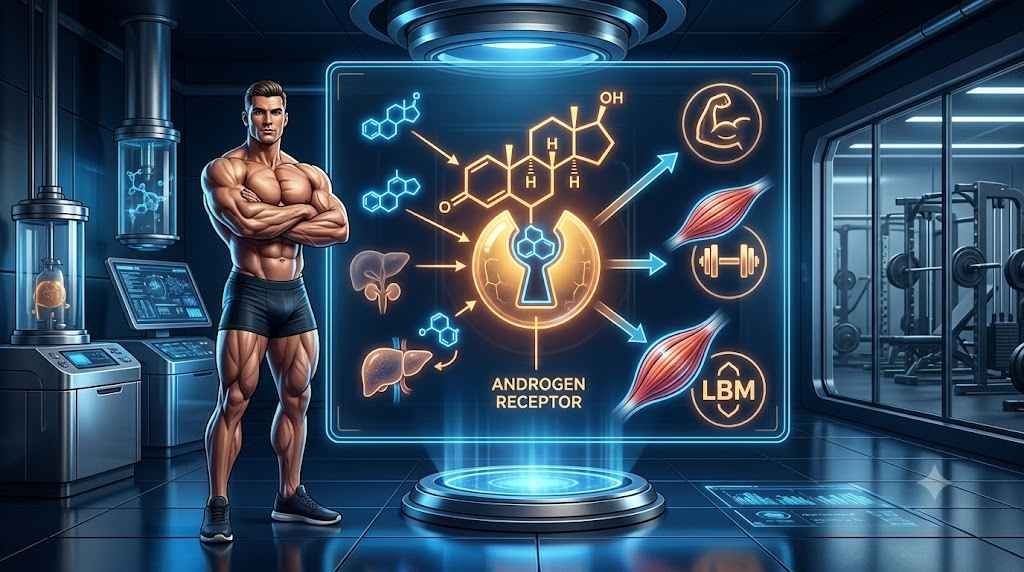
SARMs stand for Selective Androgen Receptor Modulators.
The basic idea behind SARMs is relatively straightforward. These compounds are designed to interact with androgen receptors in the body, which are involved in processes such as muscle and bone development.
Unlike traditional anabolic steroids, SARMs were developed with the goal of producing more selective activity in certain tissues. That’s where the word “selective” comes from.
This concept is one of the main reasons SARMs became popular among fitness enthusiasts. They are often marketed as a middle ground between natural training and traditional anabolic steroids.
But there’s an important reality check here.
SARMs are frequently promoted online as being safer than steroids, yet that claim is far too simplistic. The FDA states that SARMs are not approved for bodybuilding or muscle-building use and has reported serious adverse events associated with SARM-containing products.
Another issue is product quality. A product sold online as a particular SARM may not necessarily contain exactly what the label claims. The FDA has also taken action against companies marketing unapproved SARM products.
Common SARMs Used in Bodybuilding
There are several SARMs that appear repeatedly in bodybuilding and fitness discussions. They don’t all have the same profile or purpose.
Ostarine (MK-2866)
Ostarine, also known as MK-2866 or Enobosarm, is one of the most widely discussed SARMs.
It is generally associated with:
- Lean muscle retention
- Increasing lean body mass
- Strength and training performance
- Muscle preservation during calorie restriction
Ostarine is often described as one of the milder SARMs, but “milder” should not be interpreted as risk-free. It remains an unapproved drug for bodybuilding use.
Ligandrol (LGD-4033)
LGD-4033, commonly called Ligandrol, is another well-known SARM.
It is generally discussed in connection with:
- Increasing lean body mass
- Muscle growth
- Strength
- Bulking-oriented bodybuilding goals
Because its anabolic activity is considered stronger than some of the more commonly discussed SARMs, it is frequently mentioned in muscle-building discussions.
RAD-140
RAD-140, also known as Testolone, is another popular SARM discussed by experienced bodybuilding communities.
It is commonly associated with:
- Muscle growth
- Strength
- Lean mass
- More aggressive muscle-building goals
RAD-140 is often compared with stronger anabolic compounds because of its perceived potency, but comparisons like this shouldn’t be taken as proof that it provides the same results or safety profile as anabolic steroids.
Andarine (S4)
Andarine, commonly known as S4, is another compound in the SARM category.
It is commonly discussed for:
- Lean muscle retention
- Strength
- Cutting phases
- Body-composition goals
S4 is particularly known for its reported visual side effects involving night vision and changes in color perception, which makes it quite different from some other SARMs.
YK-11
YK-11 is frequently included in SARM discussions, although its classification and pharmacology are more complicated than the simple “SARM” label suggests.
It is commonly marketed in bodybuilding circles for:
- Muscle growth
- Strength
- Lean mass
However, human evidence is limited, and online claims about its effects often go considerably beyond what scientific evidence can support.
Commonly Reported SARM Dosages
This is where we need to separate internet bodybuilding practice from established medical dosing.
There is no FDA-approved bodybuilding dosing protocol for SARMs. Therefore, numbers commonly seen on bodybuilding forums and vendor pages should not be presented as medically established recommendations.
For an educational comparison article, we can mention commonly reported ranges while making it clear that these are not approved treatment doses.
The exact amount varies considerably between compounds and sources, and products sold online may also have inaccurate labeling.
That’s an important distinction because a dosage appearing repeatedly online doesn’t automatically make it safe, effective, or medically validated.
What Are SARMs Supposed to Do?
The attraction of SARMs comes mainly from their interaction with androgen receptors.
Depending on the compound, bodybuilding users generally seek:
Muscle growth: Increasing lean body mass and supporting a more muscular appearance.
Strength: Improved training performance and the ability to handle heavier workloads.
Muscle retention: Maintaining lean tissue during calorie deficits.
Body composition: Some users are interested in maintaining muscle while reducing body fat.
The important point is that these are intended or commonly discussed bodybuilding goals, not guarantees.
Results depend on training, nutrition, genetics, compound-specific pharmacology, product quality, and many other factors.
Potential SARMs Side Effects
This is the part that often gets ignored in social-media bodybuilding content.
SARMs can affect the body’s hormonal system. Depending on the compound and individual response, users may experience changes in testosterone and other hormones.
The FDA has reported concerns including liver injury, increased cardiovascular risk, sexual dysfunction, infertility, testicular shrinkage, and other serious adverse effects.
There is also a major difference between buying a regulated medicine from a legitimate pharmacy and buying an unapproved bodybuilding compound online.
With an unapproved product, you may not have reliable assurance about:
- Actual ingredient concentration
- Purity
- Contamination
- Stability
- Manufacturing quality
- Whether the labeled compound is actually present
That’s why the “research chemical” label should not automatically be interpreted as a quality or safety guarantee.
SARMs: The Bottom Line
SARMs became popular because they appeared to offer a different approach to androgen-receptor activity compared with traditional anabolic steroids.
But popularity isn’t the same as proof.
They remain unapproved for bodybuilding, and serious safety concerns have been reported.
So when we eventually compare SARMs vs steroids vs peptides, the right question isn’t simply:
“Which one is strongest?”
A better question is:
“How does each category work, what is it commonly used for, what evidence supports it, and what are the potential risks?”
That’s exactly what we’ll break down in the next sections.
What Are Anabolic Steroids?

Anabolic steroids, more accurately called anabolic-androgenic steroids (AAS), are synthetic derivatives of testosterone. They were developed for legitimate medical purposes, but they are also widely discussed in bodybuilding because of their ability to increase muscle protein synthesis, support muscle growth, and improve strength.
This is where the comparison with SARMs becomes interesting.
Both SARMs and anabolic steroids interact with the androgen receptor, but traditional anabolic steroids are generally much less selective in where their effects occur. They can influence muscle, reproductive tissues, the cardiovascular system, the liver, the skin, and other parts of the body.
Some anabolic steroids are also converted into other hormones or metabolites. For example, testosterone can be converted into estradiol through aromatase, while some other steroids can undergo different metabolic pathways.
That broader activity is one reason anabolic steroids can produce substantial changes in muscle mass and performance — but it is also one reason their side-effect profile can be significant.
Common Anabolic Steroids Used in Bodybuilding
There are dozens of anabolic-androgenic steroids, but a relatively small group appears repeatedly in bodybuilding discussions.
Testosterone
Testosterone is the foundation for many discussions about anabolic steroids because it is the body’s primary naturally occurring androgen.
In bodybuilding, testosterone is commonly associated with:
- Increased muscle mass
- Increased strength
- Improved training performance
- Recovery and muscle retention
- Increased nitrogen retention and protein synthesis
Different testosterone esters, such as testosterone enanthate, cypionate, and propionate, differ mainly in their pharmacokinetic characteristics, particularly how quickly testosterone is released and cleared.
Testosterone is also a prescription medicine for specific medical conditions. That does not mean using testosterone at bodybuilding doses is medically equivalent to testosterone replacement therapy.
Dianabol (Methandrostenolone)
Dianabol, also called methandrostenolone or methandienone, is an oral anabolic steroid historically associated with rapid increases in body weight and strength.
Bodybuilders commonly associate it with:
- Rapid weight gain
- Increased strength
- Increased training performance
- Bulking phases
Some of the initial increase in scale weight can involve water retention, so gaining weight is not automatically the same thing as gaining equivalent amounts of new muscle tissue.
Anavar (Oxandrolone)
Oxandrolone, commonly known as Anavar, is an anabolic steroid often discussed in connection with lean mass and strength.
It is commonly associated with:
- Lean tissue retention
- Strength
- Body-composition goals
- Cutting phases
Despite its reputation as a “mild” steroid, oxandrolone is still an anabolic steroid and can produce clinically important effects on lipids, liver function, and the body’s hormonal system.
Deca-Durabolin (Nandrolone Decanoate)
Nandrolone decanoate, widely known by the brand name Deca-Durabolin, is another anabolic steroid frequently discussed in bodybuilding.
It is commonly associated with:
- Increased muscle mass
- Strength
- Bulking
- Supporting training volume
Nandrolone is also a prescription anabolic steroid in certain medical contexts, but non-medical bodybuilding use is a different situation.
Trenbolone
Trenbolone is one of the most potent anabolic steroids discussed in bodybuilding circles.
It is commonly associated with:
- Significant increases in muscle mass
- Strength
- Muscle hardness and density
- Body-composition changes
However, its reputation for potency should not be confused with safety. Trenbolone is not approved for human therapeutic use in many jurisdictions, including the United States, and underground bodybuilding use carries substantial uncertainty.
Winstrol (Stanozolol)
Stanozolol, commonly known as Winstrol, is another anabolic steroid used in bodybuilding discussions.
It is often associated with:
- Strength
- Leaner appearance
- Muscle retention during cutting
- Athletic performance
Stanozolol can have significant effects on blood lipids and liver function, particularly in its oral form.
Commonly Reported Steroid Dosages
This is another area where bodybuilding culture and medical practice need to be separated.
Anabolic steroids such as testosterone and nandrolone have legitimate prescription uses, but bodybuilding doses, cycles, and combinations can be substantially different from medically supervised treatment.
There is therefore no single “standard bodybuilding steroid dose.”
Online bodybuilding sources commonly describe doses ranging from relatively low amounts to several times therapeutic replacement levels, depending on the compound, experience level, and goal. Those figures should not be interpreted as recommended or safe doses.
For this article, we’ll use dosage information primarily to explain how bodybuilding use differs from medical use rather than presenting a cycle for readers to follow.
What Do Anabolic Steroids Do for Muscle Growth?
The major attraction of anabolic steroids is their strong anabolic activity.
Increased Muscle Protein Synthesis
Androgen-receptor activation can increase processes involved in muscle protein synthesis and adaptation to resistance training.
In simple gym language: when training and nutrition are already providing the stimulus, anabolic steroids can significantly amplify the body’s ability to build and retain muscle tissue.
Increased Strength
Greater muscle mass, changes in neuromuscular performance, and other physiological effects can contribute to increased strength.
This can allow users to train with greater loads or volume, although strength gains are not purely a result of larger muscles.
Improved Muscle Retention
Anabolic steroids can have strong anti-catabolic effects, which is one reason they’re discussed heavily during cutting phases.
Maintaining muscle while dieting is one of the biggest challenges in bodybuilding, particularly when body fat becomes very low.
Increased Body Weight
Some anabolic steroids can produce substantial increases in scale weight.
But here’s the important distinction:
Scale weight ≠ pure muscle.
Depending on the compound, diet, glycogen storage, water retention, and other factors, changes in body weight can include muscle tissue, glycogen, water, and fat.
Steroid Side Effects You Should Know
This is where the benefits come with a serious trade-off.
Anabolic steroids can affect multiple systems in the body. NIDA notes that anabolic steroid misuse can be associated with cardiovascular problems, liver and kidney issues, hormonal changes, infertility, psychiatric effects, and other health problems.
Hormonal Suppression
When external androgens are introduced, the body’s natural hormone production can be suppressed through negative feedback.
Depending on the drug, dose, duration, and individual response, this can lead to reduced natural testosterone production and changes in reproductive function.
Cardiovascular Effects
Anabolic steroid misuse can negatively affect cholesterol and blood pressure and may contribute to cardiovascular disease.
This is one of the areas that often gets overlooked by younger lifters because the visible effect — bigger muscles — is much easier to notice than changes occurring inside the cardiovascular system.
Liver Stress
Some anabolic steroids, particularly certain oral 17-alpha-alkylated compounds, can place considerable stress on the liver.
Abnormal liver enzymes and other liver-related problems can occur.
Estrogen-Related Effects
Some testosterone-derived steroids can be converted into estrogen.
Elevated estrogen activity can contribute to problems such as:
- Water retention
- Gynecomastia
- Changes in mood
- Blood-pressure changes
The relationship is more complicated than simply saying “high estrogen is bad,” because estrogen also has important physiological functions.
Skin and Hair
Androgenic activity can contribute to:
- Acne
- Oily skin
- Increased body hair
- Accelerated hair loss in genetically susceptible individuals
Fertility
Exogenous anabolic steroids can interfere with normal reproductive hormone signaling and sperm production.
This is particularly important for people who may want children in the future.
SARMs vs Steroids: The First Major Comparison
Now we can finally get into the comparison that most bodybuilding readers are interested in.
At first glance, SARMs and anabolic steroids can look similar because both are connected to the androgen receptor.
But there are important differences.
Mechanism
SARMs: Designed to produce selective androgen-receptor activity in particular tissues.
Anabolic steroids: Produce androgenic and anabolic effects through androgen-receptor signaling, with broader activity throughout the body.
Muscle-Building Potential
Anabolic steroids have a much longer history of use and research in relation to anabolic effects and can produce substantial increases in muscle mass when misused at supraphysiological doses.
SARMs can also have anabolic effects, but human research is much more limited for bodybuilding applications, and individual compounds differ considerably.
Selectivity
This is where SARMs have their theoretical advantage.
They were developed with the goal of producing more tissue-selective androgenic/anabolic effects.
But selective does not mean side-effect-free.
Hormonal Effects
Both categories can interfere with the body’s natural hormonal system.
The degree varies by compound, dose, duration, and individual response.
Regulatory Status
This distinction is extremely important.
Many anabolic steroids are legitimate prescription medicines for specific medical conditions, while non-medical use for physique enhancement is a different matter.
SARMs, meanwhile, are not FDA-approved for bodybuilding or muscle growth. The FDA specifically warns consumers about the risks associated with products marketed as SARMs.
Which Is More Potent?
If the question is simply “Which category has the greater established muscle-building potential?”, anabolic steroids have the stronger evidence base and much longer history of demonstrated anabolic effects.
But stronger anabolic effects do not automatically make something a better choice.
The real comparison needs to include effectiveness + health risks + evidence + regulatory status + individual circumstances.
That’s why we shouldn’t stop at SARMs vs steroids.
The third category — peptides — works very differently, and that’s where the comparison gets even more interesting.
What Are Peptides?
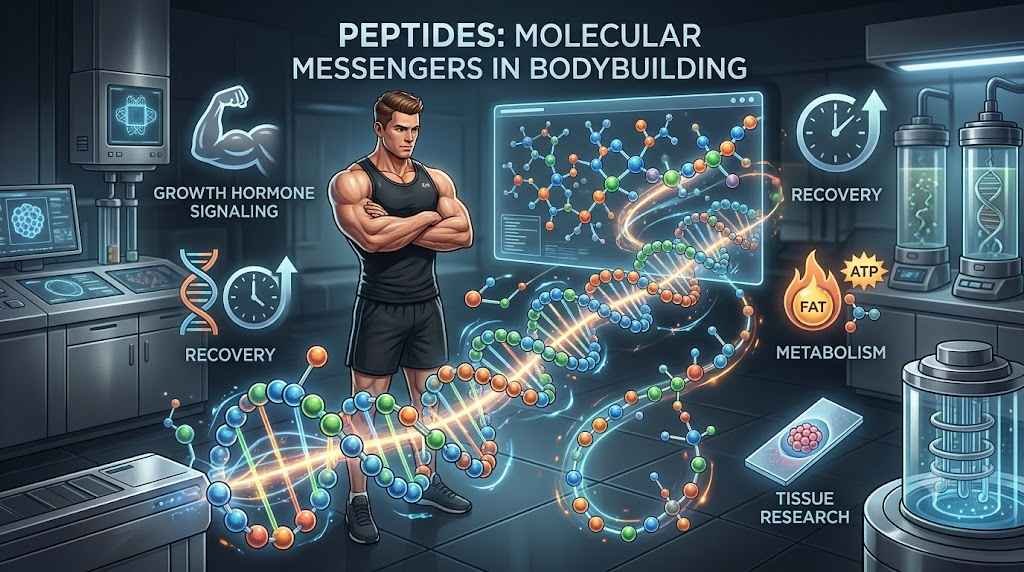
Peptides are short chains of amino acids. If you’ve only heard about peptides through bodybuilding forums or fitness influencers, it can sound like “peptides” are one specific type of muscle-building drug.
They’re not.
Peptides are actually a very broad group of molecules that can interact with different receptors and signaling pathways in the body. Some are involved in hormones, metabolism, tissue signaling, appetite, recovery, or other biological processes.
That’s why comparing peptides directly with anabolic steroids can sometimes be misleading.
A testosterone-based anabolic steroid is designed to produce androgenic and anabolic effects, while a peptide such as a growth-hormone secretagogue may work by influencing the body’s own hormone signaling.
And then you have compounds such as BPC-157 or TB-500 that are discussed primarily around recovery and tissue repair, rather than direct muscle-building.
So when someone says, “Peptides build muscle,” the next question should always be:
Which peptide?
Common Peptides Discussed in Bodybuilding
There are many peptides circulating in the fitness world, but they don’t all have the same purpose.
For this guide, it’s easier to understand them by function rather than simply listing dozens of names.
Growth Hormone–Related Peptides
This group includes compounds such as:
- CJC-1295
- Ipamorelin
- GHRP-2
- GHRP-6
- Sermorelin
- Hexarelin
Many of these are discussed as growth hormone secretagogues, meaning they can stimulate the release of growth hormone through different mechanisms.
For example, ipamorelin is a growth hormone secretagogue that acts through the ghrelin receptor. CJC-1295 has been studied for its ability to increase growth hormone exposure. The exact pharmacology differs from peptide to peptide.
These compounds are therefore quite different from simply injecting a traditional anabolic steroid.
Recovery and Tissue-Related Peptides
Another group commonly discussed in bodybuilding includes:
- BPC-157
- TB-500
- Thymosin-related compounds
- GHK-Cu
These are generally discussed around areas such as:
- Recovery
- Tissue repair
- Connective tissue
- Wound-healing research
- Inflammation-related pathways
However, online bodybuilding claims can run far ahead of the available human evidence.
For example, BPC-157 has attracted enormous interest in fitness communities, but much of the evidence surrounding it remains preclinical rather than high-quality human clinical evidence.
So “popular in bodybuilding” and “clinically proven” are two completely different things.
Body-Composition Peptides
Some peptides are discussed specifically for body-composition or fat-loss purposes.
Examples include:
- AOD-9604
- HGH Fragment 176-191
- Tesamorelin
Their proposed mechanisms and evidence are different from those of anabolic steroids.
For example, tesamorelin has a legitimate medical use for reducing excess abdominal fat in certain adults with HIV-associated lipodystrophy. That doesn’t mean every peptide marketed online for “fat loss” has the same level of evidence or approval.
IGF-Related Compounds
Another category often seen in bodybuilding discussions includes:
- IGF-1
- IGF-1 LR3
- IGF-1 DES
- MGF
- PEG-MGF
These compounds are connected to growth-factor signaling rather than simply androgen-receptor activation.
They are therefore particularly important when discussing the difference between muscle-building signals and direct anabolic-androgenic drugs.
Commonly Reported Peptide Dosages
This is probably the most confusing part of the peptide world.
Unlike a single medication with one standardized indication and dosing schedule, bodybuilding discussions cover many different peptides, research compounds, routes of administration, and protocols.
That means there is no universal “peptide dose.”
A dose that appears in an online bodybuilding protocol may have nothing to do with an approved medical dose — and in some cases, the compound itself may not have an approved human use.
For our comparison, we’ll therefore identify commonly reported bodybuilding ranges where relevant, while clearly separating them from medically established dosing.
That’s particularly important with compounds sold online as “research peptides.”
What Are Peptides Used For in Fitness?
The goals associated with peptides are much broader than simply gaining muscle.
Supporting Growth Hormone Signaling
Some peptides are used in research or discussed by bodybuilders because they can stimulate or influence growth hormone release.
Growth hormone has effects on multiple tissues and metabolic pathways, so the interest isn’t necessarily limited to muscle size.
Recovery
Certain peptides are marketed around tissue-repair and recovery applications.
This is one of the biggest areas where marketing claims can exceed human evidence, so it’s important not to confuse experimental research with proven treatment.
Body Composition
Some peptide-based therapies can influence appetite, fat distribution, metabolism, or other aspects of body composition.
Again, the specific effect depends entirely on the compound.
Muscle Growth
Some peptides may indirectly contribute to an environment associated with muscle growth through growth-hormone or growth-factor pathways.
But this is where the distinction between direct anabolic action and hormonal signaling becomes important.
Peptides shouldn’t simply be assumed to produce the same degree of muscle growth as anabolic steroids.
Peptide Side Effects and Limitations
“Peptide” is not a synonym for “safe.”
The potential risks depend heavily on the specific compound.
Some possible concerns can include:
- Changes in blood glucose
- Changes in insulin sensitivity
- Fluid retention
- Headaches
- Changes in appetite
- Injection-site reactions
- Hormonal changes
- Changes in growth-factor signaling
There are also quality-control concerns when compounds are obtained from unregulated sources.
The FDA has identified safety concerns with certain compounded peptide substances, including concerns surrounding GHRP-2 and GHRP-6.
That means readers shouldn’t assume that a vial labeled “research peptide” has the same manufacturing standards, purity, sterility, or quality control as an approved pharmaceutical product.
Peptides vs Steroids: What’s the Difference?
Now we get to our second major comparison.
At first glance, both peptides and anabolic steroids may appear in bodybuilding protocols designed around gaining muscle, improving recovery, or changing body composition.
But biologically, they can be very different. MK-677: Benefits, Dosage, Half-Life, Effects & Side Effects
SARMs, Steroids and Peptides: Mechanism of Action
Anabolic steroids primarily work through androgen-receptor signaling.
Peptides can act through many different pathways depending on the specific compound.
A growth-hormone secretagogue, for example, may stimulate endogenous GH release rather than directly acting as an anabolic androgen.
SARMs, Steroids and Peptides: Direct Muscle Building
Anabolic steroids have a well-established anabolic mechanism and can produce substantial increases in muscle mass when used at supraphysiological levels.
Peptides vary enormously.
Some may influence pathways related to growth and recovery, but that does not mean every peptide is a powerful muscle-building compound.
Recovery vs Muscle Growth: SARMs, Steroids and Peptides
This is another major distinction.
Bodybuilders may use anabolic steroids primarily for muscle growth, strength, and muscle retention.
Peptides are often discussed for a wider range of objectives, including recovery, growth-hormone signaling, body composition, and tissue-related research.
That makes “which is better?” an incomplete question.
The better question is:
Better for what goal?
Hormonal Effects of SARMs, Steroids and Peptides
Anabolic steroids can strongly suppress the body’s natural reproductive hormone production.
Peptides can also influence hormonal pathways, but the effect depends entirely on the compound.
A peptide that affects growth hormone is obviously going to have a very different hormonal profile from a testosterone-derived anabolic steroid.
SARMs, Steroids and Peptides: What Does the Evidence Say?
This is one of the most important differences.
Some peptides have established medical applications and clinical research behind them.
Others commonly discussed in bodybuilding have limited human evidence.
Therefore, you can’t evaluate the safety or effectiveness of “peptides” as one giant category.
Each compound needs to be evaluated individually.
Are Peptides Safer Than Steroids?
This is one of the most common questions in bodybuilding.
The honest answer is:
It depends on the peptide.
There is no scientifically valid rule saying that peptides are automatically safer than anabolic steroids.
A medically approved peptide therapy used under appropriate supervision is one thing.
An unapproved peptide purchased online from an unknown source is something completely different.
The same principle applies when comparing a prescription anabolic steroid used for a legitimate medical indication with non-medical underground steroid use.
The compound, dose, source, route of administration, duration, individual health, and medical supervision all matter.
Peptides: The Bottom Line
Peptides are probably the most misunderstood category in the SARMs vs steroids vs peptides debate.
They aren’t simply “milder steroids.”
They aren’t all muscle builders.
And they aren’t automatically safe because they’re made from amino acids.
Some have legitimate medical applications, while others remain experimental or lack adequate human evidence for the claims commonly made about them.
The biggest takeaway is simple:
Don’t judge a peptide by the word “peptide.” Judge the specific compound, its mechanism, its evidence, its regulatory status, and its risks.
Now that we’ve covered all three categories, we can finally put them head-to-head.
SARMs vs Steroids vs Peptides: How Do They Really Differ?
Now that we’ve looked at each category separately, it’s time to put them together.
The easiest mistake is to compare these compounds purely by how much muscle they can potentially add. That’s only one part of the picture.
Mechanism, effectiveness, hormonal effects, evidence, regulatory status, and potential risks all matter.
And because SARMs, anabolic steroids, and peptides work through different biological pathways, there isn’t one universal winner.
Let’s break down each comparison.
SARMs vs Steroids: What’s the Difference?
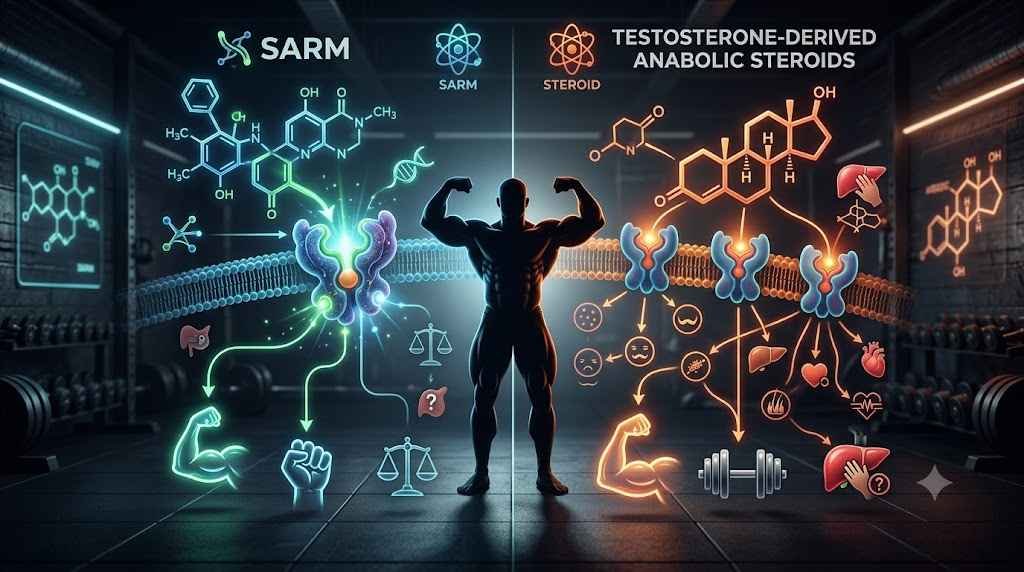
SARMs and anabolic steroids are probably the two categories most frequently compared in bodybuilding.
The reason is obvious: both are connected to androgen-receptor signaling, and both are discussed in relation to muscle growth and strength.
But they aren’t interchangeable.
SARMs vs Steroids: Mechanism
SARMs are designed to selectively activate androgen receptors in certain tissues.
Traditional anabolic steroids, meanwhile, produce androgenic and anabolic effects through androgen-receptor activation with broader activity throughout the body.
The original idea behind SARMs was to achieve useful anabolic effects while reducing some unwanted androgenic effects.
That’s an interesting concept, but it doesn’t mean SARMs have eliminated the risks associated with androgenic activity.
SARMs vs Steroids: Muscle Growth
When it comes specifically to established muscle-building potential, anabolic steroids have the stronger track record.
Certain anabolic steroids can produce substantial increases in muscle mass and strength, particularly when used at supraphysiological doses.
SARMs can also produce anabolic effects, and some human studies have demonstrated increases in lean body mass with certain compounds.
However, the evidence base for recreational bodybuilding use is much smaller than the extensive history surrounding anabolic steroids.
SARMs vs Steroids: Hormonal Suppression
This is another area where internet discussions can become misleading.
A common misconception is:
SARMs don’t suppress testosterone because they’re selective.
That’s not correct.
SARMs can suppress the body’s natural hormonal axis.
The degree of suppression depends on the compound, exposure, duration, and individual response.
Anabolic steroids can also cause significant suppression of endogenous testosterone production.
So neither category should be considered “non-suppressive” simply because one is called selective.
SARMs vs Steroids: Side Effects
Both categories can produce unwanted effects.
SARMs have been associated with concerns involving:
- Hormonal suppression
- Changes in cholesterol
- Liver injury
- Cardiovascular risk
- Sexual and reproductive effects
The FDA specifically warns that SARMs are unapproved for bodybuilding and may carry serious health risks.
Anabolic steroids can affect:
- Blood pressure
- Cholesterol
- Cardiovascular health
- Liver function
- Kidney function
- Fertility
- Natural testosterone production
- Mood and psychological health
So the idea that SARMs are simply “safe steroids” is not supported by the evidence.
Steroids vs Peptides: Which One Works Differently?
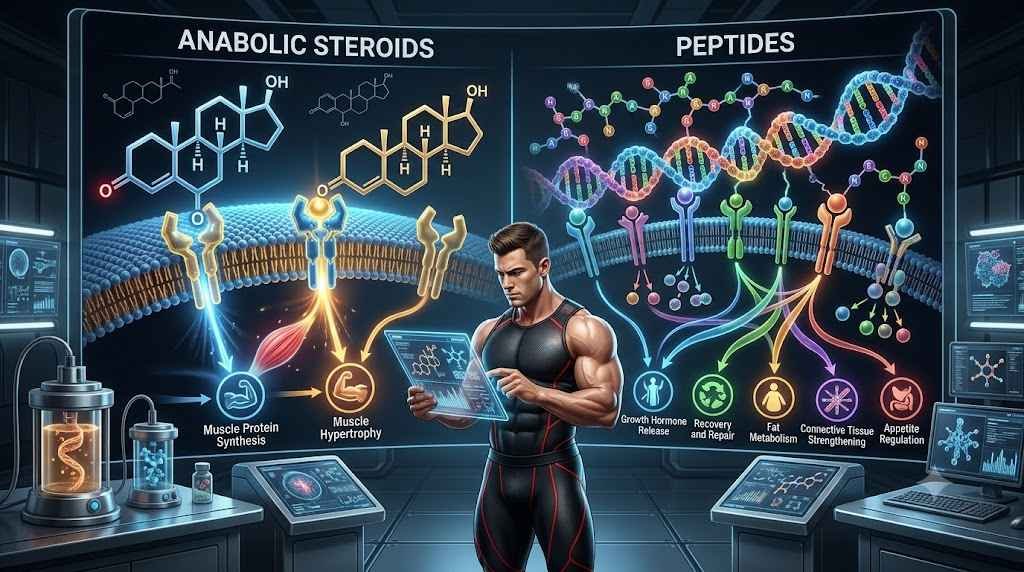
This comparison is completely different.
Unlike SARMs and steroids, the word peptide describes a huge family of compounds with very different mechanisms.
Steroids vs Peptides: Mechanism
Anabolic steroids primarily act through androgen-receptor signaling.
Peptides can interact with many different receptors and biological pathways.
For example:
- Some influence growth hormone release.
- Some influence metabolic pathways.
- Some interact with growth-factor signaling.
- Some are being investigated for tissue-related effects.
So comparing “steroids” with “peptides” without identifying the specific peptide isn’t scientifically precise.
Steroids vs Peptides: Muscle Growth
Anabolic steroids have a direct and powerful anabolic effect on skeletal muscle.
Peptides vary significantly.
Some compounds may indirectly support pathways associated with muscle growth, while others are primarily investigated for completely different purposes.
That’s why a peptide shouldn’t automatically be considered an alternative to anabolic steroids for building muscle.
Steroids vs Peptides: Recovery
This is where peptides often receive more attention.
Some compounds discussed in bodybuilding communities are marketed around:
- Recovery
- Connective tissue
- Tissue repair
- Growth hormone signaling
However, the level of evidence varies considerably.
A compound being discussed heavily on fitness forums doesn’t automatically mean that it has been proven to accelerate recovery in humans.
Steroids vs Peptides: Hormonal Effects
Anabolic steroids can directly interfere with the body’s reproductive hormone axis.
Peptides can have hormonal effects too, but these depend entirely on the peptide.
A growth-hormone secretagogue is going to produce a very different hormonal response from testosterone or nandrolone.
That’s why treating all peptides as one class is a mistake.
Peptides vs SARMs: How Are They Different?
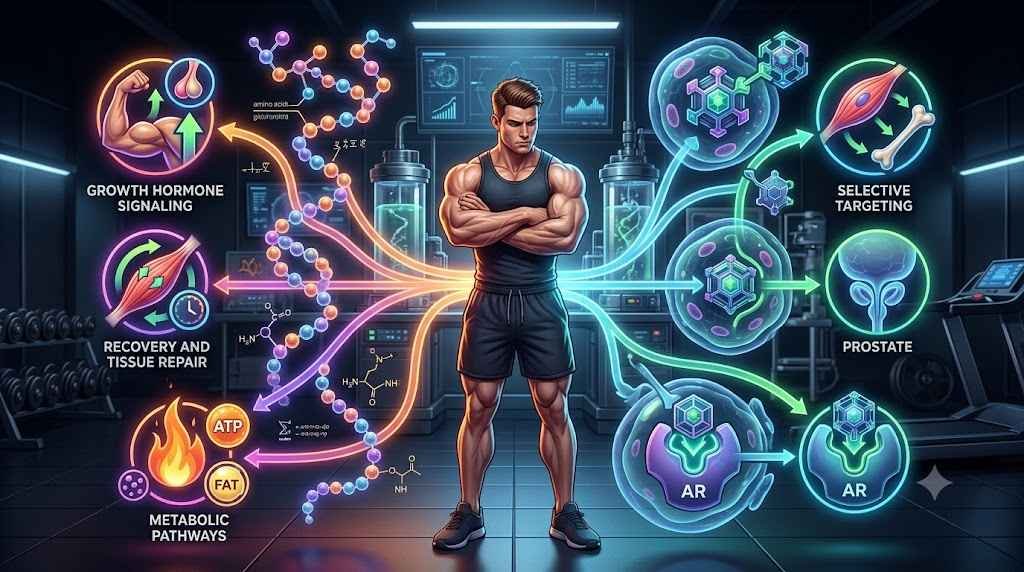
Our third comparison brings together two categories that are often marketed toward similar audiences but work through very different mechanisms.
Peptides vs SARMs: Mechanism
SARMs primarily target androgen receptors.
Peptides can influence many different signaling systems.
For example, some growth-hormone-related peptides act through receptors involved in GH secretion rather than directly activating androgen receptors.
This is a fundamental biological difference.
Peptides vs SARMs: Muscle Building
Some SARMs are specifically developed around anabolic activity and therefore have a more direct relationship with muscle tissue.
Peptides vary dramatically.
Some may influence growth-related pathways, while others are discussed mainly for recovery, metabolism, or tissue research.
So there is no blanket answer to which category “builds more muscle.”
The individual compound matters.
Peptides vs SARMs: Body Composition
Both categories appear in bodybuilding conversations around body composition, but for very different reasons.
SARMs are generally discussed around:
- Lean mass
- Muscle retention
- Strength
- Bodybuilding performance
Peptides may be discussed around:
- Growth-hormone signaling
- Recovery
- Fat metabolism
- Appetite or metabolic pathways
- Body composition
Again, these aren’t interchangeable effects.
Peptides vs SARMs: Safety
Neither category deserves a blanket “safe” label.
SARMs are unapproved for bodybuilding and carry significant regulatory and safety concerns.
Peptides range from established medicines to experimental compounds with limited human evidence.
Therefore, the safety question must always be:
Which compound, at what exposure, from what source, and for what purpose?
SARMs vs Steroids vs Peptides: Side-by-Side Comparison
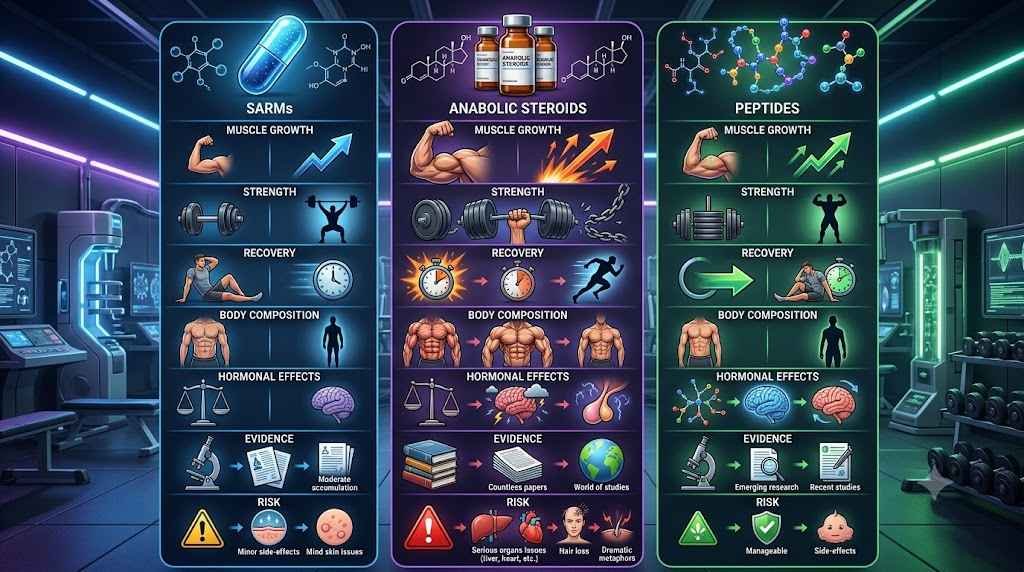
Here’s the simplest way to visualize the major differences:
| Feature | SARMs | Anabolic Steroids | Peptides |
|---|---|---|---|
| Basic category | Selective androgen receptor modulators | Anabolic-androgenic steroids | Short chains of amino acids with diverse biological functions |
| Main pathways | Androgen receptors | Primarily androgen receptors | Varies by peptide |
| Muscle-building action | Anabolic | Strong anabolic activity | Highly compound-dependent |
| Strength | Common bodybuilding goal | Common bodybuilding goal | Not necessarily the primary effect |
| Recovery | Not the primary mechanism | May indirectly support training/recovery | Some are investigated for recovery-related effects |
| Body composition | Common bodybuilding interest | Common bodybuilding interest | Depends on compound |
| Hormonal effects | Possible | Often significant | Highly compound-dependent |
| Human evidence | Limited for bodybuilding use | Extensive history, but misuse has risks | Ranges from established clinical evidence to very limited evidence |
| FDA-approved for bodybuilding | No | No | No blanket approval; depends on the individual medicine |
| Main concern | Hormonal, liver, lipid and cardiovascular effects | Cardiovascular, hormonal, liver, kidney and reproductive effects | Compound-specific risks and product quality |
The table makes one thing obvious:
These three categories should not be treated as interchangeable.
Which Is Strongest for Muscle Gain?
If we’re talking strictly about established anabolic muscle-building potential, anabolic steroids generally have the strongest evidence and the longest history of producing significant increases in muscle mass.
SARMs can have anabolic effects, but they have a much smaller evidence base for bodybuilding.
Peptides are even more complicated because some are not primarily designed or studied as direct muscle-building agents at all.
So ranking the categories as:
Steroids > SARMs > Peptides
can be useful as a very broad description of traditional bodybuilding muscle-building potential, but it oversimplifies the individual compounds.
For example, comparing testosterone with a tissue-repair peptide doesn’t really make biological sense because they’re being used to influence completely different systems.
SARMs vs Steroids vs Peptides: What About Beginners?
This is where we need to be especially careful.
There isn’t a scientifically established “best beginner” category for non-medical performance enhancement.
Being new to bodybuilding doesn’t make SARMs safer.
It doesn’t make peptides risk-free.
And it doesn’t make anabolic steroids appropriate for someone who simply wants faster progress.
For beginners, the biggest gains usually come from getting the fundamentals right:
- Progressive resistance training
- Adequate protein
- Appropriate calorie intake
- Sufficient sleep
- Consistent training
- Proper recovery
- Patience
These factors are responsible for a huge amount of the progress beginners see during their first stages of training.
Common Products and Their Main Functions
Here’s a quick-reference breakdown of compounds frequently discussed in bodybuilding. Benefits and Types of SARMs: Complete Guide
SARMs
| Compound | Commonly Discussed Function |
|---|---|
| Ostarine (MK-2866) | Lean mass and muscle retention |
| LGD-4033 | Muscle growth and strength |
| RAD-140 | Muscle growth and strength |
| S4 (Andarine) | Lean mass and cutting-oriented goals |
| YK-11 | Muscle growth and strength claims |
Anabolic Steroids
| Compound | Commonly Discussed Function |
|---|---|
| Testosterone | Muscle growth, strength and overall anabolic support |
| Dianabol | Rapid mass and strength increases |
| Anavar | Lean mass and strength |
| Nandrolone | Mass and strength |
| Trenbolone | Muscle growth, strength and body-composition changes |
| Winstrol | Strength and leaner physique goals |
Peptides
| Compound | Commonly Discussed Function |
|---|---|
| CJC-1295 | Growth-hormone signaling |
| Ipamorelin | Growth-hormone release |
| GHRP-2 | Growth-hormone secretion |
| GHRP-6 | Growth-hormone secretion and appetite-related effects |
| Sermorelin | Growth-hormone-releasing activity |
| BPC-157 | Primarily discussed in tissue/recovery research |
| TB-500 | Primarily discussed in tissue/recovery research |
| AOD-9604 | Body-composition/fat-metabolism research |
| Tesamorelin | Growth-hormone pathway and specific medical body-fat indication |
| IGF-1-related compounds | Growth-factor signaling |
Important: “Commonly discussed function” does not mean the compound is clinically proven to produce that outcome in healthy bodybuilders.
What About Dosage?
Dosage is one of the areas where bodybuilding websites often create the most confusion.
There are three completely different things that can get called a “dose”:
1. Approved medical dose
A dose established for a specific medical indication.
2. Clinical research dose
An amount used in a controlled research study.
3. Bodybuilding community dose
An amount circulated through forums, social media, vendors, or anecdotal protocols.
These are not interchangeable.
For SARMs and many research peptides, there may be no approved bodybuilding dose at all.
For prescription anabolic steroids, a medically prescribed dose for a specific condition is also not equivalent to a bodybuilding cycle.
That’s why any dosage table in a responsible comparison should identify the context instead of presenting a number as universally “recommended.”
Why Comparing Only Muscle Gain Can Be Misleading
Let’s say Compound A produces more muscle than Compound B.
That doesn’t automatically mean Compound A is the better choice.
You also have to consider:
How strong is the evidence?
What are the potential side effects?
Is the compound approved for human use?
How reliable is the product?
What happens to natural hormone production?
What happens to cholesterol and cardiovascular health?
What happens after stopping?
Is the claimed benefit actually supported by human research?
This is why a proper comparison needs more than a simple “which one is strongest?” ranking.
The Bottom Line
SARMs, anabolic steroids, and peptides may all appear in bodybuilding conversations, but they’re fundamentally different categories.
SARMs are designed to selectively modulate androgen receptors.
Anabolic steroids are androgenic/anabolic compounds with a much longer history of producing significant muscle and strength gains.
Peptides are an extremely broad category that can influence many different biological pathways.
There is no universal winner.
If the goal is muscle growth, the compound’s mechanism and evidence matter. If the goal is recovery, the answer may be completely different. And if the goal is body composition, another group of compounds may enter the conversation.
The smartest approach is therefore not to ask:
“Which one is the best?”
Instead, ask:
“What does this specific compound do, what evidence supports it, and what are the potential risks?”
That question gives you a much more realistic picture of SARMs vs steroids vs peptides.
SARMs vs Steroids vs Peptides: Common Products, Functions and Dosage Context
After comparing SARMs, anabolic steroids, and peptides, it’s useful to look at the compounds individually.
One important point before we get into the tables: there is no universal bodybuilding dosage for any of these three categories.
A medically established dose, a dose used in a clinical study, and a dose commonly posted on bodybuilding forums are three completely different things.
This distinction is especially important with SARMs and research peptides. Many products sold online are not approved medicines, and the amount printed on a label doesn’t necessarily mean the product has been evaluated for safety, effectiveness, purity, or consistency.
Common SARMs and Their Functions
| SARM | Commonly Discussed Purpose | Main Interest |
|---|---|---|
| Ostarine (MK-2866) | Lean-mass retention and muscle building | Cutting / lean mass |
| LGD-4033 | Increasing lean body mass and strength | Bulking |
| RAD-140 | Muscle growth and strength | Muscle building |
| S4 (Andarine) | Lean-mass retention and body composition | Cutting |
| YK-11 | Marketed around muscle growth | Muscle building |
These compounds are frequently discussed as alternatives to anabolic steroids, but that description can be misleading.
SARMs are not approved for bodybuilding, and the FDA has warned about serious adverse effects associated with products marketed as SARMs, including liver injury and potential cardiovascular risks.
SARMs vs Steroids vs Peptides: What Should You Know About Dosage?
You will find specific milligram amounts all over bodybuilding websites and forums. However, those figures should not be presented as recommended doses.
There is no FDA-approved bodybuilding dosing protocol for Ostarine, LGD-4033, RAD-140, S4, or YK-11.
Some individual SARMs have been studied experimentally in humans, but a research dose does not automatically become a safe bodybuilding dose.
For this reason, a responsible article should treat online dosage numbers as reported use, not medical guidance.
Common Anabolic Steroids and Their Functions
Anabolic steroids are a much broader and older category than SARMs.
They are synthetic derivatives of testosterone and have legitimate medical applications for certain conditions. However, bodybuilding use can involve doses and combinations very different from therapeutic treatment. MedlinePlus notes that people misusing anabolic steroids may take doses far above those used for medical conditions.
| Anabolic Steroid | Commonly Discussed Purpose | Typical Bodybuilding Interest |
|---|---|---|
| Testosterone | Muscle growth, strength and overall anabolic support | Mass / strength |
| Dianabol | Rapid increases in body weight and strength | Bulking |
| Anavar (Oxandrolone) | Lean mass and strength | Cutting / lean mass |
| Nandrolone | Muscle mass and strength | Bulking |
| Trenbolone | Muscle growth, strength and body composition | Advanced bodybuilding |
| Winstrol (Stanozolol) | Strength and leaner appearance | Cutting |
Testosterone
Testosterone is the reference point for understanding anabolic steroids.
It is naturally produced by the human body and is also available as a prescription medicine for specific medical conditions.
In bodybuilding discussions, testosterone is commonly associated with:
- Muscle growth
- Increased strength
- Increased training capacity
- Muscle retention
- Increased body weight
However, medical testosterone replacement and bodybuilding use are not the same thing.
Dianabol
Dianabol, or methandrostenolone, is historically associated with rapid increases in body weight and strength.
Bodybuilders commonly associate it with:
- Bulking
- Strength
- Rapid weight gain
- Increased training performance
Some of the early scale-weight increase can involve water and glycogen rather than purely new muscle tissue.
Anavar
Anavar is the common bodybuilding name for oxandrolone.
It is generally associated with:
- Lean mass
- Strength
- Muscle retention
- Cutting-oriented goals
Its reputation as a “mild steroid” should not be interpreted as “safe.” Anabolic steroids can affect cholesterol, hormones, liver function, and cardiovascular health.
Nandrolone
Nandrolone compounds are commonly discussed for:
- Muscle growth
- Strength
- Bulking
- Training performance
Nandrolone also has legitimate medical applications in some settings, but that does not make non-medical bodybuilding use equivalent to prescribed treatment.
Trenbolone
Trenbolone is frequently described as one of the more potent anabolic steroids used in bodybuilding circles.
It is associated with:
- Significant muscle growth
- Strength
- Body-composition changes
- Muscle retention
Its potency is also one reason it should not be casually presented as a beginner compound.
Winstrol
Winstrol, or stanozolol, is commonly associated with:
- Strength
- Leaner appearance
- Cutting
- Muscle retention
It can have significant effects on blood lipids and liver health, particularly in oral use.
Steroids vs SARMs vs Peptides: Medical and Bodybuilding Dosage
This is one of the most important distinctions in the entire article.
Prescription anabolic steroids are dosed according to a specific medical condition, formulation, patient characteristics, and clinical monitoring.
Bodybuilding protocols can involve substantially higher exposure, multiple compounds, and longer periods of use.
Therefore, there is no single number that can honestly be described as the “common bodybuilding dose” for all steroids.
Giving one number without explaining the medical context can make the information sound much more authoritative than it actually is.
For this reason, readers should not use a bodybuilding forum dose as a substitute for medical guidance.
Common Peptides and Their Functions
Peptides are even more complicated because they cover many different biological pathways.
Here’s a simplified reference guide:
| Peptide | Commonly Discussed Function | Category |
|---|---|---|
| CJC-1295 | Growth-hormone signaling | GH-related |
| Ipamorelin | Growth-hormone secretion | GH-related |
| GHRP-2 | Growth-hormone secretion | GH-related |
| GHRP-6 | Growth-hormone secretion / appetite-related effects | GH-related |
| Sermorelin | Growth-hormone-releasing activity | GH-related |
| AOD-9604 | Body-composition / fat-metabolism research | Metabolic |
| BPC-157 | Tissue and recovery research | Research |
| TB-500 | Tissue/recovery research | Research |
| GHK-Cu | Skin/connective-tissue research | Research |
| IGF-1 | Growth-factor signaling | Growth factor |
| IGF-1 LR3 | Experimental growth-factor compound | Research |
| MGF / PEG-MGF | Muscle-growth signaling research | Growth factor |
The important word in this table is “discussed.”
A compound being popular in bodybuilding communities does not automatically mean its claimed function has been demonstrated in high-quality human studies.
The FDA currently identifies safety or information gaps for several compounds commonly discussed in bodybuilding, including GHRP-2, GHRP-6, CJC-1295, ipamorelin, AOD-9604, BPC-157, PEG-MGF, and TB-500.
CJC-1295
CJC-1295 is a synthetic analogue of growth hormone-releasing hormone and is discussed primarily for its effects on growth-hormone signaling.
It is not simply another version of testosterone or a SARM.
Ipamorelin
Ipamorelin is a growth-hormone secretagogue.
Its bodybuilding appeal comes from the idea of stimulating endogenous growth-hormone release rather than directly activating the androgen receptor.
The FDA has noted limited safety information and concerns related to compounded ipamorelin products.
GHRP-2 and GHRP-6
These are growth-hormone-releasing peptides commonly discussed in bodybuilding.
GHRP-6 is also known for appetite-related effects.
However, the FDA has identified safety concerns around compounded GHRP-2 and GHRP-6, including concerns about immunogenicity and metabolic effects.
BPC-157
BPC-157 is widely discussed online in relation to recovery and tissue repair.
However, the gap between online claims and established human evidence is important.
The FDA has stated that it has limited safety information for BPC-157 and concerns related to peptide impurities and immunogenicity for certain compounded routes.
TB-500
TB-500 is another compound heavily discussed in recovery-focused bodybuilding communities.
It is generally associated with tissue and recovery research rather than direct anabolic muscle building.
The FDA states that it lacks human exposure data sufficient to determine whether compounded TB-500 products would cause harm and has identified concerns around immunogenicity and peptide impurities.
AOD-9604
AOD-9604 is a synthetic peptide fragment derived from human growth hormone and is primarily discussed around fat metabolism and body composition rather than direct muscle building.
The FDA has also noted limited safety information concerning compounded AOD-9604.
SARMs vs Steroids vs Peptides: Why There Isn’t One Standard Dosage
This category is where dosage information becomes especially confusing.
A peptide might be:
- A prescription medicine
- A clinical research compound
- An experimental compound
- A compounded preparation
- An unregulated product sold online
Each situation can have completely different dosing information.
For example, an approved medicine with a specific indication can have a defined dosing schedule supported by clinical trials.
A research peptide sold online does not automatically have an established human dose.
Therefore, we should never take a number from a bodybuilding forum and label it the standard peptide dose.
SARMs vs Steroids vs Peptides: Quick Reference
If you’re trying to understand the three categories quickly, think about them like this:
SARMs
Main pathway: Androgen receptors
Bodybuilding interest: Lean mass, muscle growth, strength and muscle retention
Major issue: Unapproved for bodybuilding and associated with significant safety concerns
Anabolic Steroids
Main pathway: Primarily androgen-receptor signaling
Bodybuilding interest: Muscle growth, strength, mass and muscle retention
Major issue: Strong anabolic effects can come with significant hormonal, cardiovascular, liver, kidney and reproductive risks
Peptides
Main pathway: Depends entirely on the peptide
Bodybuilding interest: Growth-hormone signaling, recovery research, body composition and growth-factor pathways
Major issue: The evidence and safety profile can vary enormously from one peptide to another
SARMs vs Steroids vs Peptides: Which Has the Most Predictable Muscle-Building Effect?
If we’re talking specifically about established anabolic muscle-building effects, anabolic steroids have the longest history and strongest evidence base.
SARMs were developed with anabolic activity in mind, but their recreational bodybuilding use is not approved and their long-term safety remains a major concern.
Peptides are the most difficult category to rank because many are not primarily direct muscle-building compounds.
So a simple ranking can be misleading. Steroids for Bodybuilding: Benefits, Dosage & Side Effects
It’s better to think of them as three different tools that affect different biological systems — with very different levels of evidence and risk.
SARMs vs Steroids vs Peptides: The Most Important Takeaway About Dosage
A number on a website doesn’t automatically make it a safe dose.
Before considering any compound, readers should distinguish between:
Medical dose: Established for a specific medical indication.
Research dose: Used in a controlled study.
Reported bodybuilding dose: An anecdotal or community-derived amount.
Those three categories should never be treated as equivalent.
And with unapproved products, there is another problem: you may not even know whether the vial or tablet contains what the label says.
That is especially relevant for products purchased through unregulated channels.
The FDA has repeatedly warned about bodybuilding products containing steroid or steroid-like substances and reports of serious adverse events, including liver injury and cardiovascular problems.
Part 4 Summary
By now, the difference should be much clearer.
SARMs are primarily androgen-receptor modulators designed around tissue selectivity.
Anabolic steroids are testosterone-derived anabolic-androgenic compounds with a much longer history of use and substantially established anabolic effects.
Peptides are a huge family of signaling molecules with functions ranging from growth-hormone regulation to metabolic and tissue-related research.
The biggest mistake is assuming that every compound within one category behaves the same way.
Compound → mechanism → evidence → dose context → risks
That’s the order in which these substances should be evaluated.
SARMs vs Steroids vs Peptides for Different Bodybuilding Goals
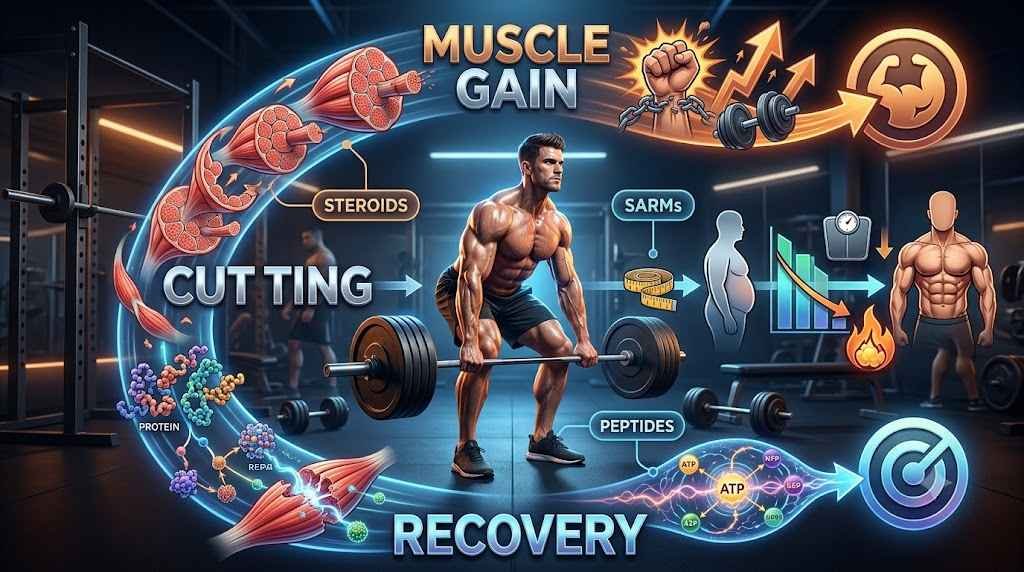
So far, we’ve compared these compounds by their mechanisms and individual functions.
But most people searching for this topic aren’t thinking about receptor pharmacology.
They’re thinking about practical goals:
“What is associated with muscle gain?”
“What is used for cutting?”
“What is associated with strength?”
“What about recovery?”
This is where the comparison becomes much more useful.
The important thing is that SARMs, anabolic steroids, and peptides aren’t equally suited to every goal — and some compounds within each category have completely different purposes.
SARMs vs Steroids for Muscle Gain
When the primary goal is adding muscle mass, anabolic steroids have the most established history of producing substantial anabolic effects.
Testosterone and several other anabolic-androgenic steroids have been extensively studied for their effects on muscle mass and strength.
SARMs were developed to produce anabolic activity with greater tissue selectivity, and some have demonstrated increases in lean body mass in human research.
However, the evidence doesn’t support treating SARMs as simply “oral steroids without the side effects.”
They have their own risks, and they remain unapproved for bodybuilding.
Muscle-Gain Comparison
Anabolic steroids: Generally associated with the strongest and most predictable anabolic effects.
SARMs: Can produce anabolic effects, but recreational bodybuilding evidence and long-term safety data are much more limited.
Peptides: Highly compound-dependent. Some influence growth-related signaling, but many aren’t direct muscle-building agents.
So if someone asks which category has the strongest established anabolic effect, steroids generally come out ahead.
But if someone asks which is “best,” that’s a much harder question because effectiveness isn’t the only variable.
SARMs vs Steroids for Cutting
Cutting is different from bulking.
The main objective is usually to reduce body fat while preserving as much lean tissue as possible.
This is why certain SARMs and anabolic steroids are frequently discussed in cutting communities.
SARMs such as Ostarine and S4 are commonly associated with lean-mass retention.
Anabolic steroids such as Anavar and Winstrol are also commonly discussed in cutting contexts.
But here’s something beginners often misunderstand:
No anabolic compound magically burns body fat.
Your calorie balance remains one of the biggest factors determining whether body fat actually decreases.
A compound may influence muscle retention, performance, or body composition, but it cannot replace a properly structured diet.
Where Peptides Come In
Some peptide-based medicines and investigational compounds are discussed around body composition and fat metabolism.
However, this category needs particularly careful interpretation.
For example, tesamorelin has an established medical indication for reducing excess abdominal fat in certain adults with HIV-associated lipodystrophy. That doesn’t mean it should be considered a general-purpose bodybuilding fat-loss drug.
Other peptides discussed online may have considerably less human evidence.
Steroids vs Peptides for Strength
Strength is strongly connected to muscle size, but the two aren’t identical.
Anabolic steroids can produce substantial increases in strength through a combination of increased muscle mass and other physiological adaptations.
Peptides don’t generally have the same direct anabolic profile.
Some growth-related peptides may influence training and recovery indirectly, but it would be misleading to put them in the same category as traditional anabolic steroids when discussing direct strength enhancement.
So for direct strength and muscle-building effects, anabolic steroids have the more established profile.
Peptides vs SARMs for Recovery
This is where peptides often enter the conversation.
Certain peptides are marketed or researched around tissue repair, recovery, inflammation, or growth-hormone signaling.
Examples commonly discussed in fitness communities include:
- BPC-157
- TB-500
- CJC-1295
- Ipamorelin
- GHRP-2
- GHRP-6
But there is a major distinction between research interest and proven clinical benefit.
A peptide appearing in thousands of bodybuilding discussions doesn’t mean its ability to improve recovery has been conclusively demonstrated in humans.
SARMs, meanwhile, aren’t primarily recovery compounds.
Their main attraction is anabolic and androgen-receptor activity.
So the two categories are often discussed for very different reasons.
SARMs vs Steroids vs Peptides for Body Composition
Body composition means more than simply seeing a lower number on the scale.
It includes:
- Muscle mass
- Body fat
- Water
- Glycogen
- Overall proportions
SARMs are commonly discussed around lean mass and muscle retention.
Anabolic steroids can significantly increase lean mass while also producing changes in body weight and appearance that vary by compound.
Peptides can influence body composition through different mechanisms, depending on the compound.
But none of these categories eliminates the fundamentals of body composition:
Calories + protein + resistance training + recovery = the foundation.
Drugs and research compounds cannot compensate for consistently poor nutrition or training.
SARMs vs Steroids vs Peptides: Which Has the Biggest Muscle-Building Potential?
This is probably the question readers want answered most.
If we’re talking about overall established anabolic potential, the broad picture looks like this:
1. Anabolic Steroids
Traditional anabolic steroids have the strongest established muscle-building effects of the three categories.
They have been used and studied for decades, and their ability to increase muscle mass at supraphysiological exposure is well documented.
2. SARMs
SARMs can produce anabolic effects, and some have demonstrated increases in lean body mass in clinical research.
However, their long-term safety and recreational bodybuilding profile remain uncertain.
3. Peptides
This category cannot really be ranked as one group.
Some peptides influence growth-hormone or growth-factor pathways, while others are primarily studied for metabolism, tissue repair, or other biological functions.
Therefore, putting “peptides” at number three doesn’t mean every peptide is weaker than every SARM.
It simply means peptides aren’t primarily one single class of direct anabolic muscle-building compounds.
Pros and Cons of SARMs
Potential Advantages
- Designed around androgen-receptor selectivity
- Some compounds demonstrate anabolic activity
- Often discussed for lean-mass retention
- Many are orally administered
- Extensive interest in developing them for medical applications
Potential Disadvantages
- Not approved for bodybuilding
- Limited long-term safety data
- Can suppress natural hormone production
- Potential liver and cardiovascular concerns
- Product quality can be unreliable
- Online marketing can exaggerate benefits
The FDA warns consumers that SARMs are unapproved drugs and should not be treated as harmless bodybuilding supplements.
Pros and Cons of Anabolic Steroids
Potential Advantages
- Strong anabolic effects
- Extensive history of research
- Significant potential for muscle and strength increases
- Many compounds have well-characterized pharmacology
- Some compounds have legitimate medical applications
Potential Disadvantages
- Significant hormonal suppression
- Cardiovascular risks
- Cholesterol changes
- Liver-related risks with certain compounds
- Fertility effects
- Possible psychiatric effects
- Risk of serious complications with misuse
NIDA describes anabolic steroid misuse as being associated with cardiovascular, liver, kidney, reproductive, and psychological problems.
Pros and Cons of Peptides
Potential Advantages
- Very diverse biological functions
- Some have legitimate medical applications
- Certain compounds have well-defined physiological targets
- Some are being investigated for metabolic, hormonal, or tissue-related applications
Potential Disadvantages
- “Peptide” covers many completely different compounds
- Some have limited human evidence
- Many bodybuilding products are not approved medicines
- Product purity and sterility can be concerns
- Effects can vary dramatically between compounds
- Long-term safety may be unknown for experimental compounds
This is why calling peptides “safe alternatives” to steroids is an oversimplification.
SARMs vs Steroids vs Peptides: Risk Comparison
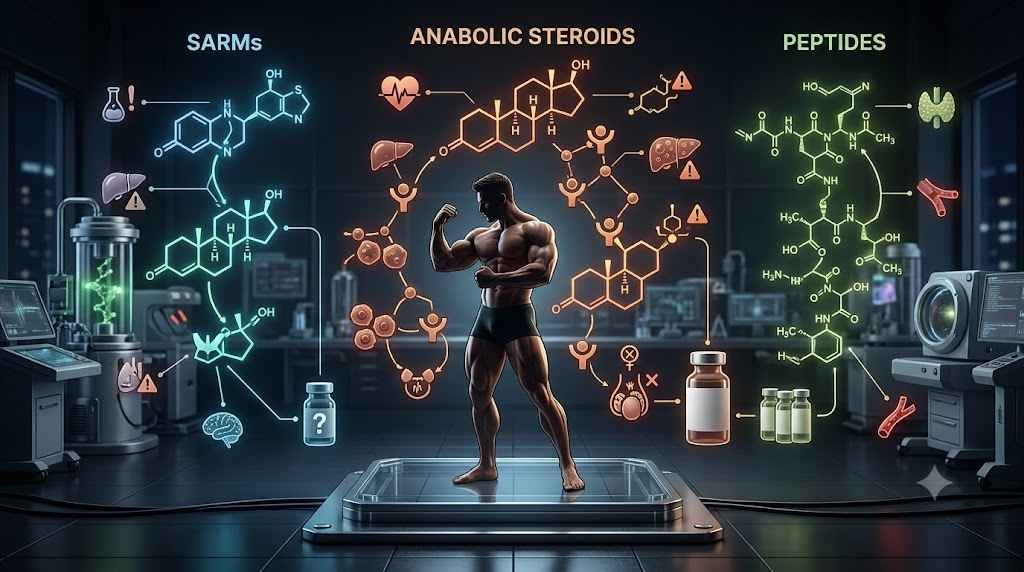
A simple risk ranking isn’t scientifically accurate because the individual compound and exposure matter enormously.
For example, comparing a medically prescribed peptide with an underground anabolic-steroid cycle isn’t a meaningful apples-to-apples comparison.
Likewise, comparing one SARM with another can produce very different results.
A better way to think about risk is through individual factors:
| Risk Factor | SARMs | Steroids | Peptides |
|---|---|---|---|
| Hormonal disruption | Possible | Common concern | Compound-dependent |
| Cardiovascular effects | Possible | Significant concern | Compound-dependent |
| Liver effects | Possible | Compound-dependent | Compound-dependent |
| Fertility effects | Possible | Significant concern | Compound-dependent |
| Product-quality concerns | High with unregulated products | High with underground products | High with unregulated products |
| Long-term uncertainty | Significant | Varies by compound/use | Significant for many experimental compounds |
This is why “natural vs chemical” or “peptide vs steroid” isn’t enough to determine safety.
Why More Muscle Doesn’t Always Mean Better Results
There’s another point worth discussing.
Bodybuilding is not simply a competition to gain the most weight as quickly as possible.
A successful physique also depends on:
- Proportion
- Conditioning
- Muscle retention
- Cardiovascular health
- Recovery
- Sustainable training
- Overall health
Someone can gain a large amount of body weight and still end up with poor body composition.
Likewise, someone can add relatively modest lean mass while dramatically improving their physique through better conditioning.
That’s why chasing maximum scale weight isn’t always the same as achieving the best physique.
The Smartest Way to Compare SARMs, Steroids and Peptides
Instead of asking:
“Which one is strongest?”
Use five questions:
1. What does it actually do?
Understand the mechanism before looking at the marketing.
2. What evidence supports it?
Human clinical evidence is much more valuable than testimonials.
3. Is it approved for the intended use?
A compound being sold online doesn’t mean it has regulatory approval.
4. What are the potential risks?
Look beyond short-term physique changes.
5. Is the product reliable?
An inaccurately labeled or contaminated product can completely change the risk profile.
This approach gives you a much more realistic understanding of SARMs vs steroids vs peptides. Peptides for Bodybuilding: Types, Uses, Dosage & Safety
SARMs vs Steroids vs Peptides: One Final Reality Check
There is a reason these compounds remain controversial.
The physique changes can be attractive, especially when social media makes rapid transformation look normal.
But the body doesn’t only respond to the visible part.
Hormones, cholesterol, blood pressure, liver function, fertility, cardiovascular health, and other systems can also be affected.
The bigger lesson is simple:
The strongest compound isn’t automatically the smartest choice.
And the compound marketed as the “safer” option isn’t automatically safe either.
Understanding the difference between SARMs, anabolic steroids, and peptides is the first step toward making sense of the claims surrounding them.
Frequently Asked Questions About SARMs vs Steroids vs Peptides
Are SARMs the same as steroids?
No. SARMs and anabolic steroids both interact with the androgen receptor, but they are different classes of compounds.
SARMs were developed with the goal of producing more selective androgen-receptor activity, while traditional anabolic steroids generally produce broader androgenic and anabolic effects.
That said, SARMs should not be considered simply “safe steroids.” They can still affect hormones, cholesterol, the liver, and cardiovascular health, and they are not FDA-approved for bodybuilding.
Are peptides steroids?
No.
Peptides are short chains of amino acids, while anabolic steroids are synthetic compounds related to testosterone.
The two categories can influence completely different biological pathways.
Some peptides affect growth-hormone signaling, some influence metabolism, and others are being investigated for tissue-related effects.
Which is better for muscle growth: SARMs or steroids?
Anabolic steroids have the stronger established history and evidence for substantial muscle-building effects.
Some SARMs can increase lean body mass, but their recreational bodybuilding use is not approved and long-term safety remains uncertain.
So while SARMs and steroids are often compared, they shouldn’t be treated as interchangeable.
Can peptides build muscle?
Some peptides can influence biological pathways associated with growth hormone or growth-factor signaling, but “peptides” is an extremely broad category.
Some have legitimate medical uses, while others are experimental or have limited human evidence.
Therefore, whether a peptide can meaningfully contribute to muscle growth depends entirely on the specific compound and the evidence behind it.
Which is stronger: SARMs or steroids?
In terms of established anabolic muscle-building potential, anabolic steroids generally have the stronger profile.
Some SARMs can produce significant anabolic effects, but the two categories have different pharmacology, evidence bases, and risks.
“Stronger” also doesn’t automatically mean “better.”
Are peptides safer than SARMs?
Not automatically.
There are many different peptides, and their safety profiles vary enormously.
Some peptides are approved medicines with established clinical uses. Others are experimental or sold through unregulated channels.
Likewise, SARMs are not approved for bodybuilding and have important safety concerns.
The specific compound matters much more than the category name.
Which is better for cutting: SARMs, steroids, or peptides?
There is no universal answer.
Some SARMs and anabolic steroids are commonly discussed in cutting because of their association with lean-mass retention.
Certain peptide-based medicines are used medically for specific metabolic or body-composition indications.
But fat loss ultimately depends heavily on maintaining an appropriate calorie deficit while preserving muscle through resistance training and adequate protein intake.
SARMs vs Steroids vs Peptides: Which Is Better for Bulking?
Anabolic steroids have the most established history of producing substantial increases in muscle mass and body weight.
Some SARMs are also discussed for bulking, particularly compounds associated with greater anabolic activity.
Peptides are more complicated because many aren’t direct muscle-building compounds.
Do SARMs suppress testosterone?
They can.
The fact that SARMs are described as “selective” does not mean they leave the body’s natural hormone production untouched.
Androgen-receptor modulation can interfere with the body’s hormonal feedback system, with the degree depending on the compound and exposure.
Do steroids suppress natural testosterone?
Yes, anabolic steroids can suppress the body’s natural testosterone production.
External androgens can reduce the signals that normally stimulate the testes to produce testosterone.
The degree of suppression varies according to the steroid, dose, duration, and individual response.
Do peptides suppress testosterone?
It depends on the peptide.
Peptides are not one single pharmacological category.
A peptide that affects growth-hormone signaling can have very different effects from a compound that interacts with reproductive hormones or another biological pathway.
Are SARMs legal?
Legality varies by country and by the specific compound.
However, legality and regulatory approval are not the same thing.
In the United States, the FDA states that SARMs are unapproved drugs and warns against using them for bodybuilding or performance enhancement.
Readers should check the regulations that apply in their own country.
Are peptides legal?
There is no single answer because “peptides” includes prescription medicines, research compounds, and other substances with different regulatory statuses.
A peptide being available for purchase online doesn’t mean it is approved for human use.
Always distinguish between an approved pharmaceutical product and a research or unregulated product.
Can you stack SARMs, steroids and peptides?
Bodybuilding communities frequently discuss combining multiple compounds, but combining substances also makes it harder to predict both benefits and risks.
Interactions can be complex, and stacking multiple hormonal or experimental compounds can increase overall exposure and make it difficult to determine which compound is responsible for a side effect.
More compounds do not automatically mean better results.
Do SARMs have fewer side effects than steroids?
It’s not that simple.
SARMs were designed around tissue selectivity, but they can still produce unwanted hormonal and metabolic effects.
The FDA has warned about serious potential risks associated with SARMs, including liver injury and cardiovascular problems.
A smaller number of visible side effects doesn’t necessarily mean a compound is safer overall.
Are peptides natural?
Peptides are made from amino acids, but that doesn’t mean every peptide product is “natural.”
Many peptides used in medicine or research are synthesized or manufactured rather than extracted directly from food or plants.
And “natural” itself isn’t a reliable measure of safety.
Can you build muscle naturally without SARMs, steroids or peptides?
Absolutely.
For most beginners and intermediate lifters, the biggest improvements come from consistent resistance training, sufficient protein, an appropriate calorie intake, good sleep, and progressive overload.
Performance-enhancing compounds can change the rate or magnitude of adaptation, but they don’t replace the fundamentals.
SARMs vs Steroids vs Peptides: Final Verdict
So, after breaking down all three categories, what’s the final answer?
There isn’t one universal winner.
Anabolic steroids have the strongest established anabolic muscle-building effects and the longest history in bodybuilding and clinical research. They can produce major changes in muscle mass and strength, but misuse comes with significant health risks.
SARMs were developed to provide more selective androgen-receptor activity and can produce anabolic effects. However, they are not approved for bodybuilding, long-term safety remains a concern, and they should not be treated as harmless alternatives to steroids.
Peptides are completely different from both categories. Some influence growth-hormone or growth-factor pathways, while others are studied for metabolism, recovery, or tissue-related effects. Their evidence and regulatory status can vary dramatically from one compound to another.
So instead of asking:
“SARMs vs steroids vs peptides — which one is best?”
Ask:
“What is the compound, how does it work, what evidence supports its use, what are the potential risks, and is it actually approved for the purpose I’m considering?”
That’s a much smarter way to look at the subject.
And remember the part that doesn’t get nearly enough attention in bodybuilding discussions:
Training, nutrition, sleep and consistency still form the foundation of muscle growth.
No SARM, steroid, or peptide can turn poor training and poor nutrition into a great physique.
The compounds may be different, the mechanisms may be different, and the risks may be different — but understanding those differences is far more useful than blindly following whatever compound is trending on social media.
Final Takeaway
If you remember only five things from this entire guide, remember these:
SARMs are not steroids.
Peptides are not SARMs.
“Research chemical” does not mean “safe.”
More muscle does not automatically mean better health.
And the strongest compound isn’t necessarily the smartest choice.
Understanding the difference is the first step. Making an informed decision requires looking beyond marketing, gym-bro claims, and short-term results.
Need Help With Your Bodybuilding Goals?
Still confused about SARMs vs steroids vs peptides, or not sure which direction fits your bodybuilding goals?
Our team can help you understand different compounds, bodybuilding protocols, diet plans, workout plans, and other fitness-related options based on your goals and experience.
Want to discuss your goals?
📲 Contact us on WhatsApp:–
+91-7696593279
Whether your goal is muscle gain, cutting, strength, or improving your overall physique, send us a message and tell us what you’re trying to achieve.
Message us on WhatsApp today.



[…] The problem is that all of these compounds are often put into the same basket. SARMs vs Steroids vs Peptides: Complete Comparison […]
[…] For bodybuilding audiences, the attraction is easy to understand. Testosterone can support an anabolic environment that helps maintain and build lean tissue when training, nutrition, and recovery are properly managed. However, using testosterone for physique enhancement is very different from medically supervised testosterone replacement. SARMs vs Steroids vs Peptides: Complete Comparison […]