Testosterone Propionate is one of the shorter-acting forms of injectable testosterone and has been used in medical testosterone treatment as well as discussed extensively in bodybuilding circles. Because it is a testosterone ester with relatively short pharmacokinetic activity compared with longer-acting testosterone preparations, it is often associated with more frequent administration and noticeable changes in testosterone levels.
For athletes and bodybuilders, Testosterone Propionate is particularly well known because testosterone itself plays an important role in muscle protein synthesis, recovery, strength, libido, red blood cell production, bone health, and overall androgenic function. However, using testosterone without a medical indication is very different from medically supervised testosterone replacement therapy.
The important point is that Testosterone Propionate is still testosterone. The ester changes how quickly testosterone is released and cleared; it does not turn testosterone into a fundamentally different anabolic hormone. Testosterone Enanthate: Dosage, Cycle, Benefits & Side Effects
This guide explains what Testosterone Propionate is, how it works, its potential benefits, medical dosing considerations, why bodybuilding cycles are different from therapeutic treatment, common side effects, monitoring requirements, and how it compares with longer-acting testosterone esters.
What Is Testosterone Propionate?
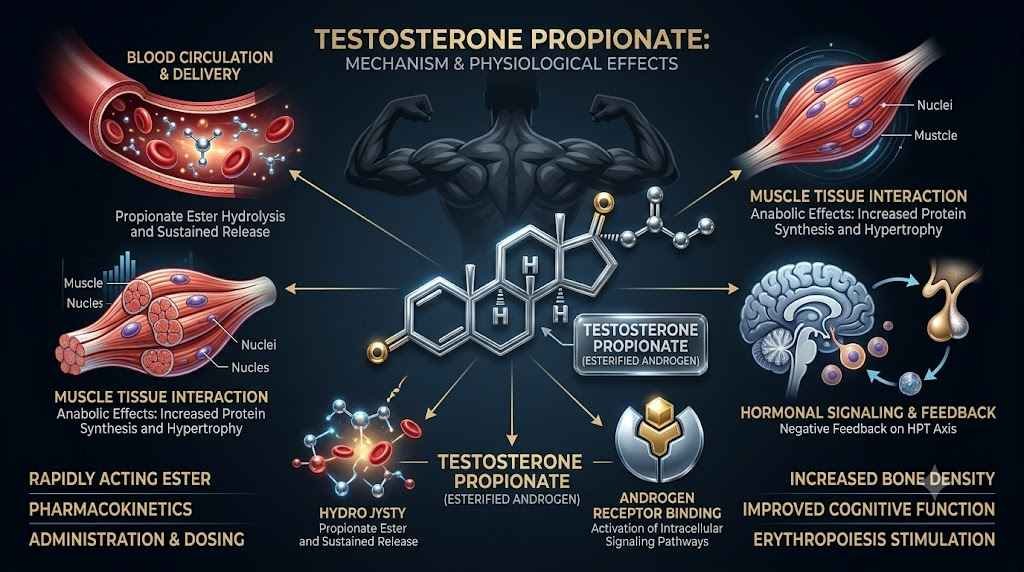
Testosterone Propionate is an injectable ester of testosterone. Testosterone is the primary androgenic hormone in males and is responsible for many biological functions, including the development and maintenance of male sexual characteristics, muscle tissue, bone mass, and reproductive function.
The propionate ester is attached to the testosterone molecule to modify its release after injection. Compared with longer-chain testosterone esters, Testosterone Propionate is considered relatively short-acting.
This distinction matters because the ester influences the pharmacokinetics of the medication rather than changing the fundamental effects of testosterone.
Once testosterone propionate is administered, the ester is gradually cleaved, releasing testosterone into circulation. The testosterone can then interact with androgen receptors throughout the body.
In medical treatment, testosterone therapy may be considered for men who have symptoms and consistently low testosterone concentrations confirmed through appropriate testing. The Endocrine Society recommends confirming the diagnosis with repeated morning testosterone measurements rather than diagnosing testosterone deficiency from symptoms alone.
How Does Testosterone Propionate Work?
Testosterone works primarily by binding to androgen receptors inside cells.
After testosterone enters target tissues, it can bind to the androgen receptor and influence gene expression. This produces a wide range of physiological effects.
For bodybuilding, the effects that attract the most attention are related to:
- Muscle protein synthesis
- Nitrogen retention
- Recovery
- Strength development
- Lean body mass
- Red blood cell production
- Training capacity
- Libido and sexual function
However, more testosterone does not automatically mean proportionally better results.
The body has a complex hormonal system involving the hypothalamus, pituitary gland, and testes. Introducing external testosterone can suppress the body’s natural production of testosterone because the brain detects increased androgen activity and reduces signaling through luteinizing hormone and follicle-stimulating hormone.
This is one reason why non-medical anabolic steroid use can have consequences beyond simply gaining muscle.
Testosterone Propionate Dosage
The appropriate Testosterone Propionate dosage depends heavily on why testosterone is being used.
Medical testosterone treatment is not dosed according to bodybuilding goals such as gaining maximum muscle mass or increasing strength as quickly as possible. Instead, clinicians aim to restore testosterone to an appropriate physiological range while improving symptoms and monitoring adverse effects.
The Endocrine Society recommends that testosterone therapy be considered in men with appropriate symptoms and consistently low testosterone levels, with treatment generally aimed at maintaining testosterone concentrations within the mid-normal range.
Medical Testosterone Propionate Dosage
There is no single Testosterone Propionate dosage that is appropriate for every person.
A clinician considers factors such as:
- Testosterone laboratory results
- Symptoms
- Age
- Medical history
- Other medications
- Hematocrit
- Cardiovascular risk
- Prostate health
- Fertility plans
- The specific testosterone formulation being prescribed
This is important because testosterone treatment is individualized. A dose that is appropriate for one patient may produce excessive testosterone concentrations or adverse effects in another.
The goal of legitimate testosterone replacement therapy is not to create supraphysiological testosterone concentrations. MK-677: Benefits, Dosage, Half-Life, Effects & Side Effects
Testosterone Propionate Dosage for Bodybuilding
Testosterone Propionate: Online-Discussed Weekly Dose Ranges
Non-medical bodybuilding dose categories supplied for educational comparison; these are not medically recommended doses.
Dose categories are not standardized medical classifications.
| Experience level | Online-discussed Testosterone Propionate amount |
|---|---|
| Beginner | 200 mg/week |
| Intermediate | 300–400 mg/week |
| Professional | 500–600 mg/week |
Important: These categories are not medically established dosing recommendations. They represent the kind of dose ranges discussed in bodybuilding communities. Research and clinical reviews describe non-medical testosterone use across a wide range, and there is no evidence-based definition of a “beginner,” “intermediate,” or “professional” Testosterone Propionate dose
Bodybuilding communities often discuss Testosterone Propionate doses that are substantially different from medically supervised replacement therapy.
Those bodybuilding protocols are not equivalent to approved therapeutic treatment.
Using supraphysiological amounts of testosterone can increase anabolic effects, but it can also increase the likelihood of adverse effects. There is no medically established “safe bodybuilding dose” that guarantees muscle growth without health risks.
For that reason, Testosterone Propionate should not be approached as though there is one universal beginner, intermediate, or advanced dosage.
The safer approach is to distinguish between medical testosterone replacement and non-medical performance-enhancing use.
Testosterone Propionate Cycle
The phrase “Testosterone Propionate cycle” is commonly used in bodybuilding to describe a planned period of testosterone use followed by a period without the drug or a subsequent recovery strategy.
However, recreational steroid cycles are fundamentally different from medically supervised testosterone treatment.
A bodybuilding cycle may intentionally keep testosterone concentrations above the physiological range. That can increase anabolic activity, but it also increases hormonal suppression and the possibility of adverse effects.
There is therefore no medically recommended Testosterone Propionate cycle for healthy people simply seeking greater muscle mass or gym performance.
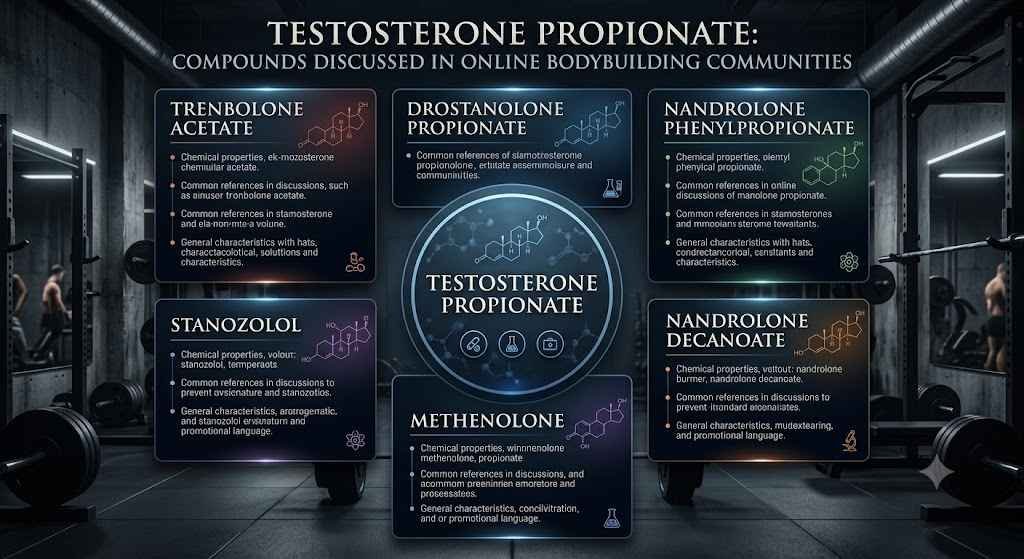
Other anabolic steroids are commonly mentioned alongside Testosterone Propionate in online bodybuilding discussions; the recurring names include Trenbolone Acetate, Drostanolone Propionate (Masteron), Nandrolone Phenylpropionate (NPP), Nandrolone Decanoate (Deca), Methenolone (Primobolan), Boldenone, and Stanozolol (Winstrol). A recent review of non-medical AAS use also describes stacking as common and lists nandrolone, trenbolone, methenolone, and stanozolol among frequently used substances.
Online Discussion: Compounds Commonly Stacked With Testosterone Propionate
| Compound | Common name | How it appears in online discussions |
|---|---|---|
| Trenbolone Acetate | Tren A | Frequently discussed in cutting/contest-prep combinations |
| Drostanolone Propionate | Masteron / Mast P | Frequently paired with Test P in cutting-focused discussions |
| Nandrolone Phenylpropionate | NPP | Commonly discussed with testosterone for mass/lean-bulk purposes |
| Nandrolone Decanoate | Deca | Common testosterone + nandrolone combination |
| Methenolone | Primobolan / Primo | Often discussed as a comparatively milder anabolic option |
| Stanozolol | Winstrol | Frequently mentioned in cutting/strength-oriented combinations |
| Boldenone Undecylenate | Equipoise / EQ | Appears in longer-duration bodybuilding stacks |
Online forum discussions specifically mention Test P + Masteron, Test P + NPP, and Test P + Tren A combinations.
Why Testosterone Propionate Is Associated With Shorter Cycles
The shorter pharmacokinetic profile of Testosterone Propionate is one reason bodybuilders traditionally associate it with shorter cycles and more frequent administration.
A shorter-acting ester can allow testosterone concentrations to change more quickly after treatment is stopped compared with some longer-acting formulations.
This does not, however, mean that the health risks disappear quickly.
Hormonal suppression can continue after the last administration, and recovery of the hypothalamic-pituitary-gonadal axis can vary significantly between individuals.
Testosterone Propionate Cycle and Hormonal Suppression
One of the biggest misconceptions about testosterone cycles is that the only concern is what happens during the cycle.
The hormonal consequences can continue afterward.
External testosterone can suppress endogenous testosterone production. During suppression, the testes receive less stimulation from LH and FSH.
Potential consequences include:
- Reduced natural testosterone production
- Reduced sperm production
- Testicular shrinkage
- Reduced fertility
- Libido changes
- Mood changes
- Fatigue
- Difficulties recovering normal hormone production
Recovery is not guaranteed to occur at the same speed for everyone.
Testosterone Propionate Benefits
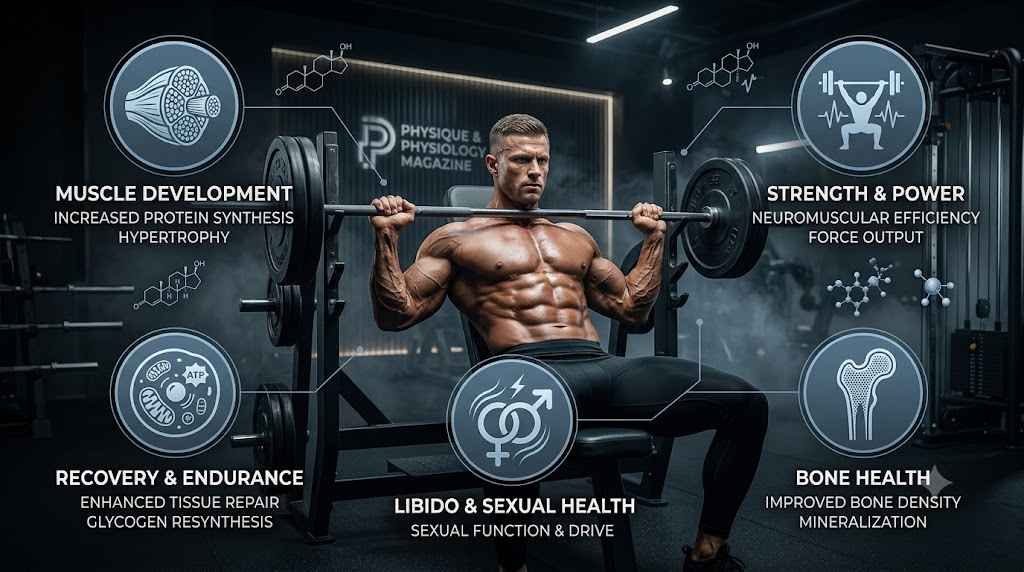
Testosterone has important physiological functions, and medically appropriate testosterone treatment can provide benefits in men with genuine testosterone deficiency.
The benefits should be separated into medical effects and the performance-enhancing effects sought by bodybuilders.
1. Support for Testosterone Levels
The primary purpose of testosterone replacement therapy is to restore testosterone concentrations in men with confirmed testosterone deficiency.
When testosterone is genuinely low, treatment may improve symptoms associated with androgen deficiency.
2. Muscle Mass and Strength
Testosterone has anabolic activity and plays an important role in maintaining skeletal muscle.
In men with testosterone deficiency, restoring testosterone toward an appropriate physiological range can support lean body mass and physical function.
This does not mean that medically appropriate testosterone therapy should be viewed as a shortcut for bodybuilding.
The Endocrine Society recognizes effects on body composition and related outcomes in appropriately diagnosed hypogonadal men, while emphasizing proper diagnosis and monitoring.
3. Recovery and Training
Testosterone influences several processes involved in muscle maintenance and recovery.
This is one reason testosterone has become the foundation of many performance-enhancing steroid protocols.
However, faster recovery does not eliminate the need for adequate:
- Calories
- Protein
- Sleep
- Training programming
- Rest days
- Hydration
- Stress management
Drugs cannot compensate indefinitely for poor fundamentals.
4. Libido and Sexual Function
Testosterone contributes to normal male sexual function.
Men with clinically significant testosterone deficiency may experience low libido and other sexual symptoms, and appropriate treatment can improve testosterone-related symptoms.
Again, this is different from using testosterone at excessive concentrations for bodybuilding.
5. Bone Health
Testosterone also contributes to maintaining bone health.
Long-term testosterone deficiency can negatively affect bone density, which is one reason testosterone replacement may be considered in appropriately diagnosed patients.
Testosterone Propionate Side Effects
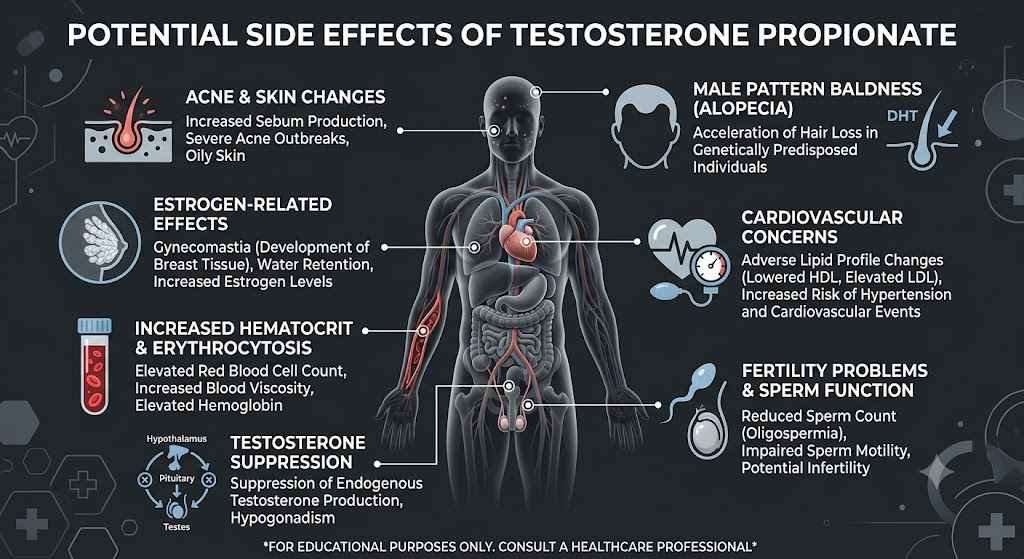
Testosterone Propionate can produce side effects because it increases androgen exposure.
The likelihood and severity of side effects depend on factors including testosterone concentration, duration of exposure, individual genetics, age, existing health conditions, and whether testosterone is being used within or far above the physiological range.
Some of the most important risks include hormonal suppression, erythrocytosis, acne, changes in hair growth, fertility problems, and cardiovascular concerns.
Estrogen-Related Side Effects
Testosterone can be converted into estradiol through the aromatase enzyme.
When testosterone concentrations become excessive, estradiol may also rise.
Possible effects include:
- Water retention
- Increased breast tissue sensitivity
- Gynecomastia
- Mood changes
- Changes in libido
This is one reason attempting to manipulate testosterone and estrogen levels without medical supervision can become complicated. Steroids for Bodybuilding: Benefits, Dosage & Side Effects
Acne and Oily Skin
Androgenic activity can increase sebaceous gland activity.
As a result, some testosterone users experience:
- Oily skin
- Facial acne
- Back acne
- Chest acne
People genetically predisposed to acne may be particularly susceptible.
Hair Loss
Testosterone can contribute to androgenic hair loss in genetically predisposed individuals.
This is related partly to androgen sensitivity and conversion of testosterone into dihydrotestosterone (DHT).
Men with a strong family history of male-pattern baldness may notice accelerated hair loss when androgen exposure increases.
Increased Hematocrit
One of the medically important adverse effects of testosterone therapy is an increase in red blood cell production.
This can increase hemoglobin and hematocrit.
The Endocrine Society specifically recommends monitoring hematocrit during testosterone treatment and advises intervention when hematocrit becomes excessively elevated.
This is not a side effect that should simply be ignored because someone is trying to gain muscle.
Suppression of Natural Testosterone
External testosterone can suppress the body’s own testosterone production.
This suppression occurs because the hypothalamus and pituitary recognize increased androgen activity and reduce the signals responsible for stimulating the testes.
The consequences can include:
- Low endogenous testosterone
- Reduced sperm production
- Testicular atrophy
- Reduced fertility
- Low libido after discontinuation
- Fatigue
- Mood changes
The degree and duration of suppression can vary.
Fertility Problems
Testosterone therapy can suppress sperm production.
This is especially important for men who are planning to have children.
The Endocrine Society recommends against starting testosterone therapy in men planning fertility in the near term.
Someone interested in fertility should discuss this with a qualified physician before considering testosterone treatment.
Cardiovascular Considerations
Testosterone therapy requires consideration of cardiovascular risk and monitoring.
Increasing testosterone exposure can affect hematocrit, fluid balance, blood pressure, lipids, and other cardiovascular risk factors.
The overall cardiovascular risk profile is complex and continues to be studied, which is another reason unsupervised high-dose use should not be treated as harmless.
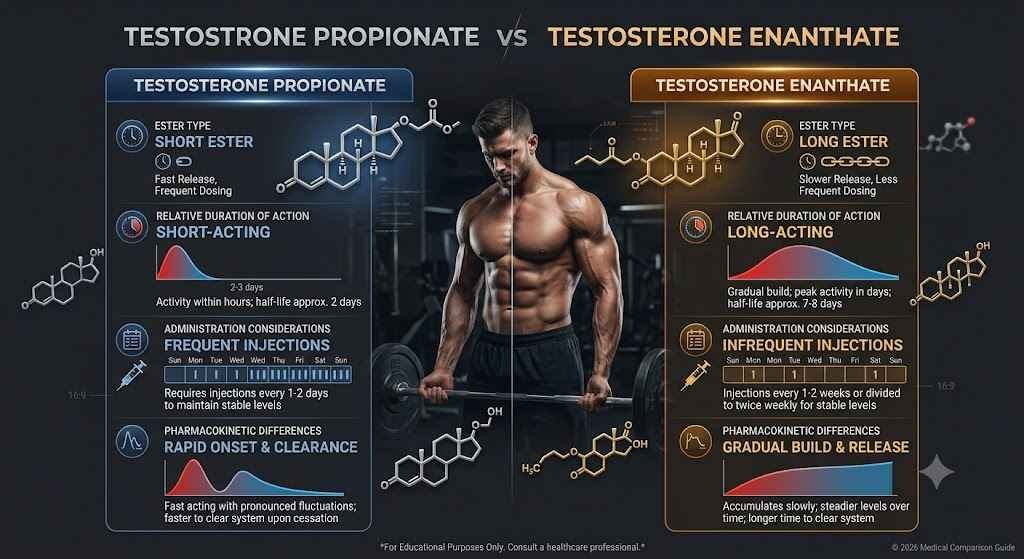
Testosterone Propionate Half-Life
One of the defining characteristics of Testosterone Propionate is its relatively short duration compared with longer testosterone esters.
The ester influences how quickly testosterone becomes available after administration and how quickly concentrations decline.
This is why Testosterone Propionate is generally associated with more frequent administration than long-acting testosterone preparations.
The shorter action can be useful in specific clinical contexts, but it can also make administration less convenient.
It is important not to confuse the ester half-life with the biological effects of testosterone itself. Hormonal effects and suppression can persist beyond the point at which the ester has been substantially cleared.
Testosterone Propionate vs Testosterone Enanthate
Testosterone Propionate and Testosterone Enanthate are both testosterone esters.
The major difference is the ester attached to testosterone, which influences pharmacokinetics.
| Feature | Testosterone Propionate | Testosterone Enanthate |
|---|---|---|
| Testosterone base | Testosterone | Testosterone |
| Ester | Propionate | Enanthate |
| Action | Relatively shorter | Longer |
| Administration pattern | Generally more frequent | Generally less frequent |
| Hormonal effect | Testosterone-mediated | Testosterone-mediated |
| Anabolic activity | Testosterone-dependent | Testosterone-dependent |
| Medical use | Depends on formulation/region | Widely used testosterone formulation |
| Main risks | Testosterone-related adverse effects | Testosterone-related adverse effects |
The important takeaway is that changing the ester does not eliminate the underlying risks of testosterone.
What Should Be Monitored During Testosterone Treatment?
Monitoring is one of the most important parts of legitimate testosterone treatment.
The Endocrine Society recommends evaluating patients after treatment begins for treatment response, adverse effects, and adherence. Testosterone and hematocrit should be monitored, with prostate risk assessed when appropriate.
Depending on the patient, clinicians may evaluate:
- Total testosterone
- Free testosterone when appropriate
- Complete blood count
- Hemoglobin
- Hematocrit
- Blood pressure
- Lipid profile
- Liver-related laboratory markers when clinically indicated
- PSA and prostate health when appropriate
- Symptoms and adverse effects
- Fertility considerations
A baseline assessment is important because abnormal results before treatment can change whether testosterone is appropriate. HGH Frag (176-191): Benefits, Dosage, & Fat Loss
Who Should Be Careful With Testosterone Therapy?
Testosterone therapy is not appropriate for everyone.
Clinical guidelines identify several situations where testosterone should not be started or requires careful evaluation, including certain prostate conditions, elevated hematocrit, untreated severe sleep apnea, uncontrolled heart failure, recent cardiovascular events, and plans for near-term fertility.
This is why obtaining testosterone from an underground source and starting a cycle based solely on online advice can be risky.
A proper evaluation can identify problems that might otherwise go unnoticed.
Testosterone Propionate: Medical Treatment vs Bodybuilding Use
This distinction deserves special attention.
Medical testosterone replacement therapy is designed to treat documented testosterone deficiency and generally aims to restore testosterone to an appropriate physiological range.
Bodybuilding use often aims to push androgen exposure above normal physiological concentrations to increase muscle growth, recovery, and performance.
These are not the same thing.
A medication can be medically useful while still carrying substantial risks when used at excessive doses or for an inappropriate purpose.
The Endocrine Society’s 2026 statement continues to emphasize accurate diagnosis, appropriate testing, clinician involvement, and monitoring when testosterone therapy is used.
Frequently Asked Questions About Testosterone Propionate
Is Testosterone Propionate testosterone?
Yes. Testosterone Propionate is a testosterone ester. The propionate ester changes the pharmacokinetic behavior of testosterone after administration.
Is Testosterone Propionate good for muscle growth?
Testosterone has anabolic effects and supports muscle tissue. In men with testosterone deficiency, medically appropriate treatment can help restore lean mass and physical function. Using testosterone at supraphysiological levels for bodybuilding is a different situation and carries additional risks.
Is Testosterone Propionate short acting?
Yes. It is generally considered a shorter-acting testosterone ester compared with preparations such as testosterone enanthate.
Does Testosterone Propionate suppress natural testosterone?
Yes. Exogenous testosterone can suppress the body’s natural testosterone production through negative feedback on the hypothalamic-pituitary-gonadal axis.
Can Testosterone Propionate affect fertility?
Yes. Exogenous testosterone can suppress sperm production and therefore negatively affect fertility.
Does Testosterone Propionate cause estrogenic side effects?
It can. Testosterone can be converted into estradiol, and excessive androgen exposure may contribute to estrogen-related effects such as water retention and gynecomastia.
Does Testosterone Propionate cause acne?
It can. Increased androgen activity can stimulate sebaceous glands and contribute to acne, particularly in genetically susceptible individuals.
Is Testosterone Propionate safer than other steroids?
It is still testosterone, and its safety depends heavily on why it is being used, the dose, the individual’s health, and medical monitoring. The shorter ester does not make non-medical use risk-free.
Final Thoughts
Testosterone Propionate is a short-acting testosterone ester that has a long history in discussions surrounding testosterone treatment and bodybuilding.
Its popularity comes from the powerful physiological effects of testosterone, including support for muscle tissue, strength, sexual function, bone health, and other androgen-dependent processes.
But the same hormone that can produce desirable effects can also produce significant adverse effects when testosterone exposure becomes excessive.
The biggest mistake is to think of Testosterone Propionate simply as a muscle-building compound. Testosterone affects multiple systems throughout the body. It can influence red blood cell production, fertility, prostate-related monitoring, cardiovascular risk factors, skin, hair, estrogen levels, and the body’s natural hormone production.
For medically indicated testosterone therapy, proper diagnosis and monitoring are essential. Current endocrine guidance emphasizes confirming testosterone deficiency with appropriate testing and monitoring treatment response, testosterone concentrations, hematocrit, adverse effects, and prostate risk when applicable.
For bodybuilding, there is no medically established “safe cycle” that guarantees muscle gains without health consequences. Anyone considering testosterone because of symptoms of low testosterone should speak with a qualified healthcare professional rather than self-prescribing a cycle.
Understanding the benefits is important, but understanding the risks is even more important when dealing with powerful hormonal drugs.
Have Questions About Testosterone Propionate?
If you still have questions about Testosterone Propionate, testosterone esters, dosage considerations, side effects, or choosing the right approach for your goals, you can contact our team directly.
For product-related questions, availability, general guidance, or assistance, reach us on WhatsApp:
WhatsApp: 7696593279
We recommend understanding the potential benefits and risks of testosterone use before making any decision. If you are considering testosterone treatment because of suspected low testosterone, speak with a qualified healthcare professional and get appropriate blood work and medical evaluation first.

[…] Among gym users, searches for Dianabol dosage, Dianabol tablets, Dianabol 10 mg, Dianabol 50mg, cycle results, and side effects remain common. However, there is a major difference between what is discussed on bodybuilding forums and what is supported by medical evidence. This article separates those two areas so readers can understand what Dianabol is, why it is used, what results people discuss online, and why its risks should not be underestimated. Testosterone Propionate: Dosage, Cycle, Benefits & Side Effects […]
[…] Anyone using oxandrolone medically should follow the prescribed schedule rather than adapting an internet bodybuilding cycle. Testosterone Propionate: Dosage, Cycle, Benefits & Side Effects […]