A Gaining Cycle with Peptides is a topic that gets plenty of attention among bodybuilders looking to increase muscle mass, improve recovery and support a calorie-surplus phase. Peptides such as GHRP-6 and CJC-1295 are frequently discussed in bodybuilding communities because of their potential effects on growth-hormone-related pathways.
But there is an important difference between what people discuss in the gym, what sellers claim and what scientific research has actually demonstrated.
Some bodybuilding protocols combine peptides with anabolic steroids such as Dianabol, nandrolone decanoate and testosterone. These are not simply peptide cycles. They are combinations of different drug classes, each with its own effects and risks. Adding a peptide does not make an anabolic steroid combination safer.
In this guide, we’ll break down the Gaining Cycle with Peptides concept, explain the compounds commonly discussed, examine the kinds of cycle tables circulating online and look at the risks, blood tests, nutrition and recovery considerations that bodybuilders should understand before trusting a protocol.
The goal is to help readers separate evidence from bodybuilding folklore—not to present an unverified combination of research chemicals and prescription medicines as a proven muscle-building plan. Gaining Cycles with SARMs: Compounds, Risks, and Recovery
What Is a Gaining Cycle with Peptides?
A Gaining Cycle with Peptides generally refers to a planned period in which someone uses one or more peptide products with the aim of supporting muscle growth, appetite, recovery or growth-hormone-related activity.
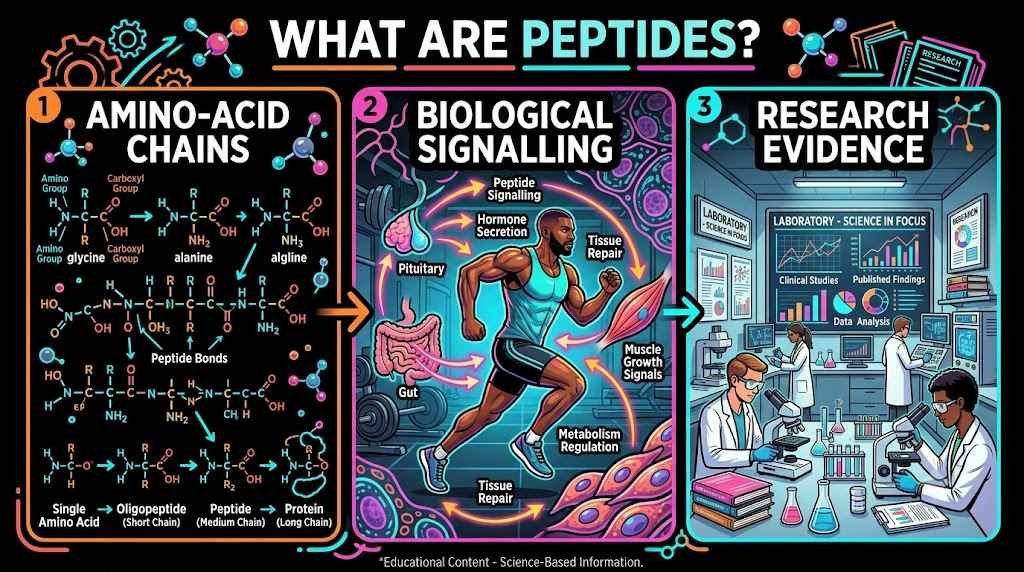
Peptides are short chains of amino acids. Different peptides interact with different biological systems, so they should not all be treated as interchangeable muscle-building compounds.
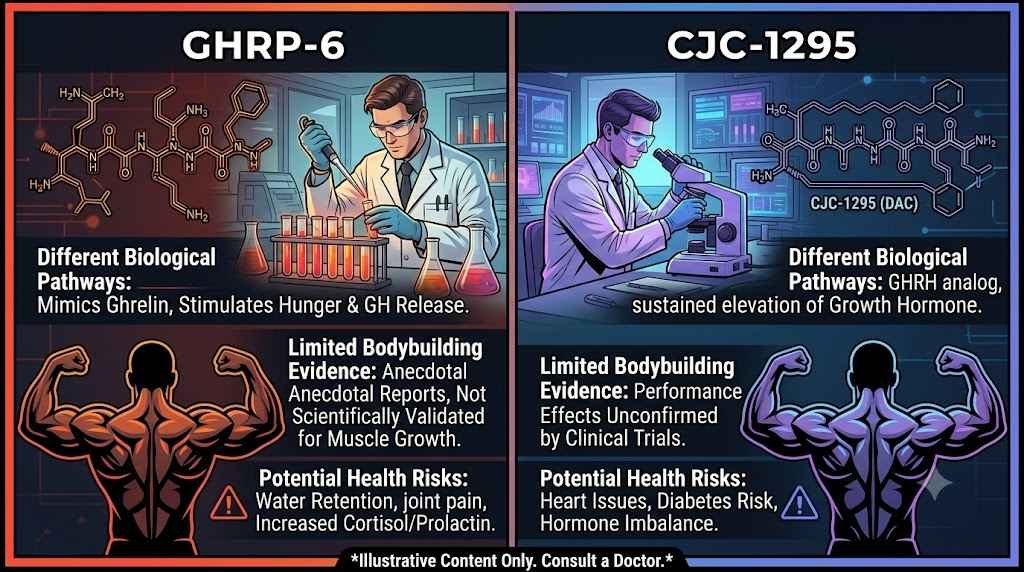
For example, GHRP-6 is a growth-hormone secretagogue studied for its ability to stimulate growth hormone release. CJC-1295 has also been investigated for its effects on growth-hormone regulation. However, evidence about a compound’s biological activity does not automatically establish that it produces meaningful muscle gains or is safe for long-term bodybuilding use.
A Gaining Cycle with Peptides may refer to several different approaches:
- Peptide-only use: Using a peptide product without anabolic steroids.
- Growth-hormone-related combinations: Combining compounds that affect related hormonal pathways, despite limited evidence supporting many bodybuilding combinations.
- Peptides alongside anabolic steroids: Combining peptides with testosterone or oral and injectable anabolic steroids, which introduces additional risks.
- Research-oriented use: Studying these compounds in clinical or laboratory settings rather than using them for physique enhancement.
These categories matter because a peptide-only approach and a combination involving multiple anabolic drugs have different risk profiles.
Why Do Bodybuilders Discuss a Gaining Cycle with Peptides?
The interest usually comes down to four goals.
1. Muscle growth: Bodybuilders hope that changing growth-hormone-related activity will improve muscle development. However, hormonal changes alone do not prove that a product builds more contractile muscle.
2. Appetite and food intake: Some compounds are discussed because of their effects on hunger. Eating enough calories can help during a gaining phase, but increased appetite is not the same as increased muscle growth.
3. Recovery: Users often claim that peptides improve recovery between workouts. These claims need to be evaluated individually, because evidence for one medical application cannot automatically be applied to bodybuilding recovery.
4. Supporting a bulking phase: Some users combine peptides with high-calorie diets, resistance training and other performance-enhancing drugs. This makes it difficult to determine which substance, if any, caused the reported result.
The bottom line is that a Gaining Cycle with Peptides should not be judged by anecdotal reports alone. Training quality, nutrition, sleep, genetics and the specific compounds involved all influence the outcome.
Popular Peptides Discussed in a Gaining Cycle with Peptides
GHRP-6 in a Gaining Cycle with Peptides
GHRP-6 is a growth-hormone-releasing peptide that acts on pathways involved in stimulating growth hormone secretion. It is often discussed in bodybuilding circles because it may also influence appetite.
That appetite effect is one reason it appears in discussions about gaining weight. However, eating more food does not guarantee that the additional weight will be lean muscle. The quality of the diet, training stimulus and overall energy surplus still matter.
There are also safety concerns. Potential effects involving blood glucose regulation, insulin sensitivity and other hormonal responses need consideration. Products obtained from unverified sellers may present additional problems involving purity, concentration and contamination.
A Gaining Cycle with Peptides involving GHRP-6 therefore cannot be considered a proven or risk-free route to gaining muscle.
CJC-1295 in a Gaining Cycle with Peptides
CJC-1295 is a synthetic peptide investigated for its ability to influence growth-hormone and IGF-1 pathways. It is frequently mentioned in bodybuilding discussions about increasing growth-hormone-related activity.
However, research on hormonal responses is not the same as strong clinical evidence showing improved bodybuilding outcomes. The exact product formulation also matters, and products sold under similar names may not be equivalent to the compounds used in research.
CJC-1295 has raised safety concerns, and limited clinical data make it difficult to establish the safety of nonmedical use. Combining it with other hormone-active compounds adds further uncertainty.
For anyone researching a Gaining Cycle with Peptides, the key question is not simply whether a compound changes hormone levels. It is whether meaningful benefits have been demonstrated and whether those benefits outweigh the potential harms. Beginner Gaining Cycle: Compounds, Dosage, and PCT
Gaining Cycle with Peptides: Understanding the Four Cycle Examples
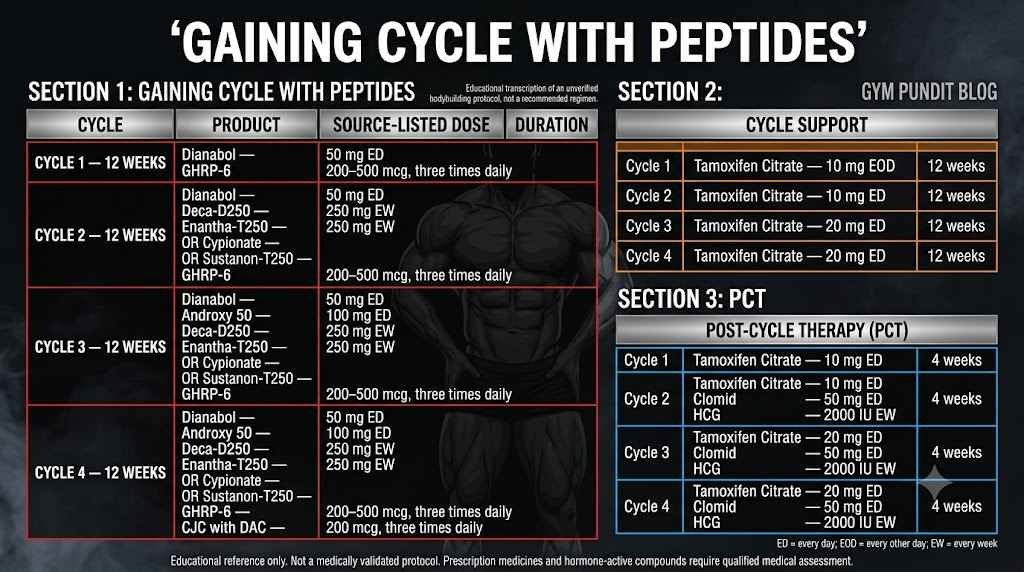
The screenshots show four gaining-cycle examples, each listed as lasting 12 weeks. They combine oral anabolic steroids, injectable anabolic steroids and, in some examples, peptides associated with growth-hormone pathways.
These are multi-drug anabolic protocols, not peptide-only cycles. That distinction is important when evaluating their potential effects on muscle growth, hormone production and overall health.
Cycle 1: Dianabol and GHRP-6
The first example combines Dianabol with GHRP-6. Dianabol is an oral anabolic-androgenic steroid, whereas GHRP-6 is a peptide that stimulates growth-hormone release.
The source lists Dianabol at 50 mg daily and GHRP-6 at 200–500 mcg three times daily for 12 weeks. These are source-listed figures, not a validated or recommended regimen.
The two compounds act through different biological pathways. Dianabol can suppress the body’s natural testosterone production and may adversely affect liver function, blood pressure and cholesterol. GHRP-6 may influence appetite and growth-hormone secretion, but evidence that this combination safely improves muscle gains is lacking.
Using a peptide alongside an anabolic steroid does not cancel out the steroid’s adverse effects.
Cycle 2: Dianabol, Nandrolone and Testosterone
The second example adds injectable anabolic steroids to Dianabol and GHRP-6. The screenshot identifies nandrolone decanoate (Deca-D250) and testosterone enanthate (Enantha-T250), with testosterone cypionate or Sustanon listed as alternatives.
This introduces several overlapping hormonal effects. Testosterone and nandrolone can suppress natural hormone production, while Dianabol adds further anabolic-steroid exposure. Potential concerns include changes in cholesterol, elevated blood pressure, fertility impairment, acne, hair loss in susceptible individuals and other cardiovascular or endocrine complications.
The screenshot lists a 12-week duration, but duration alone does not establish that a combination is safe or appropriate. Combining multiple anabolic steroids also makes adverse effects and changes in bloodwork more difficult to attribute to a single substance.
Cycle 3: Adding Androxy 50
The third example adds Androxy 50 to the previously listed compounds. The screenshot associates this product with a daily dose of 100 mg, but the exact active ingredient should be verified from reliable product documentation before drawing conclusions about its effects.
Brand names can be ambiguous, and similar product names do not guarantee identical ingredients or concentrations. Identifying the active compound matters because different anabolic agents can have different effects on the liver, cardiovascular system, hormone production and other aspects of health.
Adding another drug does not automatically improve the quality of a gaining phase. It can increase total exposure and complicate the assessment of side effects.
Cycle 4: Adding CJC-1295
The fourth example adds CJC-1295 with DAC to the compounds listed in the third example. DAC refers to the drug-affinity complex modification associated with a longer duration of action.
The screenshot lists CJC-1295 with DAC at 200 mcg three times daily. This should be treated as a figure reported by the source, not as a dosing recommendation: the formulation, frequency and clinical appropriateness require verification, and the screenshot does not establish that this schedule is supported by clinical evidence.
CJC-1295 research has examined growth-hormone-related effects, but this does not establish that combining it with several anabolic steroids produces superior muscle growth or acceptable long-term safety.
Important takeaway: These four examples progressively combine more pharmacologically active substances. The number of compounds is not a measure of effectiveness, and the screenshot does not establish that any of the combinations is safe or evidence-based.
Cycle Support in a Gaining Cycle with Peptides
The second screenshot includes a separate cycle-support table listing tamoxifen citrate for all four examples. Tamoxifen is a selective estrogen receptor modulator (SERM), a prescription medicine used for specific medical indications.
It is important to distinguish a source’s proposed cycle-support schedule from a medically appropriate treatment plan.
Tamoxifen does not protect against every complication associated with anabolic steroids. It does not reliably prevent steroid-related changes in cholesterol, high blood pressure, liver injury or cardiovascular risks. Nor does its presence guarantee that estrogen-related symptoms will be prevented.
The source lists different tamoxifen schedules for its four examples, but those schedules should not be treated as established preventive regimens. Whether tamoxifen is appropriate depends on the individual’s medical situation, the symptoms being investigated and a clinician’s assessment.
Why Cycle Support Is Not a Guarantee of Safety
Bodybuilding discussions sometimes present support medicines as though they can neutralize the risks of a multi-drug cycle. That is an oversimplification. First Steroid Cycle: What Beginners Should Know
- Estrogen-related symptoms: These require assessment rather than automatic treatment based on a cycle chart.
- Cardiovascular health: Anabolic steroids can adversely affect blood pressure and lipid levels even when a SERM is used.
- Liver health: Tamoxifen does not eliminate the liver risks associated with oral anabolic steroids.
- Hormonal suppression: Blocking some estrogen effects does not necessarily restore normal testosterone production.
- Medication risks: Tamoxifen itself can cause adverse effects, including an increased risk of blood clots in some circumstances.
A Gaining Cycle with Peptides that also includes anabolic steroids should therefore be assessed as a whole, rather than assuming that a separate support medicine makes the combination safe.
PCT After a Gaining Cycle with Peptides and Anabolic Steroids
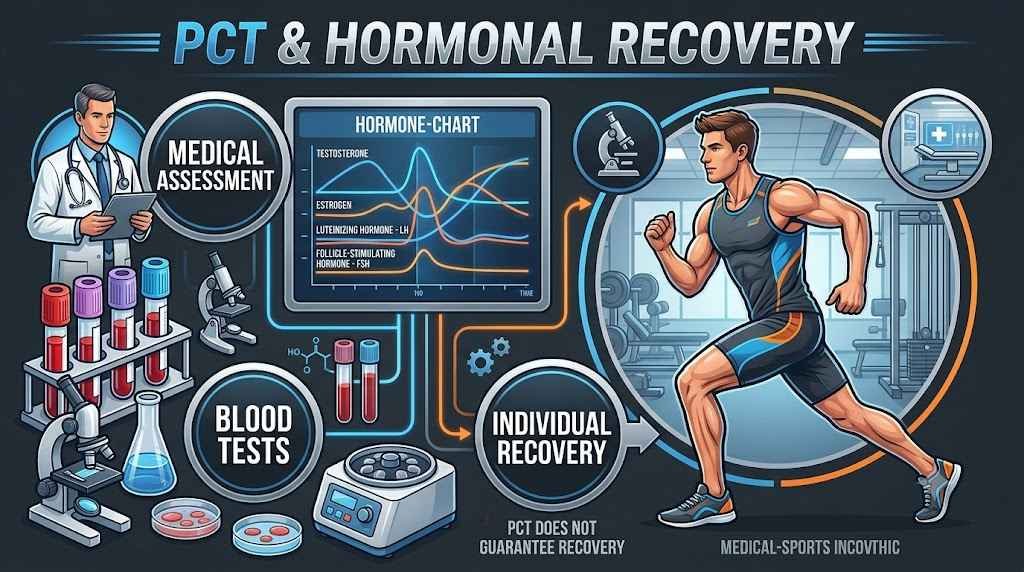
Post-cycle therapy (PCT) is a term used in bodybuilding for interventions intended to address hormonal suppression after anabolic-steroid use. The screenshot lists tamoxifen citrate for the first example and tamoxifen, clomiphene and hCG for the remaining examples.
These medicines have different actions:
- Tamoxifen: A SERM that blocks or modulates estrogen receptors in particular tissues.
- Clomiphene: A SERM used in selected clinical settings to influence reproductive hormone signalling.
- hCG: Human chorionic gonadotropin, a hormone medicine that acts on the LH receptor and can stimulate testosterone production by the testes.
Their medical uses do not mean that a bodybuilding PCT schedule is proven effective. The right response to suppressed testosterone depends on the substances used, the duration of exposure, symptoms, fertility goals and laboratory results.
Why PCT Cannot Be Guaranteed to Restore Hormones
Recovery after anabolic-steroid use varies considerably. Some people recover gradually after stopping, while others experience prolonged suppression and need medical evaluation.
A fixed four-week schedule does not guarantee that testosterone, sperm production or other hormonal functions will return to normal. Starting prescription medicines without assessment can also create additional risks and make laboratory results harder to interpret.
Anyone experiencing persistent fatigue, low libido, erectile difficulties, depressed mood or fertility problems after steroid use should seek medical advice. Severe mood changes or thoughts of self-harm warrant urgent help.
Gaining Cycle with Peptides: Health Monitoring and Blood Tests
For people who have used anabolic steroids or hormone-active peptides, medical monitoring can help identify complications. It cannot make an unproven drug combination safe.
A clinician may consider the following, depending on the substances used and the person’s history:
| Assessment | Why it matters |
|---|---|
| Blood pressure | Detects hypertension and cardiovascular strain |
| Complete blood count | Checks haemoglobin and haematocrit |
| Liver function tests | Evaluates possible liver injury |
| Lipid profile | Checks cholesterol and triglycerides |
| Testosterone, LH and FSH | Helps assess hormonal suppression and recovery |
| Glucose or HbA1c | Evaluates glucose regulation |
| Kidney function | Assesses relevant markers of kidney health |
| Additional tests when indicated | May include estradiol, prolactin or fertility investigations |
The appropriate tests and timing should be determined by a healthcare professional. Results need to be interpreted alongside symptoms, medical history and the exact substances used.
Gaining Cycle with Peptides: Nutrition and Training Still Matter
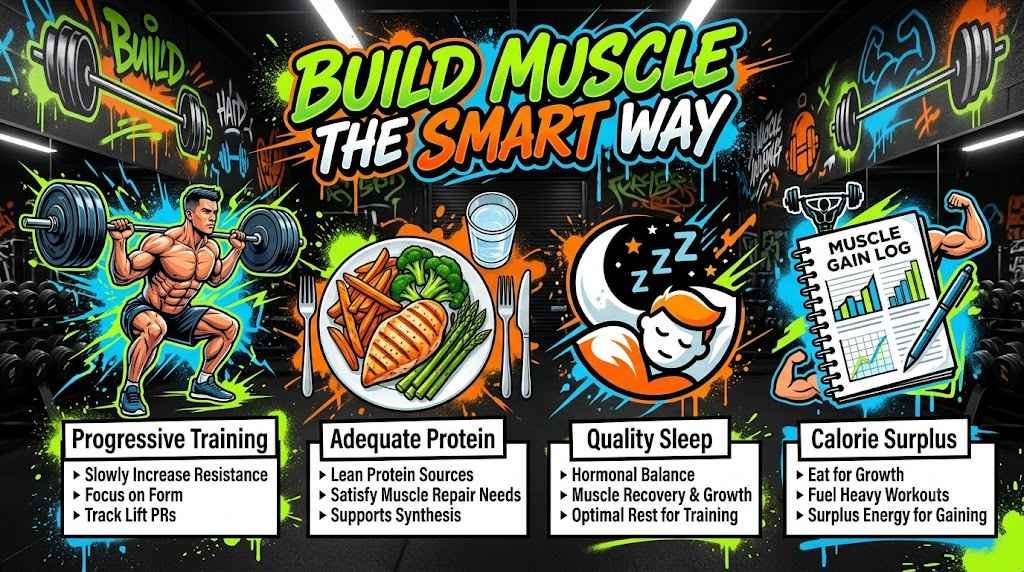
Regardless of what is discussed in bodybuilding forums, muscle growth depends on a consistent training stimulus, adequate nutrition and recovery.
For a natural gaining phase, the basics remain straightforward:
- Maintain a modest calorie surplus rather than gaining weight as quickly as possible.
- Consume sufficient protein from suitable foods.
- Follow a progressive resistance-training programme.
- Get enough sleep and allow muscle groups time to recover.
- Track strength, body weight and waist measurements instead of relying only on the mirror.
Peptides cannot compensate for poor training, insufficient food quality or inadequate sleep. And changes in body weight alone do not establish that a compound has increased contractile muscle tissue. Blood Tests for Bodybuilders: 10 Key Markers to Check
Final Thoughts on a Gaining Cycle with Peptides
A Gaining Cycle with Peptides is often presented online as a way to combine hormonal pathways for faster muscle growth. But the four examples in your screenshots combine several drug classes, and their inclusion in a table does not establish their safety, effectiveness or suitability for bodybuilding.
The key points are to distinguish peptides from anabolic steroids, verify the identity of every compound, understand the limits of the available evidence and avoid treating cycle-support or PCT tables as guaranteed protection.
For most bodybuilders, progressive training, adequate nutrition and consistent recovery remain the foundation of sustainable muscle gain. Anyone considering or recovering from hormone-active drugs should discuss the potential risks and appropriate monitoring with a qualified healthcare professional.
Need Help Understanding a Gaining Cycle with Peptides?
Confused about a Gaining Cycle with Peptides, peptide research, bodybuilding supplements, or the potential risks of combining peptides with anabolic steroids? It is important to understand what the available evidence actually shows before trusting an online cycle chart.
At Gym Pundit, we encourage informed decisions based on reliable information, realistic muscle-building goals, proper nutrition, and appropriate health monitoring.
Have questions? Contact Gym Pundit on WhatsApp.
📱 WhatsApp: +91 76965 93279
You can reach out with questions about bodybuilding education, training, nutrition, and understanding product information. For questions about prescription medicines, hormonal suppression, side effects, or post-cycle recovery, consult a qualified healthcare professional.
Remember: An online cycle chart is not a medical prescription, and no peptide or steroid combination is guaranteed to be safe.

[…] In this guide, we’ll explain why muscle loss happens after a cycle, how to minimise it, what your proposed maintenance plans involve, and what the available evidence says about these compounds. Gaining Cycle with Peptides: Muscle Growth, Uses and Risks […]