Protein for muscle gain is one of the most important parts of a muscle-building diet, but how much do you actually need? Do you need 100 grams a day, 150 grams, or even 200 grams? And does eating more protein automatically mean building more muscle?
The truth is that more protein isn’t always better. For most people who lift weights regularly, around 1.6–2.2 grams of protein per kilogram of body weight per day is a practical target for supporting muscle growth. Your ideal intake can vary depending on your body weight, training experience, calorie intake, and whether you’re trying to bulk or cut.
In this guide, we’ll break down how much protein you need, how to calculate your personal target, how much protein to eat per meal, the best protein sources, and the common mistakes that can slow down your progress. Why Am I Not Gaining Muscle? 15 Reasons & How to Fix It
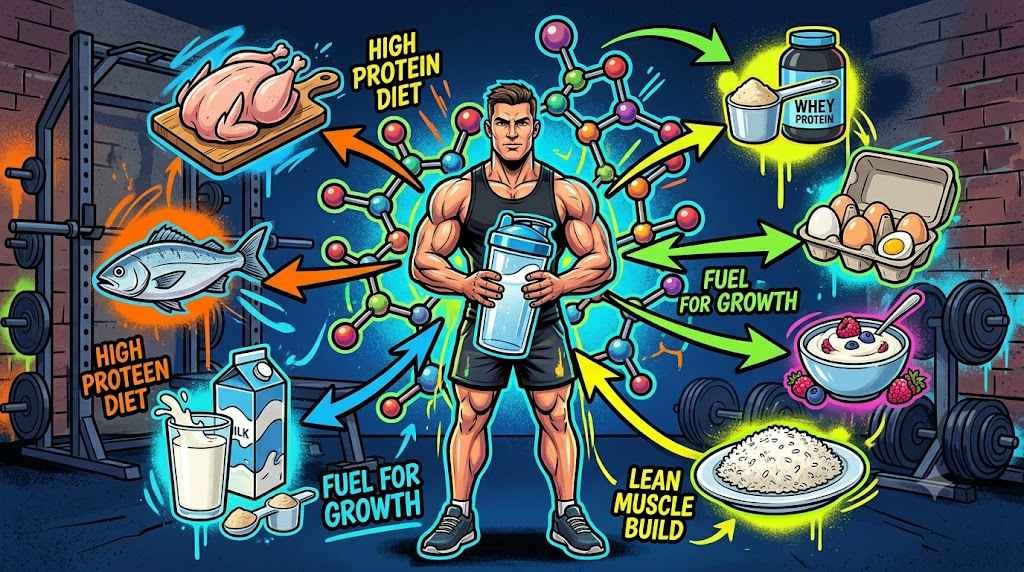
Why Protein Matters for Muscle Gain
Muscle tissue is constantly being broken down and rebuilt.
When you train with weights, you create a stimulus that tells your body it needs to adapt. Your body uses amino acids from dietary protein to repair and build muscle tissue.
This process is one reason protein is so important for anyone following a serious resistance-training program.
Think of your workouts as the signal and protein, calories, recovery, and sleep as the building materials and recovery environment.
If your training is good but your diet consistently provides too little protein, muscle growth can become harder.
That doesn’t mean protein is magic. You still need progressive resistance training, enough calories, adequate sleep, and consistency.
But if you’re asking what nutritional factor deserves special attention when trying to build muscle, protein is near the top of the list.
How Much Protein Do You Need to Build Muscle?
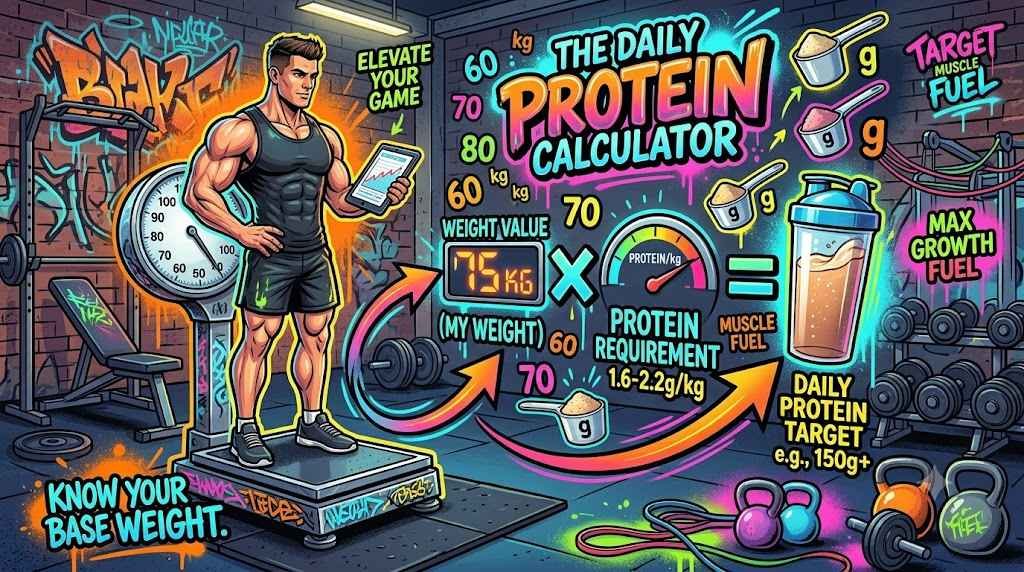
For most people who regularly perform resistance training, a useful protein target is approximately:
1.6–2.2 grams of protein per kilogram of body weight per day.
For someone weighing 70 kg, that works out to roughly:
| Body Weight | Lower Target | Higher Target |
|---|---|---|
| 50 kg | 80 g | 110 g |
| 60 kg | 96 g | 132 g |
| 70 kg | 112 g | 154 g |
| 80 kg | 128 g | 176 g |
| 90 kg | 144 g | 198 g |
| 100 kg | 160 g | 220 g |
| 110 kg | 176 g | 242 g |
| 120 kg | 192 g | 264 g |
You don’t necessarily need to hit the very top of the range every day.
For many lifters, getting somewhere around 1.6–2.0 g/kg/day is already a very strong target.
The higher end can become more useful in situations such as dieting or when someone simply prefers a higher-protein diet.
Protein for Muscle Gain: A Simple Formula
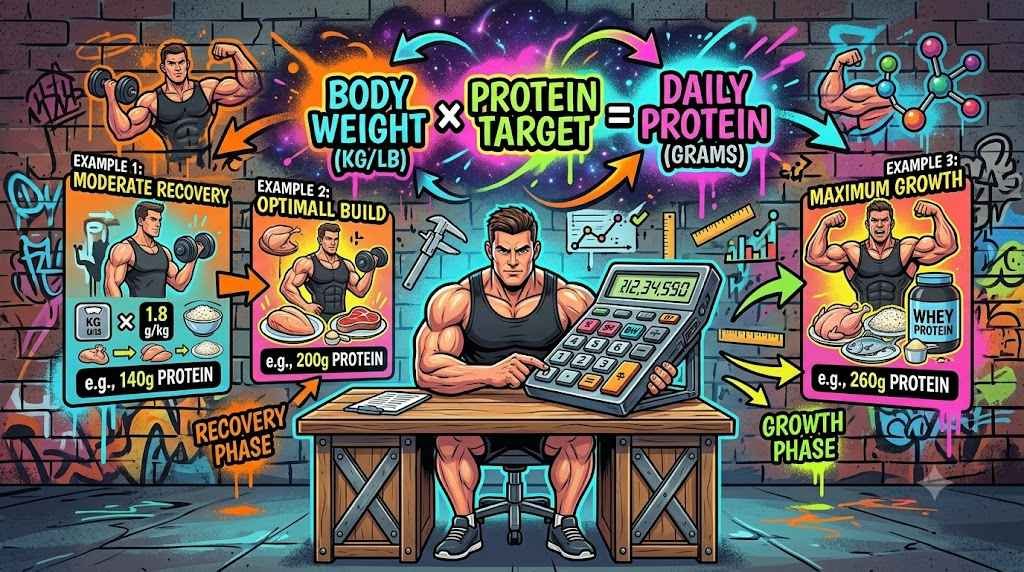
You don’t need a complicated calculator.
Take your body weight in kilograms and multiply it by your preferred protein target.
Body weight × 1.6–2.2 = daily protein target
For example, if you weigh 80 kg:
80 × 1.6 = 128 g
80 × 2.2 = 176 g
So an 80 kg lifter could aim for roughly 128–176 grams of protein per day.
If you want a simple target without constantly calculating numbers, around 1.8–2.0 g/kg/day is a convenient middle ground for many resistance-trained people.
Is More Protein Always Better?
This is where many gym-goers go overboard.
Someone might discover that protein is important for muscle growth and suddenly start eating 250–300 grams of protein every day despite weighing 70–80 kg.
That doesn’t automatically produce more muscle.
Once your protein intake is already high enough to support muscle growth, adding substantially more protein is unlikely to create a proportional increase in muscle.
Your body also needs carbohydrates and fats.
Carbohydrates can help fuel hard training, while dietary fats are important for normal physiological functions and provide a concentrated source of energy.
So don’t turn your entire diet into chicken breast and protein shakes.
A good muscle-building diet is balanced.
Protein Requirements During Bulking
Bulking means intentionally eating enough calories to support muscle growth, usually with a moderate calorie surplus.
During a properly planned bulk, you generally don’t need an extreme protein intake.
A target around 1.6–2.0 g/kg/day is sufficient for many lifters.
For example, an 80 kg person might aim for approximately 130–160 grams of protein per day.
After hitting your protein target, you can focus on getting enough carbohydrates and fats to support your calorie intake and training performance.
This is important because muscle growth isn’t determined by protein alone.
If you’re eating enough protein but your overall diet is poorly structured, your results can still suffer.
Protein Intake While Cutting
Protein becomes especially important when you’re trying to lose body fat while maintaining muscle.
When calories are restricted, your body has less energy available. Resistance training and sufficient protein can help support the retention of lean muscle mass.
Depending on the individual and how lean they are, protein intake toward the higher end of the usual range can make sense during a calorie deficit.
For example, an 80 kg lifter cutting could potentially aim around 160–175 grams of protein per day, depending on their overall diet and circumstances.
The leaner you become and the more aggressive the calorie deficit, the more important it becomes to take muscle preservation seriously.
Don’t combine an extreme calorie deficit with poor protein intake and expect your muscle mass to remain untouched.
How Much Protein Should You Eat Per Meal?

Daily protein is the big picture, but spreading your intake across the day can also be useful.
Instead of eating almost all your protein in one giant dinner, try to distribute it across several meals.
A practical approach for many lifters is roughly:
0.3–0.4 g/kg of protein per meal
For an 80 kg person, that could mean approximately 24–32 grams per meal.
If you eat four meals, you might structure your day around something like:
| Meal | Example Protein Target |
|---|---|
| Breakfast | 30–35 g |
| Lunch | 35–40 g |
| Post-workout/afternoon | 25–35 g |
| Dinner | 35–40 g |
| Daily Total | 125–150 g |
This isn’t a strict rule.
You don’t need to panic if one meal contains 20 grams and another contains 45 grams.
Your total daily intake remains extremely important.
The main idea is simply to give your body multiple opportunities throughout the day to receive high-quality protein.
Does Protein Timing Matter?
You don’t need to drink a protein shake exactly 30 minutes after your workout.
The idea of a tiny “anabolic window” that closes shortly after your final set is heavily exaggerated.
Your body continues dealing with the effects of training for many hours.
Having a protein-rich meal or shake around your workout can be convenient, especially if you haven’t eaten for several hours, but your total daily protein intake is more important than obsessing over the exact minute you consume it.
If you train at 6 PM and eat dinner containing 40 grams of protein at 7:30 PM, you’re not missing your chance to build muscle. Testosterone vs Anavar: Which Is Better for Muscle Growth?
Best Foods for Muscle-Building Protein
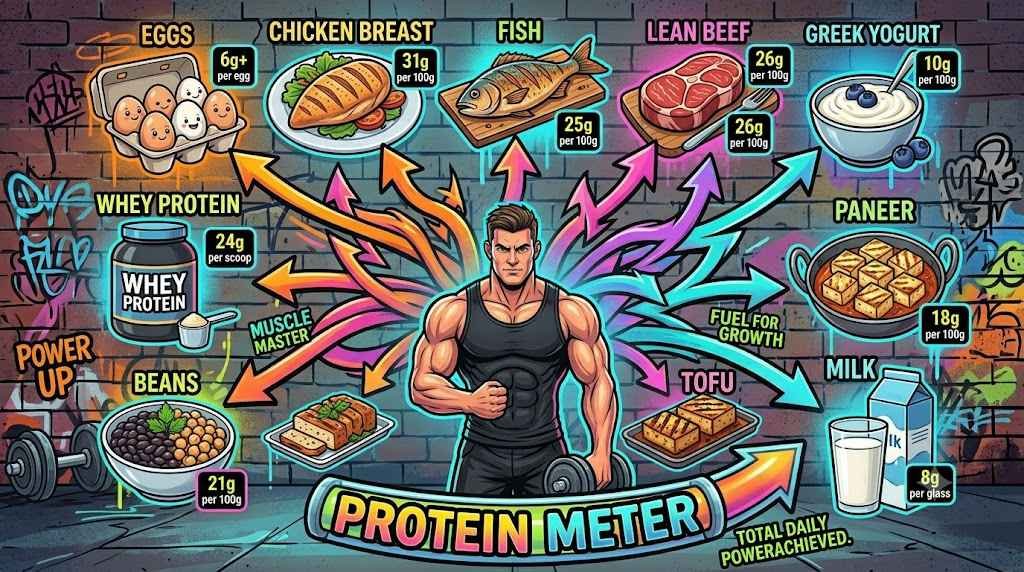
You don’t need to rely entirely on supplements.
Whole foods can provide plenty of protein and also deliver vitamins, minerals, fats, carbohydrates, and other nutrients.
Some useful options include:
| Food | Approximate Protein |
|---|---|
| Chicken breast, 100 g cooked | ~30 g |
| Eggs, 3 large | ~18–20 g |
| Greek yogurt, 200 g | ~18–20 g |
| Cottage cheese/paneer, 100 g | ~15–20 g* |
| Fish, 100 g cooked | ~20–25 g |
| Lean beef, 100 g cooked | ~25–30 g |
| Milk, 500 ml | ~16–17 g |
| Whey protein, 1 scoop | ~20–25 g* |
| Soy foods, depending on type | ~10–20+ g |
*Values vary considerably by brand and preparation.
You don’t need to eat the exact same foods every day.
The best diet is usually one you can follow consistently while getting enough protein and maintaining a balanced calorie intake.
Animal vs Plant Protein
Both animal and plant foods can contribute to your daily protein intake.
Animal proteins such as eggs, dairy, chicken, fish, and meat are generally considered high-quality protein sources because they provide all essential amino acids in useful amounts.
Plant proteins can also work very well, particularly when you eat a varied diet.
Good options include soy, tofu, tempeh, beans, lentils, peas, and other legumes.
If you follow a plant-based diet, you may need to pay a little more attention to total protein intake and food variety.
You don’t need to rely on one single plant food.
Combining different protein sources throughout the day can help you get a broad amino-acid profile.
Is Whey Protein Necessary for Muscle Gain?
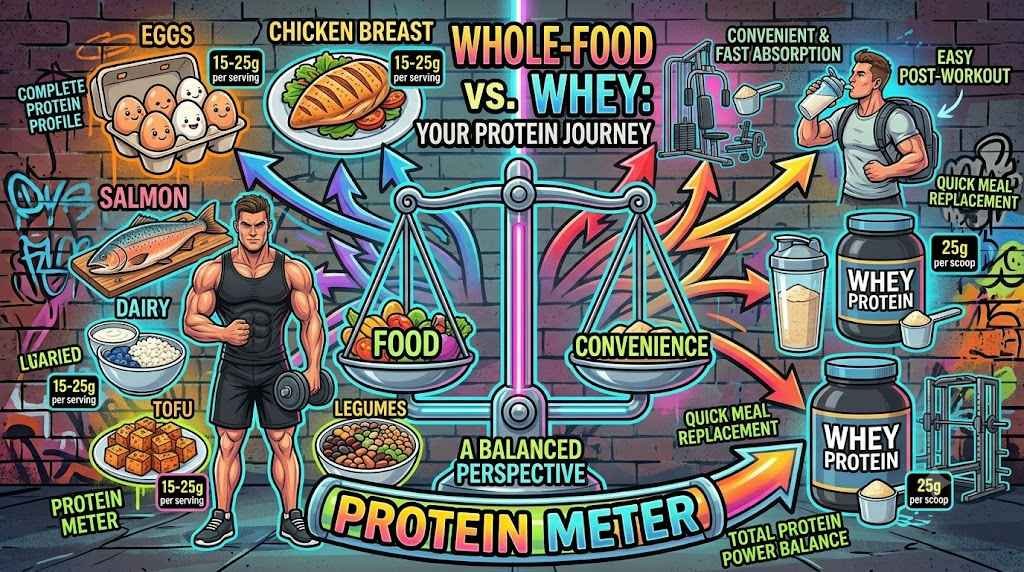
No.
Whey protein is a convenience food, not a requirement for building muscle.
If you can comfortably get 150 grams of protein from normal foods, there’s nothing magical about adding whey.
But if you’re struggling to reach your protein target because you’re busy, don’t have much appetite, or simply don’t want to eat another chicken-and-rice meal, whey can make things easier.
One scoop can provide roughly 20–25 grams of protein with very little preparation.
That’s why whey is popular among lifters.
It’s convenient, easy to digest for most people, and generally provides a high-quality protein source.
How Much Protein Do Beginners Need?
Beginners don’t need a completely different protein target.
If you’re new to resistance training, a practical target around 1.6–2.0 g/kg/day is more than enough for most people.
For example, a 60 kg beginner could aim for roughly:
96–120 grams of protein per day.
Don’t make the mistake of thinking you need 200 grams simply because you’re starting the gym.
Your biggest priorities as a beginner should be:
- Learn proper exercise technique
- Train consistently
- Progress gradually
- Eat enough total calories
- Get adequate protein
- Sleep properly
- Stay consistent for months, not just weeks
Those basics will take you much further than constantly changing supplements.
What Happens If You Don’t Eat Enough Protein?
If protein intake is consistently too low, your body has fewer amino acids available for maintaining and building muscle tissue.
You might still make progress, especially if you’re a beginner, but your diet won’t be optimized for muscle growth.
Low protein intake can become particularly problematic when you’re dieting because you’re simultaneously providing less energy.
Some common signs that your overall diet may need attention include poor recovery, difficulty maintaining muscle during weight loss, and consistently falling short of your nutritional targets.
However, don’t blame every bad workout on protein.
Training quality, sleep, calories, hydration, stress, and programming all matter too. Dianabol vs Anavar: What’s the Difference?
Can You Build Muscle With 100 Grams of Protein?
Yes — depending on your body weight and total diet.
A 55 kg person eating 100 grams of protein is getting around 1.8 g/kg, which can be an excellent intake.
But a 100 kg lifter eating the same 100 grams is only getting around 1 g/kg.
That’s why saying “100 grams of protein is enough” doesn’t make sense without knowing someone’s body weight.
Your protein target should be based on your individual situation rather than a random number you saw on social media.
Can You Build Muscle Without Protein Supplements?
Absolutely.
Protein powder isn’t required.
Someone can build an impressive physique using foods such as eggs, chicken, fish, lean meat, dairy, legumes, soy, and other protein-rich foods.
Supplements simply make the process more convenient.
Think of whey as a tool.
If you already hit your protein target with food, you don’t need it.
If you’re consistently short by 30 grams, a shake can be an easy solution.
Common Protein Mistakes Lifters Make
Eating Too Little Protein
Some people spend a lot of money on pre-workouts, creatine, fat burners, and other supplements while barely eating enough protein.
Get your basic nutrition right first.
Eating Huge Amounts of Protein
More isn’t automatically better.
Once your protein intake is already sufficient, adding another 100 grams isn’t likely to suddenly transform your muscle growth.
Ignoring Total Calories
Protein matters, but calories matter too.
If you’re trying to gain muscle and consistently undereating, hitting your protein target alone won’t solve the problem.
Eating Almost All Protein at Dinner
You don’t have to eat protein every two hours, but spreading your intake over several meals is a practical strategy.
Depending Entirely on Shakes
Protein powder is convenient, but whole foods should still make up a large part of a balanced diet.
Forgetting Carbohydrates and Fats
Protein gets all the attention in bodybuilding, but carbs and fats have important roles too.
A balanced diet generally supports better training and recovery than an extreme high-protein diet.
A Simple High-Protein Muscle-Building Day
Here’s what a basic day could look like for an 80 kg lifter targeting around 150 grams of protein:
| Meal | Example | Approx. Protein |
|---|---|---|
| Breakfast | Eggs + oats + milk | 30–35 g |
| Lunch | Chicken + rice + vegetables | 40 g |
| Snack | Greek yogurt + fruit | 20 g |
| Post-workout | Whey protein shake | 25 g |
| Dinner | Fish/chicken + potatoes/rice + vegetables | 30–35 g |
| Total | 145–155 g |
This is only an example.
You can replace chicken with fish, lean meat, tofu, paneer, Greek yogurt, or other foods depending on your preferences.
The goal isn’t to copy the exact meals.
The goal is to understand how easily your daily protein target can be divided across normal meals.
Does Protein Help With Fat Loss Too?
Yes.
Protein isn’t only useful during a bulk.
A higher-protein diet can help you maintain muscle while losing weight, and protein-rich foods can also be filling.
That’s particularly useful during a calorie deficit because hunger can become one of the biggest problems when dieting.
The key is still maintaining an appropriate calorie deficit.
Eating 200 grams of protein doesn’t automatically cause fat loss if your total calorie intake remains too high.
Think of protein as one part of the fat-loss strategy, not a replacement for calorie control.
Protein for Muscle Gain: The Bottom Line
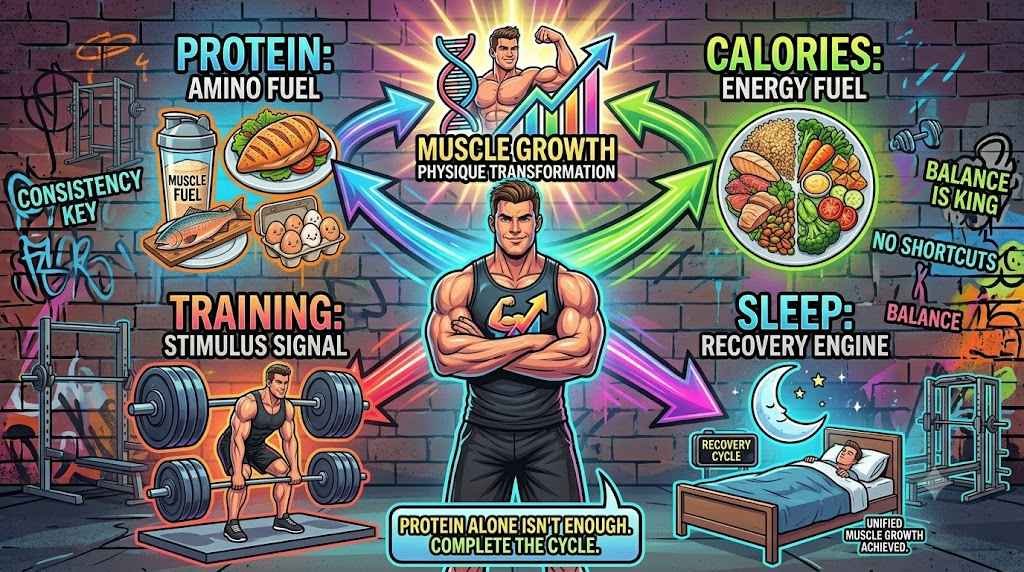
You don’t need a crazy amount of protein to build muscle.
For most people who regularly lift weights, around 1.6–2.2 grams of protein per kilogram of body weight per day is a strong evidence-based range.
If you want to keep things simple, around 1.8–2.0 g/kg/day is a practical target for many lifters.
Then focus on the things that actually determine long-term progress:
Train hard. Eat enough calories. Get sufficient protein. Sleep well. Progress your lifts. Repeat for months and years.
Don’t get distracted by the idea that you need 250 grams of protein, five different protein powders, or a shake every 90 minutes.
Consistency beats complexity. Anavar vs Winstrol: Which Is Better for Cutting & Muscle?
Frequently Asked Questions
How much protein do I need for muscle gain?
Most resistance-trained people can aim for approximately 1.6–2.2 grams of protein per kilogram of body weight per day. Your exact target depends on factors such as body weight, calorie intake, training, and whether you’re bulking or cutting.
Is 100 grams of protein enough to build muscle?
It depends on your body weight. For someone weighing 55–60 kg, 100 grams can be a very good intake. For a much heavier person, 100 grams may be relatively low.
Is 150 grams of protein enough for muscle gain?
For many people, yes. Someone weighing around 70–90 kg could potentially use 150 grams as a strong daily target, depending on their goals and overall diet.
Do I need protein immediately after my workout?
No. You don’t have to consume protein the second your workout ends. Getting enough total protein throughout the day is more important. A protein-rich meal or shake around your workout can simply be a convenient way to meet your daily target.
Can I build muscle without whey protein?
Yes. Whey protein is not necessary for muscle growth. You can get all your protein from whole foods if your diet provides enough total protein.
Is too much protein bad for you?
Very high protein intakes aren’t automatically better for muscle growth. People with certain medical conditions, particularly kidney disease, should discuss appropriate protein intake with a qualified healthcare professional rather than following bodybuilding recommendations blindly.
Should I eat more protein while cutting?
Protein intake can be especially important during a calorie deficit because you’re trying to preserve lean mass while losing body fat. Depending on the person and severity of the diet, using the higher end of the usual protein range may be appropriate.
How much protein should I eat per meal?
A practical target for many lifters is around 0.3–0.4 g/kg per meal, spread across several meals. You don’t need to hit an exact number every time.
What is the best protein source for muscle gain?
There isn’t one single best food. Eggs, dairy, chicken, fish, lean meat, soy, legumes, and protein powders can all contribute. The best choice is one that helps you consistently hit your daily protein target while fitting your diet and preferences.
Does eating more protein automatically mean more muscle?
No. Once protein intake is sufficient, simply adding more protein doesn’t guarantee additional muscle growth. Progressive resistance training, sufficient calories, recovery, sleep, and consistency are all important.
Need Help With Your Muscle Gain Diet?
Confused about how much protein you should eat for your body weight, how to structure your meals, or whether you actually need whey protein? Getting the basics right can make a big difference when your goal is to build muscle.
If you want help with your protein intake, muscle-gain diet, workout nutrition, or bodybuilding goals, you can contact us directly on WhatsApp.
WhatsApp: 7696593279
Send your current body weight, goal, and basic diet details, and we can help you understand how to structure your nutrition more effectively.


