Bulking vs cutting is one of the most common questions people have when they start bodybuilding. Should you eat more calories to build muscle, or should you reduce calories first to lose body fat? The right answer depends on your current body composition, how much muscle you have, your body-fat level and what you actually want from your physique.
If you’re trying to build bigger arms, a wider chest, broader shoulders and more overall muscle, you may think bulking is automatically the best choice. But if you’re already carrying a lot of body fat, jumping straight into a calorie surplus can make the situation worse. On the other hand, if you’re already very lean and don’t have much muscle, spending months cutting may simply make you look smaller.
That’s why understanding bulking vs cutting is important before deciding what to do first.
In this guide, we’ll break down bulking, cutting and body recomposition in simple gym-bro language and explain how to decide which approach makes the most sense for you. Protein for Muscle Gain: How Much Do You Really Need?
What Is Bulking?

Bulking is a phase where your main goal is to build muscle and increase body weight.
The basic idea is simple: you consume enough calories to support training, recovery and muscle growth. This usually means eating in a calorie surplus, meaning you consume slightly more calories than your body uses.
But a good bulk doesn’t mean eating everything in sight.
Pizza, burgers, sweets and other high-calorie foods can make it easy to gain weight, but a large portion of that weight can come from fat. A smarter approach is a controlled or lean bulk, where you use a moderate calorie surplus and focus mainly on nutritious foods.
A typical muscle-building diet includes:
- Enough protein
- Adequate carbohydrates
- Healthy fats
- Fruits and vegetables
- Plenty of water
- Enough total calories
- Consistent resistance training
The goal isn’t simply to make the number on the weighing scale go up.
The goal is to gain useful bodyweight, with muscle making up as much of that gain as reasonably possible.
What Is Cutting?
Cutting is the opposite side of the equation.
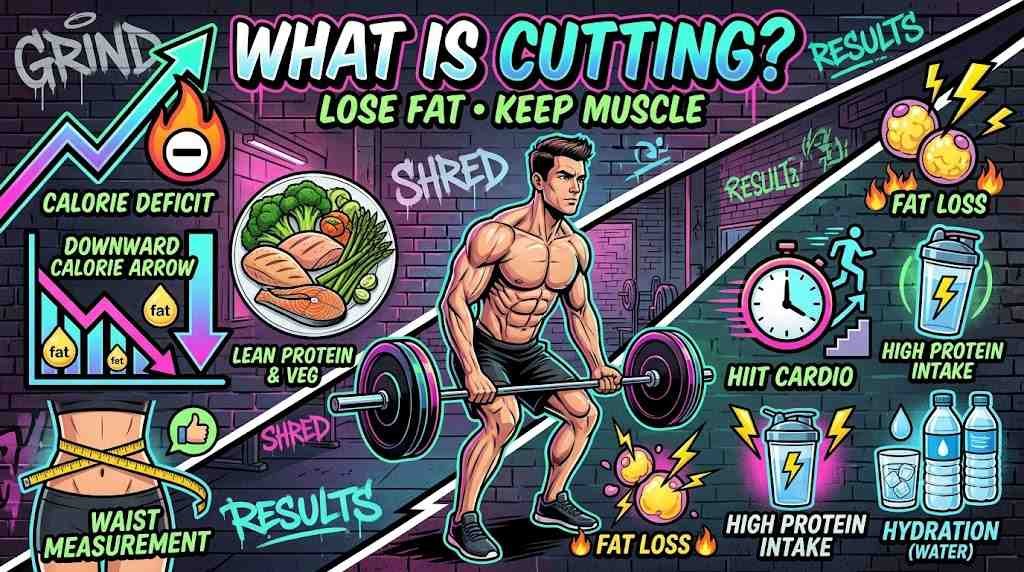
During a cut, the main goal is to reduce body fat while preserving muscle.
You normally achieve this by eating fewer calories than your body uses, creating a calorie deficit. Resistance training and adequate protein become especially important because you want your body to hold onto as much muscle as possible while losing fat.
A good cutting phase doesn’t mean starving yourself.
Crash diets can cause rapid weight loss, but they can also make training harder and increase the risk of losing lean mass. A more controlled calorie deficit is usually easier to maintain.
A cutting diet generally focuses on:
- High-protein foods
- Plenty of vegetables
- Fruits
- Whole grains and other quality carbohydrate sources
- Healthy fats in appropriate amounts
- Adequate hydration
- Consistent weight training
The scale should generally move downward over time, but the main objective is fat loss, not simply weight loss.
Bulking vs Cutting: What’s the Main Difference?
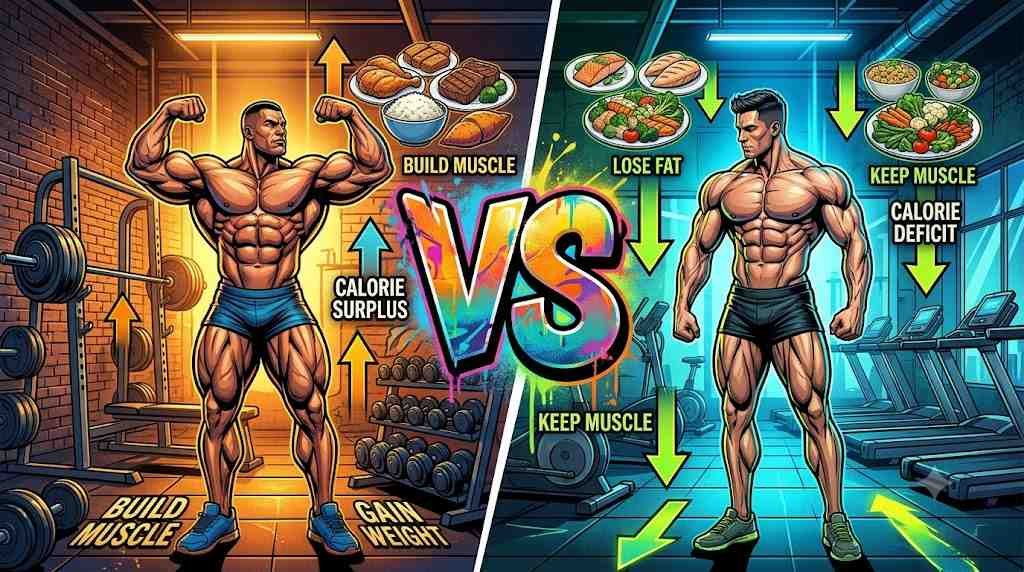
The biggest difference between bulking and cutting is the calorie balance.
| Factor | Bulking | Cutting |
|---|---|---|
| Main goal | Build muscle | Lose body fat |
| Calories | Usually surplus | Usually deficit |
| Bodyweight | Generally increases | Generally decreases |
| Protein | High | High |
| Weight training | Essential | Essential |
| Fat gain | Possible | Usually reduced |
| Muscle gain | Main objective | Mainly preserve muscle |
| Cardio | Optional/useful | Often useful |
| Time frame | Often several months | Often several weeks/months |
One important point is that protein remains important during both phases.
The difference is mainly what you are trying to accomplish with your total calorie intake and training strategy.
So, Should You Bulk or Cut First?

This is the real question.
There is no universal rule saying every beginner must bulk first or every overweight person must cut first.
Your starting point matters.
A simple way to think about it is:
Higher body fat + relatively low muscle → consider cutting first.
Lower body fat + relatively low muscle → consider a lean bulk.
Moderate body fat + beginner → body recomposition may be worth considering.
Already muscular and relatively lean → choose based on your specific physique goal.
This is much more useful than blindly following a traditional “bulk then cut” cycle.
Bulking vs Cutting: When Should You Cut First?
Cutting first can make sense if you already have a noticeable amount of body fat and your primary goal is to become leaner.
For example, if most of your weight is currently coming from body fat rather than muscle, immediately starting a large calorie surplus may simply make you heavier without giving you the physique you’re looking for.
A period of fat loss can give you a better starting point for a later muscle-building phase.
Signs You May Want to Cut First
You may want to consider cutting before bulking if:
- You have significant excess body fat
- Your waist is growing faster than your muscles
- You feel uncomfortable with your current body-fat level
- You have been overeating for months
- You want to establish better eating habits
- Your main goal is improving definition
- You already have enough muscle to look better after losing fat
The exact body-fat percentage at which someone should cut is not a universal number. Different people store fat differently, and visual appearance, waist measurement, performance and personal goals all matter.
Bulking vs Cutting: When Should You Bulk First?
If you’re relatively lean but don’t have much muscle, starting with a controlled muscle-building phase can make more sense.
This is particularly common among naturally skinny beginners.
Imagine someone who is 5’10”, relatively lean and weighs 60–65 kg. They may have very little body fat but also don’t have much muscle.
If that person starts a long cutting phase, they may simply become smaller.
Instead, a controlled calorie surplus combined with progressive resistance training may help them add the muscle they’re missing.
Signs You May Want to Bulk First
A lean bulk may be appropriate if:
- You’re relatively lean
- You have limited muscle mass
- You’re naturally skinny
- Your strength is still increasing rapidly
- You want more overall size
- Your waist is relatively small compared with your frame
- You’re comfortable accepting some fat gain during muscle growth
The key word here is controlled.
Bulking doesn’t mean eating 5,000 calories because you think every extra calorie automatically becomes muscle.
What If You’re Skinny but Have a Belly?
This is one of the most confusing situations in bodybuilding.
You may have thin arms and legs but still carry noticeable fat around your stomach.
This is often described as being “skinny fat.”
In this situation, jumping into an aggressive bulk may not be the best idea because you may gain additional body fat before you’ve built enough muscle.
At the same time, an aggressive cut may make you look even smaller.
This is where body recomposition can be useful.
What Is Body Recomposition?
Body recomposition means trying to build muscle while reducing body fat at the same time.
It sounds difficult, but beginners and people returning to training after a break can sometimes make noticeable progress in both areas.
Instead of using a large calorie surplus or aggressive calorie deficit, you can focus on:
- High protein intake
- Progressive resistance training
- Calories around maintenance or a small deficit
- Good sleep
- Consistent training
- Quality food choices
Body recomposition is usually slower than aggressively focusing on one goal.
But for some people, it can be a much better starting strategy.
Bulking vs Cutting for Beginners
Beginners often don’t need to overcomplicate this.
If you’ve just started lifting weights, your first priority should be learning how to train properly and becoming consistent.
You don’t need to immediately jump into a massive bulk.
You also don’t necessarily need a strict cutting diet.
During the first months of training, beginners can make significant improvements in strength and muscle because the body is adapting to a new training stimulus.
A sensible beginner approach is:
- Establish a consistent resistance-training routine.
- Eat enough protein.
- Get enough calories to support your goal.
- Sleep properly.
- Track your bodyweight and waist measurement.
- Adjust calories based on progress.
Your first goal should be building good habits, not obsessing over every gram of food. Why Am I Not Gaining Muscle? 15 Reasons & How to Fix It
How Big Should Your Calorie Surplus Be When Bulking?
One of the biggest mistakes people make during a bulk is using an unnecessarily large calorie surplus.
More food does not automatically mean more muscle.
Your body has a limited capacity to build muscle. Once your nutritional needs are covered, pushing calories much higher can simply increase fat gain.
A controlled surplus is generally a better approach.
For many people, a modest increase above maintenance calories can be enough to support gradual weight gain.
Instead of trying to gain weight as quickly as possible, monitor your:
- Weekly average bodyweight
- Waist measurement
- Gym performance
- Strength progression
- Visual changes
- Recovery
If your weight is climbing rapidly and your waist is expanding quickly, your surplus may be larger than necessary.
How Large Should Your Calorie Deficit Be When Cutting?
The same principle applies to cutting.
A massive calorie deficit isn’t automatically better.
You might lose weight faster, but aggressive dieting can make it harder to train, recover and preserve muscle.
A moderate calorie deficit is generally easier to maintain.
Your progress should be judged by your average weight trend over several weeks, rather than one random weigh-in.
Bodyweight can fluctuate because of:
- Water retention
- Sodium intake
- Carbohydrate intake
- Food volume
- Stress
- Sleep
- Digestive changes
So don’t panic because your scale increases by 1 kg overnight.
Bulking vs Cutting: What About Protein?
Protein is important in both phases.
During bulking, protein provides the amino acids needed to support muscle protein synthesis and recovery from resistance training.
During cutting, adequate protein becomes especially useful because you’re trying to maintain muscle while eating fewer calories.
Good protein sources include:
- Eggs
- Chicken
- Fish
- Lean meat
- Greek yogurt
- Milk
- Cottage cheese
- Whey protein
- Soy and other plant-based protein sources
- Beans and legumes
You don’t need to eat the same protein source every day.
A varied diet can make it much easier to hit your nutritional targets.
Bulking vs Cutting: Which Is Better for Muscle Growth?
If your only goal is maximizing muscle growth, a properly managed calorie surplus generally provides a better environment for gaining weight and supporting training.
But that doesn’t mean you should stay in a bulk forever.
Eventually, excessive fat gain can become a problem.
This is why many lifters alternate between periods of gaining and periods of fat loss.
The important part is knowing when to change direction.
Bulking vs Cutting: How Long Should You Bulk?
There is no perfect number of weeks for a bulk.
Some people bulk for several months, while others may use longer muscle-building phases.
The duration depends on:
- Starting body composition
- Training experience
- Rate of weight gain
- Personal physique goals
- How much fat you’re comfortable gaining
A lean bulk should generally be slow and controlled.
If you’re gaining weight rapidly, don’t assume you’re making exceptionally fast muscle gains. Much of the extra increase may be fat, water and glycogen.
Bulking vs Cutting: How Long Should You Cut?
The same applies to cutting.
A cut can last several weeks or several months depending on how much fat you want to lose.
Rather than choosing an arbitrary deadline, monitor your progress.
Useful measurements include:
- Morning bodyweight
- Weekly weight average
- Waist circumference
- Progress photos
- Gym performance
If your waist is shrinking and your strength is reasonably stable, you’re probably moving in the right direction.
Should You Bulk and Cut More Than Once?
For people who want to build a substantial amount of muscle over several years, multiple gaining and cutting phases can make sense.
A common long-term approach looks something like:
Lean bulk → cut → maintenance → lean bulk → cut
But this doesn’t mean you need to switch phases every few weeks.
Constantly changing calories can make it difficult to know what’s actually working.
A better approach is to stay in a phase long enough to create measurable progress.
Common Bulking Mistakes
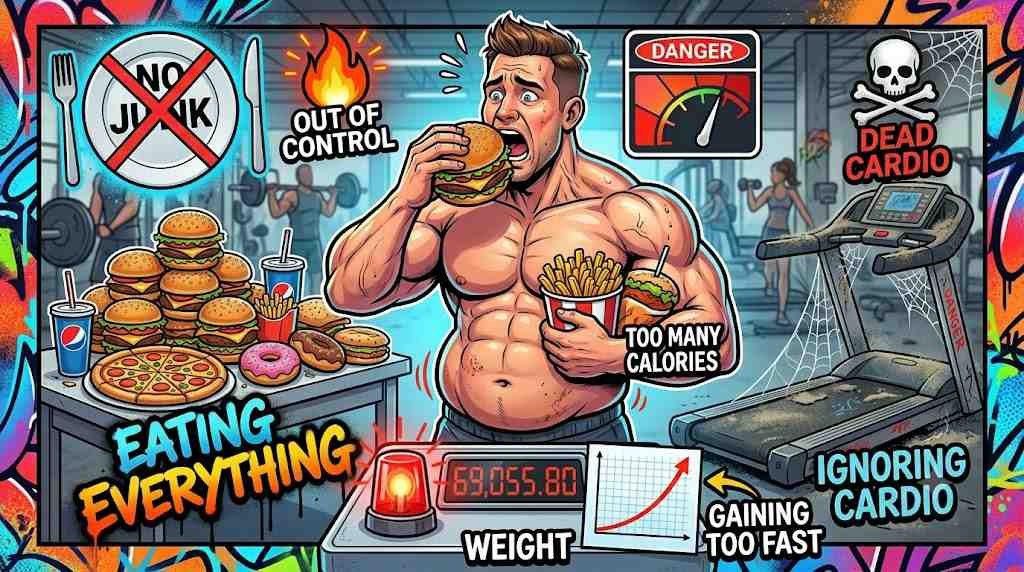
Eating Everything in Sight
A bulk isn’t an excuse to turn every meal into junk food.
You can eat higher-calorie foods, but your overall diet should still provide enough protein, vitamins, minerals, fiber and quality carbohydrates. Dianabol vs Anavar: What’s the Difference?
Trying to Gain Weight Too Quickly
Fast weight gain usually means more fat gain.
Muscle growth takes time.
Ignoring Cardio
Cardio doesn’t automatically destroy your gains.
A reasonable amount of cardiovascular activity can support fitness, conditioning and overall health.
Stopping When You Gain Some Fat
Some fat gain during a calorie surplus is normal.
The goal of a lean bulk is to minimize unnecessary fat gain, not eliminate it completely.
Common Cutting Mistakes
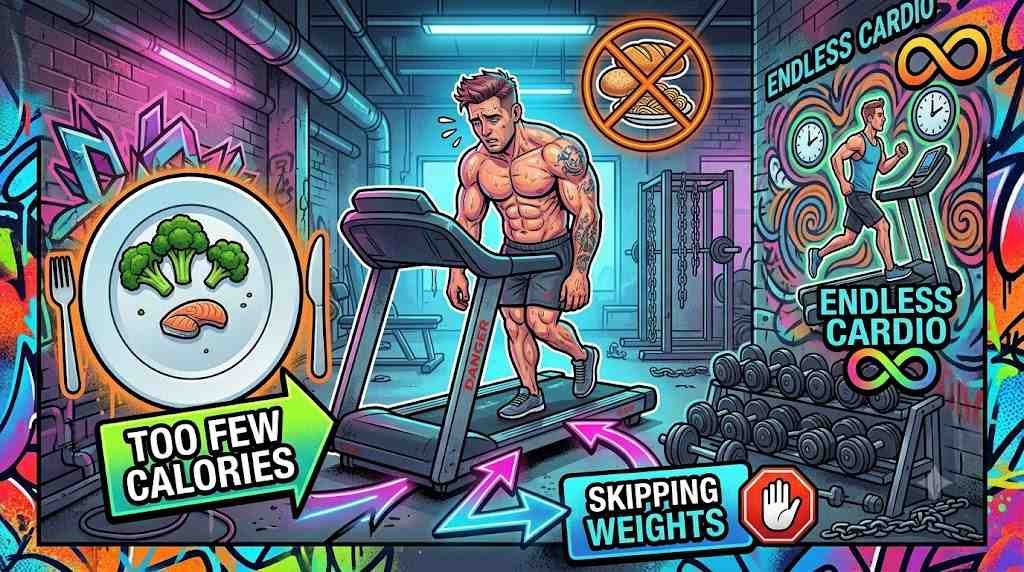
Cutting Calories Too Aggressively
Eating extremely little may produce rapid scale changes, but it can make training and recovery difficult.
Removing All Carbohydrates
Carbohydrates are not automatically fattening.
Total calorie intake matters much more than labeling one macronutrient as “bad.”
Doing Endless Cardio
More cardio isn’t always better.
Your diet and resistance training should remain the foundation.
Ignoring Strength Training
If you want to keep muscle while losing fat, lifting weights should remain a major part of your program.
Bulking vs Cutting: What Should You Do Based on Your Goal?
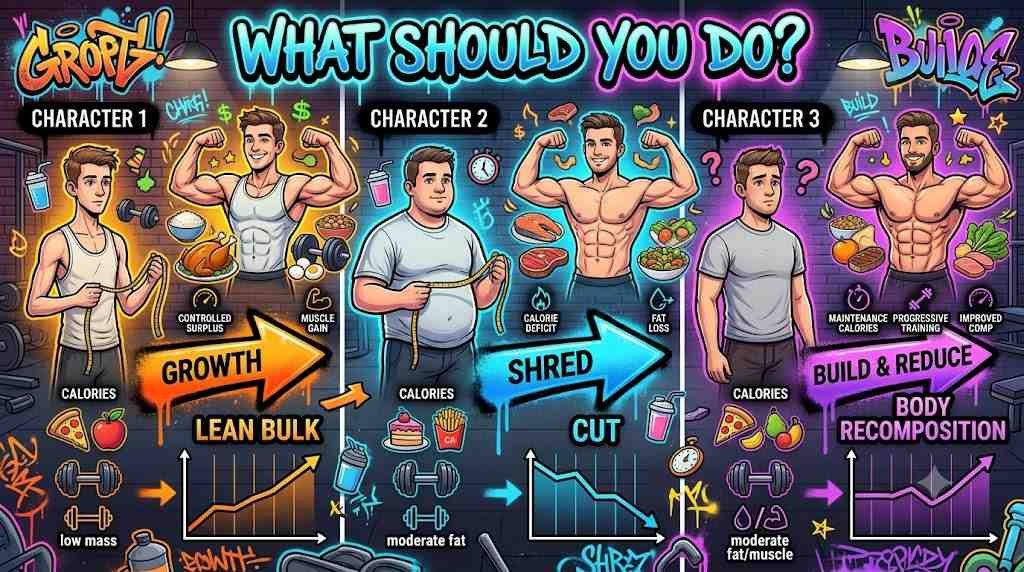
Here’s a simple decision guide.
| Your Current Situation | Possible Best Approach |
|---|---|
| Very lean and under-muscled | Lean bulk |
| High body fat with reasonable muscle | Cut |
| Skinny with noticeable belly fat | Recomposition or short cut |
| Beginner with higher body fat | Recomposition or cut |
| Beginner who is very lean | Lean bulk |
| Already muscular but carrying excess fat | Cut |
| Lean and already muscular | Choose based on physique goal |
| Unsure what to do | Start with maintenance and track progress |
This isn’t a medical or individualized prescription. It’s simply a practical bodybuilding framework.
What If You Want Both Muscle and Abs?
This is where expectations matter.
You can build muscle and lose fat, but trying to maximize both simultaneously isn’t always realistic.
If you’re already relatively lean and want significantly more muscle, a controlled gaining phase is usually more practical.
If you already have plenty of muscle but want visible abs, fat loss becomes the priority.
The best physique often comes from accepting that different phases have different jobs.
Bulking vs Cutting: Don’t Ignore Maintenance Calories
There’s another option that doesn’t get enough attention: maintenance.
You don’t always need to bulk or cut.
A maintenance phase can be useful after a long diet, after gaining significant weight, or when you’re simply unsure what direction to take.
During maintenance, your goal is to keep bodyweight relatively stable while focusing on:
- Training performance
- Recovery
- Nutrition quality
- Sleep
- Building consistency
Maintenance can also give you a useful baseline for determining how your body responds to different calorie levels.
The Bottom Line: Bulking vs Cutting
So, which should you do first: bulk or cut?
It depends on where you’re starting.
If you’re very lean and lack muscle, a controlled lean bulk may be the better option.
If you’re carrying a significant amount of body fat, cutting first may help you create a better starting point for future muscle growth.
If you’re skinny but carrying some belly fat, body recomposition or a carefully planned approach may make more sense than immediately jumping into either an aggressive bulk or aggressive cut.
And if you’re a complete beginner, don’t feel pressured to make everything perfect from day one. Focus on consistent resistance training, enough protein, appropriate calories and good recovery.
The biggest mistake isn’t choosing the “wrong” phase for a few weeks.
The biggest mistake is changing your plan every time the scale or mirror doesn’t change immediately.
Muscle takes time to build. Fat loss takes time. The best physique usually comes from staying consistent long enough for your plan to actually work.
In the end, bulking vs cutting isn’t about choosing the phase that sounds better. It’s about choosing the phase that matches your current body composition and your actual goal. Anavar vs Winstrol: Which Is Better for Cutting & Muscle?
Frequently Asked Questions about Bulking vs Cutting
Is it better to bulk or cut first?
It depends on your starting body composition. Lean people with little muscle may benefit from a lean bulk, while people carrying significant excess body fat may benefit from cutting first.
Bulking vs Cutting: Can you bulk and cut at the same time?
You can potentially build muscle while losing fat, which is called body recomposition. This is more achievable for beginners, people returning to training and some individuals with higher body-fat levels.
Bulking vs Cutting: Should skinny people bulk?
If you’re naturally lean and have relatively little muscle, a controlled lean bulk can be a sensible strategy. The goal should be gradual weight gain rather than rapidly increasing bodyweight.
Should I cut if I have a belly but skinny arms?
Not necessarily. If you’re relatively under-muscled, an aggressive cut could make you look even smaller. Recomposition or a carefully controlled approach may be worth considering.
How long should a bulk last?
There is no universal duration. A bulk can last several months or longer depending on your rate of weight gain, body composition and goals.
How long should a cut last?
That depends on how much fat you want to lose and how aggressive your calorie deficit is. A gradual approach is generally easier to maintain than crash dieting.
Do you need to bulk to build muscle?
No. Beginners and some other lifters can gain muscle around maintenance calories or even while losing fat. However, a controlled calorie surplus can make gaining muscle easier for many experienced lifters.
Does cutting make you lose muscle?
A calorie deficit can increase the risk of losing muscle, especially if the deficit is aggressive. Adequate protein and resistance training can help support muscle retention.
Can you gain muscle without gaining fat?
It is possible to make some muscle gains with minimal fat gain, particularly for beginners, but completely eliminating fat gain during a long calorie-surplus phase is difficult for many people.
What’s better for beginners: bulking or cutting?
There isn’t one answer. A beginner with high body fat may benefit from fat loss or recomposition, while a very lean beginner with little muscle may benefit from a controlled bulk.
Need Help With Your Bodybuilding Goal?
If you’re confused about whether you should bulk, cut or focus on body recomposition, you can discuss your goal, diet and training approach with us on WhatsApp.
WhatsApp: 7696593279
Whether your goal is gaining muscle, improving definition or building a more balanced physique, choosing the right strategy from the beginning can save you months of unnecessary trial and error.