A cutting cycle with peptides is a topic that attracts bodybuilders who want to reduce body fat while maintaining muscle mass, strength, and a defined physique. During a cutting phase, the main goal is to lose fat without losing more muscle than necessary. This requires a calorie-controlled diet, resistance training, sufficient protein, and proper recovery.
Peptides such as ipamorelin, GHRP-2, CJC W/O DAC, and hexarelin are often discussed in bodybuilding communities because of their relationship with growth hormone signaling. However, their popularity does not mean that they are proven fat-loss treatments or that combining them with anabolic steroids and other drugs is safe.
In this Gym Pundit guide, we will examine the role of peptides in cutting, review four source-listed cutting-cycle charts, and cover the supplied Cycle Support, PCT, and Maintenance Cycle tables. We will also discuss expected results, possible side effects, blood tests, diet, and training.
Important: The cycle tables below reproduce the supplied reference information. They are not medically approved prescriptions or recommendations to use these combinations. Several listed substances can cause serious health problems, and some have limited human safety data. Cutting Cycles with SARMs: 4 Plans, Risks, Support & PCT
What Is a Cutting Cycle With Peptides?
A cutting cycle with peptides generally refers to a bodybuilding approach in which peptides are combined with a calorie deficit and training in an attempt to improve body composition. Some protocols also combine peptides with anabolic-androgenic steroids, stimulants, thyroid hormones, or experimental performance-enhancing compounds.
These are different categories of substances, and they should not be treated as interchangeable.
Peptides are short chains of amino acids. Some act on hormonal pathways, while others are investigated for different biological effects. In bodybuilding discussions, growth hormone secretagogues such as ipamorelin, GHRP-2, CJC-1295-related compounds, and hexarelin are often grouped together.
However, evidence that a compound influences a hormone does not automatically prove that it produces meaningful fat loss, preserves muscle during a calorie deficit, or improves long-term health.
The central question when evaluating a cutting cycle with peptides is whether the claimed benefits are supported by reliable human research and whether the potential risks outweigh those benefits.
How a Cutting Cycle With Peptides Is Supposed to Work
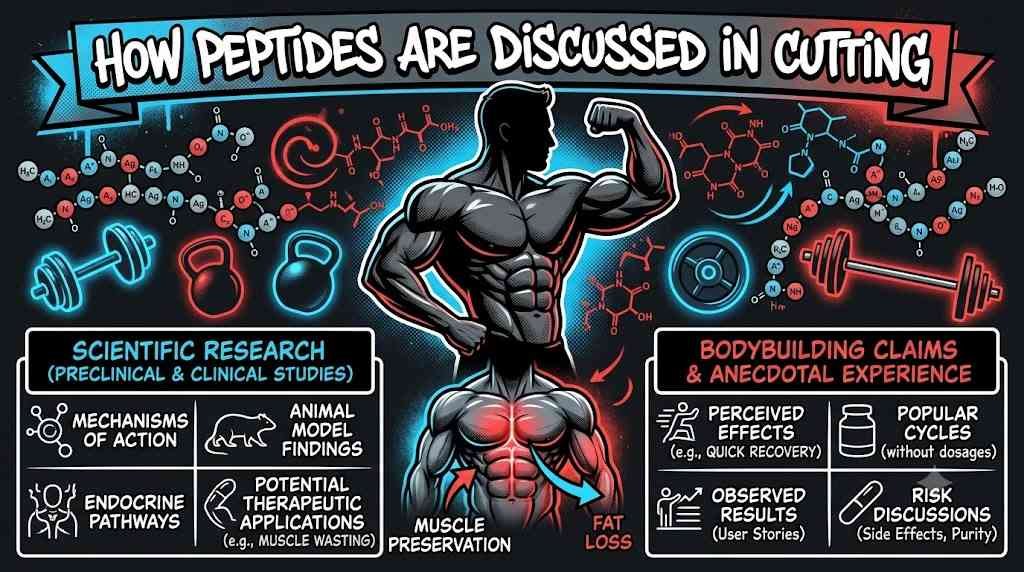
Bodybuilders generally discuss peptide-assisted cutting in relation to three goals.
1. Supporting Muscle Retention
During a calorie deficit, the body receives less energy than it uses. If the deficit is too aggressive, protein intake is inadequate, or training and recovery are poorly managed, muscle loss can occur.
Bodybuilders sometimes investigate growth hormone-related peptides because of their influence on hormonal signaling. However, there is insufficient evidence to conclude that the combinations in the charts below reliably prevent muscle loss during cutting.
2. Improving Body Composition
Body composition refers to the relationship between fat mass and lean mass. A successful cut aims to reduce fat while retaining as much lean tissue as practical.
Some peptide-related hormonal changes can affect water balance or other physiological processes. Changes on the scale therefore do not necessarily represent fat loss.
3. Supporting Training and Recovery
Training performance can decline during a prolonged calorie deficit, particularly when the deficit is large or sleep is inadequate.
Rather than assuming that a peptide will solve recovery problems, bodybuilders should first assess training volume, calorie intake, protein, hydration, and sleep.
Peptides Commonly Discussed in a Cutting Cycle With Peptides
| Compound | Why it is discussed | Important limitation |
|---|---|---|
| Ipamorelin | Growth hormone secretagogue research | Evidence for bodybuilding fat loss and muscle retention is limited |
| GHRP-2 | Growth hormone-related signaling | Human safety and effectiveness for physique enhancement are not established |
| CJC W/O DAC | Commonly discussed in growth hormone-related protocols | Product identity, evidence, and safety require careful evaluation |
| Hexarelin | Growth hormone secretagogue research | Long-term safety and physique-enhancement benefits remain uncertain |
The U.S. FDA has identified potential safety concerns involving compounded ipamorelin and GHRP-2, including issues related to peptide impurities, immune reactions, and limited safety information. It has also identified limited clinical data and potential serious adverse events associated with CJC-1295. These findings do not mean every possible use causes harm, but they do mean that these compounds should not be presented as established, risk-free cutting aids. FDA safety information.
CUTTING CYCLE WITH PEPTIDES: Understanding the Four Source Charts
The following four tables preserve the compounds, doses, frequencies, and durations provided in the reference material. They are presented for source-chart review, not as instructions for self-administration.
The abbreviation ED means every day, while EW means every week. “Twice ED” means twice daily as written in the source chart.
The listed amounts and schedules should not be interpreted as validated doses. In particular, the presence of multiple drugs in one table does not establish that the combination has been adequately studied or that the substances can be safely used together.
Cutting Cycle With Peptides — Cycle 1
| Product | Dosage | Duration |
|---|---|---|
| CLEN-40 | 40mcg ED | first 4 weeks |
| CLEN-40 | 80mcg ED | next 4 weeks |
| T3-MAX | 25mcg ED | 4 weeks |
| ANAVAR | 50mg ED | 12 weeks |
| IPAMORELIN | 200mcg Twice ED | 8 weeks |
Cycle 1: What the Chart Contains
This source-listed combination includes clenbuterol, a thyroid hormone product, oxandrolone (Anavar), and ipamorelin. These substances act through different biological pathways and have different risks.
Clenbuterol can cause a rapid heartbeat, tremors, electrolyte disturbances, and potentially serious cardiovascular complications. Thyroid hormone taken without a medical indication can cause symptoms of excess thyroid activity, including a rapid heartbeat and muscle loss. Oxandrolone can adversely affect cholesterol levels and liver health.
Ipamorelin has a different mechanism, but its presence does not cancel out the risks associated with the other substances. The chart should not be interpreted as evidence that this combination is safe or that it produces superior cutting results.
Cutting Cycle With Peptides — Cycle 2
| Product | Dosage | Duration |
|---|---|---|
| CLEN-40 | 40mcg ED | first 4 weeks |
| CLEN-40 | 80mcg ED | next 4 weeks |
| T3-MAX | 25mcg ED | 4 weeks |
| STANAZOL-10 | 50mg ED | 12 weeks |
| ANAVAR | 50mg ED | 12 weeks |
| IPAMORELIN | 200mcg Twice ED | 8 weeks |
Cycle 2: What Changes From Cycle 1?
The principal change in this source chart is the addition of STANAZOL-10 while Anavar remains listed.
Stanozolol and oxandrolone are anabolic-androgenic steroids. Using multiple oral anabolic steroids can increase concerns about liver injury and adverse cholesterol changes. Anabolic steroid use can also affect natural hormone production, fertility, mood, and cardiovascular health.
The combination with clenbuterol and thyroid hormone introduces additional concerns. These effects may overlap, making an adverse reaction harder to attribute to one substance.
Adding ipamorelin does not establish that the plan will preserve muscle or improve fat loss. There is not enough reliable evidence to validate this complete combination as an effective or safe cutting protocol.
Cutting Cycle With Peptides — Cycle 3
| Product | Dosage | Duration |
|---|---|---|
| CLEN-40 | 40mcg ED | first 4 weeks |
| CLEN-40 | 80mcg ED | next 4 weeks |
| T3-MAX | 25mcg ED | 4 weeks |
| STANAZOL-10 | 50mg ED | 12 weeks |
| ANAVAR | 50mg ED | 12 weeks |
| PROPIONE-T100 | 300mg EW | 12 weeks |
| GHRP-2 | 200mcg Twice ED | 8 weeks |
| CJC W/O DAC | 200mcg Twice ED | 8 weeks |
Cycle 3: Understanding the Additional Compounds
This chart adds PROPIONE-T100, GHRP-2, and CJC W/O DAC to the listed combination.
PROPIONE-T100 appears to refer to a testosterone propionate product, but the exact formulation should be verified from its label. Testosterone is an androgen, and nonmedical use can suppress natural testosterone production and affect fertility, blood pressure, red blood cell levels, and cardiovascular health.
GHRP-2 and CJC W/O DAC are included in growth hormone-related discussions, but the available evidence does not establish that this combination safely improves fat loss or muscle retention when used alongside anabolic steroids.
The chart also combines multiple hormonal and performance-enhancing substances. Such combinations can make monitoring more complicated and increase the chance of overlapping adverse effects.
The supplied reference lists both peptide compounds at 200mcg twice daily for eight weeks. This records the source information; it does not verify the appropriateness of those amounts or the safety of the combination. Cutting Cycle for Beginners: Compounds, Risks & Fat Loss
Cutting Cycle With Peptides — Cycle 4
| Product | Dosage | Duration |
|---|---|---|
| CLEN-40 | 40mcg ED | first 4 weeks |
| CLEN-40 | 80mcg ED | next 4 weeks |
| T3-MAX | 25mcg ED | 8 weeks |
| STANAZOL-10 | 50mg ED | 12 weeks |
| ANAVAR | 50mg ED | 12 weeks |
| PROPIONE-T100 | 300mg EW | 12 weeks |
| MASTERON-E100 | 300mg EW | 12 weeks |
| Hexarelin | 200mcg Twice ED | 8 weeks |
| CJC W/O DAC | 200mcg Twice ED | 12 weeks |
Cycle 4: Understanding the Expanded Combination
Cycle 4 adds MASTERON-E100 and Hexarelin to the compounds listed in Cycle 3. The T3-MAX duration is also listed as eight weeks in this chart, rather than four weeks.
Masteron is commonly associated with drostanolone, an anabolic-androgenic steroid, but the exact formulation should be verified from the product label. Combining several anabolic steroids does not guarantee better muscle retention or a leaner final physique.
Hexarelin is a growth hormone secretagogue. Like other research-associated peptides, its presence in a bodybuilding protocol does not establish long-term safety or meaningful benefits for fat loss.
The longer thyroid-hormone duration listed in Cycle 4 deserves particular caution. Unnecessary thyroid hormone exposure can lead to excessive thyroid activity, heart rhythm problems, and loss of muscle tissue. Changes to a thyroid medication should be managed by a qualified clinician rather than based on a bodybuilding chart.
Important distinction: Cycle 4 has a different peptide duration from Cycle 3. The source lists Hexarelin for eight weeks and CJC W/O DAC for 12 weeks. These details are retained separately rather than merged into one schedule.
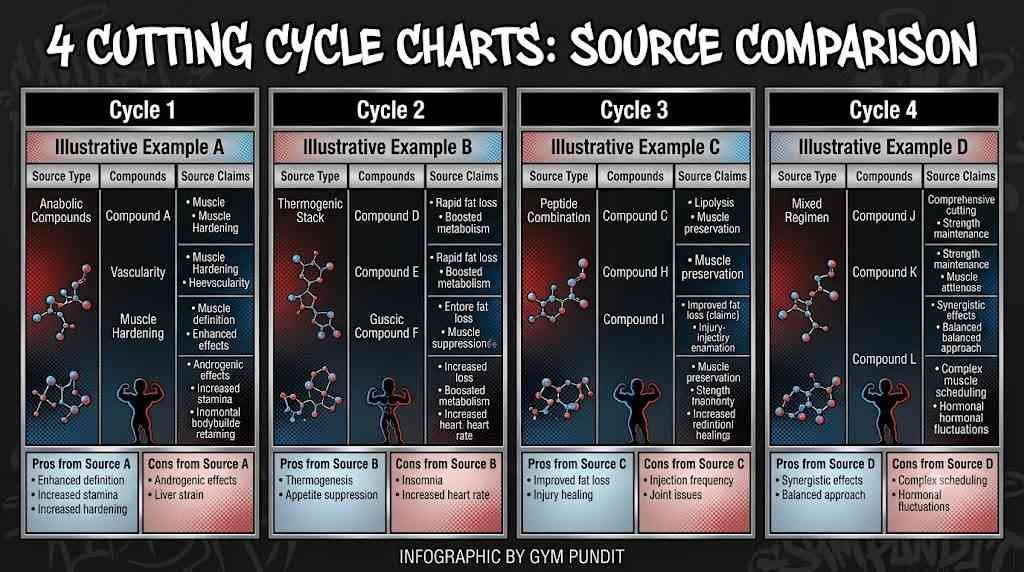
Comparing the Four Cutting Cycle With Peptides Charts
| Feature | Cycle 1 | Cycle 2 | Cycle 3 | Cycle 4 |
|---|---|---|---|---|
| CLEN-40 | Listed | Listed | Listed | Listed |
| T3-MAX | 4 weeks | 4 weeks | 4 weeks | 8 weeks |
| STANAZOL-10 | Not listed | Listed | Listed | Listed |
| ANAVAR | Listed | Listed | Listed | Listed |
| Testosterone product | Not listed | Not listed | Listed | Listed |
| MASTERON-E100 | Not listed | Not listed | Not listed | Listed |
| Peptide products | Ipamorelin | Ipamorelin | GHRP-2, CJC W/O DAC | Hexarelin, CJC W/O DAC |
This comparison summarizes the contents of the four source charts; it is not a ranking of which cycle is better. More compounds do not automatically mean more fat loss, greater muscle retention, or better results. Each added substance can introduce its own risks and interactions.
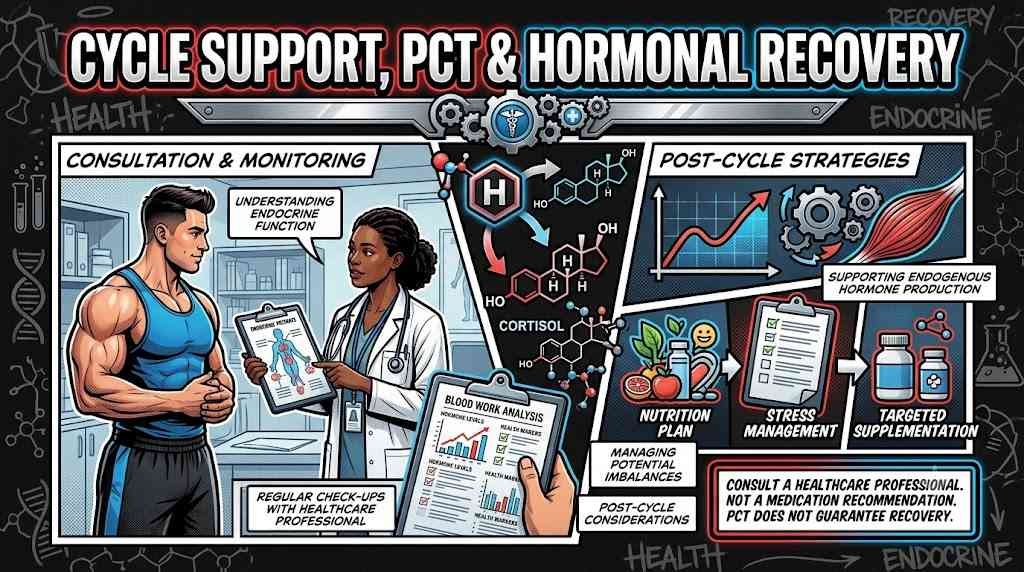
Cycle Support: Source-Listed Table
Cycle support is a broad term used in bodybuilding communities for products intended to address particular health concerns during a cycle. It is not a guarantee that the effects of anabolic steroids, thyroid hormones, or stimulants can be prevented.
The source chart lists the following information:
| Cycle | Product | Dosage | Duration |
|---|---|---|---|
| Cycle 1 | NR | NR | NR |
| Cycle 2 | NR | NR | NR |
| Cycle 3 | Tamoxifen Citrate | 10mg EOD | 12 weeks |
| Cycle 4 | Tamoxifen Citrate | 10mg EOD | 12 weeks |
NR is retained exactly as supplied. Its meaning should be confirmed with the original source rather than assumed to mean that no support is needed.
Tamoxifen is a prescription medicine used for specific medical indications. It can cause adverse effects, including blood clots, and should not be treated as a universal protective medication for a bodybuilding cycle. Its suitability depends on the individual and the clinical circumstances.
PCT: Post-Cycle Therapy Source Chart
Post-cycle therapy (PCT) is a term commonly used for medicines taken after anabolic steroid use in an attempt to address hormone suppression. Recovery is not identical for everyone, and a chart alone cannot determine whether treatment is needed or which medication is appropriate.
The supplied PCT information is:
| Cycle | Product | Dosage | Duration |
|---|---|---|---|
| Cycle 1 | NR | NR | NR |
| Cycle 2 | NR | NR | NR |
| Cycle 3 | Tamoxifen Citrate | 10mg ED | 4 weeks |
| Cycle 4 | Tamoxifen Citrate | 10mg ED | 4 weeks |
| Cycle 4 | Clomifene | 50mg ED | Not specified in supplied chart |
The final duration for clomifene was not supplied, so it is identified as unspecified rather than filled in.
Tamoxifen and clomifene affect estrogen signaling through different clinical mechanisms. They are not automatically appropriate for everyone after a cycle, and taking them does not guarantee a rapid or complete return of natural testosterone production. Both can cause adverse effects and require medical assessment.
If a person has stopped anabolic steroids and develops symptoms such as persistent low libido, erectile difficulties, marked fatigue, or mood changes, a clinician can assess hormone levels and determine whether treatment or observation is appropriate.
Maintenance Cycle: Source-Listed Tables
A maintenance phase is intended to focus on preserving progress rather than continuing to chase rapid changes in body weight. In bodybuilding discussions, the term can refer to several different approaches, so the contents of a particular table should not be mistaken for an established medical maintenance protocol.
Maintenance Cycle — SARMs
| Product | Dosage | Duration |
|---|---|---|
| Cardarine | 10mg Thrice ED | 4–8 weeks |
| SR-9009 | 10mg Thrice ED | 4–8 weeks |
| Withania Somnifera | 2g with warm milk before bed | 4–8 weeks |
Maintenance Cycle — Peptides
| Product | Dosage | Duration |
|---|---|---|
| Ipamorelin | 200mcg Twice ED | 4–8 weeks |
| CJC W/O DAC | 200mcg Twice ED | 4–8 weeks |
| Withania Somnifera | 2g with warm milk before bed | 4–8 weeks |
These tables reproduce the supplied reference information. They should not be read as recommendations to take the listed substances.
Cardarine (GW501516) is not a SARM, despite sometimes being marketed alongside SARMs. It is an experimental PPAR-delta agonist. Health Canada has warned that Cardarine and SR-9009 are unauthorized for use in Canada and may pose serious health risks. Development of Cardarine was halted after serious toxicities, including cancers, were observed in long-term animal studies; the long-term effects in humans remain unknown. Health Canada safety notice.
Withania somnifera, commonly known as ashwagandha, is an herb rather than a peptide or SARM. Its evidence, safety considerations, and potential interactions are different from those of the other products in the table.
For maintaining muscle after a cut, a structured training plan, adequate protein, sufficient calories, and consistent sleep are more established foundations than an experimental drug combination. Retain Muscle During PCT: Keep Your Gains After a Cycle
Can a Cutting Cycle With Peptides Help Preserve Muscle?
Muscle retention during cutting depends on several factors. The most important are the size of the calorie deficit, protein intake, resistance-training quality, sleep, and the person’s starting body composition and training experience.
A peptide may affect a hormonal pathway without necessarily producing a measurable improvement in muscle retention. Claims about a cutting cycle with peptides should therefore be evaluated against human evidence, not only personal anecdotes or product marketing.
A sensible approach to muscle retention includes:
- Keeping the calorie deficit moderate rather than using an extreme crash diet.
- Eating sufficient protein spread across meals.
- Continuing resistance training and adjusting volume when recovery declines.
- Maintaining consistent sleep and hydration.
- Tracking strength, body weight, waist measurements, and recovery over time.
Expected Results From a Cutting Cycle With Peptides
There is no reliable universal estimate for the amount of fat a person will lose or muscle they will retain from the combinations shown in these charts.
Results depend on diet, training, starting body fat, adherence, sleep, and individual health. Weight can also fluctuate because of changes in water balance, glycogen, and digestive contents.
A lower scale reading does not prove that a compound caused fat loss. Likewise, a fuller appearance or temporary increase in training performance does not prove that muscle tissue has been preserved.
The most useful measures are changes in waist circumference, body-weight trends, strength, training performance, and overall health—not simply the number of products in a cycle.
Side Effects and Risks of a Cutting Cycle With Peptides
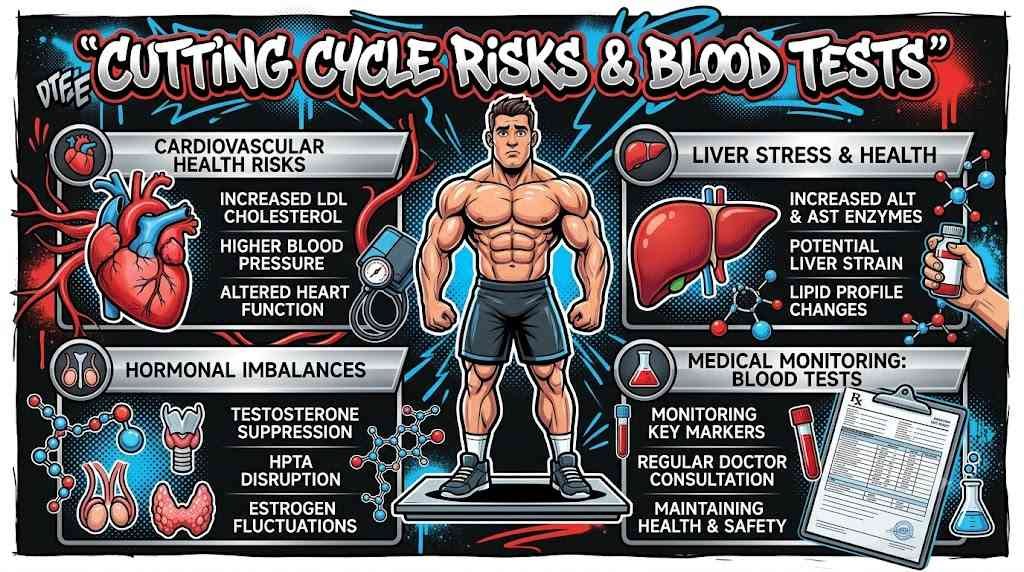
The combinations in these charts raise concerns because several substances can affect the cardiovascular system, liver, endocrine system, or metabolism.
Cardiovascular Risks
Clenbuterol can cause palpitations, tremors, rapid heart rate, and potentially serious heart rhythm problems. Anabolic steroids can adversely affect blood pressure, cholesterol, and cardiovascular risk. Combining multiple substances may make the overall risk harder to predict.
Chest pain, fainting, severe shortness of breath, or a sustained rapid or irregular heartbeat requires urgent medical assessment.
Liver and Cholesterol Concerns
Oral anabolic steroids such as stanozolol and oxandrolone can cause liver-related complications and adverse changes in lipid levels. Using multiple oral agents can compound concerns. Liver tests and lipid measurements are important clinical assessments, but normal results at one point do not guarantee safety throughout a cycle.
Hormonal and Fertility Effects
Anabolic steroids can suppress the body’s own testosterone production and impair fertility. Thyroid hormone taken unnecessarily can disrupt normal thyroid function and contribute to muscle loss, while growth hormone secretagogues can affect hormonal pathways in ways that may not be predictable from online charts.
Peptide-Related Uncertainty
Research-associated peptides can have limited human safety data, uncertain long-term effects, and problems related to product quality or contamination. FDA safety reviews have raised concerns about several compounded peptides, including ipamorelin, GHRP-2, and CJC-1295. FDA safety review.
Blood Sugar and Other Metabolic Effects
Some growth hormone-related compounds can influence glucose regulation. People with diabetes, prediabetes, or other metabolic concerns should not assume that these products are harmless simply because they are called peptides.
Blood Tests and Medical Monitoring
Anyone who has used or is considering using anabolic steroids, thyroid hormones, stimulants, or experimental peptides should discuss the relevant exposures honestly with a qualified healthcare professional.
Depending on the person’s history and symptoms, a clinician may consider:
| Assessment | Why it may matter |
|---|---|
| Blood pressure and pulse | Evaluates cardiovascular strain |
| Complete blood count | Checks hemoglobin and hematocrit |
| Liver function tests | Assesses potential liver injury |
| Lipid profile | Evaluates cholesterol and triglycerides |
| Kidney function and electrolytes | Assesses kidney-related markers and electrolyte balance |
| Thyroid function tests | Helps evaluate thyroid status when thyroid hormones are involved |
| Glucose or HbA1c | Assesses blood sugar regulation |
| Testosterone and related hormones | May be appropriate when hormone suppression or symptoms are suspected |
Not everyone needs every test, and the timing and interpretation should be determined by a clinician. Blood tests are a monitoring tool, not a guarantee that continued use is safe.
Diet and Training During a Cutting Phase
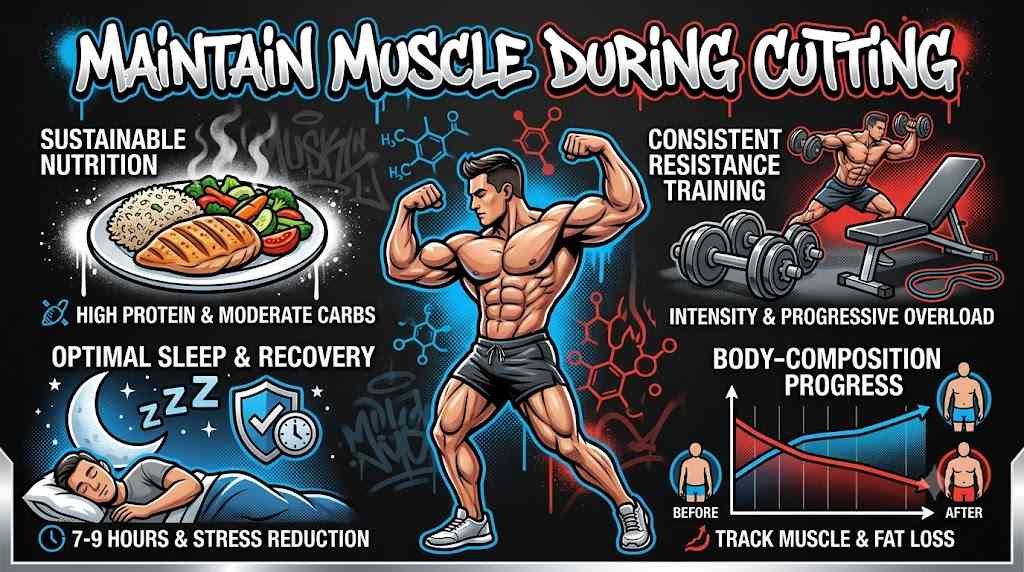
A successful cutting phase does not require a complicated stack of products. The foundation remains a manageable calorie deficit, adequate protein, resistance training, and recovery.
Nutrition
Build meals around protein sources that suit your dietary preferences, such as eggs, dairy, chicken, fish, tofu, or legumes. Include vegetables, fruit, high-fiber carbohydrates, and appropriate sources of dietary fat.
Adjust calories gradually based on progress instead of responding to every short-term scale fluctuation. Extremely low calorie intake can compromise training performance and increase the risk of losing lean mass.
Training
Keep resistance training consistent. Aim to preserve strength on key lifts where possible, but adjust volume and exercise selection when fatigue builds up.
Cardio can help increase energy expenditure, but more is not always better. Excessive cardio combined with a large calorie deficit can interfere with recovery.
Sleep and Recovery
Aim for regular, sufficient sleep and manage training stress. Poor sleep can make hunger, fatigue, and training consistency harder to control.
These fundamentals remain valuable whether a person uses supplements, follows a natural cutting plan, or is recovering from previous performance-enhancing drug use. Gaining Cycle with Peptides: Muscle Growth, Uses and Risks
Frequently Asked Questions About Cutting Cycle With Peptides
What is a cutting cycle with peptides?
It is a bodybuilding term for using peptides during a fat-loss phase, sometimes alongside other performance-enhancing substances. The term does not describe one standardized or medically validated treatment.
Which peptides are commonly discussed for cutting?
Ipamorelin, GHRP-2, CJC W/O DAC, and hexarelin appear in bodybuilding discussions. Evidence that these compounds safely produce meaningful fat loss or preserve muscle in healthy bodybuilders is limited.
Can peptides burn body fat directly?
The label “fat-loss peptide” does not establish effectiveness. A compound’s biological mechanism, evidence from human studies, and safety profile all need to be considered.
Can peptides help retain muscle during a calorie deficit?
It has not been established that the combinations in these charts reliably preserve muscle during cutting. Adequate protein, resistance training, sensible calorie restriction, and recovery have a stronger practical foundation.
Are the four source-listed cycles proven safe?
No. The charts combine substances with different mechanisms and potential adverse effects. Reproducing a chart does not establish that the doses, durations, or combinations are safe.
Is PCT always necessary after a cutting cycle?
Not every situation is the same. Hormonal suppression and recovery depend on the substances used and the individual. A healthcare professional can assess symptoms and laboratory results to determine appropriate care.
Can a maintenance cycle guarantee muscle retention?
No. A maintenance chart cannot guarantee that muscle will be retained or that hormonal function will recover. Training, nutrition, sleep, and appropriate medical care remain important.
Are Cardarine and SR-9009 peptides?
No. Cardarine is a PPAR-delta agonist, while SR-9009 is an experimental compound. They are sometimes sold alongside SARMs or other performance-enhancing products, but that marketing does not make them peptides or establish their safety.
What is the safest way to maintain a lean physique?
Use a sustainable calorie intake, sufficient protein, consistent resistance training, regular sleep, and gradual adjustments to activity. If you have used performance-enhancing drugs, discuss recovery and any symptoms with a qualified healthcare professional.
Final Thoughts on Cutting Cycle With Peptides
A cutting cycle with peptides is often marketed as a way to lose fat while retaining muscle, but the claims made in bodybuilding communities can exceed the available evidence. The four source charts also include anabolic steroids, clenbuterol, thyroid hormone, experimental compounds, and prescription medicines, so they should not be treated as simple peptide plans.
The key lesson is that more compounds do not automatically mean better results. Unapproved or experimental substances can introduce substantial uncertainty, and cycle support or PCT does not remove every risk.
For a more sustainable cut, prioritize nutrition, resistance training, recovery, and appropriate medical care. If you have used any of the substances discussed here, be open with your healthcare professional so that monitoring and treatment decisions can be based on your actual exposure and health status.
Need Help Understanding a Cutting Cycle With Peptides?
Confused about a cutting cycle with peptides, peptide-related side effects, cycle support, PCT, or muscle retention during cutting? Understanding the potential risks and the available evidence is important before making decisions about performance-enhancing substances.
At Gym Pundit, we discuss bodybuilding, nutrition, supplements, peptides, and anabolic-related topics to help readers make more informed decisions. You can contact us if you have questions about the information covered in this article.
Chat with Gym Pundit on WhatsApp: Message Us on WhatsApp
Please remember that online bodybuilding information is not a substitute for medical advice. For concerns involving hormones, prescription medicines, or adverse effects, consult a qualified healthcare professional.