If you have ever wondered why steroids cause acne, the short answer is hormones. Anabolic steroids can increase androgen activity in the body, and androgens can stimulate the skin’s oil-producing glands. More oil, combined with dead skin cells and bacteria, can create the perfect environment for clogged pores and breakouts.
For some lifters, acne might be a few small pimples around the shoulders or chest. For others, it can become much more noticeable across the back, shoulders, arms, and face. This is one of the more common skin problems associated with anabolic-androgenic steroids.
But steroids cause acne for more than one reason. Hormonal changes, genetics, skin type, sweating, training habits and the particular steroid involved can all influence how severe the problem becomes. Natural Muscle vs Steroid Muscle: Key Differences
So why does this happen, where does steroid acne usually appear, and what can you do about it?
Let’s break it down.
Why Do Steroids Cause Acne?
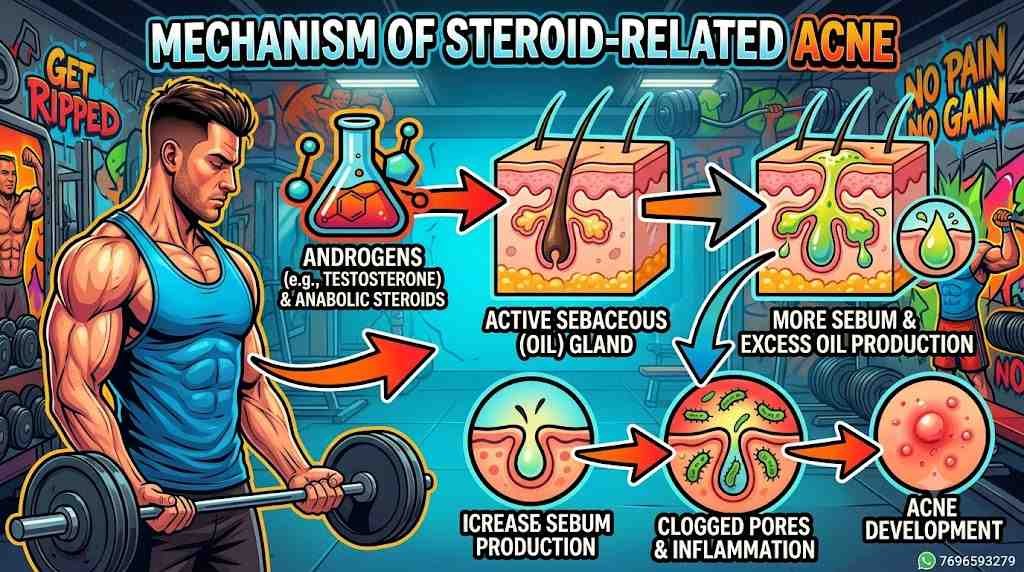
The main connection between anabolic steroids and acne is androgen activity.
Androgens are hormones that influence several processes in the body, including muscle development and the activity of the sebaceous glands in the skin. When androgen activity increases, sebaceous glands can become more active and produce more sebum, which is the oily substance that helps lubricate your skin.
The problem starts when there is too much sebum.
Excess oil can mix with dead skin cells inside hair follicles and contribute to clogged pores. Once a follicle becomes blocked, inflammation and bacterial activity can contribute to acne lesions.
This explains why steroids cause acne in many users even if they never struggled with serious acne before.
The skin basically responds to the hormonal environment it is exposed to.
How Steroids Cause Acne Through Hormonal Changes
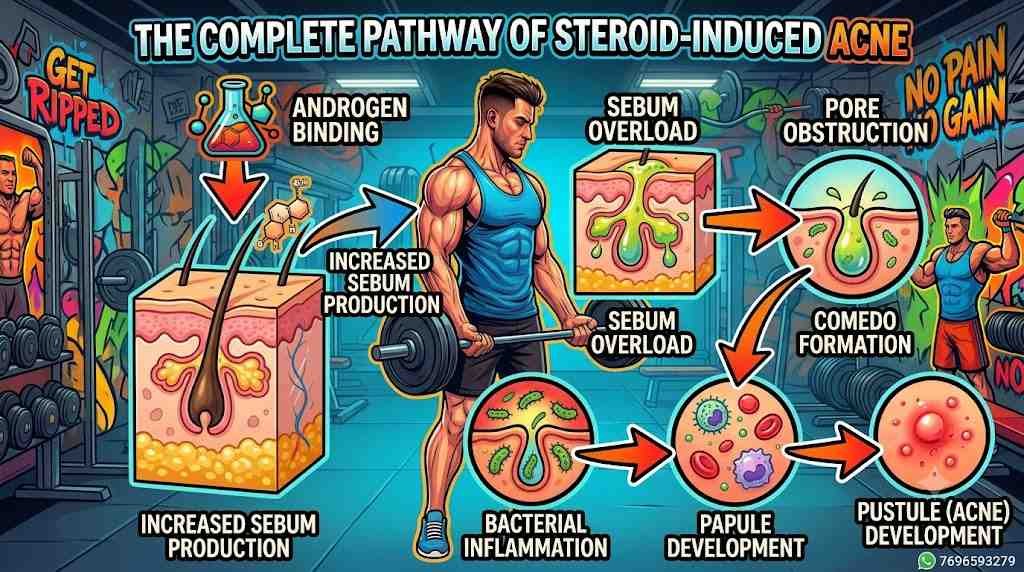
Anabolic-androgenic steroids are synthetic compounds related to testosterone and other androgenic hormones.
Their effects aren’t limited to muscle tissue. Androgen receptors are found in various tissues, including the skin.
When androgen signaling increases, the sebaceous glands can become more active. This can increase oil production and make the skin more prone to clogged follicles.
This is an important reason steroids cause acne rather than acne simply being a result of poor hygiene.
You can shower regularly, wash your face and still develop acne because the underlying trigger can be hormonal.
That doesn’t mean hygiene is irrelevant. Sweat, oil, friction and bacteria can all influence breakouts. But they are not necessarily the original reason the acne started.
Androgens and Sebum Production
Sebaceous glands are tiny glands connected to hair follicles. They produce sebum, which protects and lubricates the skin.
Androgen hormones can stimulate these glands.
When androgen activity rises, sebum production may increase. If your skin is naturally oily or you are genetically prone to acne, the effect can be even more noticeable.
This is one of the main biological reasons steroids cause acne.
What Happens When Pores Become Clogged?
A clogged follicle can develop into different types of acne lesions.
You may see:
- Blackheads
- Whiteheads
- Small red bumps
- Pus-filled pimples
- Deep painful nodules
- Inflamed acne across the back and shoulders
Not every person develops the same type of acne.
Your genetics, skin characteristics and hormonal response all matter.
Why Steroids Cause Acne That Can Be More Severe
One reason steroids cause acne can be particularly frustrating for bodybuilders is that hormonal acne can appear suddenly and in areas where people don’t normally get many breakouts.
Someone might have relatively clear facial skin but suddenly develop large amounts of acne on the back, shoulders or chest.
This is sometimes called truncal acne, meaning acne affecting areas such as the chest and back.
The skin on these areas contains many sebaceous glands, and sweat and friction from training can add another layer to the problem.
In some people, the lesions can also be deeper and more inflamed than ordinary occasional pimples.
Where Do Steroids Cause Acne?
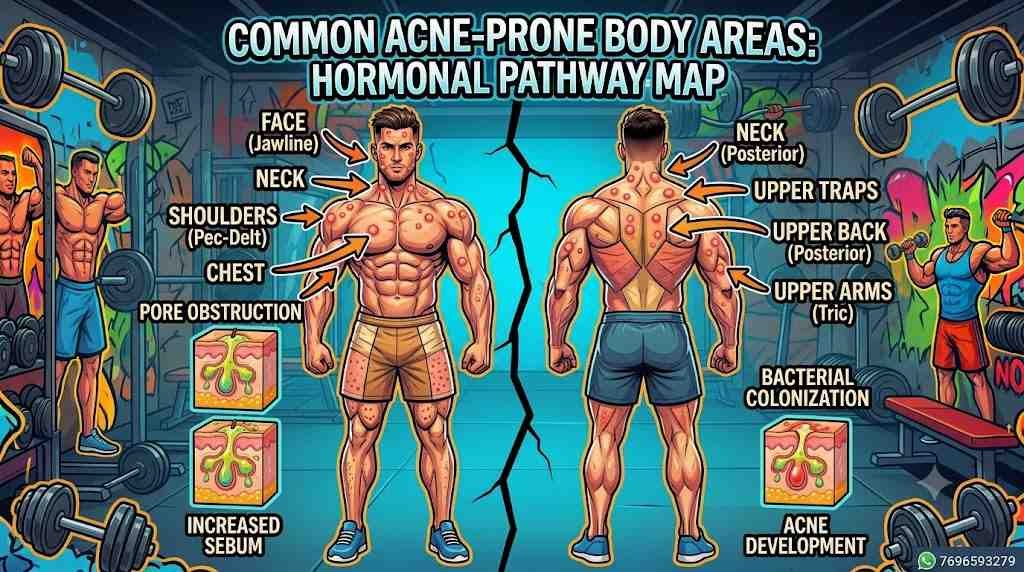
When steroids cause acne, the breakout isn’t necessarily limited to the face.
Common areas include:
- Upper back
- Shoulders
- Chest
- Upper arms
- Neck
- Face
Back acne can be especially annoying because it can be difficult to see and treat properly.
Heavy training can also mean more sweating, tighter clothing and repeated friction against benches, backpacks and gym equipment.
That combination can make an existing breakout more noticeable.
Why Do Steroids Cause Acne on the Back?
The back contains a large number of sebaceous glands.
During hard training, you also sweat heavily. If sweat remains on the skin for a long time, especially underneath tight clothing, it can contribute to an environment where clogged pores and irritation become more likely.
This doesn’t mean sweat itself automatically causes acne.
Rather, sweat can combine with oil, friction, bacteria and occlusion to make already acne-prone skin more irritated.
That is why steroids cause acne on the back so frequently in bodybuilding circles.
Can Testosterone Cause Acne When Steroid Hormones Increase?
Yes, increased androgen activity associated with testosterone can contribute to acne.
Testosterone can be converted into dihydrotestosterone (DHT) through an enzyme called 5-alpha-reductase. DHT is a potent androgen and has important effects on tissues including the skin.
However, acne isn’t simply a matter of having a specific testosterone number.
Two people can have similar hormone levels and completely different skin responses.
Genetics, androgen sensitivity, sebaceous gland activity and other factors all influence the result.
So when people ask why steroids cause acne, the answer isn’t simply “because testosterone is high.” The bigger picture is androgen signaling and how an individual’s skin responds to it.
Why Genetics Matter
Some people are naturally more acne-prone than others.
If your parents or close family members struggled with significant acne, you may have a greater tendency to develop it yourself.
This becomes important when androgen activity increases.
A person with naturally oily skin and high androgen sensitivity may experience much more severe acne than someone whose skin is naturally less reactive.
This is one reason steroids cause acne in some people much more severely than others.
What Makes Steroids Cause Acne More Easily?
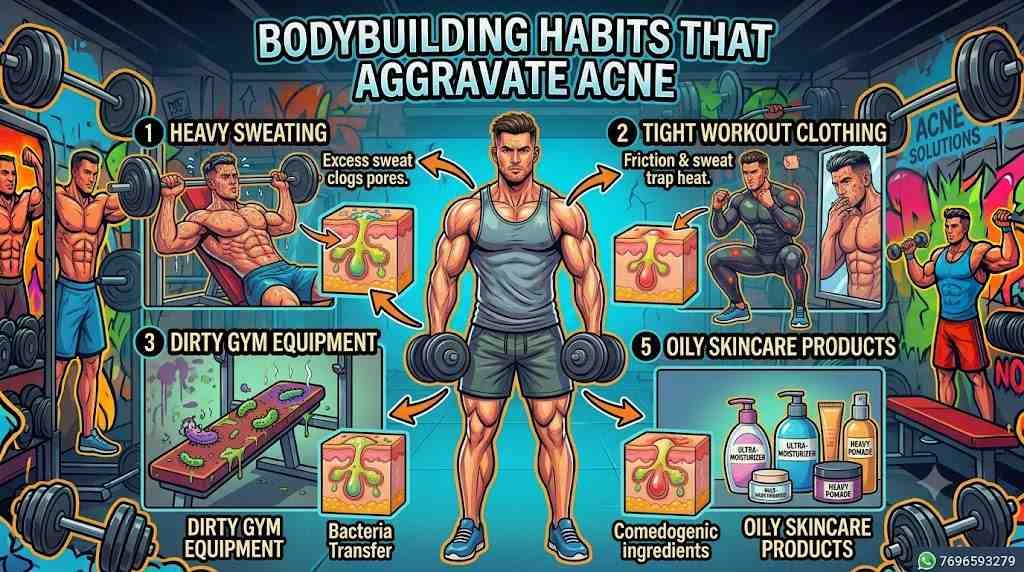
Hormonal changes are a major factor, but several everyday habits can make breakouts worse.
Heavy Sweating
Bodybuilding involves plenty of sweating.
If you finish a hard workout and remain in sweaty clothing for hours, your skin stays exposed to moisture, oil and friction.
Changing into clean clothes and showering after training can help reduce irritation. Best Foods for Muscle Growth: Diet Plans Added
Tight Clothing
Tight shirts can rub against the shoulders, chest and back.
This friction can aggravate already irritated follicles.
Loose, breathable workout clothing may be more comfortable when your skin is breaking out.
Dirty Gym Equipment
Gym benches and machines come into contact with many people’s skin.
You don’t need to become obsessed with disinfecting everything, but wiping down equipment before and after use is a sensible hygiene habit.
Picking Pimples
This is a big one.
When you squeeze or repeatedly touch acne, you can increase inflammation and potentially increase the risk of marks and scarring.
If steroids cause acne and you are already dealing with inflamed lesions, constantly picking them usually isn’t going to help.
Oily Skin Products
Heavy creams, oils or hair products that transfer onto your face, shoulders or back may contribute to clogged pores in acne-prone people.
Look for products labeled non-comedogenic when possible.
What Does Acne Caused by Steroids Look Like?
There isn’t one specific appearance that applies to everyone.
Some people develop small red pimples and whiteheads.
Others develop:
- Large inflamed pimples
- Multiple lesions across the shoulders
- Deep painful lumps
- Numerous back pimples
- Acne around the chest and upper arms
If steroids cause acne in someone who is particularly sensitive to androgen changes, the breakout can sometimes become extensive.
Severe, painful or deep acne deserves medical attention because it can leave permanent scars.
Can Steroid Acne Leave Scars?
Yes.
Acne can leave behind dark or red marks after the inflammation disappears. More severe acne can also cause permanent changes in skin texture, including depressed scars.
The risk generally increases with more severe inflammatory acne and repeated picking or squeezing.
This is why treating serious acne early matters.
If you are developing painful deep lesions across your back, shoulders or face, don’t simply assume it will disappear on its own.
How to Manage Acne When Steroids Cause Acne
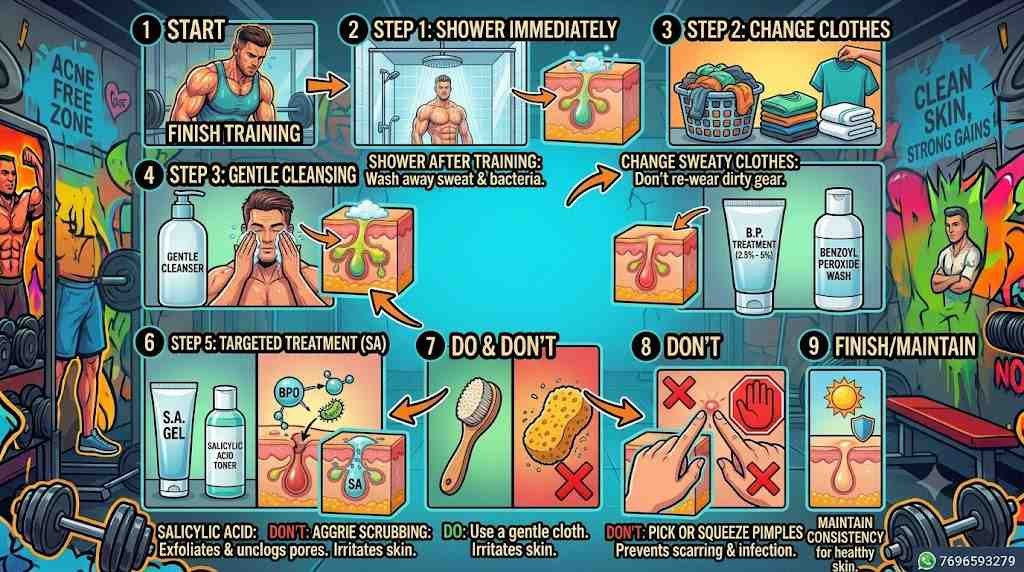
If steroids cause acne, skincare alone may not completely remove the underlying trigger.
However, good skincare can still help control the skin environment.
Shower After Training
Try not to spend hours sitting around in sweaty gym clothes.
A shower after training can remove sweat, oil and other substances from the skin.
Use a gentle cleanser rather than aggressively scrubbing the affected areas.
Don’t Scrub Aggressively
More scrubbing does not necessarily mean cleaner skin.
Harsh scrubbing can irritate the skin and potentially make inflammation worse.
Use gentle movements and avoid abrasive brushes on active acne.
Consider Benzoyl Peroxide
Benzoyl peroxide is a commonly used topical acne treatment.
It can reduce acne-causing bacteria and inflammation and is available in several over-the-counter formulations depending on the country.
It can also bleach fabrics, so be careful with towels and clothing.
Consider Salicylic Acid
Salicylic acid is another commonly used acne ingredient.
It helps exfoliate inside pores and can be useful for people dealing with clogged pores and mild acne.
Some people use body washes containing salicylic acid for areas such as the back and chest.
Don’t Pick Your Skin
This deserves repeating.
If steroids cause acne, it can be tempting to squeeze every new breakout because you’re frustrated with how quickly new pimples appear.
Try not to.
Picking can increase inflammation and may increase the chance of scars and post-inflammatory marks.
Home Remedies When Steroids Cause Acne
If steroids cause acne, you may want to start with simple home-care habits before reaching for complicated skincare routines. These methods can help keep the skin clean, reduce irritation and prevent some breakouts from becoming worse.
Keep in mind that home remedies cannot completely counteract hormone-related acne. Think of them as supportive skin-care habits rather than a cure.
Shower After Every Workout
One of the easiest things you can do is shower after training.
Sweat, oil and friction from workout clothing can irritate acne-prone skin. Don’t sit around for hours in a sweaty T-shirt after finishing your workout.
Use lukewarm water and a gentle cleanser rather than aggressively scrubbing your back, shoulders or chest. Protein for Muscle Gain: How Much Do You Really Need?
Change Out of Sweaty Clothes
If steroids cause acne on your back, shoulders or chest, staying in sweaty gym clothes for a long time may make irritation worse.
Change into clean, dry clothes after training whenever possible.
Choose breathable clothing that doesn’t constantly rub against areas affected by acne.
Keep Your Pillowcases and Towels Clean
Your face and body come into regular contact with towels, pillowcases and bedsheets.
Wash them regularly, particularly if your skin is producing a lot of oil or you are sweating heavily during training.
This isn’t a cure for hormonal acne, but maintaining clean fabrics is a simple habit that can reduce unnecessary buildup of sweat and oil.
Don’t Pick or Squeeze Pimples
This is one of the most important home-care rules.
When steroids cause acne, new pimples can appear quickly, which may make you want to squeeze them.
Try not to.
Picking can increase inflammation and may increase the risk of dark marks and permanent acne scars.
Use a Gentle Cleanser
You don’t need an aggressive soap or harsh scrub to clean acne-prone skin.
A gentle cleanser can remove excess oil and sweat without unnecessarily irritating the skin.
Avoid repeatedly washing the same area throughout the day because excessive cleansing can leave the skin irritated and dry.
Try a Cool Compress for Irritation
If an individual pimple feels swollen or irritated, a clean cool compress can temporarily soothe the area.
Don’t place ice directly against the skin. Wrap it in a clean cloth and use it briefly.
This can help with temporary discomfort, but it does not treat the hormonal cause of acne.
Avoid Random DIY Acne Mixtures
You may find internet advice recommending toothpaste, lemon juice, baking soda, harsh alcohol or other household ingredients for acne.
Skip these.
They can irritate or damage the skin and potentially make the breakout worse.
If steroids cause acne, a simple and gentle skincare routine is generally more sensible than experimenting with harsh DIY treatments.
Keep Your Gym Equipment Clean
Wipe down benches and equipment before and after use, particularly when your skin comes into direct contact with them.
This is especially useful if you are dealing with acne on your shoulders, back or chest.
Give Your Skin Time
Home care won’t make acne disappear overnight.
If steroids cause acne, the underlying hormonal environment can continue stimulating oil production even when your skincare routine is good.
If your acne is deep, painful, rapidly spreading or leaving scars, don’t rely only on home remedies. A dermatologist can recommend treatments based on the severity and type of acne.
When Should You See a Dermatologist?
If your acne is mild, basic skincare may be enough to improve it.
But you should consider professional medical advice if you have:
- Deep or painful acne
- Rapidly worsening breakouts
- Extensive back or chest acne
- Acne that is leaving scars
- Large cyst-like lesions
- Significant skin inflammation
- Acne that isn’t improving with basic treatment
A dermatologist can determine what type of acne you have and recommend appropriate treatment.
This becomes particularly important when steroids cause acne that is severe or persistent because the hormonal trigger may continue to promote new breakouts.
Does Stopping Steroids Get Rid of Acne?
The answer isn’t exactly the same for everyone.
If the acne is strongly related to increased androgen activity, reducing or removing that hormonal trigger may eventually reduce oil production and new breakouts.
However, acne doesn’t necessarily disappear overnight.
Existing inflammation can take time to settle, and scars or pigmentation can remain much longer.
Hormonal changes after stopping anabolic steroids can also be complicated, so anyone experiencing significant hormonal or physical problems should speak with a qualified healthcare professional.
Steroids, Acne and Hormonal Changes
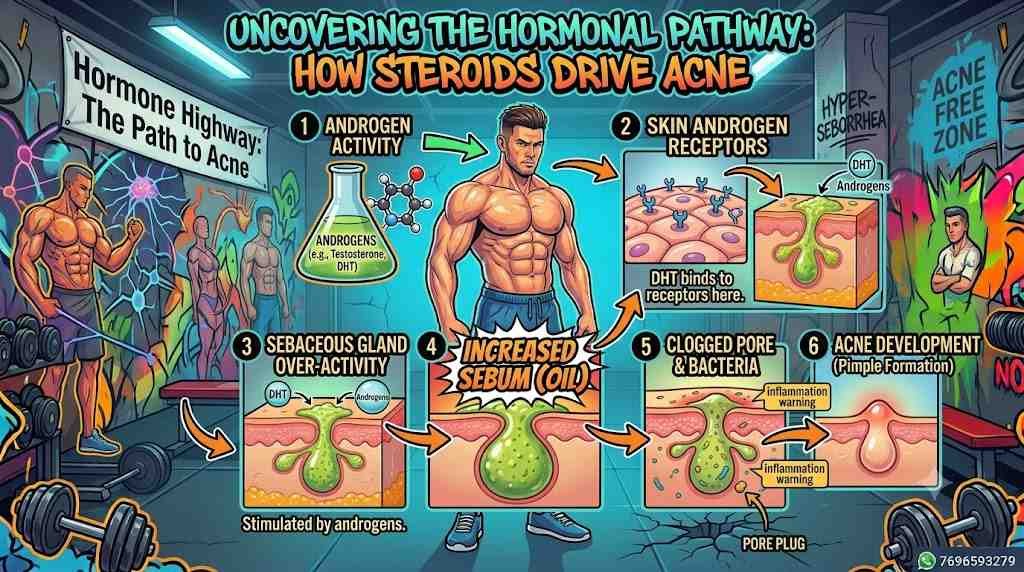
One thing that often gets overlooked is that acne isn’t only about the amount of a hormone in your bloodstream.
The skin has its own androgen receptors and enzymes involved in local hormone metabolism.
That means the skin can respond strongly to hormonal changes even when two people have very different experiences.
This is another reason steroids cause acne differently from person to person.
One lifter might barely notice a few pimples while another develops widespread inflammatory acne.
There is no guaranteed way to predict exactly how someone’s skin will react. Testosterone vs Anavar: Which Is Better for Muscle Growth?
Steroids Cause Acne vs Regular Acne
The appearance can be similar, but the underlying trigger can be different.
Regular acne can be influenced by genetics, hormones, oil production, clogged pores, bacteria, medications, stress and other factors.
When steroids cause acne, the androgenic environment can become an additional major trigger.
This doesn’t mean every pimple that appears while using anabolic steroids is automatically caused by steroids.
A proper assessment is needed to determine the actual cause, particularly if the breakout is unusual or severe.
Can Diet Cause Steroid Acne?
Diet is often blamed for every bodybuilding skin problem, but the relationship isn’t that simple.
Some research has found associations between acne and dietary patterns involving high-glycemic foods and, in some populations, certain dairy products.
However, diet isn’t usually the main explanation for sudden, significant acne associated with major hormonal changes.
If steroids cause acne, simply removing one food isn’t necessarily going to eliminate the underlying androgen-related trigger.
A balanced diet is still important for overall health and bodybuilding performance.
Does Poor Hygiene Cause Steroid Acne?
Poor hygiene can make skin problems worse, but it isn’t accurate to say that someone develops steroid-related acne simply because they aren’t washing enough.
When steroids cause acne, the underlying hormonal changes can increase oil production regardless of how often someone showers.
That said, basic hygiene still matters.
Shower after training, change sweaty clothes, clean gym equipment and avoid constantly touching your face or back.
Think of hygiene as part of acne management rather than the complete solution.
How Long Does Acne Caused by Steroids Last?
There is no universal timeline.
Some breakouts improve relatively quickly when the hormonal trigger changes and appropriate acne treatment is started.
Others can persist for months, particularly when the underlying hormonal environment remains altered.
If steroids cause acne, continuing exposure to the trigger may mean that new lesions continue appearing even while older ones are healing.
This is why severe or persistent acne shouldn’t simply be ignored.
Can Steroid Acne Be Prevented?
There is no guaranteed prevention method.
However, you can reduce some contributing factors by:
- Showering after workouts
- Wearing clean training clothes
- Keeping gym equipment clean
- Avoiding excessive skin friction
- Using suitable acne products
- Not picking pimples
- Seeking medical treatment early if acne becomes severe
If steroids cause acne, these steps may help control the skin but may not completely prevent breakouts because the hormonal component can remain.
Final Thoughts
So, why do steroids cause acne?
The biggest reason is their effect on androgen activity and the sebaceous glands.
Increased androgen signaling can increase sebum production, and excess oil can contribute to clogged follicles and inflammatory acne. Genetics, skin type, sweating, friction and personal sensitivity can determine how severe the problem becomes.
If steroids cause acne, don’t assume that simply washing your face more often will solve everything. Good hygiene and appropriate skincare can help, but significant hormonal acne may require professional treatment.
And if you’re developing deep, painful or widespread acne, especially acne that is leaving scars, getting medical advice early is much better than waiting for the problem to become severe.
Frequently Asked Questions
Why do steroids cause acne on the back?
The back has many sebaceous glands and can produce significant amounts of oil. Increased androgen activity can stimulate these glands, while sweat, friction and tight clothing can further aggravate the skin.
Can steroids cause acne even if I never had acne before?
Yes. A person who previously had clear skin can develop acne after significant hormonal changes. Individual androgen sensitivity and genetics play an important role.
Does testosterone cause more acne?
Higher androgen activity can stimulate sebaceous glands and increase oil production, which can contribute to acne. However, individual responses vary considerably.
Is steroid acne permanent?
The acne itself isn’t necessarily permanent, but severe acne can leave long-lasting pigmentation or permanent scars. Early treatment can help reduce the risk of complications.
Can showering prevent steroid acne?
Showering after training can remove sweat and oil and may help reduce irritation, but it cannot completely prevent hormone-related acne.
Should I pop steroid pimples?
No. Squeezing or picking inflamed acne can increase inflammation and raise the risk of scarring and post-inflammatory marks.
Can steroid acne be treated?
Yes. Treatment depends on the severity and type of acne. Over-the-counter ingredients such as benzoyl peroxide or salicylic acid may help mild cases, while more severe acne may require treatment from a dermatologist.
Does acne mean steroids are damaging my body?
Acne alone doesn’t tell you the full picture of how anabolic steroids are affecting your health. Steroids can have multiple effects beyond the skin, so significant side effects should be discussed with a healthcare professional.
Why do steroids cause acne more severely in some people?
Genetics, androgen sensitivity, baseline oil production, skin type, the specific hormonal environment and lifestyle factors can all influence the severity of acne. Dianabol vs Anavar: What’s the Difference?
Can steroid acne leave scars?
Yes. Deep inflammatory acne has a greater potential to cause permanent scarring, especially when lesions are picked or squeezed.
Need Help With Your Bodybuilding Goals?
Confused about acne, bodybuilding, diet, training, or supplements? You can contact us directly on WhatsApp for more information and guidance.
WhatsApp: 7696593279
Feel free to reach out with your questions and we’ll help you understand your options and make more informed decisions about your bodybuilding journey.