If you want to build muscle, choosing the right foods for muscle growth is just as important as what you do inside the gym. You can train hard, increase your weights, and push yourself every week, but if your diet does not provide enough protein, calories, carbohydrates, healthy fats, vitamins, and minerals, muscle growth can become much harder.
The good news is that you do not need an extremely complicated bodybuilding diet. Most people can make excellent progress by building their meals around quality protein, useful carbohydrates, healthy fats, fruits, vegetables, and enough total calories.
Whether your goal is to gain lean muscle, get stronger, or simply build a better physique, your daily food choices matter. Let’s look at the best foods for muscle growth and how to fit them into a practical diet. How to Lose Fat Without Losing Muscle
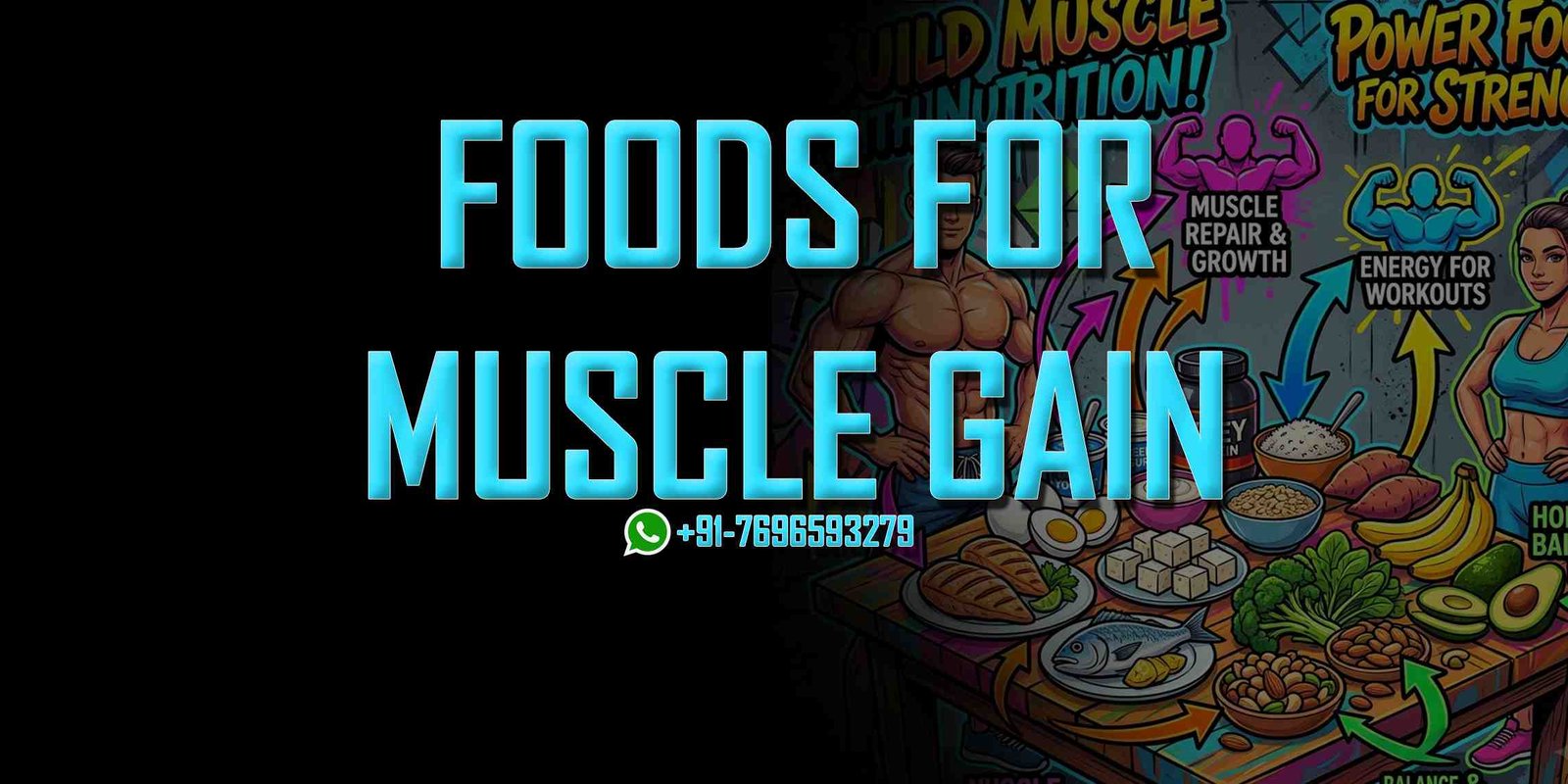
What Are the Best Foods for Muscle Growth?
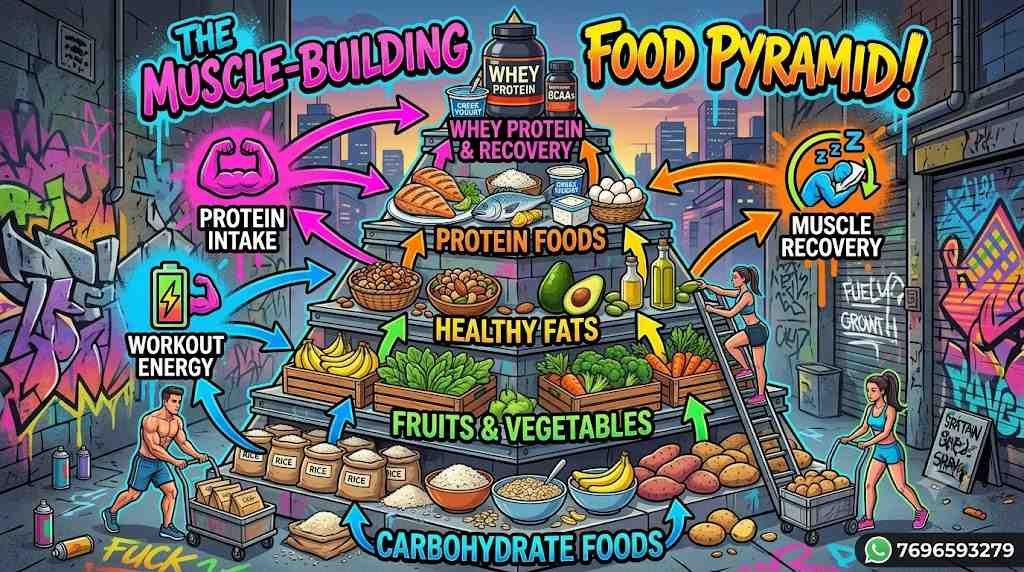
The best foods for muscle growth are foods that help you meet your daily protein and calorie requirements while providing the nutrients your body needs to recover from training.
Protein gets most of the attention because it provides amino acids used to repair and build muscle tissue. But protein is not the whole story.
Carbohydrates can provide energy for hard workouts and help replenish muscle glycogen. Dietary fats support normal hormone production and provide another source of energy. Fruits and vegetables provide vitamins, minerals, fiber, and other compounds that support overall health.
A simple muscle-building diet can therefore include:
- Eggs
- Chicken
- Lean meat
- Fish
- Greek yogurt
- Milk and other dairy products
- Whey protein
- Rice
- Oats
- Potatoes
- Whole grains
- Bananas and other fruits
- Nuts and nut butters
- Avocado
- Olive oil
- Vegetables
- Beans and lentils
You don’t need to eat every food on this list. The goal is to create a diet you can actually follow consistently.
Best Protein Foods for Muscle Growth
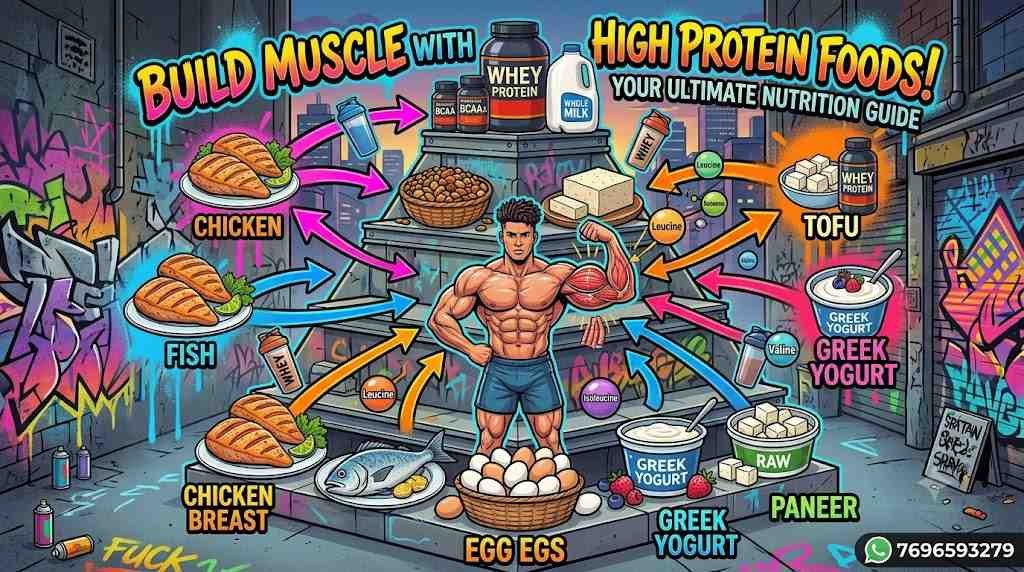
Protein is the foundation of a muscle-building diet. Resistance training stimulates muscle protein synthesis, while dietary protein supplies the amino acids needed for the process.
Instead of relying on one protein source, try to get protein from several foods throughout the day.
Eggs: One of the Best Foods for Muscle Growth
Eggs are one of the easiest foods to include in a muscle-building diet.
A whole egg provides high-quality protein along with fats, vitamins, minerals, and other nutrients. Eggs are also cheap, easy to cook, and extremely versatile.
You can eat them at breakfast, add them to a meal, or use them as a convenient protein source when you’re short on time.
If you’re trying to increase calories, whole eggs can fit nicely into your diet. If you’re trying to keep calories under control while maintaining protein intake, egg whites can also be useful.
Chicken as a Muscle-Growth Food
Chicken is a bodybuilding classic for a reason.
Chicken breast is high in protein and relatively low in fat, making it useful when you want plenty of protein without adding a huge number of calories. Other cuts can also be included depending on your calorie requirements.
You don’t have to eat plain boiled chicken every day either. Grilled chicken, roasted chicken, chicken wraps, rice bowls, and homemade chicken curries can all work.
The important part is the overall meal rather than making your diet unnecessarily boring.
Fish and Seafood for Muscle Growth
Fish provides protein along with different amounts of dietary fat depending on the type.
Fatty fish such as salmon can provide omega-3 fatty acids, while lean fish can provide plenty of protein with fewer calories.
Other seafood can also contribute to your daily protein intake.
Including fish a few times per week can give your diet some variety instead of relying entirely on chicken, eggs, and dairy.
Greek Yogurt and Dairy Foods for Muscle Growth
Greek yogurt can be an excellent snack or breakfast option for people trying to increase their protein intake.
Milk, cottage cheese, Greek yogurt, and other dairy foods can contribute protein while also providing nutrients such as calcium.
Greek yogurt can be combined with oats, berries, bananas, nuts, or honey depending on your calorie and carbohydrate requirements.
For people who struggle to eat enough food during a muscle-building phase, dairy products can also make it easier to increase total calories.
Whey Protein for Muscle Growth
Whey protein is not a magic muscle-building supplement. It is simply a convenient way to increase your protein intake.
If you already get enough protein from eggs, chicken, fish, dairy, beans, and other foods, you don’t necessarily need whey.
But if you’re busy, have a low appetite, or find it difficult to reach your daily protein target through food alone, a whey shake can be convenient.
You can mix whey with water or milk and combine it with a normal meal or snack.
The important thing is your total daily protein intake rather than believing that one particular protein powder will automatically produce better results.
Best Carb Foods for Muscle Growth
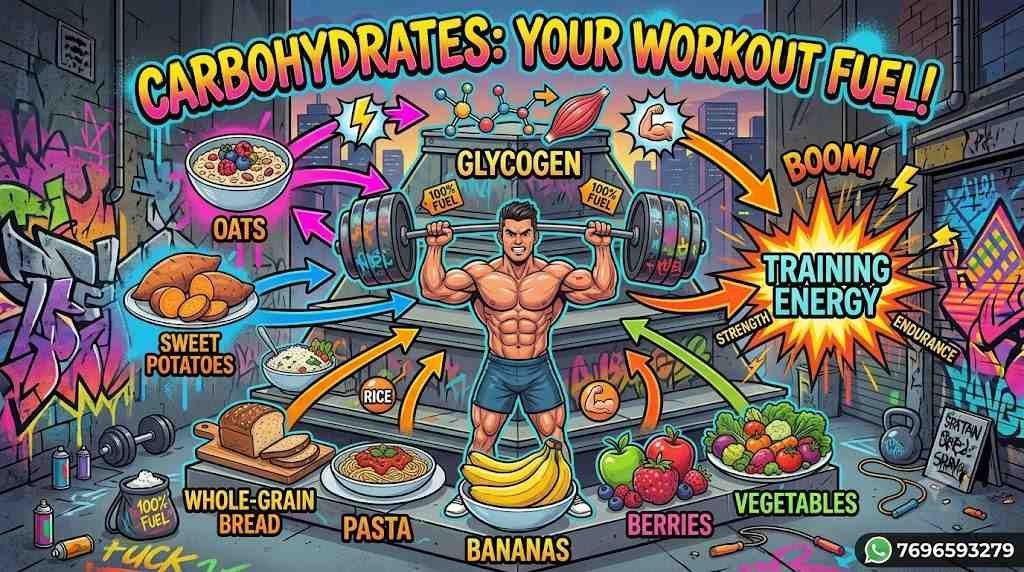
Protein gets most of the attention in bodybuilding, but carbohydrates are also useful for people who train hard.
Carbohydrates are broken down into glucose and stored partly as glycogen in muscles and the liver. During demanding exercise, muscle glycogen can contribute to energy production.
Good carbohydrate choices can therefore help you fuel workouts and make it easier to consume enough calories when trying to gain weight.
Rice and Other Foods for Muscle Growth
Rice is one of the most popular bodybuilding carbohydrate sources because it is inexpensive, easy to prepare, and easy to combine with protein.
White rice can work perfectly well around training, while brown rice and other whole grains can provide more fiber.
You can combine rice with chicken, eggs, fish, lean meat, vegetables, or beans to create a simple muscle-building meal.
Other useful grain choices include:
- Whole wheat bread
- Quinoa
- Whole-grain pasta
- Barley
- Whole-grain cereals
There is no requirement to eat only one type of carbohydrate.
Oats for Muscle Growth
Oats are another useful food for muscle growth because they provide carbohydrates, fiber, and some protein.
A bowl of oats can be turned into a high-calorie muscle-building meal by adding milk, Greek yogurt, banana, peanut butter, nuts, or whey protein.
If you have a low appetite in the morning, oats can also be made into a smoothie with milk, banana, whey, and nut butter.
Potatoes and Sweet Potatoes
Potatoes and sweet potatoes can both fit into a muscle-building diet.
They provide carbohydrates and are naturally filling. Sweet potatoes also provide nutrients such as beta-carotene.
You can bake, roast, boil, or air-fry them depending on your preferences.
The bigger issue is usually what gets added to the potatoes. A simple baked potato is very different from one loaded with huge amounts of butter, cheese, and high-calorie sauces.
Fruits for Muscle Growth
Fruit is sometimes ignored by people who are focused only on protein, but it can be a useful part of a muscle-building diet.
Bananas are particularly convenient before or after training because they are easy to carry and provide carbohydrates.
Other options include:
- Apples
- Oranges
- Berries
- Mangoes
- Grapes
- Pineapple
- Kiwi
Fruit also provides vitamins, minerals, water, and fiber.
You don’t need to avoid fruit because it contains natural sugar. For most people, whole fruit can easily fit into a balanced muscle-building diet. How to Gain Muscle Without Gaining Too Much Fat
Best Healthy Fats for Muscle Growth
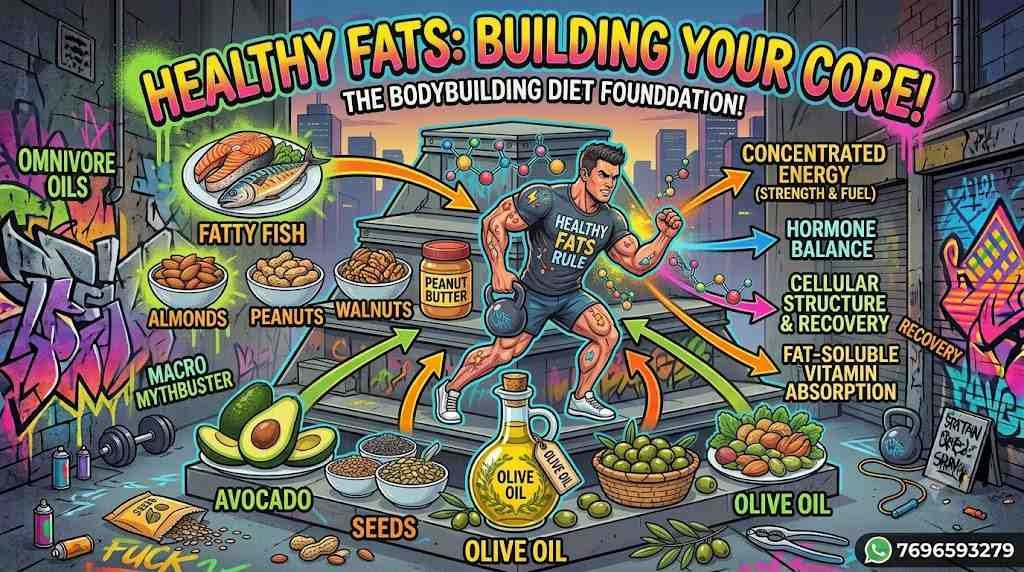
Dietary fat is another important part of a balanced diet.
Fat provides energy and helps the body absorb certain fat-soluble vitamins. Including appropriate amounts of healthy fat can also make meals more satisfying and easier to consume.
The key is moderation because fat is calorie-dense.
Nuts and Nut Butters for Muscle Growth
Almonds, peanuts, walnuts, cashews, and other nuts can be useful when trying to increase calories.
Nut butter is especially convenient because you can add it to oats, toast, smoothies, or yogurt.
For example, oats + banana + peanut butter + milk + whey can make a very calorie-dense meal without requiring a huge amount of food volume.
Just remember that nuts and nut butters are calorie-dense, so portion size matters if you are trying to control body fat.
Avocado and Healthy Oils
Avocado provides dietary fat along with fiber and several micronutrients.
Olive oil can also be used to increase the calorie content of meals without adding a huge amount of food volume.
Other sources of unsaturated fats include seeds and some types of fish.
Healthy fats are useful, but you don’t need enormous amounts. Your total diet still needs to be balanced with enough protein and carbohydrates.
What to Eat Before a Workout
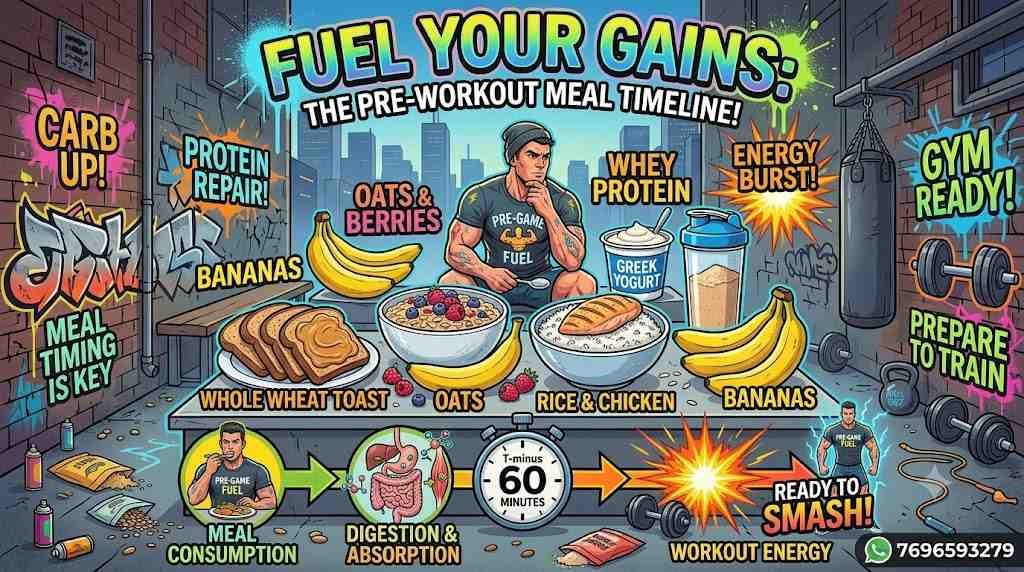
A good pre-workout meal should give you energy without leaving you feeling extremely heavy.
A combination of carbohydrates and protein can work well.
Some simple options include:
- Banana + whey protein
- Oats + milk + whey
- Rice + chicken
- Greek yogurt + fruit
- Toast + eggs
- Potato + lean chicken
How much you eat depends on how long before training you are eating.
A large meal immediately before a hard workout may feel uncomfortable, while a smaller snack can be easier to digest.
There is no single perfect pre-workout meal for everyone. Experiment with meal size and timing and find what allows you to train comfortably.
Best Foods to Eat After a Workout
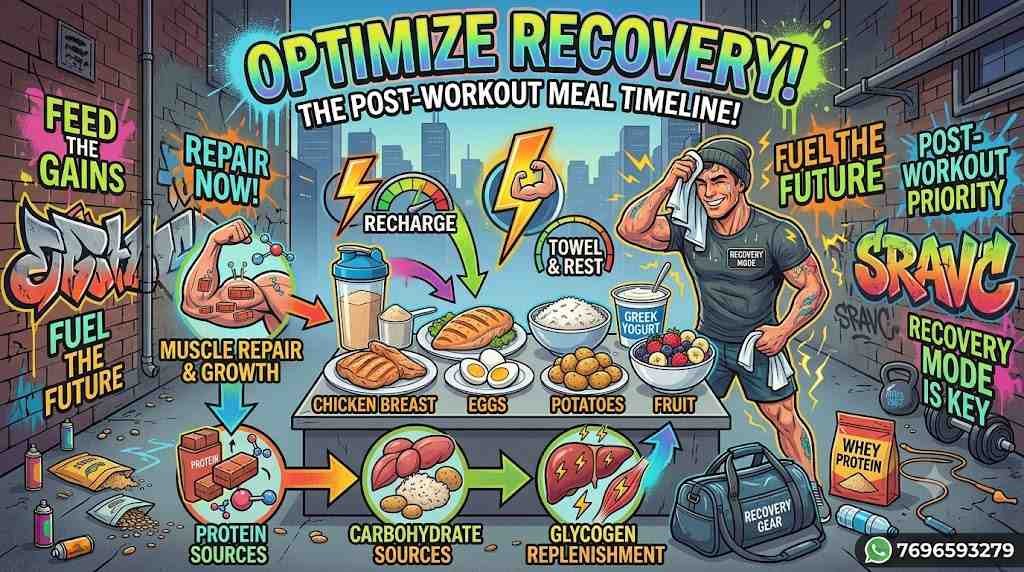
After training, your priority should be your overall daily nutrition rather than obsessing over a tiny post-workout window.
A meal containing protein and carbohydrates is a simple approach.
Examples include:
Chicken + rice + vegetables
Eggs + potatoes + fruit
Greek yogurt + oats + banana
Whey protein + oats + fruit
Fish + rice + vegetables
The goal is to continue supplying your body with protein and energy throughout the day.
If you train in the morning, your breakfast can be your post-workout meal. If you train in the evening, dinner can serve the same purpose.
How Much Protein Do You Need for Muscle Growth?
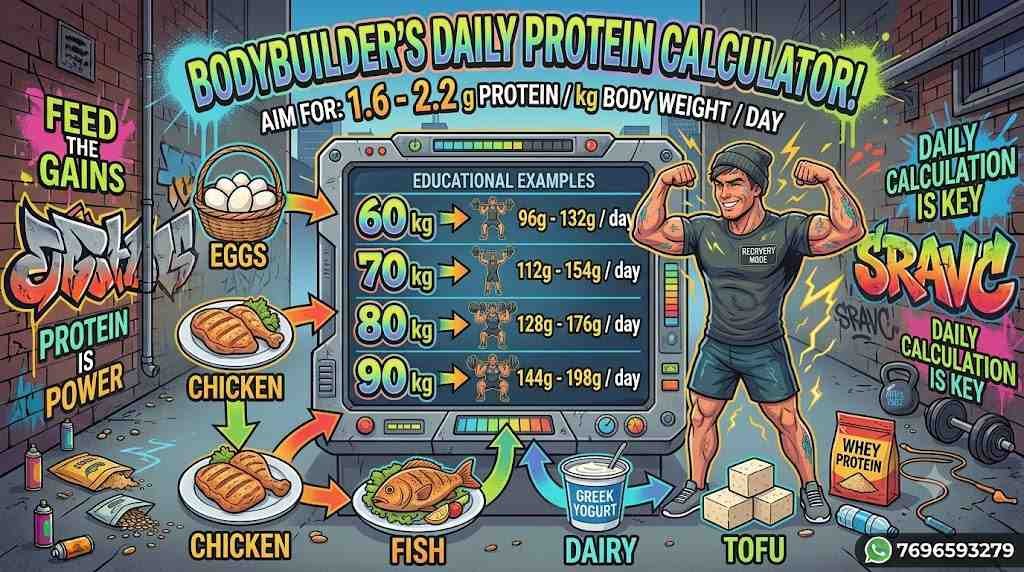
Your total daily protein intake matters much more than finding a single “perfect” protein food.
For people who regularly perform resistance training, a commonly used evidence-based range is around 1.6–2.2 grams of protein per kilogram of body weight per day.
For example, someone weighing 70 kg would be looking at roughly:
70 × 1.6 = 112 g
to
70 × 2.2 = 154 g
of protein per day.
You don’t need to hit the exact same number every day. Think of it as a practical range.
It can also be useful to spread protein across several meals rather than trying to consume almost all of it in one sitting.
For example, someone targeting around 140 g of protein could distribute it across four meals and snacks instead of eating an enormous amount at dinner.
Your exact needs can vary based on body size, training volume, total calories, age, and your overall diet.
How to Build a Muscle-Growth Meal Plan
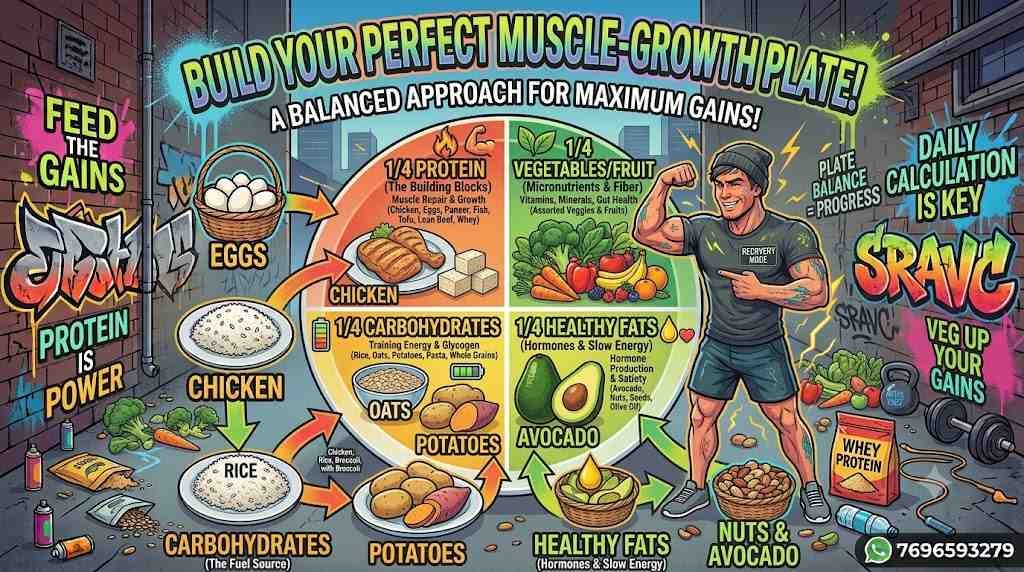
A simple meal-building formula can make your diet much easier.
For most main meals, start with:
1. A protein source
Chicken, eggs, fish, lean meat, Greek yogurt, cottage cheese, whey, beans, or lentils.
2. A carbohydrate source
Rice, oats, potatoes, bread, pasta, fruit, or other grains.
3. Vegetables or fruit
Choose whatever you enjoy and can consistently eat.
4. A healthy fat source
Nuts, seeds, avocado, olive oil, or other suitable foods.
You can then adjust portion sizes according to your calorie requirements.
If your body weight isn’t increasing and you’re trying to gain muscle, you may need to gradually increase your food intake.
If you’re gaining weight much faster than intended and body fat is increasing rapidly, reducing portions slightly may be appropriate.
Your training performance, body weight trend, recovery, and physique changes can all provide useful feedback. Bulking vs Cutting: Which Should You Do First?
150–170 g Protein Vegetarian Diet Plan for Muscle Growth
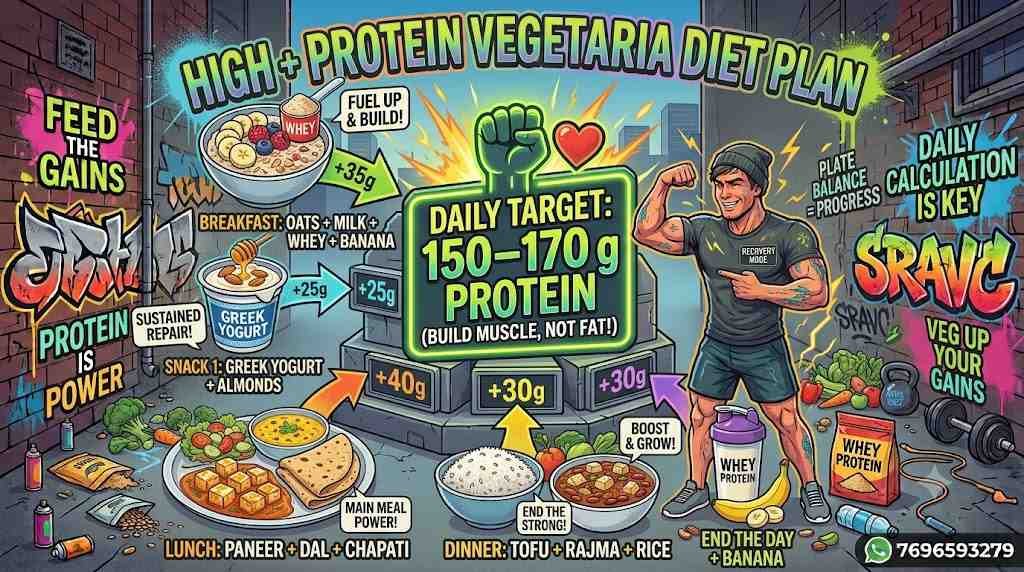
If you follow a vegetarian diet, you can still reach a high protein intake without relying entirely on supplements. The easiest approach is to combine dairy, soy, paneer, Greek yogurt, lentils, beans, and whey protein if you use it.
Breakfast
- 4 whole eggs are not included in this vegetarian plan
- 80 g oats — about 10 g protein
- 300 ml milk — about 10 g protein
- 30 g whey protein — about 24 g protein
- 1 banana
- 15 g peanut butter — about 4 g protein
Meal total: approximately 48 g protein
Mid-Morning Snack
- 250 g Greek yogurt / high-protein yogurt — about 20–25 g protein
- 20 g almonds — about 4 g protein
- 1 fruit
Meal total: approximately 25–29 g protein
Lunch
- 150 g paneer — about 27–30 g protein
- 2–3 chapatis
- 1 bowl dal — about 8–10 g protein
- Mixed vegetables
- Salad
Meal total: approximately 40–45 g protein
Pre-Workout
- 250 ml milk — about 8 g protein
- 30 g whey protein — about 24 g protein
- 1 banana
Meal total: approximately 32 g protein
Dinner
- 150 g tofu — about 18–20 g protein
- 1 bowl rajma or chickpeas — about 10–12 g protein
- Rice
- Mixed vegetables
Meal total: approximately 28–32 g protein
Daily Protein
Depending on the exact products and portions, this plan provides roughly 165–175 g protein.
If you want to stay closer to 150–170 g, slightly reduce the paneer, whey, or portion of legumes.
150–170 g Protein Non-Vegetarian Diet Plan for Muscle Growth
A non-vegetarian diet can make it easier to reach a high protein target because chicken, fish, eggs, and lean meat provide concentrated sources of protein.
Breakfast
- 4 whole eggs — about 24–26 g protein
- 60 g oats — about 7–8 g protein
- 250 ml milk — about 8 g protein
- 1 banana
Meal total: approximately 40–42 g protein
Mid-Morning Snack
- 200 g Greek yogurt — about 18–20 g protein
- 20 g almonds — about 4 g protein
- 1 fruit
Meal total: approximately 22–24 g protein
Lunch
- 150 g cooked chicken breast — about 45–47 g protein
- Rice
- Mixed vegetables
- Salad
- Yogurt
Meal total: approximately 50–55 g protein
Pre-Workout
- 30 g whey protein — about 24 g protein
- 1 banana
- 2 slices whole-grain toast
Meal total: approximately 25–28 g protein
Dinner
- 120 g cooked fish — approximately 25–30 g protein
- Rice or potatoes
- Mixed vegetables
Meal total: approximately 28–32 g protein
Daily Protein
This plan provides approximately 165–175 g protein, depending on the exact portions and products used.
To keep the target closer to 150–170 g, you can reduce the chicken portion slightly or use a smaller whey serving.
A Quick Tip About These Diet Plans
You don’t have to follow either plan exactly every day.
Think of them as templates. You can swap chicken for fish, paneer for tofu, rice for potatoes, Greek yogurt for cottage cheese, or dal for beans while keeping your overall protein intake in the same general range.
Also remember that 150–170 g of protein is not automatically the right target for everyone. Your ideal intake depends on your body weight, training, goals, total calorie intake, and individual circumstances.
For muscle growth, hitting a reasonable daily protein target consistently is much more important than trying to make every meal perfect.
Foods That Can Make Muscle Gain Harder
There are no foods that automatically destroy muscle growth. The bigger problem is when highly processed foods take over your diet and make it difficult to meet your nutritional needs. Protein for Muscle Gain: How Much Do You Really Need?
Foods such as:
- Sugary drinks
- Excessive fast food
- Highly processed snacks
- Large amounts of sweets
- Deep-fried foods
- Excessive alcohol
can make it easier to consume large amounts of calories without getting much protein, fiber, vitamins, or minerals.
That doesn’t mean you can never eat pizza, burgers, chocolate, or other foods you enjoy.
A flexible diet can be easier to maintain than an extremely restrictive one.
The key is making nutrient-dense foods the foundation of your diet while leaving room for foods you enjoy.
Common Diet Mistakes That Stop Muscle Growth
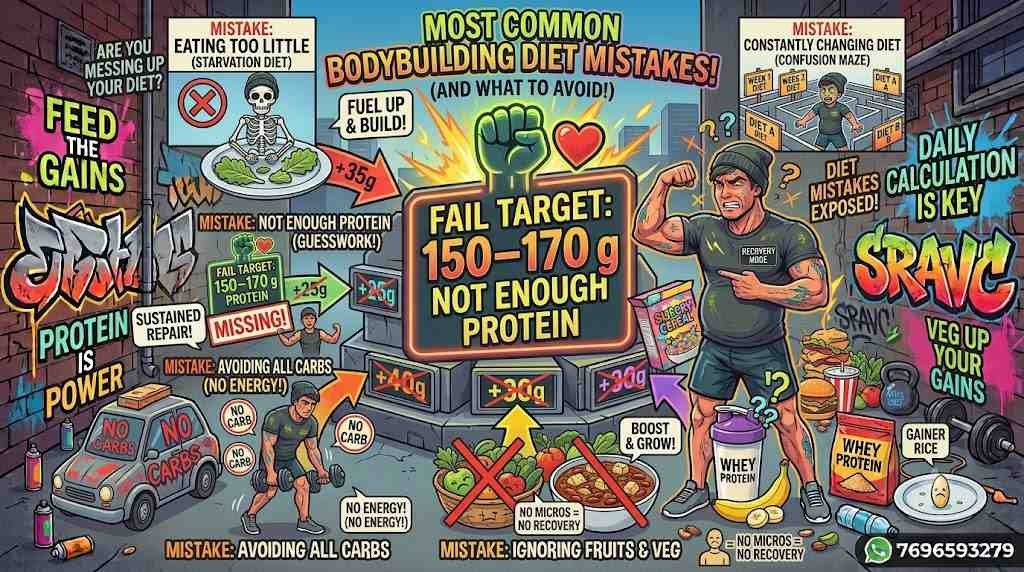
Eating Too Little
One of the biggest problems is simply not eating enough.
If you train hard but consistently fail to consume enough calories and protein, gaining muscle can become difficult.
Focusing Only on Protein
Protein is important, but eating huge amounts of protein while ignoring carbohydrates, fats, fruits, and vegetables isn’t a balanced strategy.
Changing the Diet Every Week
Muscle growth takes time.
Constantly changing your meal plan makes it difficult to know what is actually working.
Give your diet enough time and monitor your progress.
Drinking Too Many Calories Without Tracking Them
Mass-gainer shakes and homemade high-calorie smoothies can be useful, but calories from drinks can add up quickly.
If your goal is controlled weight gain, pay attention to portion sizes.
Not Eating Enough Carbohydrates
Some lifters become afraid of carbs because they associate them with fat gain.
But carbohydrates can be useful for fueling resistance training. Total calorie intake and overall diet quality matter more than simply labeling carbs as “bad.”
Simple One-Day Meal Plan for Muscle Growth
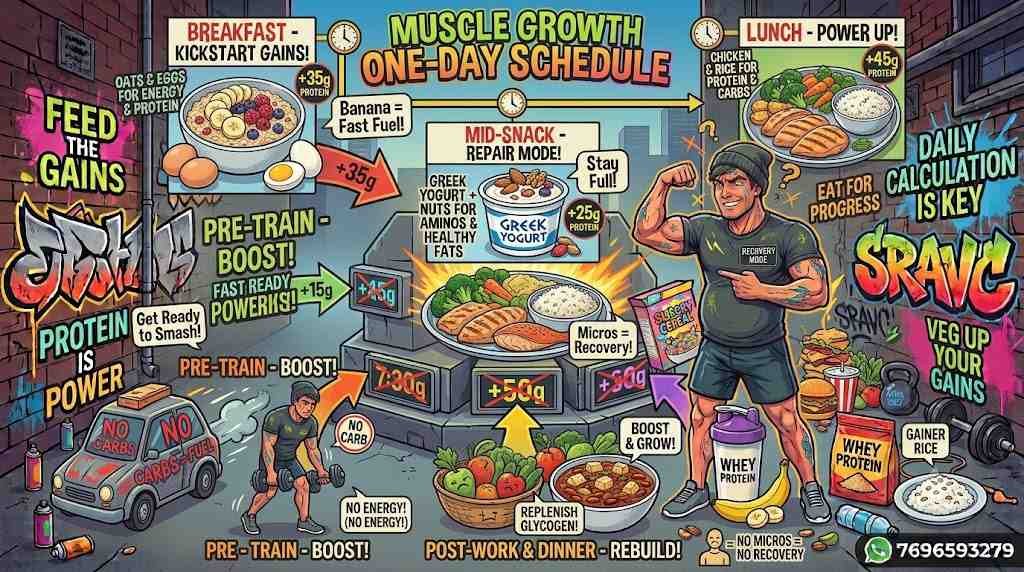
Here is an example of how you could organize a day of eating.
Breakfast
- Oats
- Milk
- Banana
- Eggs
- Peanut butter
Mid-Morning Snack
- Greek yogurt
- Fruit
- A handful of nuts
Lunch
- Chicken
- Rice
- Mixed vegetables
- Yogurt
Pre-Workout
- Banana
- Whey protein
- Toast or oats
Post-Workout / Dinner
- Lean meat or fish
- Rice or potatoes
- Vegetables
Before Bed
- Greek yogurt or cottage cheese
- Fruit or a small serving of nuts
This is only an example. Portion sizes should be adjusted according to your calorie and protein requirements.
Vegetarians can replace meat and fish with foods such as paneer, Greek yogurt, milk, soy products, lentils, beans, and other protein-rich foods.
Frequently Asked Questions About Foods for Muscle Growth
What is the best food for muscle growth?
There is no single best food. A combination of high-quality protein sources, carbohydrates, healthy fats, fruits, vegetables, and enough total calories is more important.
Are eggs good foods for muscle growth?
Yes. Eggs provide high-quality protein and can easily be included in breakfast, lunch, dinner, or snacks.
Is rice good for muscle growth?
Rice can be an excellent carbohydrate source for people who train regularly. It is easy to digest, inexpensive, and pairs well with protein foods.
Can I build muscle without whey protein?
Yes. Whey protein is convenient but not mandatory. You can get protein from eggs, chicken, fish, dairy, soy, beans, lentils, and other foods.
Are bananas good for muscle growth?
Bananas provide carbohydrates and can be a convenient snack before or after training. They can easily fit into a muscle-building diet.
Should I eat more protein or more calories to build muscle?
Both matter. Protein supplies amino acids needed for muscle growth, while sufficient energy helps support training and recovery. Your overall calorie and protein intake should match your goal.
Can I eat junk food while building muscle?
Occasionally, yes. You don’t have to eat a perfect diet every day. But nutrient-dense foods should make up most of your diet if you want to support training, recovery, and overall health.
How long does it take to see muscle growth?
Muscle growth is a gradual process. Beginners may notice changes relatively quickly, while visible progress generally becomes more noticeable over months of consistent training and nutrition.
Final Thoughts
Building muscle doesn’t require a complicated diet filled with expensive foods.
Start with the basics: get enough protein, eat enough calories for your goal, use carbohydrates to support your training, include healthy fats, and eat plenty of fruits and vegetables.
The best foods for muscle growth are ultimately the foods you can eat consistently while meeting your nutritional needs.
You don’t need to eat chicken and rice seven days a week. Build a diet around foods you enjoy, keep your protein intake consistent, train progressively, sleep properly, and give the process enough time.
Consistency beats a “perfect” diet that you can only follow for two weeks.
Need Help With Your Muscle-Gain Diet?
Not sure how much protein, calories, carbs, or fats you actually need to build muscle? A diet that works for one person may not work the same way for someone else.
If you need help creating a personalized muscle-gain diet plan, including vegetarian or non-vegetarian food options, meal timing, protein targets, and calorie requirements, you can contact us directly on WhatsApp.
WhatsApp: 7696593279
Send us your age, height, weight, training schedule, goal, and food preferences, and we can help you understand how to structure your diet around your muscle-growth goal.