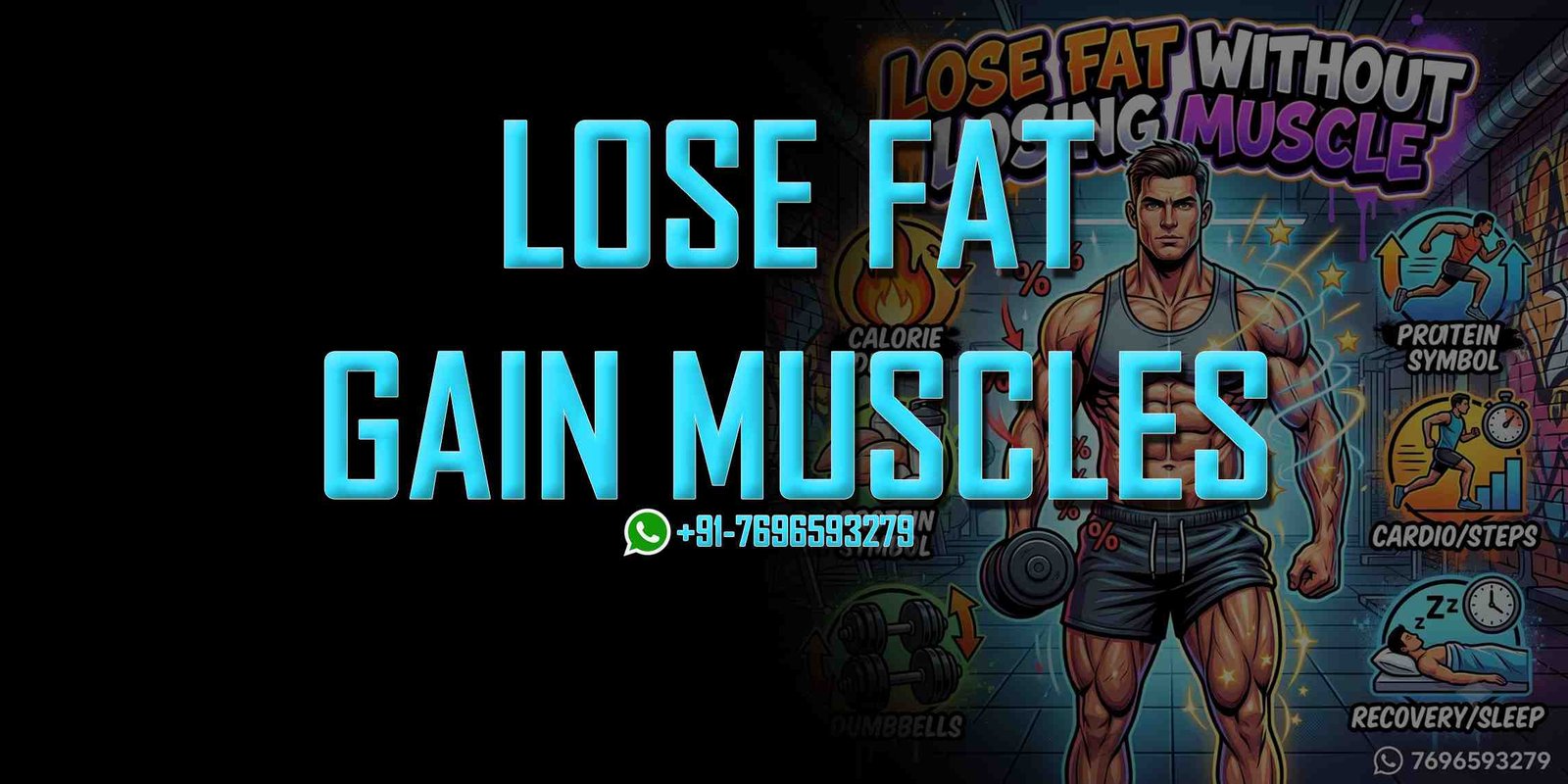
If your goal is to lose fat without losing muscle, you need to approach your cut differently from a simple weight-loss diet. Dropping body weight is easy compared with keeping the muscle you worked hard to build. A crash diet, extremely low calories, too much cardio, and poor protein intake can make the scale move quickly, but part of that weight can come from muscle.
The better strategy is to create a controlled calorie deficit, eat enough protein, keep lifting heavy, recover properly, and give your body enough time to lose fat gradually. This approach helps you get leaner while giving your muscles a much better chance of staying full and strong.
Whether you’re trying to reveal your abs, get more defined, or simply improve your body composition, here’s how to lose fat without losing muscle. How to Gain Muscle Without Gaining Too Much Fat
What Happens When You Lose Fat Without Losing Muscle?
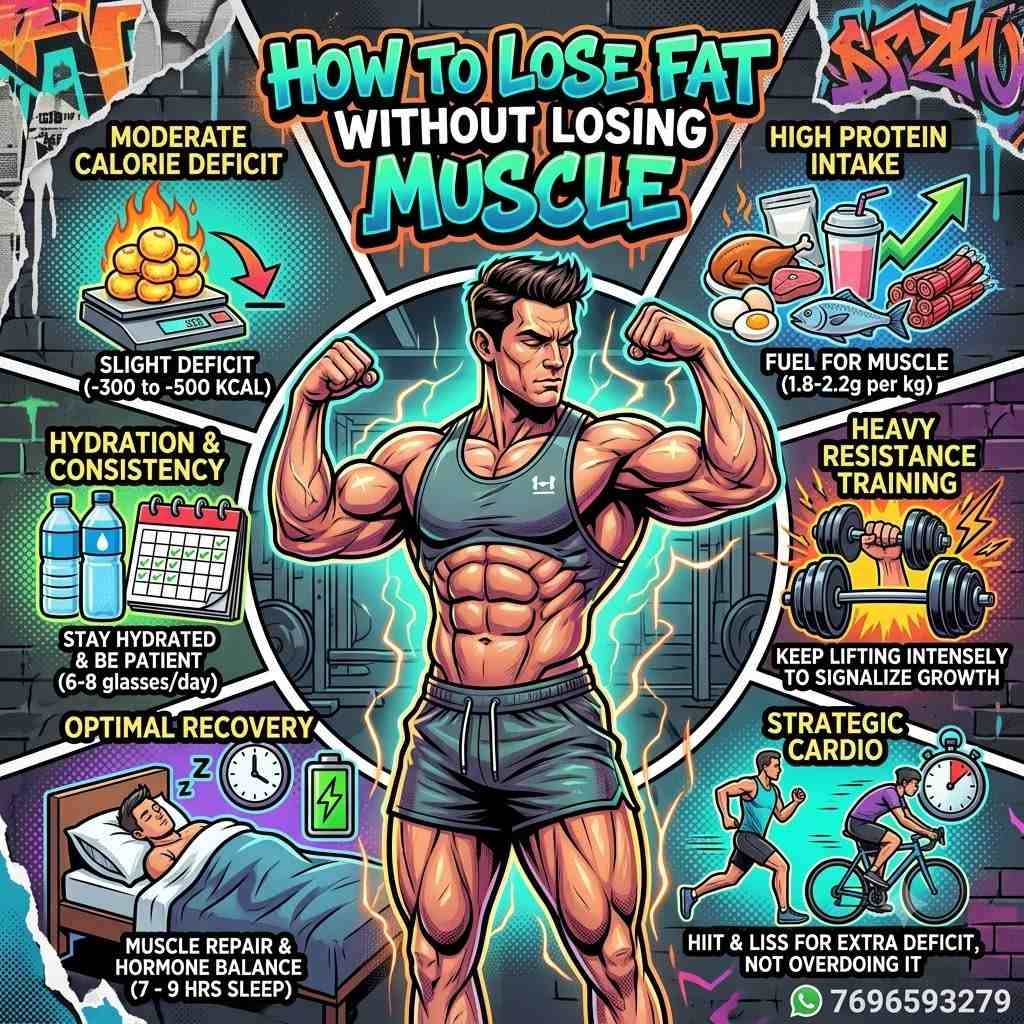
When you eat fewer calories than your body uses, your body needs to find additional energy from stored sources. Ideally, most of that additional energy comes from body fat.
The problem is that muscle tissue can also be affected when your calorie deficit is too aggressive or your training and nutrition are poorly managed.
During a cut, several things can increase the risk of muscle loss:
- Very low calorie intake
- Not eating enough protein
- Stopping resistance training
- Excessive cardio
- Losing weight too quickly
- Poor sleep
- High training stress with inadequate recovery
- Staying in a calorie deficit for too long
This is why losing fat without losing muscle isn’t simply about eating less food.
Your goal is to tell your body: “Use stored body fat for energy, but keep this muscle because I still need it.”
Resistance training and adequate protein are two of the biggest signals supporting muscle retention during a calorie deficit.
How to Lose Fat Without Losing Muscle Through a Calorie Deficit
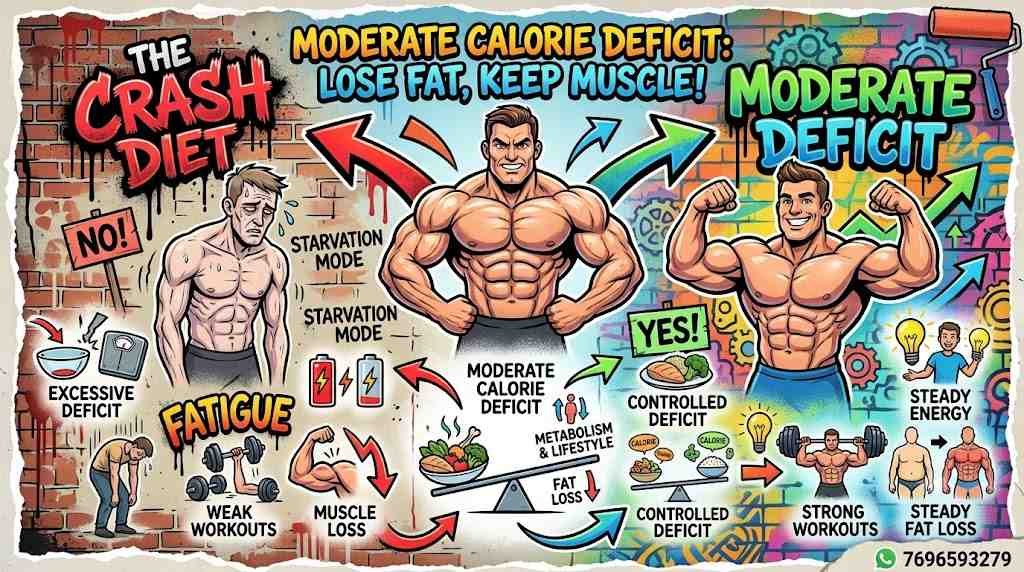
The calorie deficit is what drives fat loss, but making the deficit too large can make muscle retention harder.
Instead of dramatically cutting your food intake, aim for a moderate deficit.
For many people, starting around 300–500 calories below maintenance is a practical approach. Your exact requirement depends on body weight, activity level, metabolism, training volume, and current body-fat levels.
For example, if your maintenance intake is approximately 2,800 calories, you might begin around 2,300–2,500 calories rather than immediately dropping to 1,500–1,800.
The goal is not to lose as much weight as possible every week.
The goal is to lose mostly fat while maintaining your muscle, strength, and performance.
Don’t Make Your Deficit Too Aggressive
One of the biggest mistakes people make during a cut is thinking that eating dramatically less will automatically produce better results.
It can produce faster scale weight loss, but faster isn’t always better.
A huge deficit can make workouts feel terrible, increase hunger, reduce recovery, and make it harder to maintain training performance.
If you want to lose fat without losing muscle, think about sustainability.
A slower cut that you can maintain for several months is usually more useful than an extreme diet that lasts two weeks before you give up.
How Much Protein Do You Need to Lose Fat Without Losing Muscle?
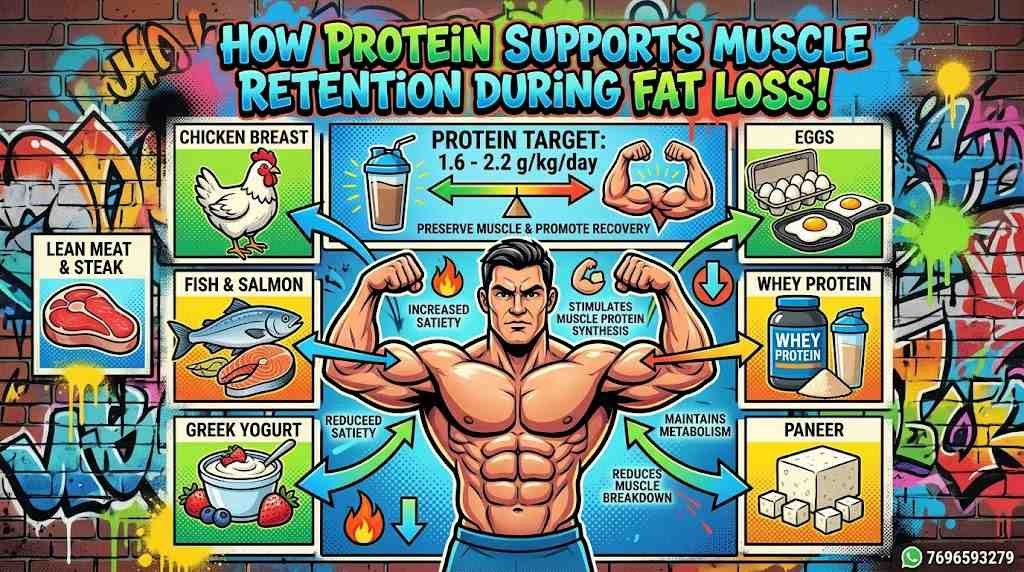
Protein becomes especially important when you’re dieting.
When calories are restricted, your body has less energy available. Maintaining adequate protein intake gives your body the amino acids it needs to support muscle protein turnover.
A practical range for many people who lift weights is around:
1.6–2.2 grams of protein per kilogram of body weight per day.
For example, someone weighing 80 kg could aim for roughly 128–176 grams of protein per day.
Your exact requirement can vary depending on your body composition, calorie deficit, training experience, and overall diet.
You don’t need to eat enormous amounts of protein either.
Once your protein intake is already sufficient, simply adding more and more protein isn’t going to magically protect every gram of muscle.
The bigger picture is:
Protein + resistance training + sensible calorie deficit + recovery = better muscle retention.
Best Protein Foods for Losing Fat and Keeping Muscle
Getting enough protein doesn’t mean you have to eat chicken and eggs every day.
Good options include:
- Chicken breast
- Eggs and egg whites
- Fish
- Lean beef
- Turkey
- Greek yogurt
- Cottage cheese
- Whey protein
- Milk
- Paneer
- Tofu
- Soy products
- Other lean protein sources
Try to distribute your protein across several meals instead of eating almost all of it in one sitting.
A protein-rich breakfast, lunch, post-workout meal, and dinner can make it much easier to hit your daily target.
Why Resistance Training Helps You Lose Fat Without Losing Muscle
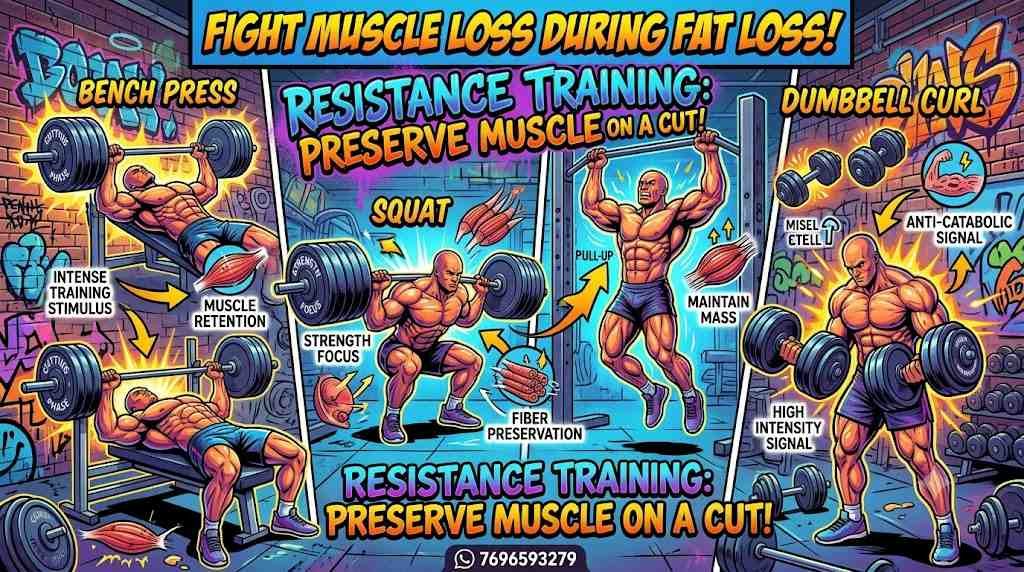
If you want to lose fat without losing muscle, resistance training should remain one of your priorities.
Your muscles adapt to the demands you place on them.
If you stop lifting because you’re dieting, your body receives less reason to maintain the same amount of muscle tissue.
This doesn’t mean you need to destroy yourself in the gym.
Continue training your major muscle groups and try to maintain your strength and performance as much as possible.
For example, you can continue using exercises such as:
- Bench press
- Squats
- Deadlifts
- Rows
- Pull-ups
- Overhead presses
- Leg presses
- Romanian deadlifts
- Lunges
- Curls
- Triceps extensions
You don’t have to hit personal records every week during a calorie deficit.
The goal is to maintain as much strength and training quality as possible.
Should You Lift Heavy While Losing Fat?
Yes, but “heavy” doesn’t mean you need to train with maximal weights all the time.
A common mistake is switching to extremely light weights and very high repetitions because the goal is fat loss.
But lifting weights doesn’t directly burn off body fat in the same way a calorie deficit does.
Your resistance training is primarily there to provide a strong stimulus for maintaining muscle.
Keep your normal exercises where possible, use challenging weights, and maintain good technique.
If your strength decreases slightly during a long cut, don’t panic. Less food, lower glycogen levels, fatigue, and reduced leverage can all affect performance.
The bigger concern is a consistent and dramatic decline in strength and training performance.
That may indicate that your deficit, recovery, or overall diet needs adjustment. Bulking vs Cutting: Which Should You Do First?
How Much Cardio Should You Do to Lose Fat Without Losing Muscle?
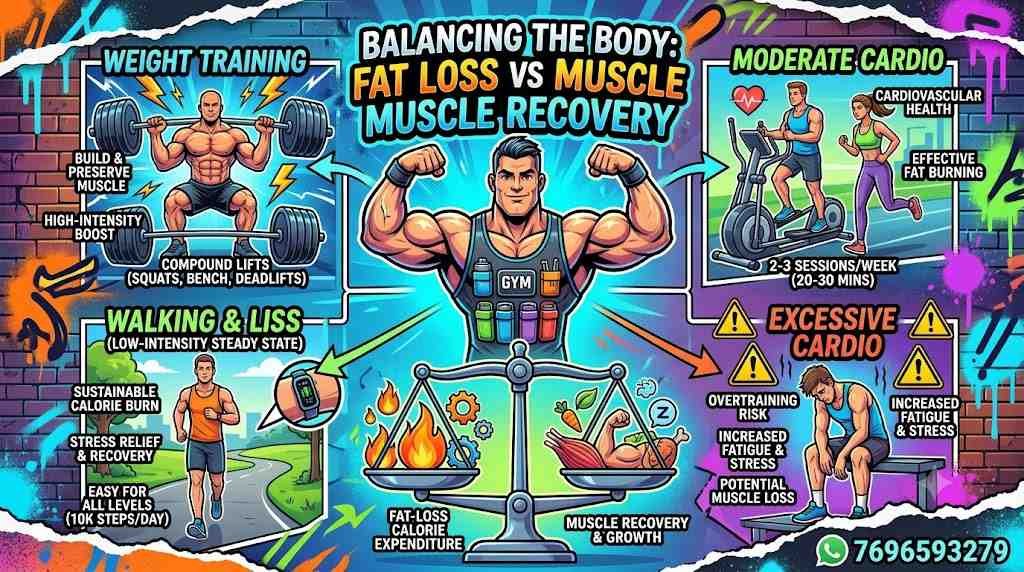
Cardio can be useful during a fat-loss phase, but more isn’t automatically better.
You can use cardio to increase calorie expenditure without dramatically reducing your food intake.
Good options include:
- Walking
- Cycling
- Incline treadmill walking
- Jogging
- Swimming
- Stair climbing
- Moderate-intensity cardio
Walking is particularly useful because it generally creates less recovery demand than very intense cardio.
If you’re already lifting five or six days per week, adding huge amounts of high-intensity cardio may make recovery more difficult.
Instead, start with a manageable amount and increase activity only when necessary.
For example, you could begin by increasing daily steps before adding multiple long cardio sessions.
Can Walking Help You Lose Fat Without Losing Muscle?
Absolutely.
Walking is one of the simplest tools you can use during a cut.
Increasing your daily steps can raise your overall energy expenditure without creating the same level of fatigue as frequent high-intensity cardio.
You don’t need to walk 20,000 steps every day.
If you’re currently averaging 5,000 steps, moving toward 7,000–10,000 can be a practical starting point depending on your lifestyle and recovery.
The important thing is consistency.
Your calorie intake and activity level should work together rather than relying on extreme methods.
How Fast Should You Lose Fat Without Losing Muscle?
If you’re trying to lose fat without losing muscle, don’t judge your diet based on how quickly the scale drops during the first few days.
Initial weight loss can include water and glycogen.
A commonly used target for a muscle-preserving cut is roughly 0.5–1% of body weight per week, with the lower end often being more appropriate for leaner individuals or people who are particularly focused on preserving muscle.
For example, a 90 kg person might lose around 0.45–0.9 kg per week under that general range.
But these numbers aren’t a rule carved in stone.
Your current body-fat level matters.
Someone with higher body fat may be able to lose weight faster while retaining muscle, whereas someone already very lean should generally be more conservative.
Don’t Judge Fat Loss Only by the Scale
The scale is useful, but it doesn’t tell you everything.
Your body weight can change because of:
- Water
- Glycogen
- Food volume
- Sodium intake
- Hormonal fluctuations
- Muscle
- Body fat
Instead of looking at one morning’s weight, track your weekly average.
Also monitor:
- Waist measurement
- Progress photos
- Gym performance
- Body measurements
- How your clothes fit
- Energy levels
If your waist is shrinking while your strength is relatively stable, that’s generally a much better sign than simply seeing the scale drop rapidly.
How to Keep Your Strength While Losing Fat
Strength retention is one of the useful indicators during a cut.
You shouldn’t expect to become dramatically stronger every week while eating fewer calories.
But maintaining much of your existing performance is a good target.
To help with this:
Keep compound exercises in your program.
Bench presses, squats, rows, presses, pull-ups, deadlift variations, and other compound movements allow you to continue giving your muscles a strong training stimulus.
Don’t change your entire workout overnight.
If your current program works, there’s no reason to completely reinvent it just because you’re cutting.
Manage fatigue.
You may eventually need slightly less training volume because recovery can become harder when calories are lower.
How Sleep Helps You Keep Muscle While Losing Fat
Sleep is often ignored when people talk about fat loss.
That’s a mistake.
Training creates the stimulus, nutrition provides the raw materials, and recovery allows your body to adapt.
Poor sleep can make dieting harder by increasing fatigue, affecting appetite, reducing training performance, and making recovery more difficult.
Try to get around 7–9 hours of quality sleep per night.
If you train hard but regularly sleep five hours, don’t expect your fat-loss plan to work at its best.
How Carbs Can Support Fat Loss Without Muscle Loss
Carbohydrates are not automatically responsible for gaining body fat.
Total calorie balance matters.
Carbohydrates can also help support training performance because they contribute to muscle glycogen.
If you suddenly remove most carbohydrates from your diet, you may notice:
- Lower workout performance
- Less muscle fullness
- Lower energy
- Increased fatigue
That doesn’t mean you need a huge amount of carbohydrates.
Instead, distribute your calories between protein, carbohydrates, and dietary fats according to your individual needs and preferences.
Keeping some carbohydrates around your workouts can be useful for people who train hard. Protein for Muscle Gain: How Much Do You Really Need?
Why You Still Need Dietary Fat While Cutting
Fat is another important part of your diet.
Extremely low-fat diets can make an already restrictive diet harder to follow and can interfere with normal physiological processes.
Include reasonable portions of foods such as:
- Eggs
- Nuts
- Seeds
- Olive oil
- Avocado
- Fatty fish
- Nut butters
Remember that fats are calorie-dense, so portion sizes matter during a cut.
You don’t need to eliminate them—you simply need to account for them.
Supplements That May Help During a Cut
Supplements aren’t the foundation of a successful cut.
Your calorie intake, protein, resistance training, sleep, and overall consistency matter much more.
However, some supplements can be useful depending on your diet.
Whey Protein
Whey protein is simply a convenient way to increase your protein intake.
If you already get enough protein from food, you don’t necessarily need it.
Creatine
Creatine monohydrate is one of the most researched sports supplements and can support strength and high-intensity training performance.
It’s particularly useful when your goal is to maintain training quality while dieting.
Caffeine
Caffeine can improve alertness and workout performance for many people.
However, don’t use excessive amounts to compensate for poor sleep.
Fish Oil
If you don’t regularly consume fatty fish, fish oil can be a convenient source of omega-3 fatty acids.
Again, supplements should support a good diet—not replace one.
Common Mistakes That Cause Muscle Loss While Cutting
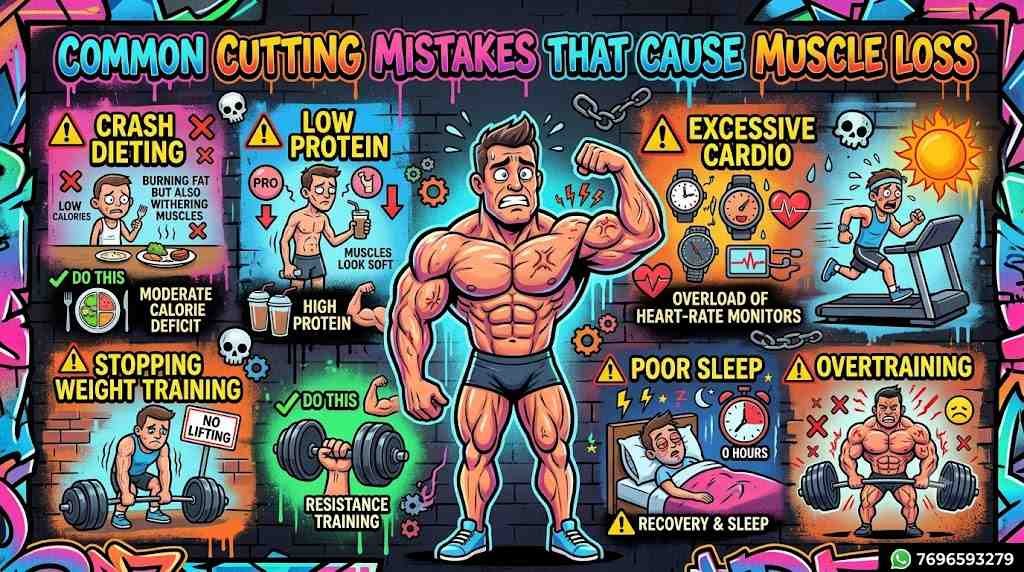
If your goal is to lose fat without losing muscle, avoid these common mistakes.
Eating Far Too Few Calories
A massive deficit may look attractive because the scale drops quickly, but it can make training and recovery much harder.
Not Eating Enough Protein
Protein is one of the easiest things to neglect when calories are restricted.
Make it a priority.
Replacing Weights With Cardio
Cardio can help create a calorie deficit, but it shouldn’t completely replace resistance training if muscle retention is your goal.
Training Harder but Recovering Less
More workouts aren’t automatically better.
Your body still needs recovery.
Chasing the Scale
If you’re losing weight but your strength is collapsing, your energy is terrible, and your physique isn’t improving, simply cutting more calories isn’t necessarily the answer.
Cutting for Too Long
A calorie deficit isn’t something you have to maintain indefinitely.
Long dieting phases can become mentally and physically exhausting.
Sometimes a period around maintenance calories can help you recover before continuing another fat-loss phase.
A Simple Plan to Lose Fat Without Losing Muscle
Let’s say you’re an 80 kg lifter who wants to get leaner while keeping as much muscle as possible.
A simple approach could look like this:
| Goal | Practical Target |
|---|---|
| Calories | Moderate deficit |
| Protein | Around 130–175 g/day |
| Weight loss | Roughly 0.4–0.8 kg/week |
| Resistance training | 4–6 sessions/week |
| Daily activity | Consistent walking/steps |
| Cardio | Moderate and adjustable |
| Sleep | 7–9 hours |
| Progress tracking | Weekly average + waist + photos |
These aren’t universal numbers. Your ideal targets should be adjusted according to your body weight, maintenance calories, training schedule, current body fat, and progress.
How to Lose Fat Without Losing Muscle: A Simple Daily Structure
You don’t need a complicated bodybuilding meal plan.
A basic day could look like:
Breakfast: Eggs + oats + fruit
Lunch: Chicken + rice + vegetables
Pre-workout: Fruit + yogurt or another easy carbohydrate/protein meal
Post-workout: Whey protein + carbohydrate source
Dinner: Lean meat/fish/paneer + potatoes or rice + vegetables
Before bed: Greek yogurt, cottage cheese, or another protein source if needed
The specific foods don’t matter as much as consistently hitting your calorie and protein targets.
What If You Lose Some Muscle During a Cut?
Don’t panic.
Some changes in muscle fullness are not necessarily actual muscle loss.
When you reduce calories and carbohydrates, muscle glycogen can decrease. Since glycogen is stored alongside water, your muscles may look flatter.
This can make you think you’ve lost a significant amount of muscle when you’re actually seeing a change in glycogen and water.
That’s why progress photos, measurements, strength, and long-term trends are more useful than judging your physique from one day to another. Why Am I Not Gaining Muscle? 15 Reasons & How to Fix It
When Should You Stop Cutting?
You don’t have to continue cutting until you’re extremely lean.
If you’re happy with your physique, performance, and body-fat level, you can gradually move toward maintenance calories.
Signs that it may be time to reconsider an aggressive deficit include:
- Training performance is consistently falling
- Recovery is getting worse
- Hunger is becoming difficult to manage
- Sleep is suffering
- Motivation is dropping
- You’ve been dieting for a very long time
- You’re already relatively lean
The goal is to build a physique you can actually maintain.
Frequently Asked Questions
Can You Really Lose Fat Without Losing Muscle?
Yes. It is possible to significantly reduce body fat while retaining most of your muscle, especially when you use resistance training, consume enough protein, maintain a moderate calorie deficit, and recover properly.
However, there is no guarantee that every person will maintain 100% of their muscle during every cutting phase.
How Much Protein Should I Eat to Keep Muscle While Cutting?
A practical range for many resistance-trained people is around 1.6–2.2 g/kg of body weight per day. People who are very lean or using a more aggressive deficit may benefit from being toward the higher end.
Should I Stop Weight Training While Cutting?
No. If muscle retention is your priority, resistance training should remain a major part of your program.
Is Cardio Bad for Muscle During Fat Loss?
No. Cardio can be useful during fat loss. The problem is excessive cardio combined with inadequate calories, poor recovery, and insufficient protein.
Can I Build Muscle While Losing Fat?
It can happen, particularly in beginners, people returning after a training break, and individuals with higher body-fat levels. Experienced, already-lean lifters generally find simultaneous muscle gain and fat loss more difficult.
How Quickly Can I Lose Fat Without Losing Muscle?
A slower and controlled rate of weight loss is generally better for muscle retention than aggressive dieting. Around 0.5–1% of body weight per week is a commonly used general range, but individual circumstances matter.
Should I Take Creatine While Cutting?
You can. Creatine can help support strength and training performance. It may also increase water stored within muscle, so don’t confuse a small increase in scale weight with fat gain.
Why Do My Muscles Look Smaller During a Cut?
Lower glycogen and water levels can make your muscles appear flatter. This doesn’t automatically mean you’ve lost significant muscle tissue.
Weekly Muscle-Preserving Cutting Checklist
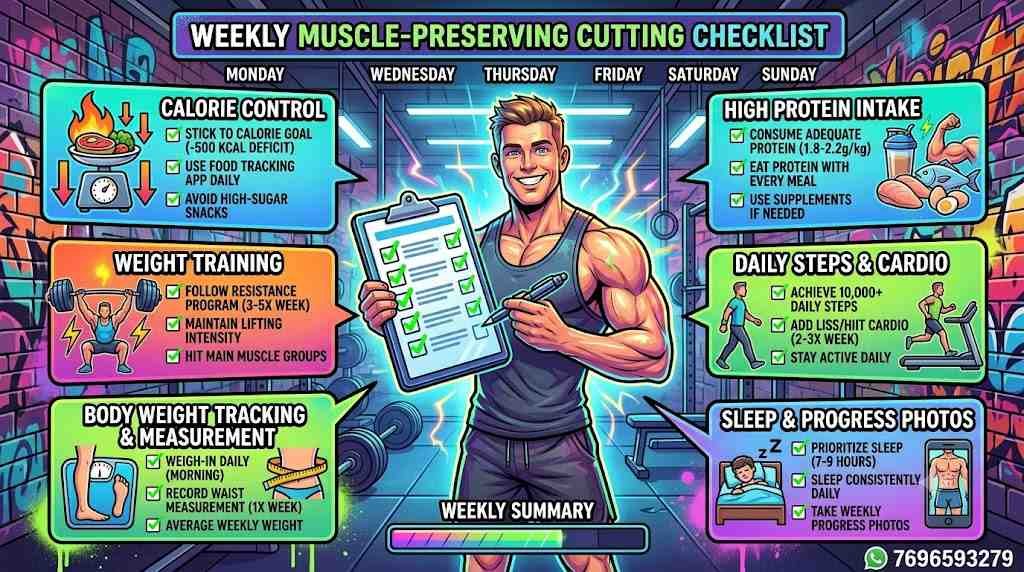
Use this simple checklist every week:
- Average calorie intake stayed close to target
- Protein target was hit most days
- Resistance training remained consistent
- Strength was reasonably maintained
- Daily activity/steps stayed consistent
- Cardio remained manageable
- Sleep averaged around 7–9 hours
- Weekly average weight was recorded
- Waist measurement was checked
- Progress photos were taken
- Energy and recovery were monitored
If your weight is slowly decreasing, your waist is shrinking, and your gym performance is reasonably stable, you’re probably moving in the right direction.
Final Thoughts on Losing Fat Without Losing Muscle
Learning how to lose fat without losing muscle comes down to controlling the variables that matter most.
Don’t crash diet. Don’t starve yourself. Don’t replace every weight-training session with cardio.
Instead, create a moderate calorie deficit, eat enough protein, continue resistance training, stay active, get enough sleep, and monitor your progress over several weeks.
The scale might not move as quickly as it would on an extreme diet, but that’s okay. You’re not trying to become lighter at any cost.
You’re trying to become leaner while keeping the muscle you’ve worked so hard to build.
That’s what makes a successful cut different from simply losing weight.
Need Help With Your Fat-Loss Plan?
Trying to lose fat without losing muscle can get confusing when you’re not sure how many calories to eat, how much protein you need, or how to structure your training and cardio.
If you want help with your cutting diet, calorie targets, protein intake, workout plan, or overall fat-loss strategy, you can contact us directly on WhatsApp.
WhatsApp: 7696593279
Send your current weight, height, age, training routine, and goal, and get guidance based on your individual requirements.