If you’re searching for how to gain muscle without putting on a lot of unwanted fat, the answer isn’t to simply eat everything in sight. Building muscle requires enough calories, protein, training, and recovery, but a huge calorie surplus can make your waist grow much faster than your muscles.
This is where a controlled lean bulk comes in. Instead of trying to gain weight as quickly as possible, the goal is to give your body enough nutrition to support muscle growth while keeping unnecessary fat gain under control.
Whether you’re naturally skinny, coming out of a cutting phase, or simply want more size without losing your abs, this guide explains how to approach muscle gain in a practical way.
What Does It Mean to Gain Muscle Without Too Much Fat?
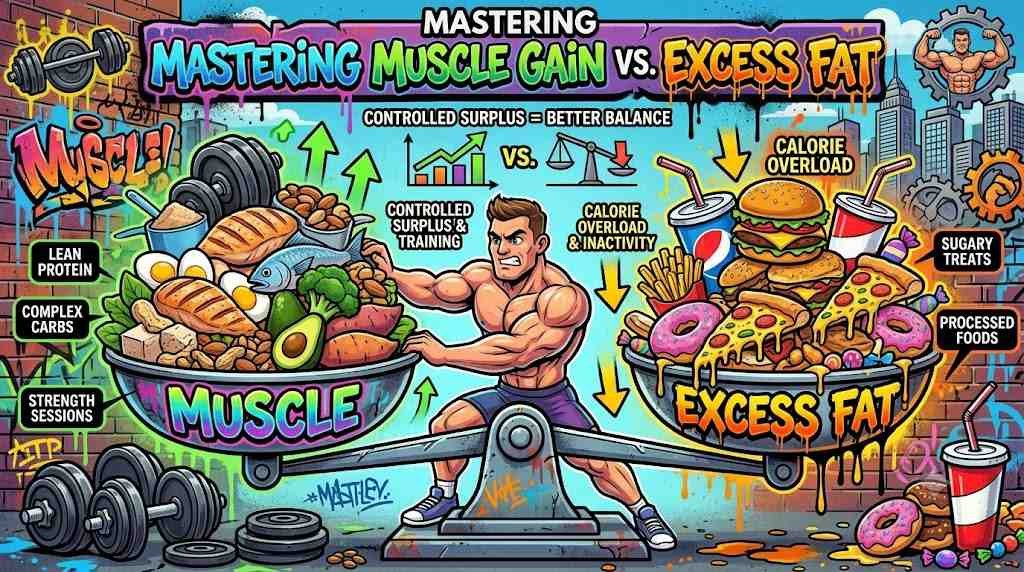
Muscle growth and some fat gain can happen together when you’re eating in a calorie surplus. The trick is controlling the size of that surplus.
When you consistently eat more calories than your body uses, you have extra energy available for training, recovery, and tissue growth. But your body doesn’t automatically turn every extra calorie into muscle.
A large surplus can result in:
- Faster bodyweight gain
- More fat accumulation
- A softer appearance
- Larger waist measurements
- A harder future cutting phase
A smaller, controlled surplus gives you a better chance of making productive gains without unnecessary fat.
The goal isn’t zero fat gain. The goal is to make the majority of your progress useful while keeping fat gain reasonable.
How to Gain Muscle With the Right Calorie Surplus
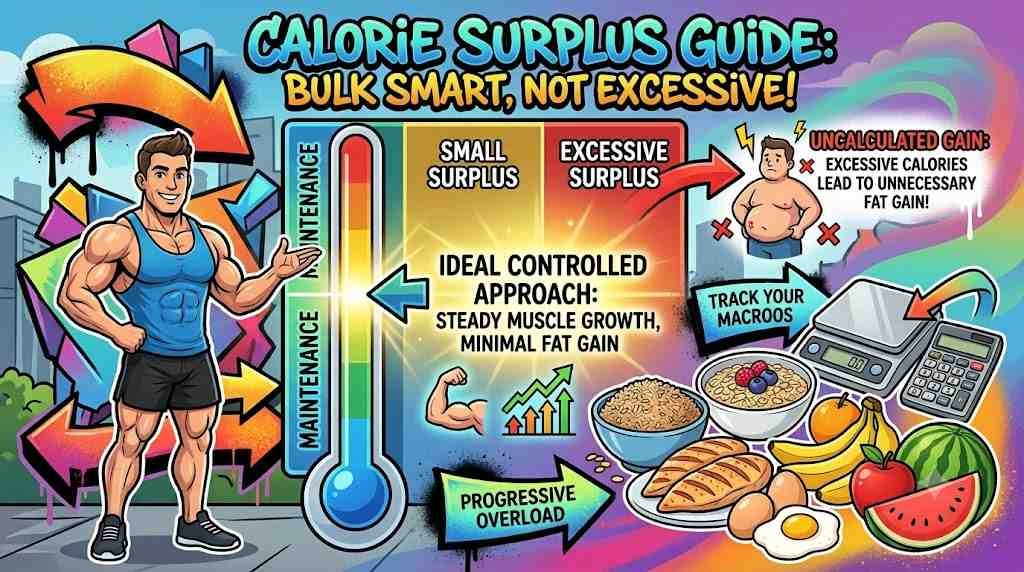
Calories are one of the biggest pieces of the muscle-building puzzle.
If you’re eating too little, your body may struggle to build new muscle tissue. If you’re eating far more than you need, the extra energy is more likely to be stored as body fat.
For many people, starting with roughly 200–300 calories above maintenance per day is a reasonable approach. Your exact requirement depends on your body size, activity level, training, metabolism, and current body composition.
Don’t become obsessed with getting the number perfect on day one.
Start with a reasonable estimate, monitor your weight and measurements, and adjust based on what actually happens.
How to Gain Muscle If Your Weight Isn’t Increasing?
If you’ve been eating consistently for a few weeks and your average bodyweight isn’t moving, your calorie intake may be too low.
You can gradually increase your food intake rather than making a massive jump.
For example, adding a small serving of rice, oats, potatoes, fruit, milk, or another calorie-dense food can make a difference.
How to Gain Muscle If You’re Gaining Weight Too Quickly?
If your weight is shooting up and your waist is increasing rapidly, your surplus may be larger than necessary.
Instead of panicking and starting a diet, slightly reduce your daily calorie intake and continue monitoring your progress.
Your bodyweight trend over several weeks is much more useful than what the scale says on a single morning.
How Much Protein Do You Need?
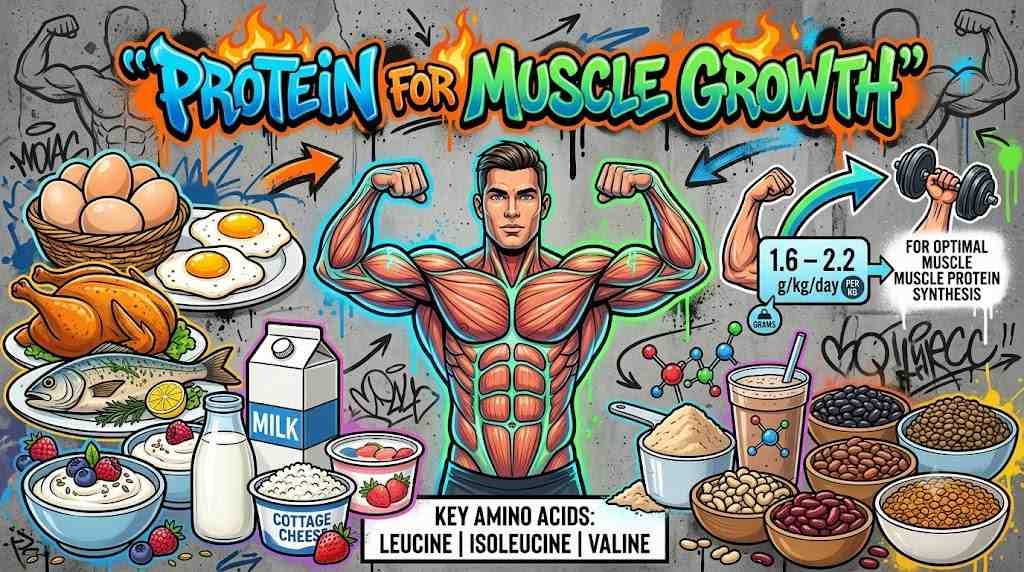
Protein provides the amino acids your body uses to repair and build muscle tissue.
If you’re serious about learning how to gain muscle, protein should be one of the first parts of your diet you get right.
A practical target for many people who resistance train is around 1.6–2.2 grams of protein per kilogram of bodyweight per day.
For example, someone weighing 70 kg could aim for roughly:
- 112 g protein at 1.6 g/kg
- 140 g protein at 2.0 g/kg
- 154 g protein at 2.2 g/kg
You don’t need to hit the exact same number every day.
More importantly, spread your protein across several meals instead of eating almost all of it at dinner.
Good protein sources include:
- Eggs
- Chicken
- Fish
- Lean meat
- Greek yogurt
- Milk
- Cottage cheese
- Whey protein
- Soy and other plant proteins
- Beans and lentils
You don’t need expensive foods to build muscle. Consistency matters more than having a complicated diet. Protein for Muscle Gain: How Much Do You Really Need?
Eat Enough Carbohydrates to Train Hard
Carbohydrates often get blamed for fat gain, but carbs themselves aren’t the enemy.
If you’re training hard, carbohydrates can provide useful fuel for your workouts and help you maintain training performance.
Good options include:
- Rice
- Oats
- Potatoes
- Sweet potatoes
- Whole-grain bread
- Pasta
- Fruits
- Beans
- Other whole grains
The important thing is your total calorie intake.
Eating huge amounts of carbohydrates on top of an already excessive calorie surplus can contribute to fat gain. But including an appropriate amount of carbs in a controlled muscle-building diet can make training much easier.
How to Gain Muscle: Don’t Be Afraid of Dietary Fat
Dietary fat is also important for a balanced diet.
You don’t need to eliminate fats while trying to stay lean. Instead, focus on reasonable portions and quality food sources.
Some useful choices include:
- Nuts
- Seeds
- Peanut butter
- Olive oil
- Avocado
- Eggs
- Fatty fish
Remember that fat is calorie-dense, so portions can add up quickly.
A few spoonfuls of peanut butter or a large handful of nuts can contain significantly more calories than you might expect.
That’s not necessarily bad, but it matters when you’re trying to control your calorie surplus.
How to Gain Muscle: Focus on Nutrient-Dense Foods
One of the easiest ways to control fat gain is to make most of your diet come from foods that provide plenty of nutrition for their calories.
Build most meals around:
Protein + carbohydrates + vegetables/fruit + a sensible fat source
For example:
Breakfast:
Eggs + oats + fruit
Lunch:
Chicken + rice + vegetables
Pre-workout:
Banana + oats or bread + protein source
Post-workout:
Rice or potatoes + chicken/fish + vegetables
Dinner:
Eggs, chicken, fish, or another protein source + carbohydrates + vegetables
This doesn’t mean you can never eat pizza, burgers, sweets, or other foods you enjoy.
You simply don’t want highly processed foods to become the foundation of your entire bulk.
How Fast Should You Gain Weight?
This is one of the most important parts of a lean bulk.
If your main goal is muscle rather than simply seeing the scale increase, you don’t need to gain weight extremely quickly.
A slower rate of weight gain can help limit unnecessary fat accumulation.
Your ideal rate depends on your training experience and starting body composition.
Beginners may sometimes build muscle efficiently, while advanced lifters generally need to be more patient because muscle growth becomes harder as they gain training experience.
Instead of chasing a specific number blindly, monitor:
- Weekly average bodyweight
- Waist measurement
- Gym performance
- Progress photos
- Muscle measurements
- Recovery
- Hunger and energy levels
If your weight is climbing quickly but your strength and muscle measurements aren’t improving much, that’s a warning sign that your surplus may be excessive. Why Am I Not Gaining Muscle? 15 Reasons & How to Fix It
How to Gain Muscle: Train for Progressive Overload
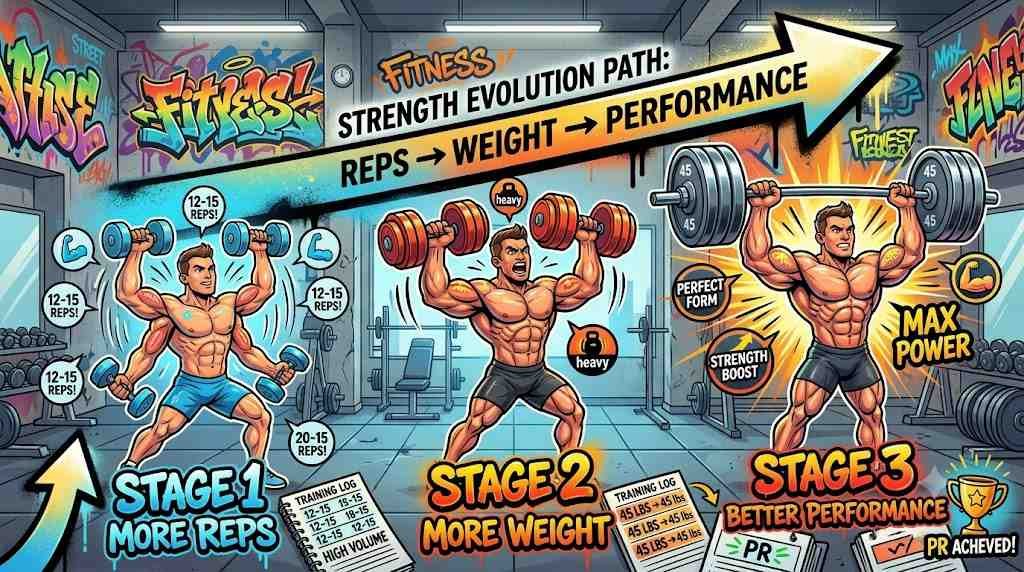
Food alone won’t tell your body to build significant amounts of muscle.
You need a resistance-training stimulus.
Progressive overload means gradually giving your muscles a reason to adapt.
That can involve:
- Adding weight
- Increasing repetitions
- Improving technique
- Increasing training volume
- Improving range of motion
- Getting stronger at a particular exercise
You don’t need to add weight to the bar every single workout.
For example, if you bench press 80 kg for 8 reps this week and eventually reach 80 kg for 10–12 clean reps, you’ve made progress.
Over time, these small improvements can add up to significant changes in muscle size and strength.
Don’t Train Every Set Like a Competition
Another common mistake is thinking that more intensity always means more muscle.
Training hard is important, but recovery matters too.
You don’t need to destroy yourself every workout.
A good muscle-building program should provide enough training stimulus while allowing you to recover before hitting the same muscles hard again.
Pay attention to:
- Sleep
- Performance
- Soreness
- Motivation
- Joint discomfort
- Overall fatigue
If your performance is constantly dropping and you’re exhausted all the time, adding even more sets probably isn’t the answer.
Should You Do Cardio While Trying to Build Muscle?
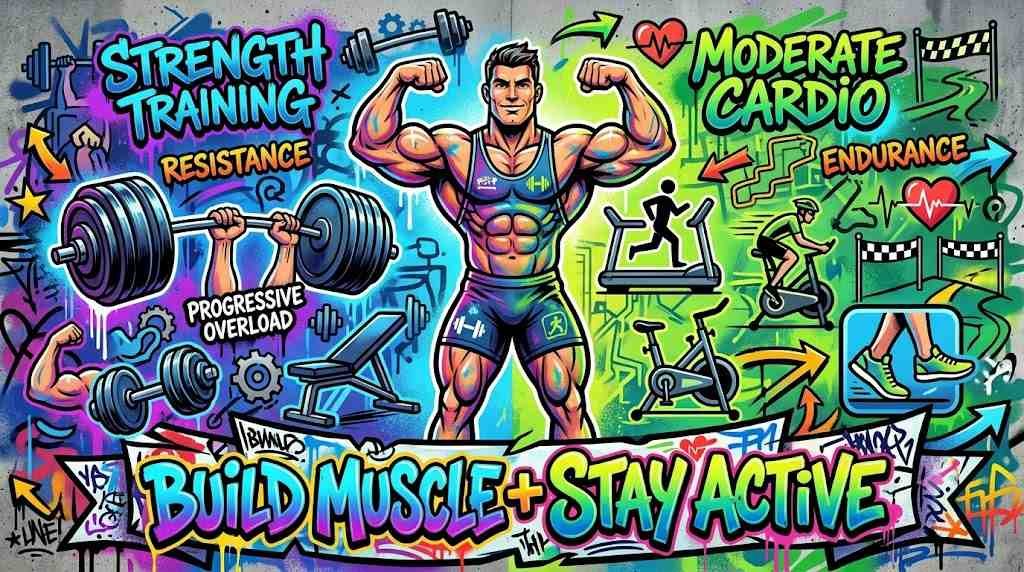
Yes.
Cardio can be useful even when your primary goal is muscle growth.
You don’t need to spend hours running on a treadmill. Moderate cardio can support cardiovascular fitness and help you stay active while bulking.
You can use activities such as:
- Walking
- Cycling
- Incline treadmill walking
- Light jogging
- Swimming
The key is not allowing excessive cardio to interfere with your recovery or making it difficult to maintain your calorie surplus.
Daily walking is particularly useful because it’s easy to recover from and can help you stay active without turning your muscle-building phase into an endurance program.
How to Gain Muscle: Sleep Is Part of Your Muscle-Building Plan
If you’re wondering how to gain muscle, don’t ignore sleep.
Your workouts create the stimulus, your nutrition provides the raw materials, and recovery gives your body the opportunity to adapt.
Most adults should aim for roughly 7–9 hours of quality sleep per night.
Poor sleep can make training feel harder, reduce energy, and make it more difficult to maintain a consistent routine.
You don’t need a perfect sleep schedule every night, but consistently getting enough sleep should be treated as part of your training program.
How to Know If You’re Gaining Too Much Fat
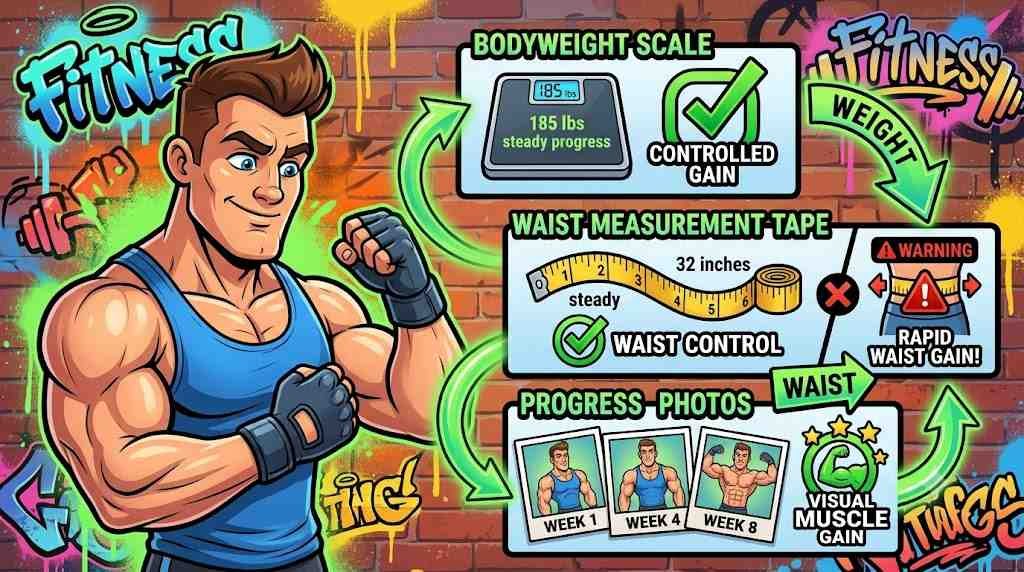
The scale alone can’t tell you whether your bulk is going well.
Two people can gain the same amount of bodyweight while having completely different changes in muscle and fat.
Keep an eye on your waist.
If your bodyweight is gradually increasing and your gym performance is improving while your waist changes slowly, your approach may be working well.
On the other hand, if you’re gaining weight rapidly, your waist is growing quickly, and your strength isn’t improving much, it’s worth reassessing your calorie intake.
Take progress photos under similar conditions every few weeks.
Don’t judge your physique based on a single photo or a single day.
Lean Bulk vs Dirty Bulk
The traditional dirty bulk approach is simple:
Eat as much as possible and worry about fat later.
It can certainly make the scale move, but it doesn’t mean you’re maximizing muscle growth.
A lean bulk takes a different approach:
Eat enough to support growth, train hard, recover properly, and control the rate of weight gain.
The advantage is obvious.
You may spend more time building and less time trying to remove large amounts of body fat afterward.
A dirty bulk isn’t a shortcut to unlimited muscle growth. Your body’s ability to build muscle is limited by factors such as genetics, training experience, nutrition, recovery, and hormones.
More food doesn’t automatically equal more muscle. Bulking vs Cutting: Which Should You Do First?
Common Mistakes That Cause Excessive Fat Gain
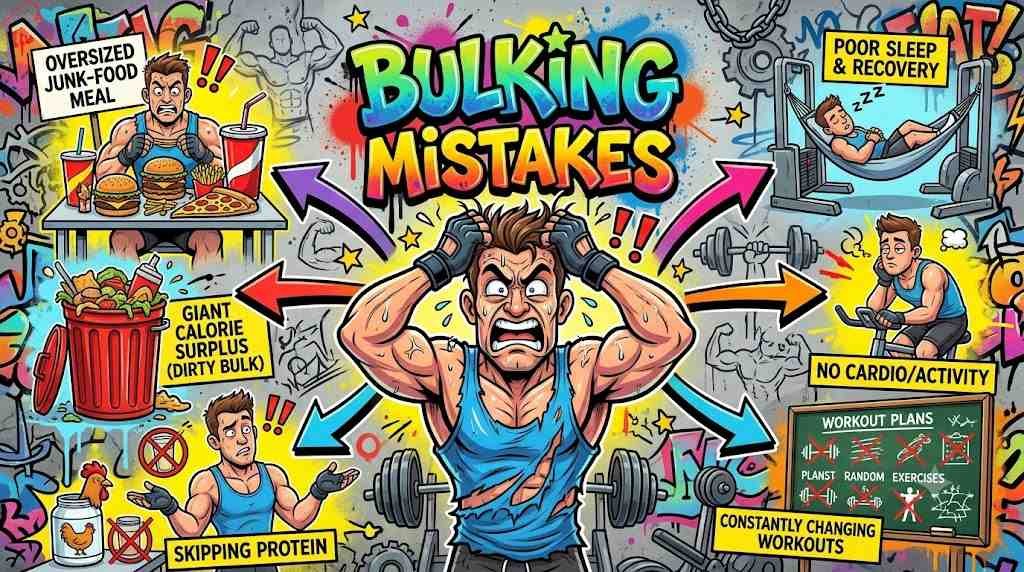
Eating Everything Because You’re “Bulking”
Being in a muscle-building phase doesn’t mean every meal needs to be a cheat meal.
A controlled surplus is still a surplus.
Increasing Calories Too Quickly
If you’re not gaining weight after one week, don’t immediately add 1,000 calories.
Give your body enough time to show a trend.
Ignoring Protein
You can eat thousands of calories and still have a poor muscle-building diet if protein intake is consistently inadequate.
Changing Your Program Every Week
Muscle growth takes time.
Constantly switching exercises makes it difficult to measure progress.
Not Tracking Anything
You don’t need to count every calorie forever, but during a muscle-building phase, tracking your food for at least a period can teach you how much you’re actually eating.
Trying to Gain Weight as Fast as Possible
Fast weight gain sounds exciting until you realize much of it may be fat and water rather than new muscle.
Patience is a huge advantage when building a physique.
Can Beginners Gain Muscle Without Much Fat?
Beginners are often in a good position to make noticeable progress because their bodies respond strongly to resistance training.
Someone new to lifting can potentially gain muscle while making relatively small changes in body fat, especially when training properly and eating enough protein.
However, don’t expect dramatic results in a few weeks.
Muscle growth is a long-term process.
Your first few months may bring noticeable improvements in strength and physique, but continuing to build an impressive amount of muscle requires years of consistent training and nutrition.
What Should You Do If You Start Gaining Too Much Fat?
Don’t immediately abandon your entire plan.
First, look at the data.
Check your:
- Average weekly weight
- Waist measurement
- Food intake
- Training performance
- Daily activity
- Progress photos
If you’re clearly gaining excessive fat, reduce your calorie surplus.
You could also spend some time at approximately maintenance calories before deciding whether you need a dedicated cutting phase.
Small adjustments are usually better than extreme reactions.
How to Gain Muscle Without Turning Your Bulk Into a Fat-Gain Phase
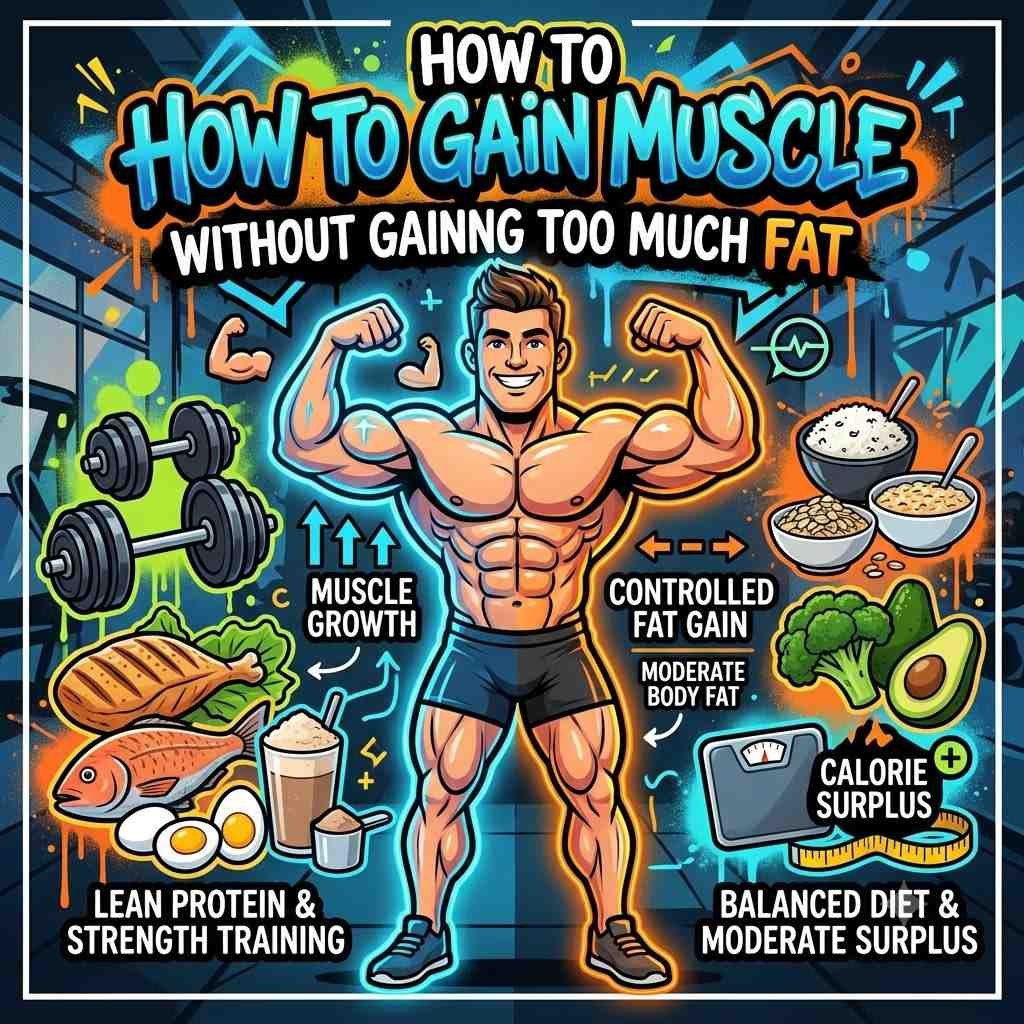
The basic formula isn’t complicated.
Eat slightly above maintenance.
Get enough protein.
Train consistently.
Progressively overload your muscles.
Eat mostly nutritious foods.
Stay active.
Sleep enough.
Monitor your bodyweight and waist.
Adjust your calories when necessary.
That’s the real answer to how to gain muscle while keeping unnecessary fat gain under control.
You don’t need to chase the biggest possible calorie surplus or eat every two hours.
You need a plan you can actually follow for months.
Frequently Asked Questions
Can you gain muscle without gaining any fat?
It’s possible in certain situations, particularly for beginners, people returning to training, or individuals with higher body-fat levels. However, when intentionally gaining weight, some fat gain can occur. The goal is to minimize unnecessary fat rather than expecting absolutely zero fat gain.
How many calories should I eat to gain muscle?
Start with a modest calorie surplus, often around 200–300 calories above estimated maintenance, then monitor your bodyweight and physique for several weeks. Your actual needs will vary.
Is protein more important than calories for muscle growth?
Both matter. Protein supplies amino acids needed for muscle protein synthesis, while adequate energy supports training and recovery. A good muscle-building diet needs both.
Can I eat junk food while bulking?
Occasionally, yes. But most of your diet should still be built around nutritious foods. Junk food is easy to overeat because it can be very calorie-dense.
Should I do cardio while bulking?
Moderate cardio can be beneficial for cardiovascular fitness and general health. Just avoid excessive cardio that interferes with recovery or makes maintaining your calorie surplus difficult.
How long should I bulk?
There is no universal timeline. Continue while you’re making productive progress and keeping fat gain under control. When body-fat levels become higher than you’re comfortable with, you can reassess your strategy.
Why am I gaining fat instead of muscle?
The most common reasons include an excessive calorie surplus, inconsistent resistance training, inadequate protein, poor recovery, or unrealistic expectations about how quickly muscle can be built.
How quickly should I expect muscle growth?
Muscle growth is gradual. Beginners may see faster changes than experienced lifters, but everyone needs consistent training, nutrition, and recovery over months and years.
Weekly Lean-Bulk Progress Checklist
Use this once per week instead of obsessing over the scale every day:
- Average bodyweight recorded
- Waist measurement checked
- Gym performance reviewed
- Protein intake consistent
- Calories reasonably consistent
- Sleep averaging 7–9 hours
- Progress photo taken if needed
- Recovery and energy levels checked
- Calories adjusted only if the trend requires it
The goal is simple: build more muscle, keep unnecessary fat gain under control, and stay consistent long enough to see the results.
Need Help With Your Muscle-Building Plan?
If you’re still confused about how to gain muscle without putting on too much fat, getting a personalized plan can make things much easier.
Your calorie needs, protein intake, workout routine, bodyweight, activity level, and current physique all affect how you should approach muscle gain.
For help with your diet, workout plan, muscle-building goals, or lean-bulking strategy, feel free to contact us directly on WhatsApp.
WhatsApp: 7696593279
Send us your current bodyweight, height, goal, training routine, and diet, and we’ll help you figure out the next step.
[…] Whether you’re trying to reveal your abs, get more defined, or simply improve your body composition, here’s how to lose fat without losing muscle. How to Gain Muscle Without Gaining Too Much Fat […]