MOTS-C peptide has become one of the most talked-about mitochondrial peptides in the health, fitness, and longevity communities. Unlike traditional bodybuilding peptides that primarily stimulate growth hormone release, MOTS-C works by influencing how cells produce and use energy. Researchers are investigating its potential role in metabolic health, exercise performance, insulin sensitivity, and healthy aging.
Interest in MOTS-C peptide has grown rapidly because early laboratory and animal studies suggest it may help regulate glucose metabolism, activate cellular energy pathways, and improve mitochondrial function. These findings have made the peptide popular among athletes, biohackers, and individuals interested in metabolic optimization. However, human research remains limited, so many of its proposed benefits are still under investigation.
In this complete guide, you’ll learn everything about MOTS-C peptide, including how it works, potential benefits, dosage charts, dosing schedules, side effects, expected results, and how it compares with other popular peptides used for fat loss and performance. SLUPP 332 Peptide: Uses, Benefits, Dosage, Side Effects
What Is MOTS-C Peptide?

MOTS-C (Mitochondrial Open Reading Frame of the 12S rRNA Type-C) is a naturally occurring peptide encoded by mitochondrial DNA. Unlike most peptides produced from nuclear DNA, MOTS-C is generated within the mitochondria—the structures inside cells responsible for producing energy.
Scientists first identified MOTS-C in 2015 while studying mitochondrial communication. Since then, researchers have explored its potential role as a signaling molecule that helps cells adapt to metabolic stress, regulate energy production, and maintain overall metabolic balance.
Because mitochondria play a central role in energy generation, researchers believe MOTS-C may influence several biological processes related to:
- Cellular energy production
- Glucose metabolism
- Insulin sensitivity
- Fat utilization
- Exercise adaptation
- Healthy aging
- Metabolic flexibility
Although research is promising, MOTS-C is still considered an investigational peptide and has not been approved as a treatment for these purposes.
How Was MOTS-C Peptide Discovered?
For many years, scientists believed mitochondrial DNA only contained genes responsible for energy production. This changed when researchers discovered that mitochondria also produce small signaling peptides capable of influencing cellular function throughout the body.
MOTS-C was identified as one of these mitochondrial-derived peptides (MDPs). Unlike conventional hormones, it acts as a messenger between the mitochondria and the cell nucleus, helping cells respond to physical stress, nutrient availability, and changing energy demands.
This discovery opened an entirely new area of research focused on how mitochondria communicate with the rest of the body and how these signaling molecules might influence metabolism and aging.
Why Is MOTS-C Different From Other Peptides?
Most peptides used in bodybuilding or anti-aging work by stimulating hormone production or binding directly to growth factor receptors.
MOTS-C peptide is different because it primarily targets cellular metabolism rather than hormone release.
Instead of increasing growth hormone levels, MOTS-C is being studied for its ability to regulate energy balance by improving how cells respond to nutrients and physical activity.
Some of the key characteristics that distinguish MOTS-C include:
- Naturally produced within mitochondria
- Acts as a metabolic signaling peptide
- Supports cellular energy regulation
- Influences glucose utilization
- May improve metabolic flexibility
- Does not directly stimulate growth hormone secretion
These unique properties have made MOTS-C a growing area of interest in longevity science, metabolic research, and sports performance.
How Does MOTS-C Peptide Work?

Understanding how MOTS-C peptide works begins with understanding the role of mitochondria.
Mitochondria are often called the “powerhouses of the cell” because they generate the energy required for nearly every biological process. When mitochondrial function declines due to aging, inactivity, or metabolic disease, energy production can become less efficient.
MOTS-C appears to act as a messenger that helps cells adapt to these changing energy demands.
Research suggests that MOTS-C may activate several metabolic pathways involved in:
- Cellular energy production
- Fat metabolism
- Glucose uptake
- Exercise adaptation
- Stress resistance
- Mitochondrial communication
Rather than acting as a stimulant, MOTS-C encourages cells to become more efficient at producing and using energy.
MOTS-C and Mitochondrial Signaling
One of the most unique aspects of MOTS-C peptide is its role in mitochondrial signaling.
When the body experiences metabolic stress—such as intense exercise, calorie restriction, or changes in nutrient availability—MOTS-C may move from the mitochondria into the cell nucleus. There, it influences the expression of genes involved in metabolism and stress adaptation.
Researchers believe this signaling process may help cells maintain metabolic balance during challenging conditions.
MOTS-C and AMPK Activation
AMP-activated protein kinase (AMPK) is often called the body’s “metabolic master switch.”
When activated, AMPK encourages the body to:
- Produce more cellular energy
- Increase fat oxidation
- Improve glucose uptake
- Reduce unnecessary energy expenditure
- Enhance metabolic efficiency
Experimental studies suggest MOTS-C may activate AMPK pathways, which is one reason researchers are investigating it for metabolic health and exercise performance.
MOTS-C and Glucose Metabolism
Glucose is one of the body’s primary energy sources.
Early research suggests MOTS-C may improve how efficiently cells absorb and utilize glucose, particularly during periods of increased energy demand.
Potential mechanisms being investigated include:
- Enhanced insulin sensitivity
- Increased glucose transport into muscle cells
- Improved metabolic flexibility
- Better energy utilization during exercise
While these findings are encouraging, most evidence currently comes from preclinical studies, and more human clinical trials are needed to determine the extent of these effects.
Key Takeaways
- MOTS-C peptide is a naturally occurring mitochondrial-derived peptide involved in cellular energy regulation.
- Unlike growth hormone peptides, MOTS-C primarily targets metabolism rather than hormone production.
- Researchers are studying its potential effects on glucose metabolism, mitochondrial function, insulin sensitivity, and exercise performance.
- Much of the current evidence comes from laboratory and animal studies, with human research still developing.
MOTS-C Peptide Benefits

The growing popularity of MOTS-C peptide is largely driven by research into its potential effects on metabolism, energy production, and healthy aging. Unlike many peptides used in bodybuilding, MOTS-C is not primarily associated with muscle growth or growth hormone release. Instead, it is being studied for its ability to support cellular energy regulation and metabolic function.
Most of the evidence available today comes from laboratory and animal studies, with a smaller but increasing number of human studies. While these findings are encouraging, more large-scale clinical trials are needed before firm conclusions can be made.
Below are the most commonly discussed MOTS-C peptide benefits based on current scientific research.
MOTS-C Peptide for Fat Loss
One of the biggest reasons people search for MOTS-C peptide is its potential role in supporting fat metabolism.
Researchers believe MOTS-C may help the body become more efficient at using stored fat as an energy source during periods of increased energy demand. Rather than acting as a stimulant or appetite suppressant, it appears to influence metabolic pathways involved in fuel utilization.
Potential mechanisms under investigation include:
- Increased fatty acid oxidation
- Improved metabolic flexibility
- Better glucose regulation
- Enhanced mitochondrial efficiency
- Support for calorie utilization during exercise
Because of these mechanisms, some users combine MOTS-C with a structured nutrition plan and regular exercise program. However, it should not be viewed as a replacement for healthy eating or physical activity.
Can MOTS-C Help With Weight Loss?
Some animal studies have shown reductions in body fat and improvements in metabolic markers. However, human research is still limited, and there is currently insufficient evidence to conclude that MOTS-C alone produces significant weight loss.
The best results are likely to occur when it is paired with:
- A calorie-controlled diet
- Strength training
- Cardiovascular exercise
- Adequate sleep
- Consistent recovery
MOTS-C Peptide for Energy
Another frequently searched topic is MOTS-C peptide for energy.
Because MOTS-C is produced by mitochondria—the energy-producing structures inside cells—researchers are investigating whether it may help improve cellular energy efficiency.
Users interested in sports performance often report feeling:
- Improved workout endurance
- Better daily energy levels
- Less exercise-related fatigue
- Faster recovery between training sessions
These reports are largely anecdotal. Scientifically, researchers believe MOTS-C may help cells produce and use energy more efficiently, particularly during periods of metabolic stress.
Unlike caffeine or stimulant-based products, MOTS-C is not believed to increase energy through nervous system stimulation. Instead, any potential improvements would likely come from enhanced cellular metabolism. Tesamorelin Dosage for Bodybuilding: Complete Guide
Improved Exercise Performance
Exercise places significant demands on the body’s energy systems. One area of active research is whether MOTS-C helps muscles adapt more effectively to physical activity.
Early studies suggest potential benefits such as:
- Increased exercise capacity
- Improved endurance
- Better oxygen utilization
- Enhanced muscle energy production
- Reduced fatigue during prolonged activity
Some researchers have described MOTS-C as an “exercise mimetic,” meaning it may activate certain biological pathways that are also stimulated by physical activity. This does not mean it can replace exercise, but it has generated interest in how it might complement regular training.
For athletes and fitness enthusiasts, this remains an exciting area of research, although more human data is needed.
Better Insulin Sensitivity
Healthy insulin function plays an important role in energy production and overall metabolic health.
Insulin helps move glucose from the bloodstream into cells, where it can be used as fuel. Reduced insulin sensitivity can make this process less efficient.
Experimental studies suggest MOTS-C may support:
- Improved glucose uptake
- Better insulin signaling
- Enhanced metabolic flexibility
- More efficient carbohydrate utilization
These findings have led researchers to investigate MOTS-C in the context of metabolic disorders. However, it is not an approved treatment for diabetes or insulin resistance, and individuals with medical conditions should follow guidance from a qualified healthcare professional.
Supports Healthy Aging
One of the most exciting areas of MOTS-C research is longevity and healthy aging.
As people age, mitochondrial function naturally declines. This reduction in efficiency can contribute to lower energy production and changes in metabolism.
Scientists are exploring whether MOTS-C may help maintain healthier mitochondrial communication as part of the aging process.
Potential areas under investigation include:
- Cellular resilience to stress
- Healthy metabolic function
- Mitochondrial efficiency
- Age-related changes in energy production
- Maintenance of physical performance
It’s important to note that MOTS-C has not been proven to slow aging or extend lifespan in humans. Current research is focused on understanding how it influences biological pathways associated with aging.
Recovery Benefits
Recovery is essential for anyone involved in resistance training, endurance sports, or high-intensity exercise.
Some users include MOTS-C in their routines with the goal of supporting recovery between workouts.
Potential mechanisms being studied include:
- Improved energy restoration
- Reduced metabolic stress
- Enhanced nutrient utilization
- Better adaptation to training
While user reports often describe improved recovery, controlled human studies are still needed to confirm these effects.
Supports Mitochondrial Health
Mitochondria generate the majority of the body’s usable energy in the form of ATP (adenosine triphosphate).
Healthy mitochondrial function is associated with:
- Physical performance
- Cognitive function
- Metabolic health
- Muscle endurance
- Overall vitality
Because MOTS-C originates from the mitochondria themselves, researchers believe it may play an important role in maintaining efficient cellular communication and energy production.
This is one reason MOTS-C is frequently discussed alongside other peptides used in longevity and metabolic research.
May Improve Metabolic Flexibility
Metabolic flexibility refers to the body’s ability to switch efficiently between carbohydrates and fats as fuel sources.
A metabolically flexible individual can:
- Burn carbohydrates effectively after meals
- Use stored fat during fasting or exercise
- Adapt quickly to changes in energy demand
Laboratory research suggests MOTS-C may help regulate some of the pathways involved in this process.
Improved metabolic flexibility is associated with better endurance, healthier glucose control, and more efficient energy production.
Potential Cognitive Benefits
Although research is still in its early stages, scientists are exploring whether improved mitochondrial function may indirectly support brain health.
Healthy mitochondria are essential for neurons because brain cells require a continuous supply of energy.
Researchers are investigating whether MOTS-C may influence:
- Cellular stress responses
- Brain energy metabolism
- Cognitive resilience during aging
At present, there is no strong clinical evidence that MOTS-C improves memory or cognitive performance in humans.
Scientific Research on MOTS-C Peptide
Research into MOTS-C continues to expand, with scientists studying its role in several areas, including:
- Metabolic health
- Obesity
- Exercise physiology
- Aging biology
- Mitochondrial communication
- Insulin sensitivity
While the early findings are promising, most experts agree that additional human clinical trials are needed to establish optimal dosing, long-term safety, and real-world effectiveness.
Summary of MOTS-C Peptide Benefits
Current research suggests MOTS-C may have potential in several areas of metabolic health and performance, including:
- Supporting cellular energy production
- Improving metabolic efficiency
- Enhancing exercise adaptation
- Promoting healthy glucose metabolism
- Supporting insulin sensitivity
- Encouraging fat utilization during exercise
- Supporting mitochondrial function
- Assisting recovery from physical activity
- Contributing to healthy aging research
These benefits are based on a growing body of research, but many remain investigational. Anyone considering MOTS-C should understand that it is still being studied and is not approved for general medical use.
MOTS-C Peptide Dosage Chart
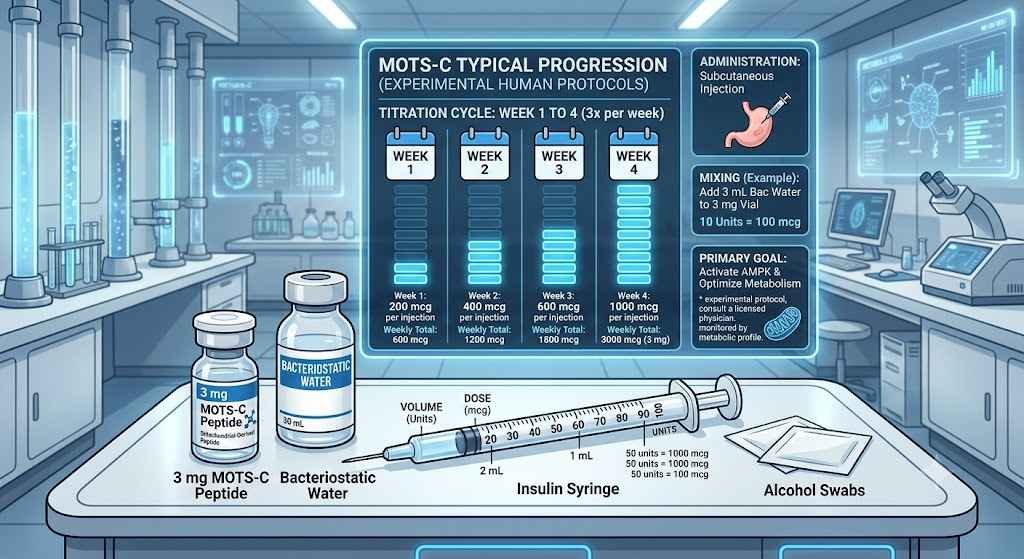
One of the most searched topics online is the MOTS-C peptide dosage chart. While there is currently no FDA-approved or standardized clinical dosing protocol for MOTS-C, many researchers and experienced peptide users follow a gradual dosing approach that slowly increases the amount over several weeks.
The purpose of this gradual increase is to allow the body to adapt while monitoring individual response throughout the cycle.
Note: The dosage chart below reflects a commonly shared community protocol and is not an officially approved medical guideline. Human clinical research on MOTS-C dosing is still developing.
MOTS-C Peptide Dosage Chart (Gradual Approach)
| Week | Daily Dose | Injection Units (3 mg Reconstituted) |
|---|---|---|
| Weeks 1–2 | 200 mcg (0.2 mg) | 6 units (0.06 mL) |
| Weeks 3–4 | 400 mcg (0.4 mg) | 12 units (0.12 mL) |
| Weeks 5–6 | 600 mcg (0.6 mg) | 18 units (0.18 mL) |
| Weeks 7–8 | 800 mcg (0.8 mg) | 24 units (0.24 mL) |
| Weeks 9–10+ | 1,000 mcg (1 mg) | 30 units (0.30 mL) |
Example based on a 3 mg vial reconstituted to approximately 3.33 mg/mL.
Beginner MOTS-C Peptide Dosage
For individuals following this gradual protocol, the cycle typically begins with:
- 200 mcg (0.2 mg) daily
- Continue for Weeks 1–2
- Equivalent to approximately 6 insulin syringe units (0.06 mL)
Starting with a lower dose allows users to evaluate tolerance before increasing the amount.
Intermediate MOTS-C Peptide Dosage
During the middle of the protocol, the dosage is gradually increased.
Weeks 3–4
- 400 mcg daily
- 12 units (0.12 mL)
Weeks 5–6
- 600 mcg daily
- 18 units (0.18 mL)
Many users choose to maintain one of these doses depending on their individual goals and response.
Advanced MOTS-C Peptide Dosage
Later in the protocol, experienced users may increase to higher daily amounts.
Weeks 7–8
- 800 mcg daily
- 24 units (0.24 mL)
Weeks 9–10+
- 1,000 mcg (1 mg) daily
- 30 units (0.30 mL)
Higher doses should only be considered with an understanding that MOTS-C remains an investigational peptide and that long-term human safety data is still limited.
MOTS-C Peptide Dosage Per Day
Using the gradual protocol above, the daily dose progresses over time rather than remaining constant.
| Phase | Daily Dose |
|---|---|
| Beginner | 200 mcg |
| Early Intermediate | 400 mcg |
| Intermediate | 600 mcg |
| Advanced | 800 mcg |
| Experienced | 1,000 mcg |
This gradual progression is intended to avoid large dose increases at the beginning of the cycle.
Weekly MOTS-C Peptide Dosing Schedule
A typical schedule following the gradual approach looks like this:
| Week | Daily Dose |
|---|---|
| Week 1 | 200 mcg |
| Week 2 | 200 mcg |
| Week 3 | 400 mcg |
| Week 4 | 400 mcg |
| Week 5 | 600 mcg |
| Week 6 | 600 mcg |
| Week 7 | 800 mcg |
| Week 8 | 800 mcg |
| Week 9 | 1 mg |
| Week 10+ | 1 mg |
This stepwise increase is one of the more commonly shared community protocols.
How to Inject MOTS-C Peptide
MOTS-C is generally administered as a subcutaneous (SubQ) injection, meaning it is injected into the fatty tissue beneath the skin rather than directly into muscle.
Common injection sites include:
- Abdomen (at least 2 inches away from the navel)
- Outer thigh
- Love handle area
- Upper buttock
To help reduce irritation, rotate injection sites throughout the cycle instead of using the same location repeatedly.
Best Time to Take MOTS-C Peptide
There is currently no universally accepted best time to administer MOTS-C. Common timing approaches discussed by users include:
- Morning, to align with daily metabolic activity.
- 30–60 minutes before training, with the goal of supporting workout performance.
- At a consistent time each day, to maintain routine.
At present, no high-quality human studies have demonstrated that one timing strategy is superior to another. Retatrutide Dosage Guide: Clinical Schedule, Results & Safety
MOTS-C Peptide Cycle Length
A gradual protocol such as the one above typically spans 8–10 weeks, allowing users to increase the dose over time.
Many users then take a break before considering another cycle, although there is no clinically established cycle length for MOTS-C. Any cycling approach should be viewed as experimental rather than evidence-based.
Storage Guidelines
Proper handling is important to maintain peptide stability.
- Store unopened lyophilized vials in a cool, dry place according to the manufacturer’s instructions.
- After reconstitution, refrigerate the peptide (typically 2–8°C / 36–46°F) unless the supplier specifies otherwise.
- Use sterile bacteriostatic water for reconstitution if directed by the product instructions.
- Avoid repeated temperature changes and excessive exposure to light.
MOTS-C Peptide Side Effects

As interest in MOTS-C peptide continues to grow, one of the most common questions is whether it causes side effects. Since MOTS-C is still considered an investigational peptide, long-term human safety data remains limited. Most available safety information comes from early clinical research, laboratory studies, and anecdotal user reports.
Current evidence suggests that MOTS-C has generally been well tolerated in the limited human studies conducted so far. However, like any injectable peptide, some individuals may experience mild side effects.
The likelihood and severity of side effects can vary depending on factors such as dosage, individual sensitivity, product quality, and injection technique.
Common MOTS-C Peptide Side Effects
Most reported side effects are mild and temporary.
Some of the more commonly discussed side effects include:
- Mild redness at the injection site
- Temporary swelling
- Slight itching
- Injection site tenderness
- Mild fatigue during the first few days
- Headache
- Temporary nausea
These symptoms generally resolve within a short period and may become less noticeable as the body adapts.
Injection Site Reactions
Because MOTS-C is administered subcutaneously, mild irritation around the injection site is one of the most frequently reported issues.
Possible reactions include:
- Redness
- Small swelling
- Mild bruising
- Tenderness
- Temporary discomfort
Using proper sterile injection techniques and rotating injection sites can help minimize these reactions.
Fatigue During the Adjustment Phase
Some users report feeling slightly tired or sluggish during the first several days of a cycle.
Researchers have not confirmed exactly why this occurs, but some believe it may be related to changes in cellular energy regulation as the body adapts.
This effect is generally reported as temporary.
Digestive Symptoms
Although uncommon, a small number of users report mild digestive discomfort, including:
- Nausea
- Reduced appetite
- Mild stomach discomfort
These symptoms are usually temporary and appear less frequently than injection site reactions.
Allergic Reactions
True allergic reactions appear to be rare but remain possible with any injectable product.
Seek immediate medical attention if symptoms such as the following occur:
- Difficulty breathing
- Swelling of the lips or throat
- Severe rash
- Hives
- Dizziness
Although uncommon, these reactions require prompt evaluation.
Are There Long-Term Side Effects?
This is one of the biggest unanswered questions surrounding MOTS-C peptide.
At present:
- Long-term human safety studies are limited.
- Most published research has evaluated relatively short treatment periods.
- Scientists continue to investigate the effects of prolonged exposure.
For this reason, it is not yet possible to fully characterize the long-term safety profile of MOTS-C.
Who Should Avoid MOTS-C Peptide?
Because research is still evolving, certain groups should avoid using investigational peptides unless advised by a qualified healthcare professional.
This includes:
- Pregnant or breastfeeding women
- Children and adolescents
- Individuals with known allergies to peptide ingredients
- People with serious underlying medical conditions unless under medical supervision
If you have diabetes, cardiovascular disease, liver disease, kidney disease, or another chronic condition, consult your healthcare provider before considering any investigational peptide.
Can MOTS-C Interact With Medications?
There is currently very little clinical data regarding drug interactions with MOTS-C.
Because researchers are studying its potential effects on glucose metabolism and insulin sensitivity, individuals taking medications that affect blood sugar should use extra caution and seek medical advice before using investigational peptides.
As additional clinical studies are completed, our understanding of possible interactions will continue to improve.
MOTS-C Peptide Results
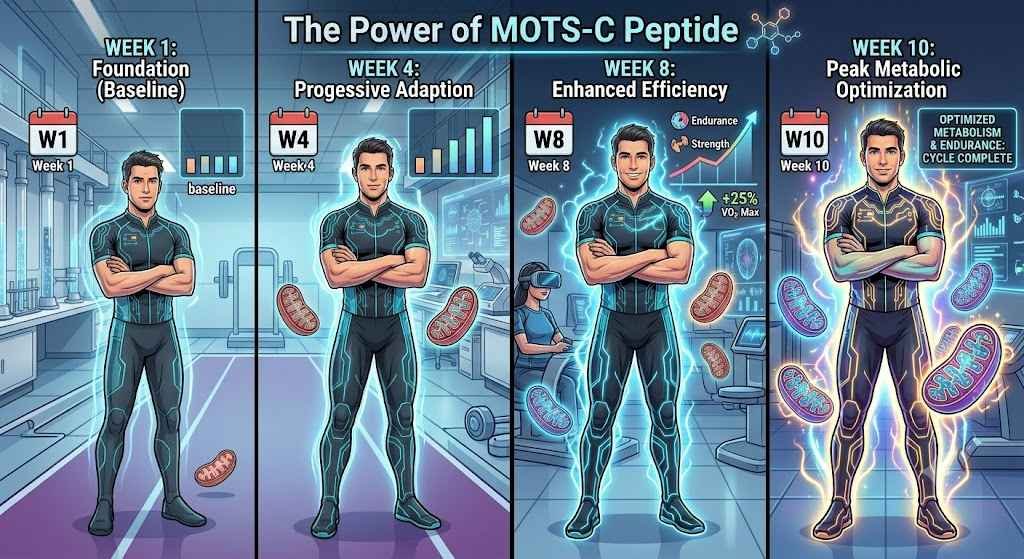
Another highly searched topic is MOTS-C peptide results. While individual experiences vary, many users are interested in how quickly potential changes might become noticeable.
It’s important to remember that results depend on several factors, including:
- Nutrition
- Exercise routine
- Sleep quality
- Overall health
- Consistency
- Individual response
Current scientific evidence does not guarantee specific outcomes, but anecdotal reports often describe gradual changes rather than dramatic overnight effects.
Weeks 1–2
During the first two weeks, most changes—if they occur—are generally subtle.
Some users report:
- Improved daily energy
- Better workout motivation
- Increased endurance
- No noticeable physical changes yet
Many people notice little or no visible difference during this stage.
Weeks 3–4
As the protocol progresses, some users report:
- Improved exercise capacity
- Better recovery between workouts
- More stable energy levels
- Increased training volume
Visible body composition changes are still largely dependent on diet and exercise.
Weeks 5–8
By the middle to later stages of a cycle, anecdotal reports sometimes describe:
- Better workout performance
- Improved stamina
- Easier recovery after intense sessions
- Gradual improvements in body composition when paired with a calorie-controlled diet and resistance training
Because these reports are subjective, they should not be interpreted as guaranteed results.
Weeks 9–10+
Individuals who continue following a gradual protocol sometimes report maintaining:
- Consistent energy
- Improved training endurance
- Better exercise recovery
- Continued support for healthy metabolic habits
Again, these observations are anecdotal and not a substitute for findings from controlled clinical trials.
MOTS-C Peptide Before and After Expectations
Many people search online for dramatic before and after transformations. In reality, MOTS-C is not intended to produce rapid physical changes on its own.
If meaningful changes occur, they are more likely to be gradual and influenced by:
- A structured resistance training program
- Regular cardiovascular exercise
- A balanced, calorie-appropriate diet
- Consistent sleep and recovery
- Long-term healthy lifestyle habits
Rather than expecting dramatic transformations, users should focus on overall metabolic health, energy levels, and sustainable fitness progress.
Tips to Maximize Results
If you’re interested in the potential benefits of MOTS-C, healthy lifestyle habits remain the foundation of success.
To support your goals:
- Follow a high-quality nutrition plan.
- Prioritize protein intake appropriate for your needs.
- Perform resistance training 3–5 times per week.
- Include cardiovascular exercise regularly.
- Aim for 7–9 hours of quality sleep each night.
- Stay well hydrated.
- Track your progress with photos, body measurements, and performance metrics instead of relying solely on the scale. S4 SARM (Andarine): Complete Guide
Key Takeaways
- Current evidence suggests MOTS-C peptide is generally well tolerated in early research, but long-term safety data is still limited.
- The most commonly reported side effects are mild injection site reactions, temporary fatigue, and occasional digestive discomfort.
- Results, if experienced, are typically gradual and depend heavily on diet, exercise, sleep, and overall lifestyle.
- More human clinical trials are needed to establish the long-term safety and effectiveness of MOTS-C.
MOTS-C Peptide vs AOD-9604
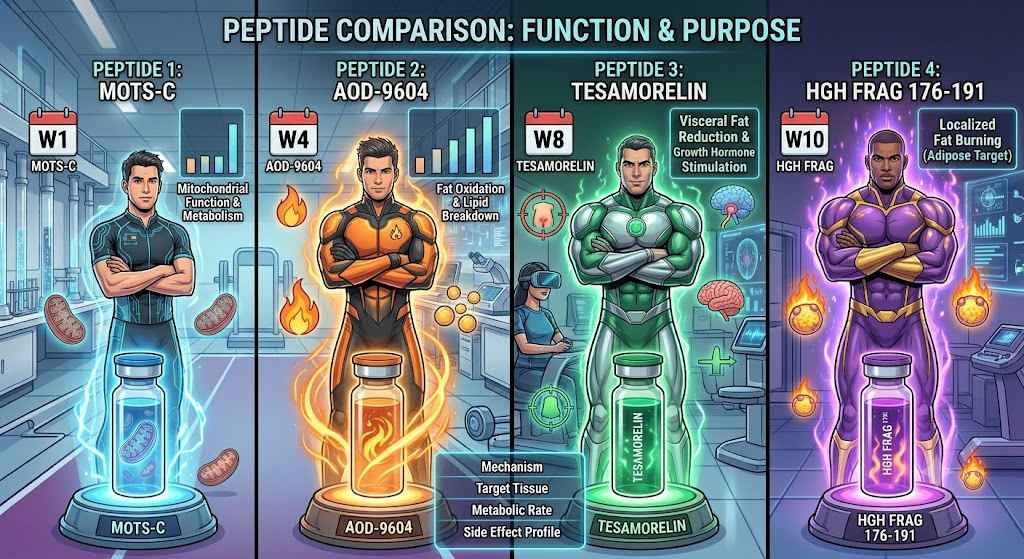
Both MOTS-C and AOD-9604 are popular peptides in the metabolic health and fat-loss space, but they work through very different biological pathways.
| Feature | MOTS-C | AOD-9604 |
|---|---|---|
| Primary Purpose | Cellular metabolism & mitochondrial function | Fat metabolism |
| Main Target | Mitochondria | Fat cells |
| Growth Hormone Activity | No | No |
| Supports Energy Production | Yes | Limited |
| Fat Loss Support | Potential | Primary research focus |
| Exercise Performance | Potential benefit | Minimal evidence |
| Longevity Research | Yes | No |
Which Is Better?
If your goal is improving cellular energy production, exercise performance, and metabolic health, MOTS-C may be the more comprehensive option under investigation.
If your primary interest is fat metabolism, AOD-9604 has been studied more specifically for that purpose.
MOTS-C Peptide vs Tesamorelin
Tesamorelin is a growth hormone-releasing hormone (GHRH) analog, while MOTS-C is a mitochondrial-derived peptide.
| Feature | MOTS-C | Tesamorelin |
|---|---|---|
| Growth Hormone Release | No | Yes |
| Mitochondrial Support | Yes | No |
| Cellular Energy | Yes | Indirect |
| Fat Loss | Potential | Studied for reducing visceral fat in specific clinical settings |
| Exercise Performance | Potential | Indirect |
The biggest difference is that Tesamorelin works through the growth hormone pathway, whereas MOTS-C focuses on cellular metabolism and mitochondrial signaling.
MOTS-C Peptide vs HGH Frag 176-191
HGH Frag 176-191 is a modified fragment of growth hormone researched primarily for fat metabolism.
| Feature | MOTS-C | HGH Frag 176-191 |
|---|---|---|
| Mitochondrial Function | Yes | No |
| Energy Metabolism | Yes | Limited |
| Fat Metabolism | Potential | Primary focus |
| Muscle Growth | No | No |
| Healthy Aging Research | Yes | Limited |
For individuals interested in metabolic optimization and cellular health, MOTS-C offers a broader area of research. HGH Frag 176-191 remains more closely associated with fat-loss investigations.
Can You Stack MOTS-C Peptide?
Many experienced peptide users discuss combining MOTS-C with other research peptides. However, there are no standardized clinical stacking protocols, and the safety of combining investigational peptides has not been fully established.
Some combinations commonly discussed in fitness communities include:
- MOTS-C + AOD-9604 (metabolic support + fat metabolism)
- MOTS-C + CJC-1295/Ipamorelin (metabolic pathways + growth hormone pathway)
- MOTS-C + Tesamorelin (advanced protocols discussed by experienced users)
- MOTS-C + BPC-157 (performance and recovery discussions)
These combinations are based largely on anecdotal experience rather than high-quality clinical evidence. Anyone considering peptide combinations should understand that safety and effectiveness have not been established through large human trials.
MOTS-C Peptide Reddit: What Users Are Saying

Searches for “MOTS-C peptide Reddit” have increased as more people share their experiences online.
Common themes reported by users include:
Positive Reports
- Improved daily energy
- Better endurance during training
- Faster workout recovery
- More consistent energy levels
- Easier adherence to exercise routines
Neutral Reports
- No noticeable changes after short-term use
- Benefits appearing gradually rather than immediately
Negative Reports
- Mild injection site irritation
- Temporary fatigue
- Cost concerns
- Difficulty finding reputable suppliers
Remember that Reddit discussions reflect personal experiences and should not be considered scientific evidence. Individual responses can vary widely, and anecdotal reports are not a substitute for controlled clinical research. SR9009 SARM (Stenabolic): Benefits, Dosage, Side Effects, Results
Frequently Asked Questions About MOTS-C Peptide
What is MOTS-C peptide used for?
MOTS-C is being researched for its potential effects on metabolism, mitochondrial function, insulin sensitivity, exercise performance, and healthy aging. It is still considered an investigational peptide.
Does MOTS-C increase growth hormone?
No. Unlike peptides such as CJC-1295 or Ipamorelin, MOTS-C does not directly stimulate growth hormone release.
Can MOTS-C help with weight loss?
Some research suggests it may support metabolic function and fat utilization, but it should not be viewed as a standalone weight-loss treatment.
Is MOTS-C legal?
The legal status of MOTS-C varies by country. Always check local regulations before purchasing or using investigational peptides.
Is MOTS-C FDA approved?
No. Native MOTS-C is not currently approved by the U.S. Food and Drug Administration for general medical use.
How long does MOTS-C take to work?
Any reported effects are generally gradual and depend on factors such as exercise, nutrition, sleep, and individual response.
Does MOTS-C build muscle?
Current research does not indicate that MOTS-C directly increases muscle mass. Its primary area of investigation is metabolic regulation.
Can women use MOTS-C?
Research has included both male and female participants in some settings, but individuals should seek medical advice before considering investigational peptides.
Does MOTS-C require refrigeration?
After reconstitution, most suppliers recommend refrigeration according to the product’s storage instructions.
Is MOTS-C safe?
Early research suggests it has generally been well tolerated, but long-term human safety data is still limited.
Final Verdict
MOTS-C peptide has emerged as one of the most promising mitochondrial-derived peptides currently under investigation. Rather than targeting growth hormone production, it focuses on cellular energy regulation, mitochondrial communication, and metabolic function.
Early research has generated interest in its potential role in exercise performance, insulin sensitivity, healthy aging, and metabolic health. However, many of these potential benefits still require confirmation through larger human clinical trials.
If you’re considering MOTS-C, it’s important to understand that it remains an investigational peptide. A balanced diet, regular exercise, quality sleep, and evidence-based medical care continue to be the cornerstones of long-term health and fitness.
Contact Gym Pundit on WhatsApp
Have questions about MOTS-C peptide, research peptides, SARMs, or bodybuilding supplements?
Our team is here to help you make informed decisions.
Chat with us directly on WhatsApp:
Whether you need guidance on peptide categories, product information, or general fitness resources, we’re happy to assist.


[…] Reviews often highlight significant differences between suppliers. Purity, concentration, and manufacturing standards may vary, which can affect both user experience and confidence in the product. MOTS-C Peptide: Benefits, Dosage, Side Effects […]
[…] Always follow the storage guidance provided by the specific manufacturer. MOTS-C Peptide: Benefits, Dosage, Side Effects […]