
Introduction
Retatrutide dosage has become one of the most searched topics in the peptide and weight management community. This investigational compound has gained significant attention because of its unique ability to target three important metabolic pathways involved in appetite regulation, glucose control, and energy balance.
Unlike traditional single-pathway compounds, Retatrutide works as a triple receptor agonist, activating GLP-1, GIP, and glucagon receptors. Because of this unique mechanism, researchers are studying its potential role in weight management, metabolic health, and obesity-related conditions.
Many people searching for Retatrutide dosage are interested in understanding how clinical studies designed dose escalation, what results were observed, possible side effects, and how this compound compares with other popular metabolic peptides.
This complete Retatrutide dosage guide explains the available clinical research information, dose schedules studied, expected results timeline, safety considerations, and frequently asked questions.
What Is Retatrutide?
Retatrutide is an investigational peptide-based medication developed for research into obesity and metabolic disorders. It belongs to a newer generation of compounds designed to influence multiple biological pathways related to body weight regulation.
While some medications target only one hormone pathway, Retatrutide has a unique triple-action approach:
GLP-1 Receptor Activity
GLP-1 (glucagon-like peptide-1) plays an important role in:
- Appetite regulation
- Food intake control
- Blood glucose management
- Slowing stomach emptying
Activation of the GLP-1 pathway is one reason similar medications have become widely studied for weight management.
GIP Receptor Activity
GIP (glucose-dependent insulinotropic polypeptide) is another hormone involved in:
- Insulin response
- Nutrient metabolism
- Energy regulation
Researchers believe combining GIP activity with GLP-1 activity may create a stronger metabolic response compared with targeting only one pathway.
Glucagon Receptor Activity
The glucagon pathway is associated with:
- Energy expenditure
- Fat metabolism
- Regulation of stored energy
The addition of glucagon receptor activity makes Retatrutide different from many earlier compounds in the same research category.
How Does Retatrutide Work?
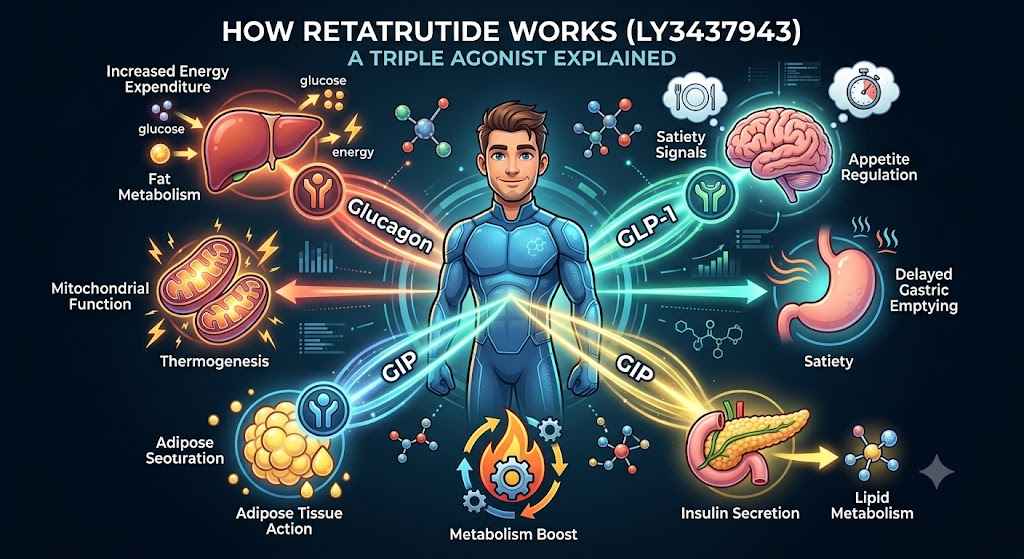
Retatrutide works by influencing signals between the digestive system, brain, and metabolism.
When these receptors are activated, several effects may occur:
Appetite Regulation
One of the major areas of interest with Retatrutide is its ability to influence hunger signals.
Research suggests that activating these pathways may help:
- Reduce appetite
- Increase feelings of fullness
- Improve control over food intake
Metabolic Support
The combination of three receptor pathways is being studied for its potential effects on:
- Glucose metabolism
- Insulin sensitivity
- Energy usage
- Body composition changes
Fat Loss Research
Clinical studies have investigated Retatrutide because of its potential impact on body weight reduction.
However, weight loss outcomes depend on many factors, including:
- Diet quality
- Physical activity
- Individual metabolism
- Overall health condition
Retatrutide Dosage Schedule in Clinical Research
One of the most common questions is:
“What is the Retatrutide dosage schedule?”
In clinical research, Retatrutide has been studied using gradual dose escalation strategies rather than immediately starting with higher amounts.
The purpose of increasing doses slowly is to:
- Improve tolerance
- Reduce digestive side effects
- Allow the body to adapt
- Monitor individual responses
Clinical trials have evaluated different dosage groups, including lower and higher study doses, to understand effectiveness and safety.
Why Does Retatrutide Use Dose Escalation?
Dose escalation is commonly used with metabolic medications because the body may need time to adjust.
A gradual approach in research settings helps researchers evaluate:
- How participants tolerate treatment
- Frequency of side effects
- Changes in appetite
- Weight-related outcomes
Starting with higher exposure levels immediately may increase the possibility of unwanted reactions, especially gastrointestinal effects.
Retatrutide Starting Dosage Explained

One of the most searched terms related to Retatrutide is Retatrutide starting dose. Since Retatrutide is still being investigated in clinical research, there is no officially approved consumer dosing schedule available.
In clinical studies, researchers generally used a gradual dose escalation approach, where participants started with lower exposure levels before moving toward higher study doses.
The reason for starting with lower doses is to evaluate:
- Individual tolerance
- Gastrointestinal response
- Changes in appetite
- Metabolic effects
- Overall safety profile
A gradual approach is common in many metabolic therapies because the body may require time to adapt to changes affecting appetite, digestion, and hormone signaling.
Retatrutide Dosage Escalation Schedule
The Retatrutide dose escalation schedule studied in clinical trials focused on slowly increasing exposure over time.
Researchers used escalation strategies to understand:
- How quickly the body adapts
- Which doses provide the best balance between effectiveness and tolerability
- How side effects change at different dose levels
A typical research approach includes:
Early Treatment Phase
During the early phase, researchers monitor:
- Appetite changes
- Digestive symptoms
- Energy levels
- General tolerance
Adjustment Phase
As participants continue, researchers evaluate whether higher study doses can be tolerated.
Important factors include:
- Side effect severity
- Individual response
- Health markers
- Treatment adherence
Maintenance Phase
Later stages of clinical research focus on understanding:
- Long-term effectiveness
- Weight-related outcomes
- Safety observations
- Metabolic improvements
It is important to remember that research dosing protocols are designed for controlled studies and should not be considered personal medical recommendations.
Retatrutide Dosage Schedule (Clinical Research Based)
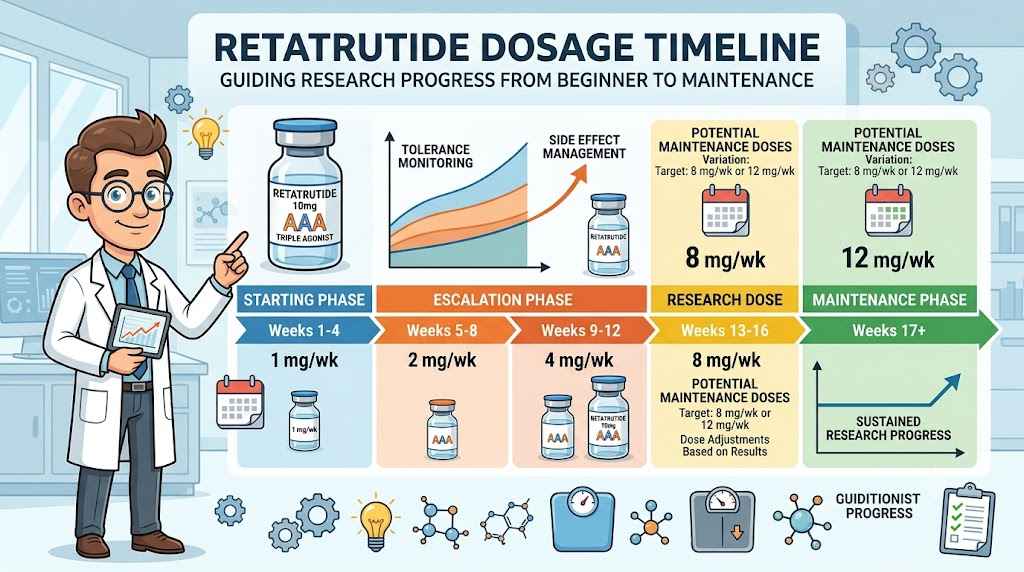
Retatrutide dosage has been studied using once-weekly subcutaneous administration with gradual dose escalation strategies to improve tolerability. In clinical trials sponsored by Eli Lilly, researchers evaluated different maintenance doses ranging from 1 mg to 12 mg weekly over a 48-week period.
Retatrutide Research Dose Escalation Chart
| Research Period | Studied Dose Range | Purpose |
|---|---|---|
| Weeks 1–4 | 1–2 mg once weekly | Initial exposure and tolerance evaluation |
| Weeks 5–8 | 2–4 mg once weekly | Gradual escalation phase |
| Weeks 9–12 | 4 mg once weekly | Intermediate research dose |
| Weeks 13–16 | 8 mg once weekly | Higher-dose research group |
| Week 17+ | Up to 12 mg once weekly | Highest maintenance dose studied |
Administration frequency: Once weekly subcutaneous injection
Research duration: Up to 48 weeks in Phase 2 clinical trials
Retatrutide Dosage Clinical Trial Groups
The Phase 2 obesity trial evaluated several Retatrutide dose groups:
| Trial Group | Weekly Dose Studied |
|---|---|
| Low Dose Group | 1 mg |
| Moderate Dose Groups | 4 mg |
| Higher Dose Groups | 8 mg |
| Highest Dose Group | 12 mg |
Some higher-dose groups used lower initial doses followed by gradual escalation to improve tolerability.
Retatrutide Dosage and Weight Loss Results in Studies
Clinical research showed dose-related weight reductions:
| Weekly Research Dose | Average Weight Reduction at 48 Weeks |
|---|---|
| 1 mg | Approximately 8.7% |
| 4 mg | Approximately 17.1% |
| 8 mg | Approximately 22.8% |
| 12 mg | Approximately 24.2% |
The highest studied doses produced the greatest average weight reduction in the Phase 2 trial, although individual results varied.
Important Note About Retatrutide Dosage
Retatrutide is still considered an investigational compound and does not currently have an approved general-use dosing schedule. Clinical trial doses are designed for controlled research environments and should not be interpreted as personal medical dosing instructions.
Retatrutide Results Timeline: What Research Shows
The Retatrutide results timeline is one of the biggest reasons this compound has gained attention.
Many people are interested in understanding how quickly changes may occur. However, results vary depending on:
- Starting body composition
- Diet
- Exercise habits
- Genetics
- Individual response
Retatrutide Results After 4 Weeks
During the early weeks of research, participants may experience adaptation changes.
Commonly monitored areas include:
- Appetite changes
- Food intake patterns
- Digestive response
- Early metabolic changes
The first month is generally considered an adjustment period. Oxy Log Oxyboost 1000 mg – Benefits, Ingredients, Uses & Complete Guide
Retatrutide Results After 12 Weeks
Around the three-month mark, researchers evaluate more noticeable changes.
Clinical studies have investigated:
- Body weight changes
- Fat mass reduction
- Metabolic markers
- Treatment tolerance
Lifestyle factors such as resistance training and adequate protein intake may also influence body composition outcomes.
Retatrutide Results After 6 Months and Beyond
Longer research periods help scientists understand:
- Continued weight-related changes
- Long-term safety
- Maintenance of results
- Changes in body composition
Long-term outcomes remain an important area of ongoing research.
Does Retatrutide Help Burn Fat?
A common question is:
“Does Retatrutide burn fat?”
Retatrutide is being researched for its potential effects on body weight reduction and metabolic regulation.
Its mechanism involves multiple pathways:
- GLP-1 receptor activation
- GIP receptor activation
- Glucagon receptor activation
These pathways may influence:
- Appetite control
- Energy balance
- Metabolic activity
However, successful body composition changes usually depend on combining treatment approaches with:
- Proper nutrition
- Strength training
- Sufficient protein intake
- Consistent lifestyle habits
Retatrutide Injection Information
Retatrutide has been studied as a once-weekly injectable compound in clinical research settings.
Important research considerations include:
Injection Frequency
Clinical studies have investigated weekly administration because of the compound’s long-lasting activity.
Injection Site Rotation
For injectable medications, rotating injection locations is commonly practiced to reduce repeated irritation in the same area.
Common injection areas studied for similar medications include:
- Abdomen area
- Thigh area
- Upper arm area
Storage Considerations
Storage requirements depend on the specific formulation and manufacturer instructions.
Research compounds should always be handled according to proper storage guidelines to maintain stability.
Retatrutide Half Life: How Long Does It Stay in the Body?
Retatrutide half-life is another popular search term among people researching this compound.
Half-life refers to the amount of time required for the body to reduce the concentration of a compound by approximately half.
A longer half-life can influence:
- How frequently a compound is studied
- Duration of biological activity
- Dosing intervals investigated in research
Retatrutide’s long-acting properties are one reason researchers have explored weekly administration schedules. Side Effects of Anabolic Steroids in Bodybuilding
Retatrutide Side Effects

Understanding Retatrutide side effects is an important part of evaluating any investigational medication.
Clinical research has reported side effects that are commonly associated with metabolic therapies affecting GLP-1 pathways.
Common Retatrutide Side Effects
Possible reported effects include:
Nausea
One of the most common gastrointestinal reactions.
Vomiting
Some participants may experience vomiting, especially during dose increases.
Diarrhea
Changes in digestion may occur during treatment.
Constipation
Slower gastric movement may contribute to constipation.
Reduced Appetite
While this may be a desired effect for weight management, excessive appetite suppression may affect nutritional intake.
Potential Serious Concerns
Researchers continue monitoring possible risks, including:
- Changes in heart rate
- Gallbladder-related issues
- Pancreatic concerns
- Loss of lean muscle mass during rapid weight reduction
Anyone considering metabolic treatments should discuss potential risks with a qualified healthcare professional.
How To Reduce Potential Retatrutide Side Effects
Research and clinical experience with similar compounds suggest several general strategies may improve tolerance:
Maintain Proper Hydration
Adequate fluid intake supports overall health and digestion. Oral Steroids for Beginners: Complete Guide
Prioritize Protein Intake
During weight reduction phases, sufficient protein intake can help support muscle maintenance.
Follow a Balanced Diet
A nutrient-rich diet can help prevent deficiencies during appetite reduction.
Increase Activity Gradually
Combining resistance training with appropriate nutrition may support healthier body composition changes.
Retatrutide vs Semaglutide vs Tirzepatide
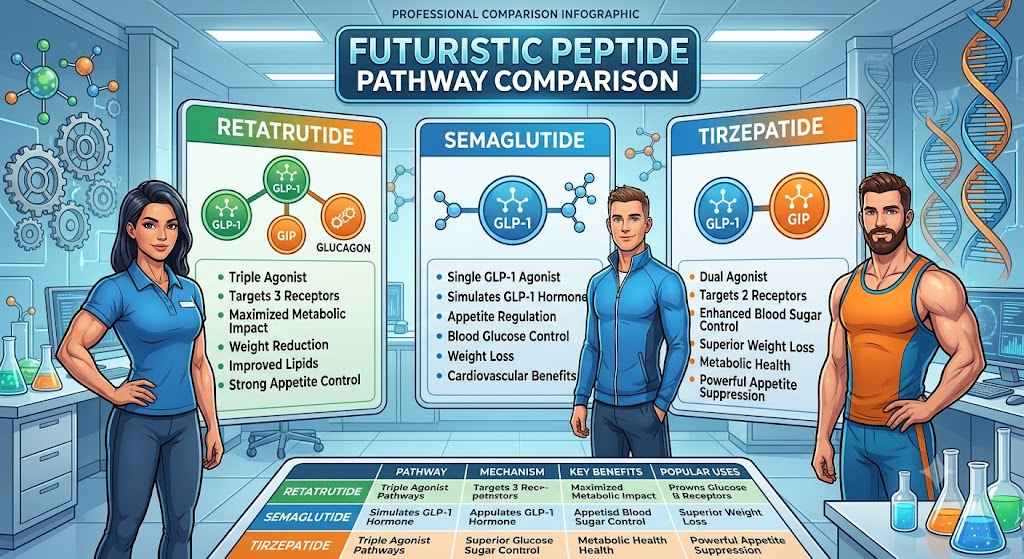
Many people compare Retatrutide with other popular metabolic compounds.
| Feature | Retatrutide | Semaglutide | Tirzepatide |
|---|---|---|---|
| Main Action | Triple receptor agonist | GLP-1 receptor agonist | GLP-1 + GIP agonist |
| Research Status | Investigational | Approved for specific medical uses | Approved for specific medical uses |
| Research Interest | Weight management & metabolism | Diabetes & weight management | Diabetes & weight management |
| Pathways | GLP-1 + GIP + Glucagon | GLP-1 | GLP-1 + GIP |
Retatrutide is unique because it combines three receptor pathways instead of one or two.
Is Retatrutide FDA Approved?
A frequently searched question is:
“Is Retatrutide FDA approved?”
Currently, Retatrutide remains an investigational compound being studied in clinical trials.
It has not received FDA approval as an officially available prescription treatment.
The approval process requires:
- Successful clinical trials
- Safety evaluation
- Effectiveness assessment
- Regulatory review
Who Should Avoid Retatrutide?
Because Retatrutide is still under investigation, researchers continue studying appropriate usage and safety considerations.
People should be especially cautious if they have:
- Existing medical conditions
- History of serious digestive problems
- Concerns about medication interactions
- Previous reactions to similar therapies
Medical guidance is important before considering any investigational treatment.
Frequently Asked Questions About Retatrutide Dosage
How Does Retatrutide Work?
Retatrutide activates GLP-1, GIP, and glucagon receptors, which are involved in appetite regulation, metabolism, and energy balance.
Is Retatrutide Better Than Semaglutide?
Retatrutide works through three receptor pathways, while Semaglutide primarily targets GLP-1. However, Retatrutide is still being investigated and is not approved.
How Long Does Retatrutide Stay in the Body?
Retatrutide has been studied as a long-acting compound, which is why researchers evaluated weekly administration schedules.
Can Retatrutide Help Preserve Muscle?
Weight loss outcomes can include both fat and lean tissue changes. Resistance training and adequate protein intake are important factors for maintaining muscle.
When Will Retatrutide Be Available?
Availability depends on clinical trial outcomes and regulatory approval timelines.
Final Thoughts on Retatrutide Dosage Research
Retatrutide dosage continues to be one of the most searched topics in the peptide and metabolic health space because of its unique triple-receptor mechanism and promising clinical research interest.
Current studies focus on understanding the best balance between effectiveness, safety, and long-term tolerability.
As research continues, future data will provide more information about Retatrutide’s potential role in weight management and metabolic health.
For now, understanding the science, clinical research process, dosage concepts, results timeline, and safety information is the best way to stay informed.
Need More Information About Retatrutide?
Have questions about Retatrutide research, clinical studies, dosage information, results, or peptide-related topics?
Our team is available to help you with general information and guidance.
Chat with us on WhatsApp: