
Mediphorm Dose is a topic that has attracted attention among bodybuilders interested in muscle appearance, localized enhancement, and hyaluronic-acid-based products. Unlike conventional bodybuilding supplements that focus on muscle protein synthesis, Mediphorm Ultra is discussed for its proposed ability to increase localized muscle volume through water retention within the treated area.
One of the most interesting aspects of Mediphorm is that different muscle groups have different anatomical structures and sizes. Biceps, triceps, chest, shoulders, calves, legs and lats are not identical, which is why discussions about Mediphorm often include separate muscle-specific protocols.
In this guide, we’ll explore what Mediphorm is, how hyaluronic acid works, why different muscle groups are discussed separately, what users report about results, and the potential health risks associated with intramuscular site-enhancement products.
We’ll also examine the differences between Mediphorm and traditional site-enhancement oils such as Synthol, along with frequently asked questions from bodybuilding communities.
What Is Mediphorm Ultra?
Mediphorm Ultra is discussed in bodybuilding circles as a localized muscle-enhancement product associated with hyaluronic acid. Its intended appeal is different from that of conventional anabolic compounds, which are used to influence muscle growth through hormonal and anabolic pathways.
The main idea behind this type of product is localized volume enhancement rather than increasing overall muscle mass through training adaptation.
This distinction is important. A muscle that appears fuller because of an injected material or fluid-related volume change has not necessarily developed additional contractile muscle tissue.
Mediphorm should therefore not be confused with:
- Whey protein or other dietary supplements.
- Creatine and performance supplements.
- Anabolic steroids.
- Peptides used for other bodybuilding purposes.
- Medically approved dermal fillers used for specific cosmetic indications.
What Is Hyaluronic Acid?

Hyaluronic Acid (HA) is a naturally occurring molecule found in different tissues throughout the human body, including the skin, connective tissues, and joints.
It is particularly well known for its ability to bind water. This property makes it useful in skincare products and certain medical applications.
Hyaluronic acid is also used in certain injectable dermal fillers. These products can add temporary volume in specifically approved treatment areas. However, the fact that HA is used in medical fillers does not establish that every HA-based product is suitable for injection into skeletal muscles.
The FDA lists specific approved applications for dermal fillers and advises against injecting fillers into muscles for body enhancement. FDA+1
How Does Mediphorm Work?
The proposed mechanism behind Mediphorm Ultra centres on the water-binding properties associated with hyaluronic acid.
Hyaluronic acid can interact with water and form a hydrated gel-like structure, depending on its formulation and physical properties.
This is why it is widely used in cosmetic and medical applications involving hydration and volume.
However, there are several important differences between skin hydration, medically approved dermal filler applications and intramuscular site enhancement.
A fuller-looking muscle does not necessarily mean that:
- New muscle fibres have developed.
- Muscle protein synthesis has increased.
- Muscle strength has improved.
- Permanent muscle growth has occurred.
There is currently insufficient clinical evidence to establish Mediphorm Ultra’s effectiveness, long-term results or safety for bodybuilding-related intramuscular enhancement.
Mediphorm Dose: Understanding Different Muscle Groups
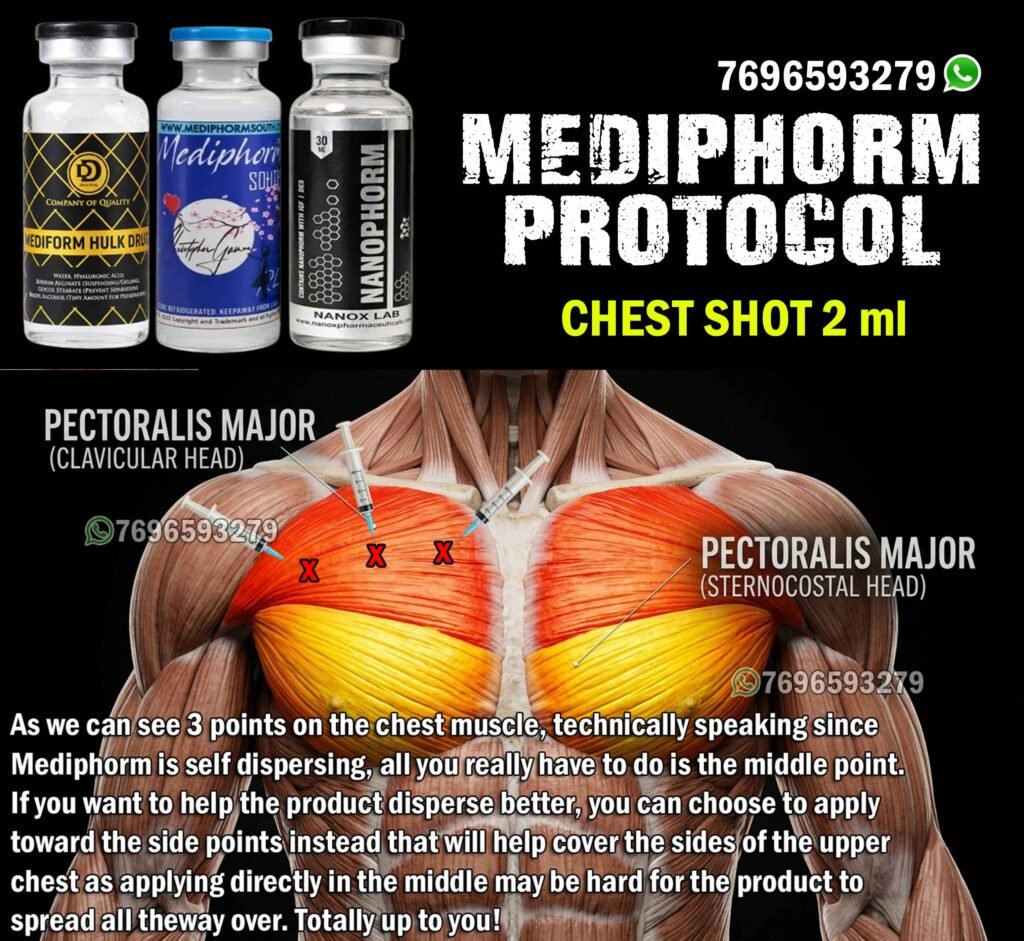
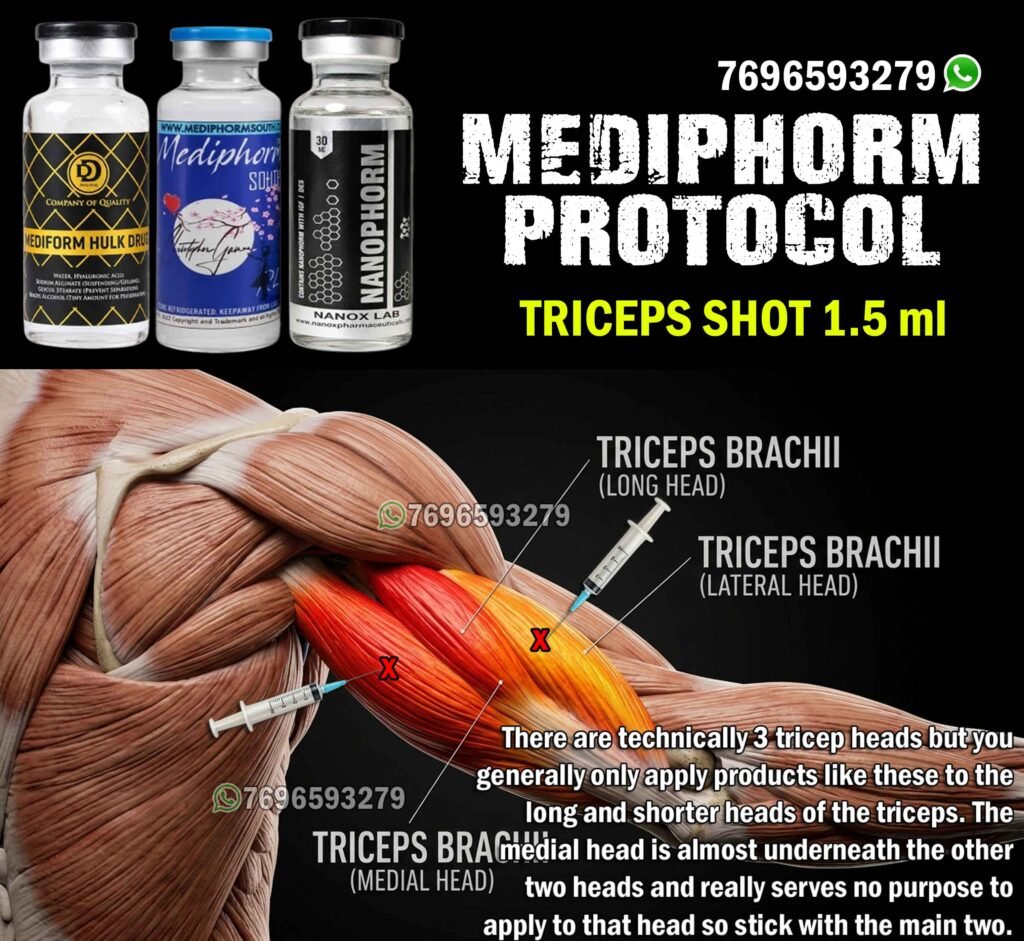
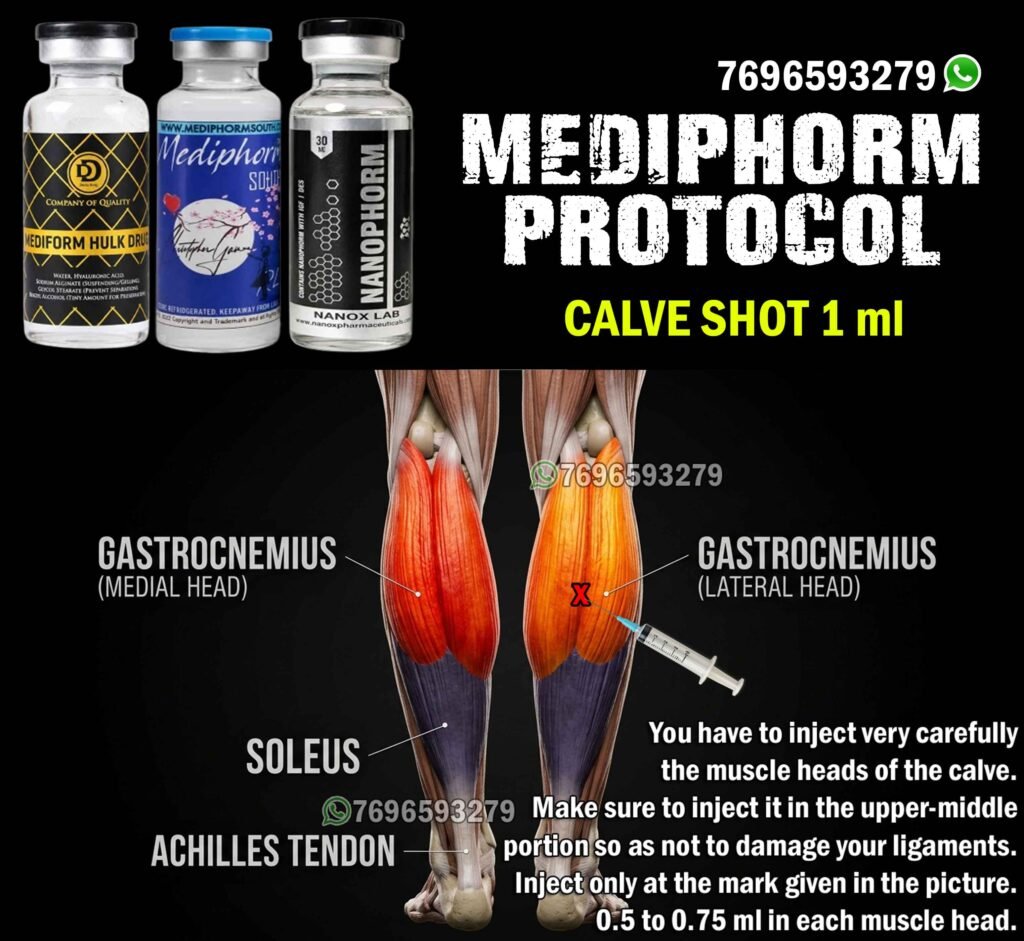
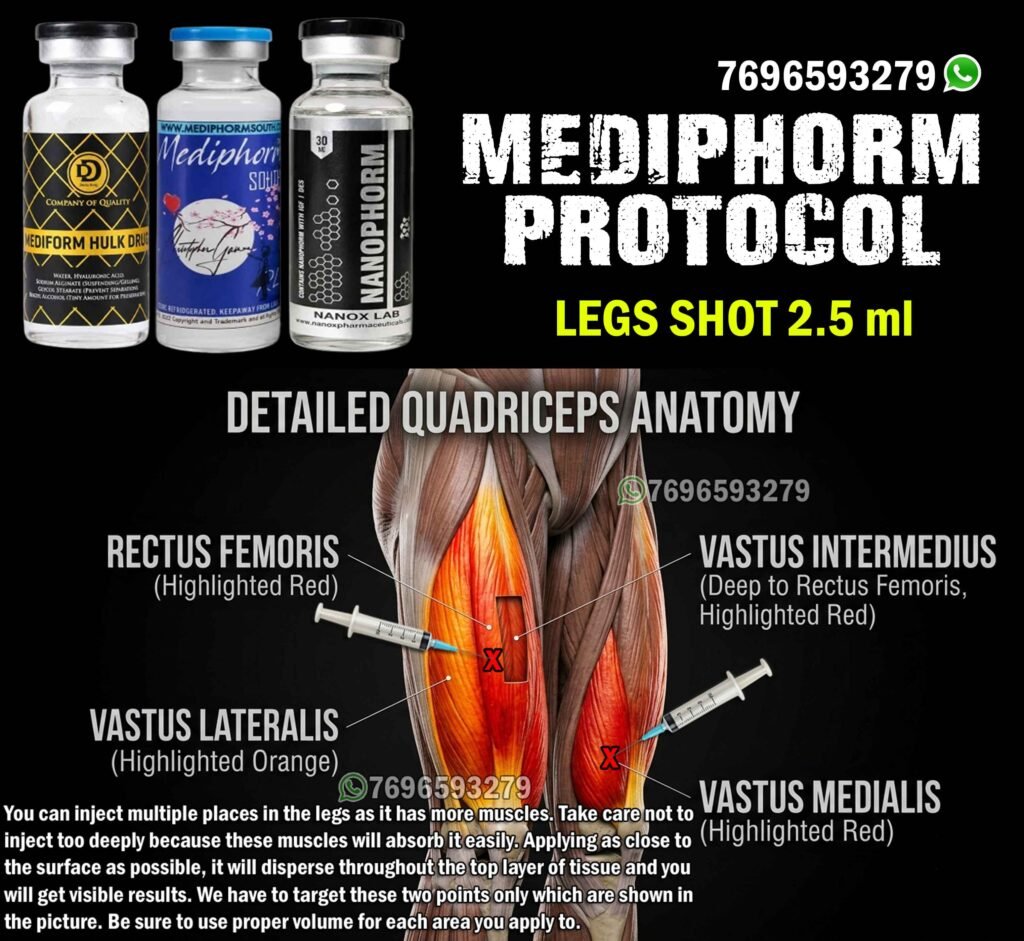
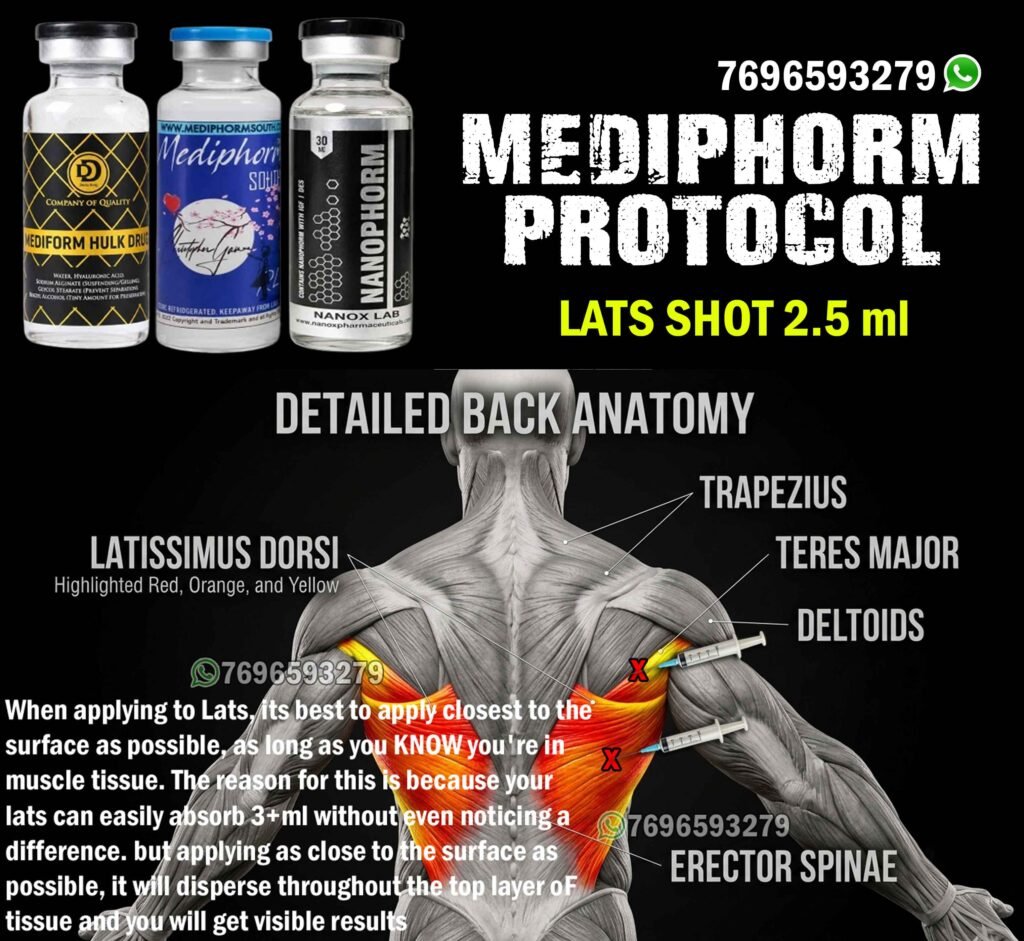
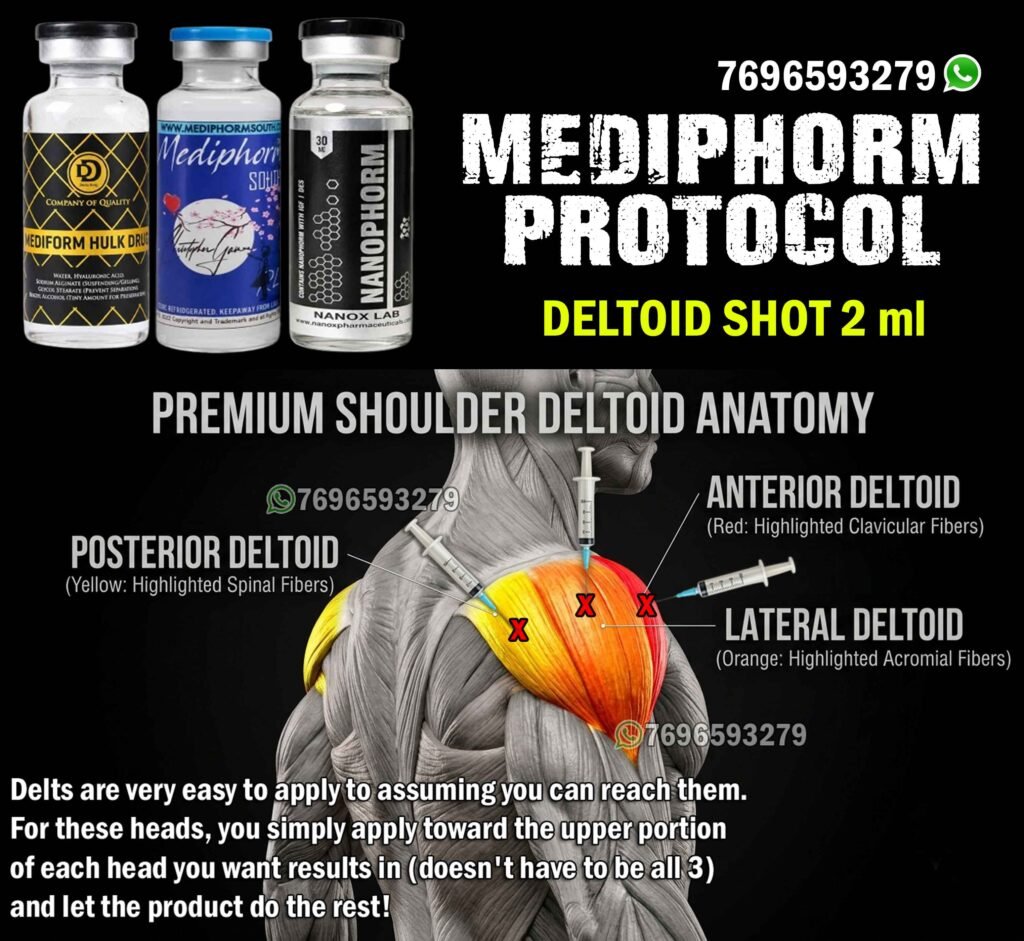
Different muscle groups have different anatomical structures, sizes and shapes. The Mediphorm protocol chart covers seven major bodybuilding muscle groups, including the biceps, triceps, chest, deltoids, calves, legs and lats.
The chart provides different volume figures for each muscle group. Below is a transcription of the amounts shown in your reference material, not a medically validated injection recommendation. Primobolan vs Masteron: Muscle Growth, Cutting & Side Effects
| Muscle group | Amount shown in the chart |
|---|---|
| Triceps | 1.5 mL |
| Chest | 2 mL |
| Biceps | 1–1.5 mL (your clarification: 1 mL per head) |
| Calves | 0.5–0.75 mL per head (explanatory text; heading says 1 mL) |
| Legs | 2.5 mL |
| Lats | 2.5 mL |
| Deltoids | 2 mL |
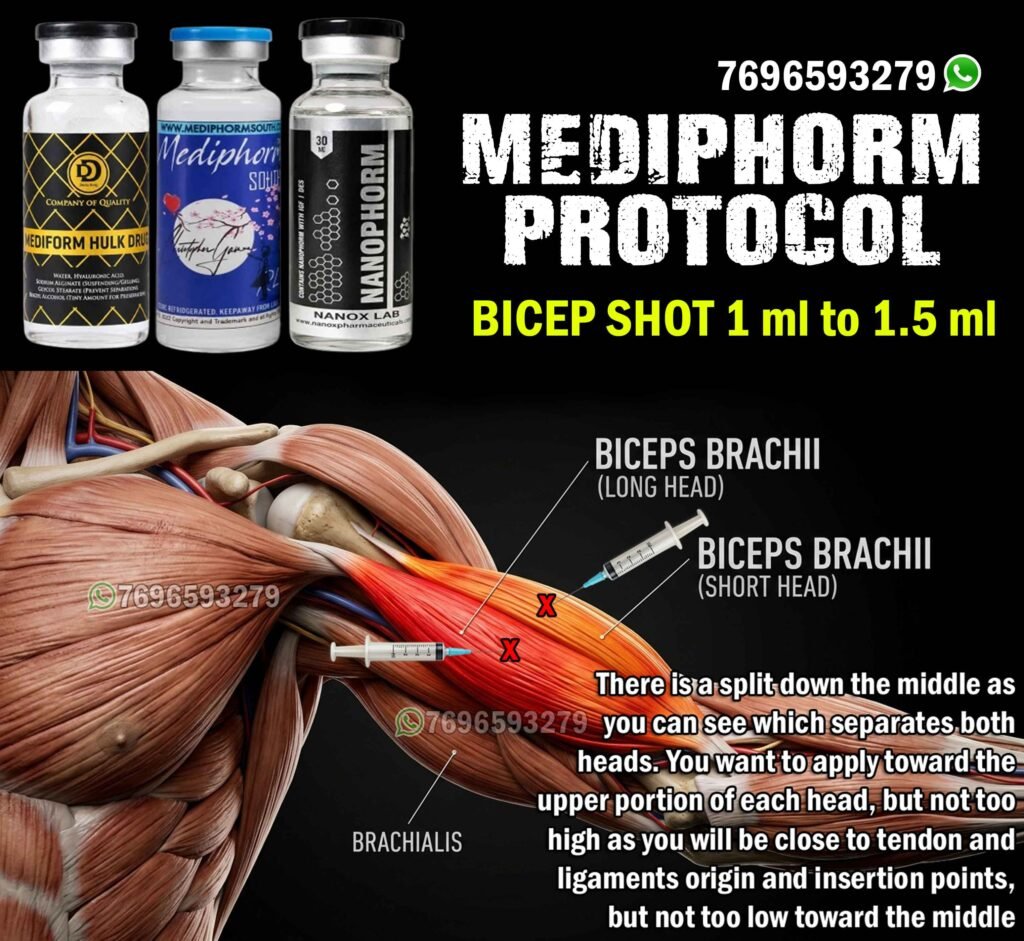
Mediphorm Dose for Biceps
The biceps brachii consists of two heads: the long head and short head. The chart illustrates both heads separately. Your clarification is that the listed 1 mL refers to each head, while the original heading gives a range of 1–1.5 mL.
Mediphorm Dose for Triceps
The triceps has three heads: long, lateral and medial. The chart identifies the long and lateral heads as the relevant anatomical features in its illustration. The heading lists 1.5 mL.
Mediphorm Dose for Chest
The chest section illustrates the pectoralis major and lists 2 mL. It also discusses the upper and middle portions of the chest.
Mediphorm Dose for Deltoids
The deltoid has three portions: anterior, lateral and posterior. The chart lists 2 mL for the deltoid section.
Mediphorm Dose for Calves
The calf section identifies the two gastrocnemius heads. Its heading states 1 mL, while the explanatory text specifies 0.5–0.75 mL per head. Both figures should remain visible in the article rather than silently treating them as equivalent.
Mediphorm Dose for Legs
The leg section lists 2.5 mL and illustrates the thigh musculature.
Mediphorm Dose for Lats
The latissimus dorsi is a large back muscle responsible for much of the V-taper appearance. The chart lists 2.5 mL for the lat section.
Why Does Mediphorm Dose Differ Between Muscle Groups?
Different muscles have different dimensions, shapes and anatomical characteristics.
For example, the biceps is considerably smaller than the pectoralis major or latissimus dorsi. The calf also has a different structure from the quadriceps.
This explains why muscle-specific charts are presented in bodybuilding discussions.
However, anatomical size alone cannot establish a safe injection volume. There is no clinically validated Mediphorm dosing protocol for these seven muscle groups, and I would not recommend using the chart as a self-injection guide.
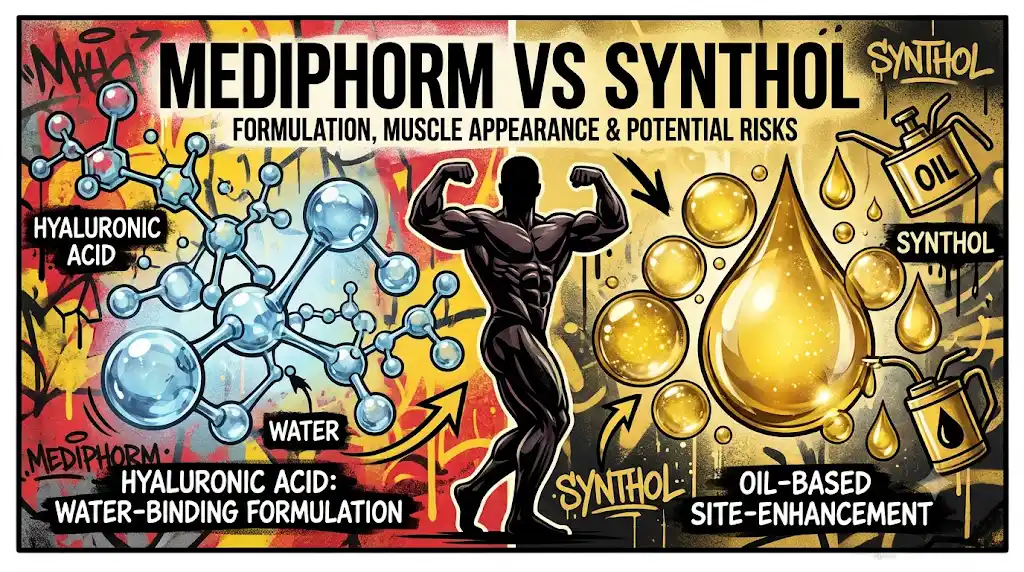
Mediphorm vs Synthol
Both products are discussed in bodybuilding communities in connection with localized muscle appearance, but they should not automatically be considered equivalent. Mediphorm vs Synthol: Differences, Uses & Risks
| Feature | Mediphorm Ultra | Synthol-type site-enhancement oils |
|---|---|---|
| Product discussed | Hyaluronic-acid-based | Oil-based formulations |
| Main association | Water-binding and localized volume | Localized oil volume |
| Intended bodybuilding appeal | Fuller-looking muscles | Fuller-looking muscles |
| Hormonal action | Not established as an anabolic hormone | Not an anabolic hormone |
| Permanent muscle growth | Not established | Not established |
| Long-term safety | Insufficient evidence | Documented serious complications |
A published medical case series documented delayed complications following site-enhancement oil injections, including painful nodules, swelling, infections and cases requiring surgery. PubMed+1
Does Mediphorm Build Actual Muscle?
This is an important question.
Actual skeletal muscle growth, also known as hypertrophy, involves adaptations within muscle fibres. Resistance training, adequate nutrition and recovery contribute to this process.
An injected substance that changes local volume does not automatically produce the same adaptations.
Therefore, a change in muscle appearance should not be confused with:
- Increased contractile tissue.
- Improved strength.
- Better athletic performance.
- Permanent hypertrophy.
How Long Do Mediphorm Results Last?
There is insufficient reliable clinical research to establish how quickly Mediphorm Ultra produces visible changes or how long those changes last.
Results from testimonials and social media discussions can vary considerably.
Factors such as product formulation, individual tissue response, existing muscle development and the nature of the injected material may influence appearance.
It would be misleading to promise permanent results or a specific timeline based only on testimonials.
Mediphorm Side Effects and Potential Complications
Although hyaluronic acid has established medical applications, injections are not automatically risk-free.
Potential complications associated with injectable fillers and intramuscular procedures include:
- Pain and swelling.
- Bruising and bleeding.
- Infection or abscess formation.
- Inflammatory reactions.
- Nodules and hardened areas.
- Tissue damage.
- Nerve or blood-vessel injury.
The FDA warns that unapproved body-enhancement uses of injectable fillers can cause serious complications. FDA+2
Important: Increasing pain, redness, warmth, fever, rapidly increasing swelling, skin discoloration or unusual weakness after an injection requires prompt medical assessment. Chest pain or breathing difficulty requires emergency care.
Does Mediphorm Affect Hormones?
Hyaluronic acid itself is not an anabolic steroid or testosterone-like hormone.
However, this does not establish that every formulation sold as Mediphorm Ultra is hormonally inactive or that it has no systemic effects.
Without verified ingredient information and clinical testing, broad safety conclusions should be avoided.
Can Mediphorm Replace Bodybuilding Training?
No.
Even if a product produces a visible change in localized volume, it cannot replace the benefits of progressive resistance training.
For actual muscle development, the fundamentals remain:
- Progressive overload.
- Sufficient daily protein.
- Appropriate calorie intake.
- Consistent resistance training.
- Proper sleep and recovery.
Frequently Asked Questions About Mediphorm Dose
1. What is Mediphorm Dose?
Mediphorm Dose refers to the amount of Mediphorm Ultra discussed in relation to different muscle groups. However, there is no clinically established muscle-specific dosing protocol for bodybuilding enhancement. Gaining Cycle with Peptides: Muscle Growth, Uses and Risks
2. Is Mediphorm a steroid?
Hyaluronic acid is not an anabolic steroid. However, the complete composition of a particular Mediphorm formulation must be verified before making claims about its ingredients.
3. Does Mediphorm increase muscle size?
It is promoted and discussed for localized volume enhancement, but reliable clinical evidence establishing its effectiveness for skeletal muscle enlargement is lacking.
4. Is Mediphorm the same as Synthol?
No. They are discussed in the same general bodybuilding category, but hyaluronic-acid-based products and oil-based site-enhancement products have different formulations and properties.
5. Does Mediphorm cause water retention?
Hyaluronic acid has water-binding properties. However, claims that injected HA remains exclusively inside the muscle belly without affecting surrounding tissues have not been established for Mediphorm Ultra.
6. Are Mediphorm results permanent?
There is insufficient clinical evidence to establish the duration or permanence of results.
7. Can women use Mediphorm?
There is insufficient clinical evidence to establish the safety of Mediphorm Ultra for bodybuilding-related intramuscular use in women or men.
8. Does Mediphorm require PCT?
PCT is generally associated with recovery after certain hormone-altering drug cycles. Hyaluronic acid itself does not require conventional anabolic-steroid PCT. That does not establish the safety of a particular Mediphorm product.
9. How should Mediphorm be stored?
Storage should follow the verified product label and manufacturer documentation. Do not assume that a general temperature recommendation guarantees sterility or product stability.
10. How can someone verify genuine Mediphorm?
Check the product’s original packaging, batch details and available authentication system. A QR code alone cannot establish sterility, ingredient accuracy or clinical safety.
Final Verdict
Mediphorm Dose is an interesting subject within the site-enhancement side of bodybuilding, particularly because of the attention surrounding hyaluronic acid and localized muscle appearance.
However, there is a major difference between a product’s proposed mechanism, testimonials shared by users and results established through controlled clinical research.
Bodybuilders should understand that localized volume enhancement is not the same as actual muscle hypertrophy. They should also consider the potential complications associated with injecting substances into skeletal muscle.
For long-term muscle development, resistance training, proper nutrition and recovery remain the more established approach.
Have Questions About Mediphorm?
Want to learn more about Mediphorm Ultra, hyaluronic acid, muscle enhancement or other bodybuilding-related topics? The Gym Pundit team is here to help.
You can contact us directly on WhatsApp for product-related information, general queries and assistance.
Gym Pundit – WhatsApp Support
+91 76965 93279
Chat With Gym Pundit