Retain Muscle During PCT is one of the biggest concerns for bodybuilders coming off an anabolic steroid cycle. After months of building muscle, increasing strength, and pushing body weight higher, nobody wants to lose those hard-earned gains when the cycle ends.
The problem is that the body needs time to recover its natural testosterone production after anabolic steroid use. During this period, testosterone levels may fall, training performance can decline, recovery may become slower, and maintaining the same muscular appearance can become difficult.
This is why bodybuilders look for ways to retain muscle during PCT without putting additional stress on their hormonal system. Some focus on training, nutrition, and recovery, while others consider maintenance or bridging compounds such as MK-677, SR-9009, ipamorelin, CJC-1295, and Withania somnifera (ashwagandha).
But here’s the important part: retaining muscle during PCT is not simply about taking another compound. The goal is to preserve as much genuine muscle tissue as possible while allowing the body’s hormonal system to recover.
In this guide, we’ll explain why muscle loss happens after a cycle, how to minimise it, what your proposed maintenance plans involve, and what the available evidence says about these compounds. Gaining Cycle with Peptides: Muscle Growth, Uses and Risks
Why Is It Difficult to Retain Muscle During PCT?
During an anabolic steroid cycle, externally administered androgens can create an environment that supports muscle growth, strength, and recovery. Depending on the substances and doses used, these effects can be considerably greater than those supported by the body’s natural hormonal production.
At the same time, external androgen use suppresses the hypothalamic-pituitary-gonadal (HPG) axis. The brain reduces its hormonal signals to the testes, which can lower natural testosterone production.
When the cycle ends, the external hormones gradually clear from the body, but natural testosterone production may not recover immediately.
This creates a difficult period for bodybuilders trying to retain muscle during PCT.
Common changes include:
- Reduced strength and training performance.
- Lower energy, motivation, or libido.
- Slower recovery between workouts.
- Changes in mood and sleep.
- Reduced muscle fullness due to changes in glycogen and water.
- Potential loss of actual muscle tissue if training, nutrition, and recovery are inadequate.
The extent of these changes depends on the compounds used, the duration of exposure, previous cycles, individual physiology, and the speed of hormonal recovery.
One important point: natural testosterone production is not universally 100 times lower than the amount of testosterone or other anabolic compounds injected during a cycle. Injected doses and endogenous hormone production are not directly comparable in that way.
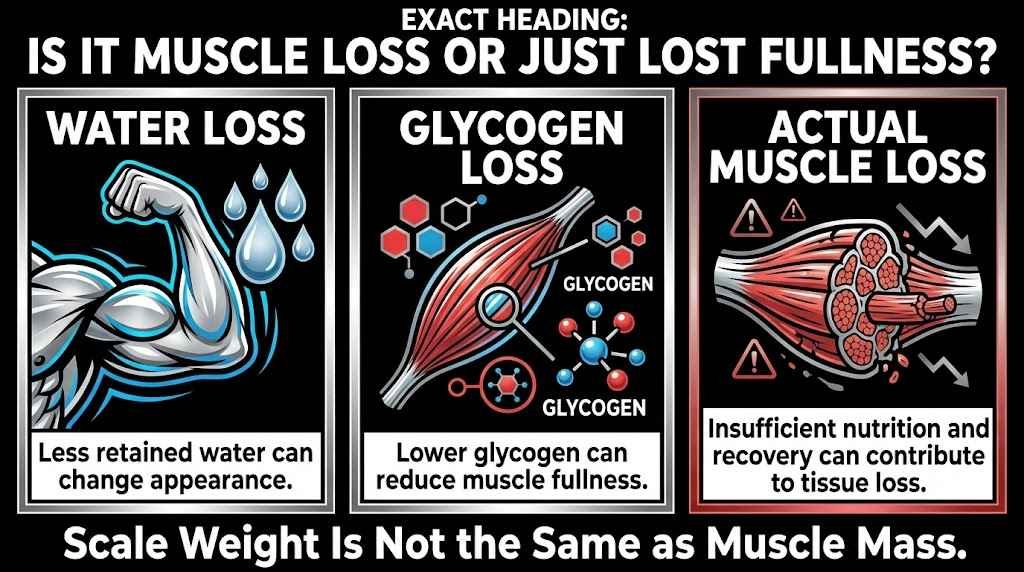
Is Muscle Loss Inevitable When Trying to Retain Muscle During PCT?
Not necessarily. Some reduction in body weight after a cycle is common, but not all of it represents lost muscle tissue.
There are three major changes to understand when trying to retain muscle during PCT.
1. Water loss
Some anabolic steroids increase water retention. After discontinuation, the body may lose some of that retained water, making muscles look smaller or less full.
2. Glycogen loss
Muscles store glycogen, which is associated with water. Changes in carbohydrate intake, training, and hormonal conditions can reduce muscle fullness without an equivalent loss of actual muscle tissue.
3. Actual muscle loss
If the body can no longer sustain the same level of muscle protein accretion, and training, nutrition, or recovery are inadequate, some genuine muscle tissue may be lost.
This is why bodybuilders should not judge their PCT results only by the weighing scale or mirror. The goal is to retain muscle during PCT while accepting that some temporary changes in body weight and appearance may be unavoidable.
6 Essential Strategies
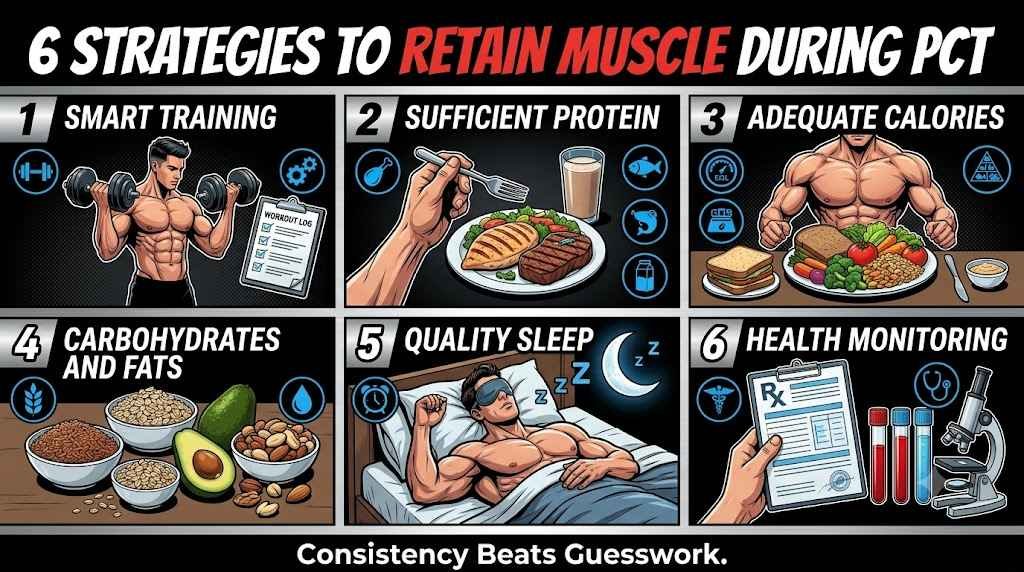
Before discussing maintenance compounds, let’s cover the fundamentals that have the strongest practical basis for preserving muscle.
1. Adjusting Training Volume
One common mistake is continuing the exact same training volume used during a steroid cycle, even when recovery capacity has changed.
A training programme that was manageable during a cycle may become difficult when hormonal support declines.
To retain muscle during PCT, keep resistance training consistent but adjust your workload according to recovery.
- Continue challenging resistance training.
- Keep productive compound exercises if you can perform them comfortably.
- Reduce unnecessary sets if fatigue and soreness accumulate.
- Avoid taking every set to absolute failure.
- Track strength, repetitions, and recovery.
- Allow sufficient rest between demanding sessions.
The objective is to provide a consistent signal to maintain muscle without creating more fatigue than your body can recover from.
You do not need to destroy yourself in the gym to maintain your physique. Consistent, productive training is more useful than chasing personal records every session.
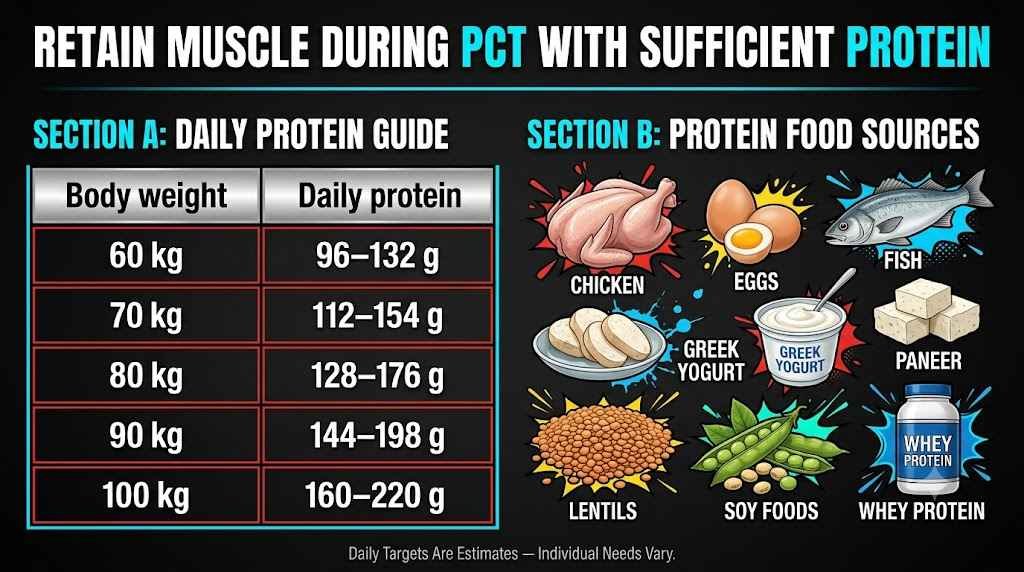
2. Retain Muscle During PCT With Sufficient Protein
Protein supplies the amino acids needed for muscle repair and maintenance.
For many healthy adults who resistance train, approximately 1.6–2.2 grams of protein per kilogram of body weight daily is a useful evidence-based range.
For example:
| Body weight | Daily protein target |
|---|---|
| 60 kg | 96–132 g |
| 70 kg | 112–154 g |
| 80 kg | 128–176 g |
| 90 kg | 144–198 g |
| 100 kg | 160–220 g |
Spread protein across several meals instead of trying to consume most of it in one sitting.
Good options include eggs, chicken, fish, dairy, whey protein, soy, and legumes.
If you are trying to retain muscle during PCT, consistency matters more than buying an expensive supplement. Whey protein can be convenient, but it is not compulsory if your normal diet already provides sufficient protein. Gaining Cycles with SARMs: Compounds, Risks, and Recovery
3. Without Aggressive Cutting
Coming off a cycle is generally not the ideal time to combine hormonal recovery with a severe calorie deficit.
A large energy deficit can make training harder, reduce recovery, and increase the likelihood of losing lean tissue.
Start by estimating your maintenance calories and monitoring body weight over several weeks. Avoid reacting to an immediate post-cycle weight drop by drastically increasing food intake or cutting calories even further.
If weight falls quickly, consider whether the change reflects water, glycogen, reduced food volume, or a sustained downward trend.
For most bodybuilders focused on muscle retention, a sensible starting point is to eat around maintenance and adjust based on actual trends rather than daily fluctuations.
4. Retain Muscle During PCT With Adequate Carbohydrates and Fats
Carbohydrates help fuel demanding workouts and replenish muscle glycogen. Dietary fats also contribute to normal physiological function and general health.
There is no need to eliminate carbohydrates or follow an extremely low-fat diet to maintain a lean appearance.
Build your meals around a balanced combination of protein, carbohydrates, dietary fats, fruit, and vegetables.
Carbohydrates can be especially useful around training sessions if you notice a decline in workout performance. However, no specific carbohydrate timing strategy can guarantee that muscle loss will be prevented.
5. Through Better Sleep and Recovery
Poor sleep can affect mood, training performance, appetite, and recovery.
Aim for a consistent sleep schedule and generally 7–9 hours per night. If sleep quality declines after stopping steroids, address the problem instead of relying on additional performance-enhancing substances to compensate.
Also consider total training stress, work demands, hydration, and rest days.
When recovery is poor, adding more exercises or more compounds is not automatically the answer. Sometimes the most productive adjustment is reducing unnecessary stress.
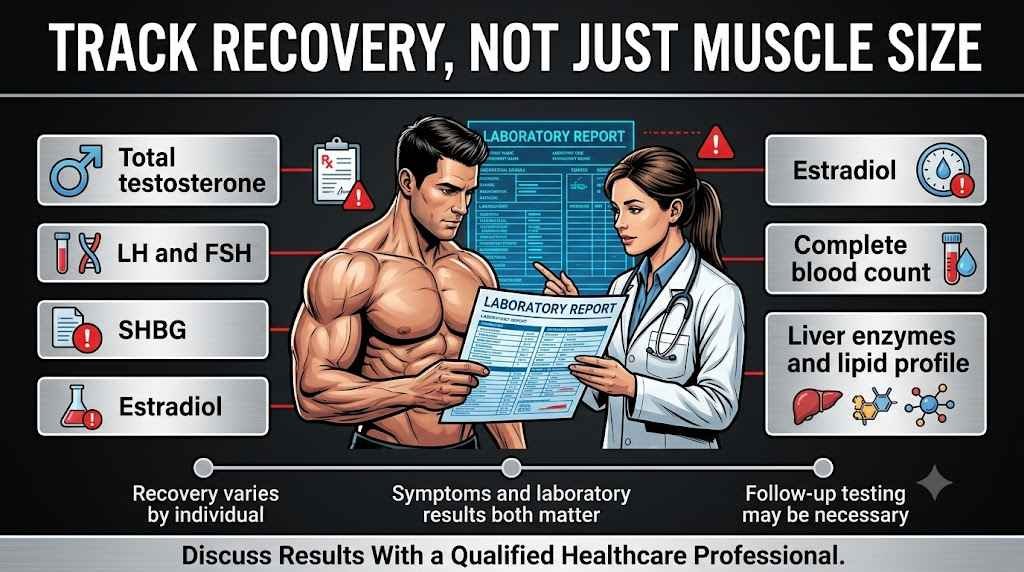
6. Retain Muscle During PCT With Proper Blood-Test Monitoring
Symptoms alone cannot reliably establish whether natural testosterone has recovered.
A clinician may recommend morning testosterone testing and, depending on your history and symptoms, additional investigations such as:
- Luteinising hormone (LH).
- Follicle-stimulating hormone (FSH).
- Sex hormone-binding globulin (SHBG).
- Estradiol.
- Complete blood count.
- Liver enzymes and lipid profile.
- Glucose-related testing where appropriate.
The correct tests depend on the individual’s history, substances used, and clinical findings.
Blood-test results should be interpreted in context. One result may not establish whether the hormonal system has fully recovered, and different hormones can recover at different rates.
If you experience persistent fatigue, low libido, erectile difficulties, depressed mood, or other significant symptoms after a cycle, seek medical assessment rather than assuming that a maintenance stack will solve the problem.
Maintenance Cycles to Retain Muscle During PCT
In bodybuilding discussions, a maintenance or bridging cycle generally means using one or more substances between full anabolic steroid cycles in an attempt to preserve muscle size, strength, or appearance.
However, PCT and bridging are not the same thing.
PCT refers to the recovery period after anabolic steroid use. Bridging generally involves using other substances between cycles. A bridge that continues androgen exposure can prolong suppression of natural testosterone production.
Some bodybuilders discuss MK-677, SR-9009, ipamorelin, CJC-1295, and ashwagandha as alternatives to another anabolic cycle. But these substances have different mechanisms, evidence bases, and risks. None of the combinations below has been established as a reliable protocol for retaining muscle during PCT while restoring natural testosterone production.
Proposed Maintenance Plans: Basic, Intermediate, and Advanced
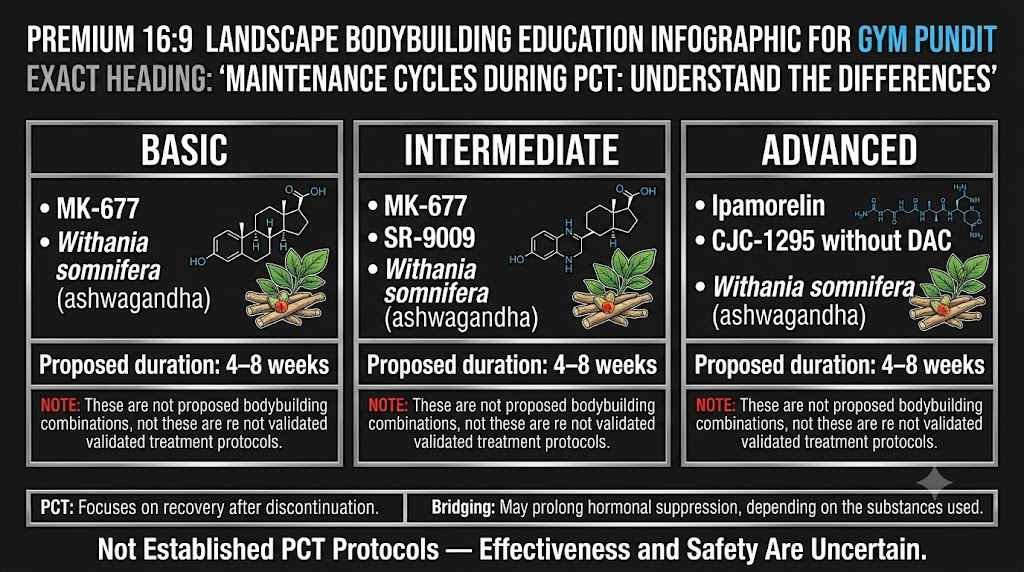
The following table preserves the compounds, doses, and durations in your proposed plans for readers to understand what is commonly discussed in bodybuilding. These are not validated PCT regimens or recommendations to self-administer the substances.
| Proposed plan | Product | Proposed dosage supplied | Proposed duration |
|---|---|---|---|
| Basic | MK-677 | 10 mg three times daily | 4–8 weeks |
| Basic | Withania somnifera | 2 g with warm milk before bed | 4–8 weeks |
| Intermediate | MK-677 | 10 mg three times daily | 4–8 weeks |
| Intermediate | SR-9009 | 10 mg three times daily | 4–8 weeks |
| Intermediate | Withania somnifera | 2 g with warm milk before bed | 4–8 weeks |
| Advanced | Ipamorelin | 200 mcg twice daily | 4–8 weeks |
| Advanced | CJC-1295 without DAC | 200 mcg twice daily | 4–8 weeks |
| Advanced | Withania somnifera | 2 g with warm milk before bed | 4–8 weeks |
The doses above reproduce the proposed amounts for informational comparison only. They should not be interpreted as medically established doses, and the combinations should not be assumed to be safe or effective. In particular, evidence does not establish that these plans restore natural testosterone production or reliably prevent muscle loss after a steroid cycle. Beginner Gaining Cycle: Compounds, Dosage, and PCT
Basic Maintenance Plan
The basic proposal combines MK-677 with Withania somnifera, commonly known as ashwagandha.
MK-677, or ibutamoren, acts on the ghrelin receptor and can stimulate growth-hormone secretion and influence IGF-1. This is why it attracts interest among bodybuilders who want to maintain muscle fullness or recovery after a cycle.
However, increasing growth-hormone-related markers does not establish that a compound will preserve muscle during PCT. MK-677 is not an approved PCT treatment and may cause increased appetite, fluid retention, and changes in glucose regulation or insulin sensitivity.
Ashwagandha has been studied for outcomes such as stress and sleep, but those studies do not establish that it restores the HPG axis after steroid use or reliably prevents post-cycle muscle loss.
The key point: The basic combination has not been proven to retain muscle during PCT or restore normal testosterone production. It should not replace appropriate medical assessment and monitoring.
Intermediate Maintenance Plan to Retain Muscle During PCT
The intermediate proposal adds SR-9009 to the basic combination.
SR-9009 is frequently discussed online in relation to metabolism, endurance, and body composition. Much of the interest comes from preclinical research rather than robust human clinical trials.
There is insufficient human evidence to establish its effectiveness, appropriate dosing, or long-term safety for retaining muscle during PCT.
Combining several poorly studied substances makes it difficult to determine which compound causes a particular effect or adverse reaction. It also creates additional uncertainty about product purity and interactions.
For these reasons, the intermediate proposal should not be considered a proven improvement over the basic plan.
Advanced Maintenance Plan
The advanced proposal combines ipamorelin, CJC-1295 without DAC, and Withania somnifera.
Ipamorelin and CJC-1295 are discussed for their effects on growth-hormone-related pathways. However, those pathways are different from the hormonal signals responsible for natural testosterone production.
A change in growth-hormone-related markers does not demonstrate recovery of LH, FSH, testicular function, or fertility.
There is no established evidence that this combination safely retains muscle during PCT or accelerates recovery of natural testosterone production. Important concerns include limited clinical evidence for this use, uncertainty about unapproved or compounded products, and possible adverse effects.
The advanced label should not be mistaken for stronger evidence or greater safety.
Can Bridging Help You Retain Muscle During PCT?
Bridging may sound attractive because the aim is to maintain size and strength between cycles. However, whether it interferes with natural recovery depends on the substances involved.
If a bridge includes an anabolic androgen, it can continue suppressing the hormonal signals responsible for natural testosterone production. The person may maintain an artificially supported hormonal environment rather than recover their own production.
Non-androgenic substances act differently, but that does not automatically make them effective PCT treatments.
There is no reliable evidence that the three proposed combinations consistently prevent muscle loss while allowing natural testosterone production to recover.
If your priority is recovery, discuss the substances you have used, symptoms, fertility goals, and appropriate monitoring with a qualified clinician rather than assuming that a bridging stack is the solution.
How Long Does It Take to Retain Muscle During PCT While Hormones Recover?
There is no universal recovery timeline.
Recovery depends on the compounds used, their duration of action, the length and intensity of exposure, the number of previous cycles, and individual health factors.
Some people recover over weeks to months, while others experience prolonged suppression. Symptoms and blood-test results do not always return to normal at the same pace.
A proposed maintenance period of 4–8 weeks does not guarantee hormonal recovery. It also does not mean that a person who still has symptoms at eight weeks should automatically add another compound.
If symptoms are persistent or severe, medical assessment is important. Seek urgent professional help for severe depression or thoughts of self-harm.
Common Mistakes That Prevent You From Retaining Muscle During PCT
Continuing peak-cycle training volume: Recovery needs may change after discontinuation. Adjust workload according to performance and fatigue.
Cutting calories too aggressively: A large energy deficit can make maintaining muscle more difficult.
Assuming all weight loss is muscle: Changes in glycogen and water can noticeably alter body weight and appearance.
Adding too many compounds: More substances create more uncertainty and do not guarantee better results.
Ignoring blood-test results: Symptoms and appearance cannot reliably establish hormonal recovery.
Expecting instant recovery: Hormonal recovery is individual, and a fixed four- or eight-week period does not guarantee normal function.
Ignoring mental health: Changes in mood, motivation, and wellbeing can occur after steroid discontinuation. These symptoms deserve attention rather than dismissal as a normal part of bodybuilding. First Steroid Cycle: What Beginners Should Know
FAQs About How to Retain Muscle During PCT
Can You Retain Muscle During PCT Naturally?
Yes. Many people can retain a substantial amount of muscle through consistent resistance training, adequate protein and calories, sufficient sleep, and sensible recovery management. The amount retained varies with the original cycle, hormonal recovery, and individual circumstances.
Does MK-677 Help You Retain Muscle During PCT?
There is insufficient evidence to establish MK-677 as a reliable PCT treatment or as a proven way to preserve post-cycle muscle while restoring natural testosterone. It also has potential metabolic and fluid-retention risks.
Can You Retain Muscle During PCT Without Bridging?
Yes. Bridging is not a requirement for muscle retention. Training, nutrition, sleep, and appropriate medical monitoring provide a foundation for maintaining muscle while the body recovers. Individual outcomes will vary.
How Much Protein Helps You Retain Muscle During PCT?
For many healthy adults who resistance train, approximately 1.6–2.2 grams of protein per kilogram of body weight per day is a useful starting range. Individual needs may differ depending on body composition, calorie intake, and health.
Is Muscle Loss Inevitable When You Retain Muscle During PCT?
No. Some loss of body weight and fullness may occur, but substantial muscle loss is not inevitable. Water and glycogen changes should be distinguished from actual muscle tissue loss.
Is a Bridging Cycle the Same as PCT?
No. PCT concerns recovery after stopping anabolic steroid use, while bridging generally means using substances between cycles. Depending on the substances involved, bridging may prolong hormonal suppression.
Final Thoughts on How to Retain Muscle During PCT
The goal of Retain Muscle During PCT should be to preserve as much genuine muscle tissue as possible while giving the body’s hormonal system the opportunity to recover.
Training intelligently, maintaining adequate nutrition, managing fatigue, and monitoring health are the foundation. Water and glycogen changes may affect appearance, so looking smaller after a cycle does not automatically mean that all the lost weight is muscle.
Maintenance and bridging compounds are frequently discussed in bodybuilding, but the proposed MK-677, SR-9009, and peptide combinations are not validated PCT protocols. They should not be presented as guaranteed ways to retain muscle or restore testosterone.
A realistic approach focuses on long-term health, sustainable training, and proper assessment rather than trying to reproduce the exact conditions of an anabolic steroid cycle.
Need Help With Retain Muscle During PCT?
Coming off a steroid cycle can raise plenty of questions about muscle retention, strength, natural testosterone recovery, nutrition, and training adjustments. If you’re trying to retain muscle during PCT, it’s important to understand what your body is going through instead of relying on guesswork or unverified maintenance protocols.
At Gym Pundit, we encourage bodybuilders to focus on informed decisions, proper recovery, sensible training, and health monitoring.
Need help understanding your post-cycle recovery?
Contact Gym Pundit on WhatsApp to discuss your bodybuilding questions, training routine, nutrition, and general recovery concerns.
WhatsApp: +91 76965 93279
Remember, persistent symptoms of low testosterone or other hormonal problems should be assessed by a qualified healthcare professional. No maintenance cycle or supplement can guarantee muscle retention or hormonal recovery.